
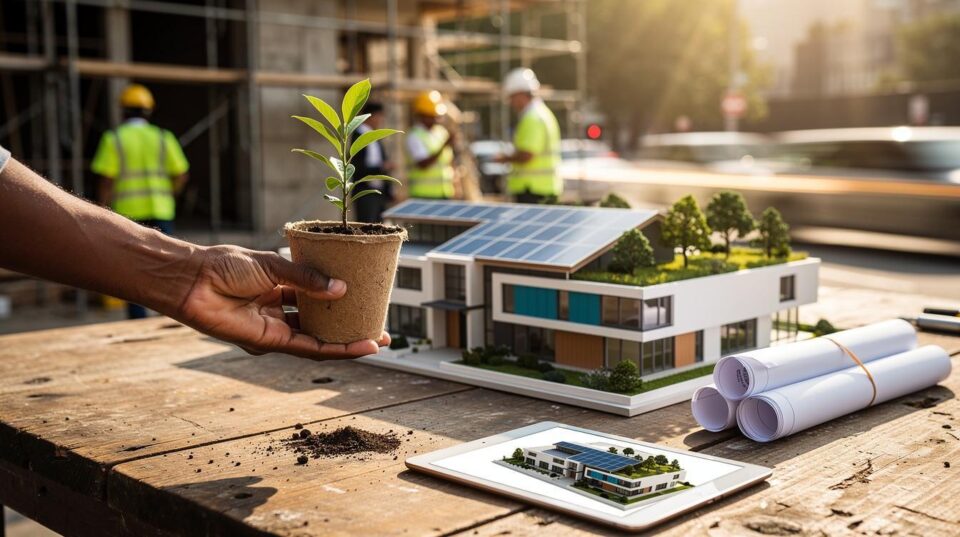
Hope isn’t a luxury in 2026-it’s a necessity. At Global Positive News Network, we believe sustainable optimism grounded in real action transforms how people face uncertainty and build stronger lives.
This blog post shows you exactly how to cultivate hope that sticks, backed by science and real stories from people who’ve done it.
Why Hope Matters in 2026
Hope operates differently than vague optimism. Jamil Zaki at Stanford distinguishes hope as the belief that things can improve and that your actions influence outcomes, not just wishful thinking. This distinction matters because hopeful people act. Research from Stanford’s Social Neuroscience Lab shows that hopeful individuals experience better mental health, maintain stronger relationships, and participate in greater civic engagement than cynical counterparts. They vote more, join social movements, and build networks that sustain them through difficulty. In 2026, when economic uncertainty persists and global challenges feel overwhelming, this action-oriented mindset separates those who adapt from those who stall. The American Psychological Association emphasizes that practical resilience-building relies on small achievable goals, consistent routines, social connections, and attention to mental well-being.
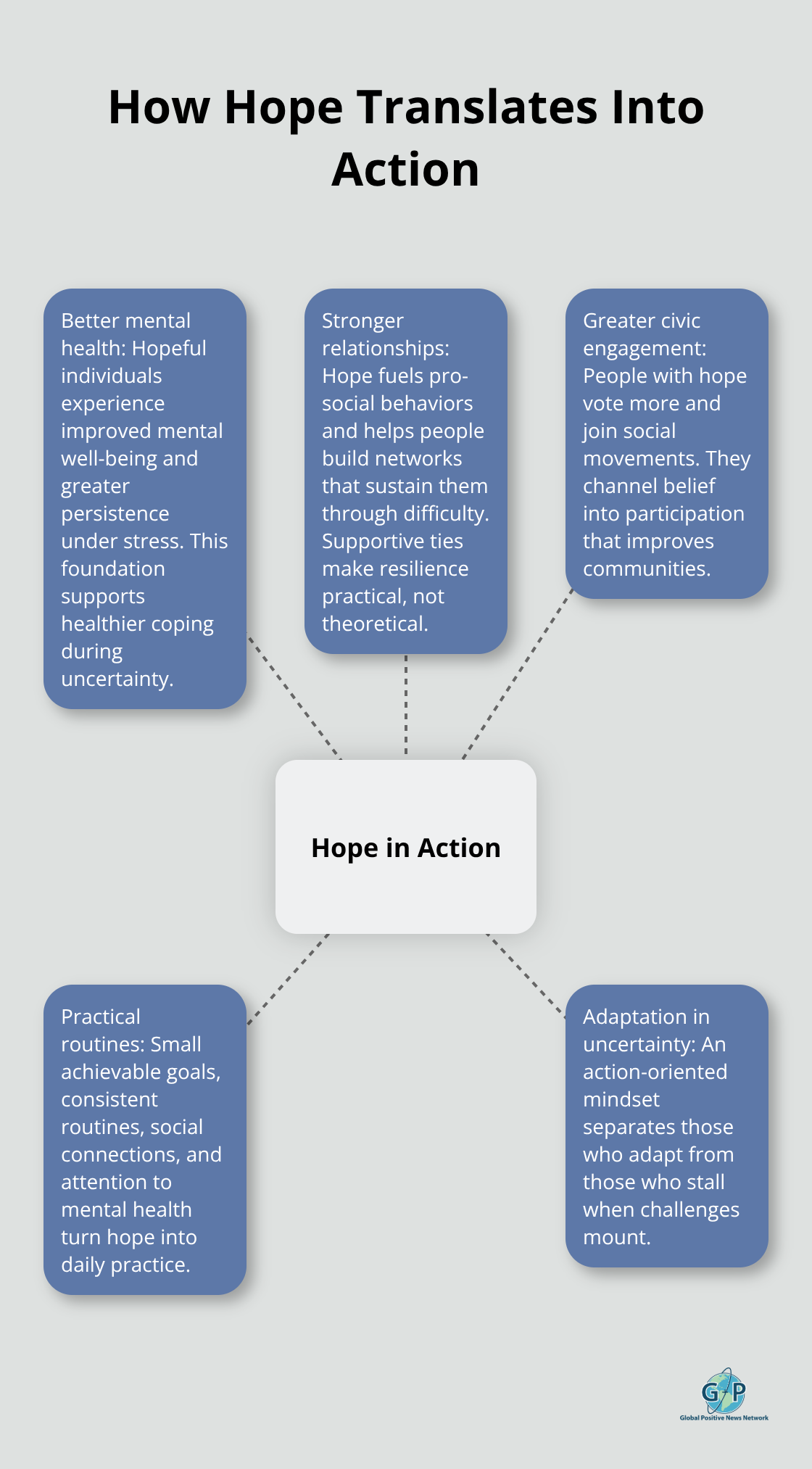
These aren’t abstract concepts but concrete daily practices that rewire how your brain processes setbacks and opportunities.
Hope Shifts Your Decisions
When you feel hopeful, your decisions shift. You stop avoiding choices and start exploring paths forward. People with hope seek solutions rather than blame circumstances. This matters in career decisions, health choices, and how you respond to personal setbacks. Hopeful skepticism means thinking like a scientist: withhold judgments, wait for evidence, and learn when and with whom to trust. This prevents false hope while maintaining momentum. The key is combining will (desire for a better future) with a path (clear, doable steps to achieve it). Many people have will but no path, leading to frustration. Others have paths but lack will, leading to apathy. Hope requires both. In 2026, this combination determines whether you set meaningful goals or abandon them by February.
Community Hope Multiplies Individual Strength
Hopeful people strengthen communities because they model that change is possible. Cross-partisan conversations, even between Democrats and Republicans, show surprising constructive potential when people meet in person rather than online. Real-world contact reduces fear and misperceptions about others and reveals practical commonalities. Media bias distorts reality about the other side; stepping away from screens and meeting people in real life often reveals greater common ground. This matters for neighborhoods, workplaces, and families. When one person demonstrates hope through action, others begin believing their efforts matter too. Positive gossip-sharing stories of everyday human goodness-counters cynicism and builds collective hope. The Solutions Story Tracker from Solutions Journalism Network highlights constructive, evidence-based responses to social problems, offering a practical tool to balance your news diet. For younger generations feeling globally informed but anxious, hope sustains when they focus on local agency where they can make a difference. Your actions ripple outward in ways you often don’t see, which is why the next section explores concrete methods to build that hope in your own life.
How to Build Hope When Everything Feels Out of Control
Hope collapses when you feel powerless. The antidote isn’t thinking positive thoughts-it’s identifying what you actually control and acting on it. Psychologists distinguish between internal locus of control (believing your actions shape outcomes) and external locus (believing circumstances determine everything). People with internal locus control report higher life satisfaction and resilience during crises.
Take Action on What You Control
Start by listing three things in your life you can directly influence: how you spend an hour each day, one conversation you initiate this week, or a skill you develop over the next month. These aren’t grand gestures. They’re specific, immediate actions. When you accomplish one, your brain registers evidence that effort produces results. This rewires the hopelessness trap.
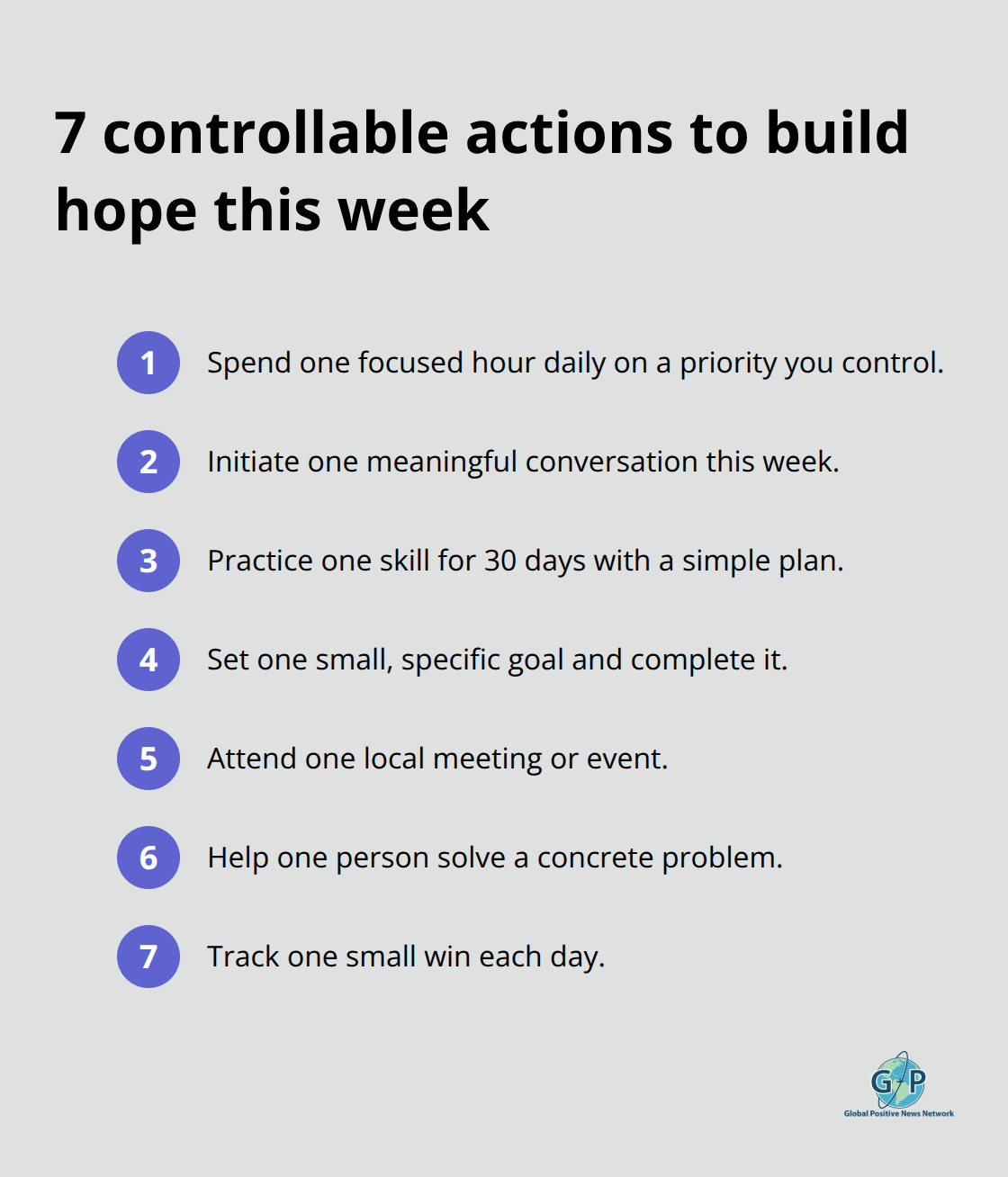
The American Psychological Association found that small achievable goals create momentum far more effectively than vague aspirations. Try setting a goal to read one article about solutions to a problem you care about, attend one community meeting, or help one person solve something concrete. Specificity matters because vague goals (be more hopeful) fail while concrete ones (call one friend struggling with isolation) succeed. You control your attention, your words, your schedule, and your effort. Everything else is negotiable.
Small Wins Trigger Real Neurological Change
Celebrating progress sounds trivial until you understand how your brain encodes motivation. Neuroscience research shows that acknowledging small wins triggers dopamine release, strengthening neural pathways associated with persistence. If you only celebrate massive victories, you train your brain to ignore 99% of your progress. This breeds discouragement.
Instead, mark completion of daily routines, difficult conversations initiated, or obstacles overcome. Write these down. One parent reported tracking three small wins daily for six weeks and noticed their anxiety about parenting dropped measurably. A manager implemented a team practice of sharing one progress moment each Monday and reported improved morale and retention. These aren’t feel-good exercises-they’re neurological investments. When hope feels distant, your evidence file of small wins becomes a practical anchor.
Kindness Accelerates Your Hope
Connect this directly to kindness: when you help someone else achieve a small win, you witness their dopamine response and strengthen your own hope simultaneously. Acts of kindness aren’t separate from hope-building; they’re accelerants. Volunteering for two hours monthly, mentoring someone in your field, or helping a neighbor solve a practical problem creates reciprocal momentum. You see impact immediately.
Research from the Solutions Journalism Network shows that exposure to stories about how people solve problems increases both hope and civic participation. Seek out people solving real problems in your community and join them, even in small ways. Your effort compounds theirs. This momentum carries forward as you discover how your actions ripple through networks you didn’t know existed-which is exactly why the next section explores the stories of people who’ve already built this kind of lasting impact.
Stories of Hope Making Real Impact
When Vulnerability Becomes Contagious
Tonya lost her son to cancer. Rather than retreat into grief, she recorded her story of hope on video, sharing how love and family sustained her through unimaginable loss. That video now sits on YouTube, where other parents facing terminal diagnoses watch it and tell her it changed how they approach their final months with their children. She did not write a theoretical essay about resilience; she documented her actual experience. Bryan faced a terminal cancer diagnosis and created a video life story centered on family, love, and the emotional intelligence he gained through facing mortality. These are not abstract success stories. They are specific people who turned their darkest moments into evidence that hope survives catastrophe. Video captures what text cannot: the smile, the voice, the pause before answering a hard question. Someone watching Tonya’s story does not just hear words about hope; they witness it in her face.
How One Person’s Action Shifts an Entire Community
Communities change when one person demonstrates that effort produces results. When Tonya shared her story, other parents stopped isolating. When Bryan spoke about emotional growth through crisis, men in his network began conversations they had avoided for years. The American Psychological Association confirms that hopeful individuals participate in greater civic engagement, but what that actually looks like is watching someone you know take action and thinking, I can do that too. Neighborhoods improve when one person organizes a community garden or starts a tool-sharing network. Workplaces retain talent when one manager implements a Monday practice where the team shares one progress moment each week. Schools shift when one teacher celebrates student effort publicly instead of only final grades. These are not grand gestures requiring institutional change; they are specific actions that ripple because other people witness them working.
Solutions Spread Through Stories, Not Statistics
The Solutions Journalism Network documents exactly this pattern: exposure to stories about how people solve problems increases both hope and civic participation. Your local community likely has people already solving real problems-food insecurity, youth mentorship, housing access, skill-building. Joining them, even for two hours monthly, means you stop being a spectator to problems and become part of the solution. That shift from spectator to participant is where lasting hope lives. When you see someone tackle a real problem in your neighborhood and succeed, you recognize that solutions exist.
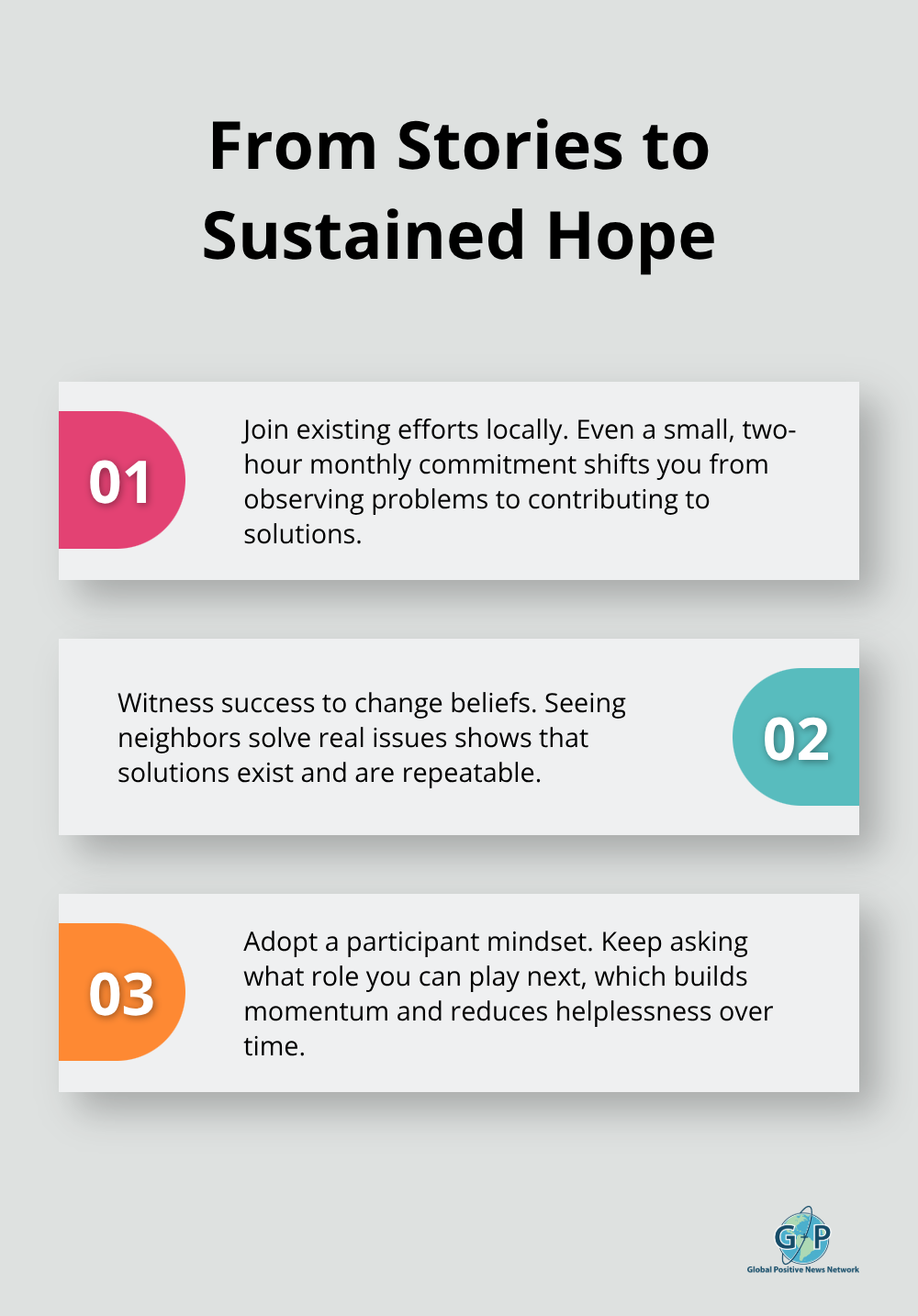
You stop accepting problems as permanent. You start asking what role you could play. This is not inspiration in the abstract sense; this is practical evidence that action works.
Final Thoughts
Hope emerges from specific actions you take within your sphere of influence, not from wishful thinking or perfect conditions. Throughout this post, we’ve shown that sustainable optimism develops when you identify what you control, celebrate small wins, connect with others through kindness, and witness how real people transform their darkest moments into evidence that change works. Tonya, Bryan, and the community organizers didn’t wait for institutional permission-they acted and discovered their effort rippled outward in ways they couldn’t predict.
Your actions matter far more than you realize because others watch and learn that effort produces results. Set one concrete goal this week, celebrate one small win, and reach out to one person who needs to know their effort counts. These aren’t grand gestures; they’re the foundation of lasting hope that sustains you through 2026 and beyond.
We at Global Positive News Network amplify exactly these stories through our platform, curating uplifting news about personal triumphs, acts of kindness, and community impact to help you maintain this outlook when cynicism feels easier. Explore stories of people building hope in their own communities and join a network committed to spreading hopeful action forward.
Having a hard day?
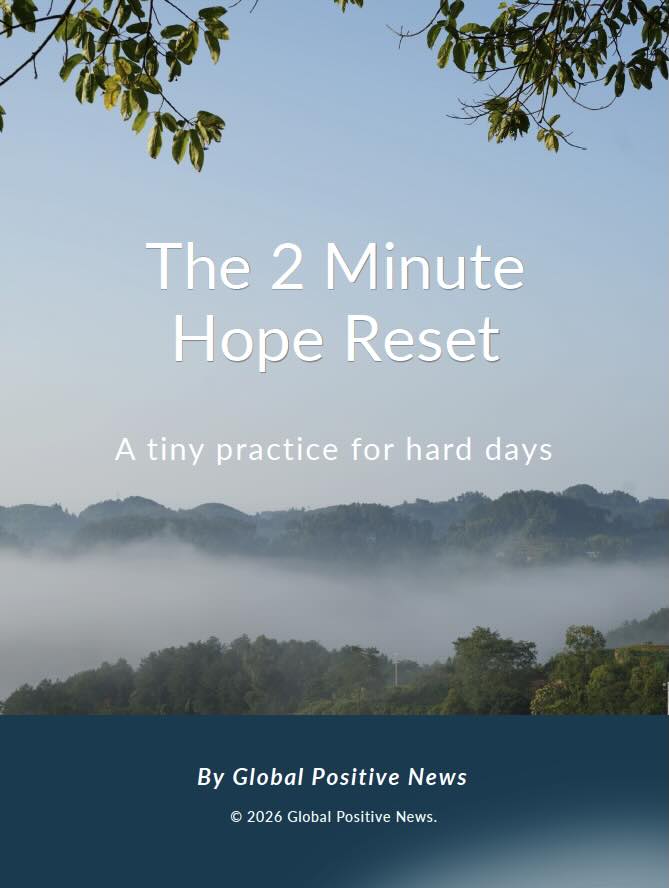
The 2 Minute Hope Reset is a short free guide with three small practices for the days that feel heavy. Two minutes each, nothing to keep up with.
Get the free guideExplore more positive news:
Enjoying stories like this?
Global Positive News Network is reader-supported. If you’d like to support the mission, you can visit the Official GPNN store.