
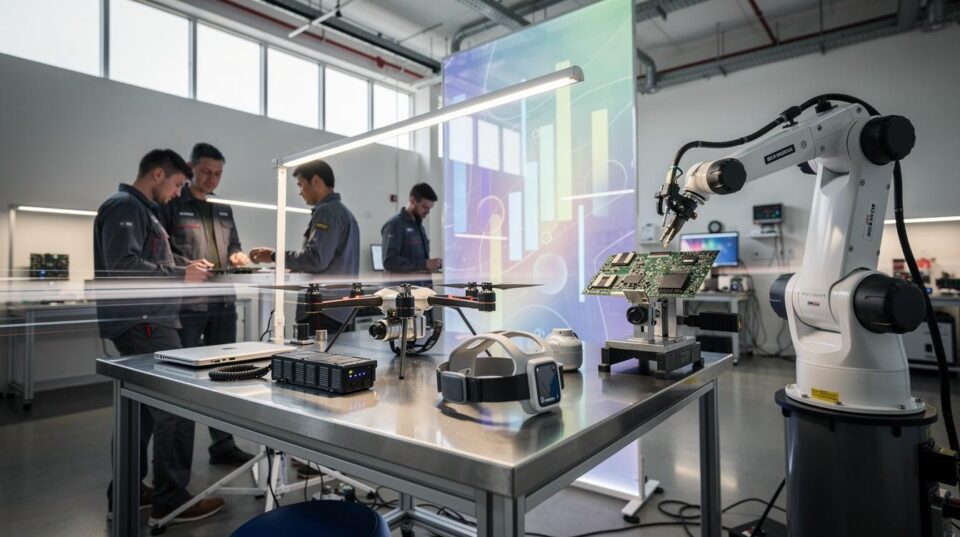
Technology is reshaping what’s possible in healthcare, energy, and global connectivity. We at Global Positive News Network believe hopeful technology innovations deserve attention because they’re already improving lives today.
From AI diagnosing diseases earlier to solar panels becoming affordable for developing nations, real breakthroughs are happening. This post explores the innovations that matter most.
AI-Powered Healthcare Breakthroughs Delivering Real Results
Early Detection That Saves Lives
AI now operates in hospitals and clinics, producing measurable improvements in disease detection and patient outcomes. The FreeStyle Libre 3 glucose monitor from Abbott demonstrates how biosensor technology enables continuous vital-sign monitoring, allowing people with diabetes to identify dangerous blood-sugar swings before emergencies occur. Early detection prevents hospitalizations and complications. AI-powered diagnostic systems flag cancers, heart disease, and other conditions at earlier stages than traditional methods, which means treatment starts when outcomes improve significantly. Patients in rural areas or low-income communities access the same diagnostic capability as those in major medical centers through telemedicine platforms like Teladoc, eliminating travel costs and reducing wait times.
Precision Surgery Reduces Recovery Time
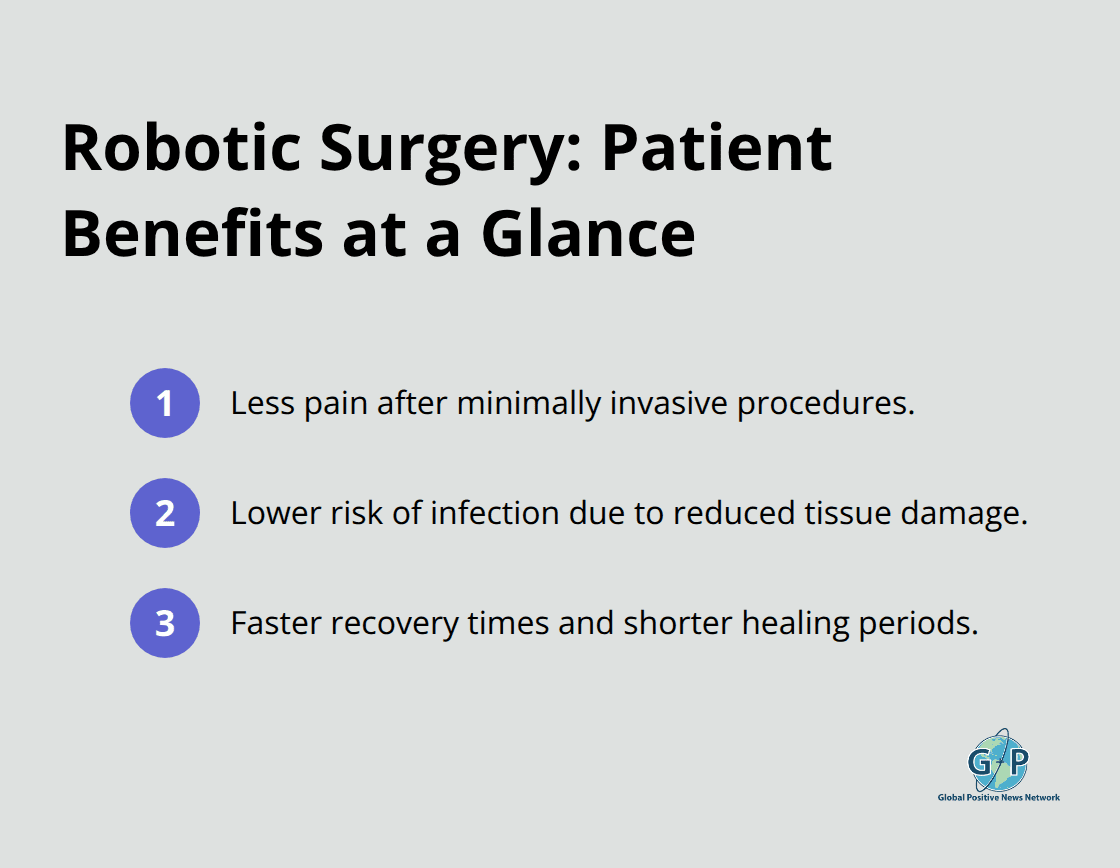
Robotic surgery has transitioned from experimental technology into standard operating procedure at leading hospitals worldwide. These systems provide surgeons with precision that human hands cannot match alone, reducing tissue damage and accelerating recovery. Patients who undergo minimally invasive robotic procedures typically experience less pain, reduced risk of infection, and faster recovery times. The precision advantage translates directly into shorter healing periods and reduced infection risk, making surgery safer and more efficient for patients across different age groups and health conditions.
Mental Health Support at Scale
AI-powered tools now support millions of users globally with personalized mental well-being and nutrition tracking. Headspace and MyFitnessPal deliver therapy techniques and habit-building exercises without the months-long waiting lists that plague traditional mental healthcare. Access to mental health support has remained a critical bottleneck for decades-AI tools finally break that barrier by making support immediate and affordable. These platforms reach populations that traditional therapy cannot serve, expanding mental health resources to underserved communities and reducing the stigma around seeking help early.
The strongest case for these innovations rests not on theoretical potential but on the people already benefiting from faster diagnosis, shorter recovery times, and immediate access to mental health resources. These advances now make it possible to explore how renewable energy breakthroughs can complement healthcare innovation by powering the infrastructure that hospitals and clinics depend on.
Renewable Energy Breakthroughs Powering a Sustainable Future
Solar Panels Become Affordable Infrastructure
Solar panels have reached genuine affordability for the first time, driven by efficiency gains that matter for developing nations and rural communities. A layer of tiny crystals now boosts electricity conversion rates, allowing panels to generate more power from the same sunlight while production costs continue to fall. This combination transforms solar from a luxury investment into practical infrastructure. In markets where grid electricity remains unavailable or prohibitively expensive, solar installations now compete directly with diesel generators on cost, eliminating the fuel dependency that kept communities locked into expensive, unreliable power.
Heat Pumps Reshape Building and Industrial Heating
Heat pumps represent another breakthrough gaining real traction globally. U.S. sales have already surpassed gas furnaces, signaling a fundamental shift in how buildings heat and cool themselves. Higher-temperature variants now enable decarbonization of heavy industry, which previously seemed impossible without abandoning manufacturing altogether. These systems pull thermal energy from air or ground and concentrate it for heating or cooling, dramatically reducing energy consumption compared to traditional methods.
Thermal Storage Stabilizes Grid Power
Battery storage technology has evolved beyond theoretical promise into grid-stabilizing reality. Thermal batteries store energy as heat rather than electricity, offering a pathway to significantly decarbonize industrial processes that require sustained high temperatures. This approach sidesteps the weight and space constraints that limit conventional battery deployment in factories and production facilities. Grid operators now deploy these systems to balance renewable energy supply with demand fluctuations, making wind and solar farms reliable sources rather than intermittent additions to fossil fuel infrastructure.
Wind Energy Captures Stronger, Consistent Winds
Modern wind turbines operate at heights and scales that previous generations could not achieve, capturing stronger, more consistent winds that exist above ground-level turbulence. Offshore installations particularly benefit from this principle, producing substantially more power per turbine than land-based alternatives.
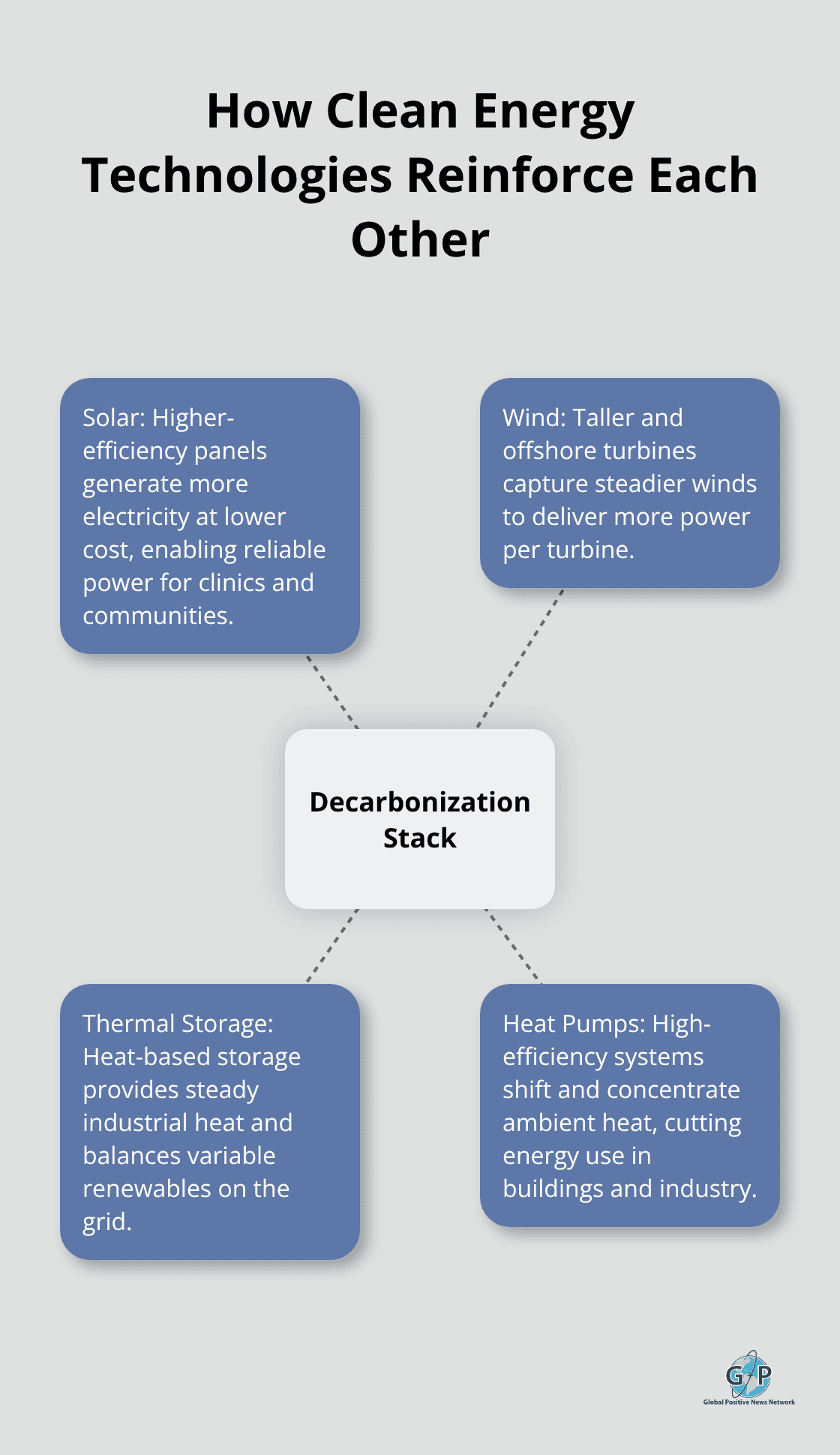
The combination of solar, wind, thermal storage, and heat pumps creates a practical decarbonization pathway that does not require waiting for perfect technology or forcing communities to choose between energy access and environmental responsibility. These innovations work together to power the healthcare infrastructure and digital connectivity that improve lives today, setting the stage for how technology bridges the digital divide in communities that need it most.
Technology Bridging the Digital Divide in Underserved Communities
Mobile-First Solutions Meet Real Constraints
Technology bridging the digital divide in underserved communities remains the greatest dividing line between communities that thrive and those left behind, yet the solutions already exist. Waiting for governments to build fiber-optic networks across every village wastes years communities cannot afford to lose. In regions where smartphone penetration exceeds 70 percent but desktop computer access remains below 20 percent, applications designed for small screens and intermittent connectivity solve real problems immediately. Telemedicine platforms like Teladoc function on basic 3G connections, allowing rural patients to consult specialists without traveling hundreds of kilometers.
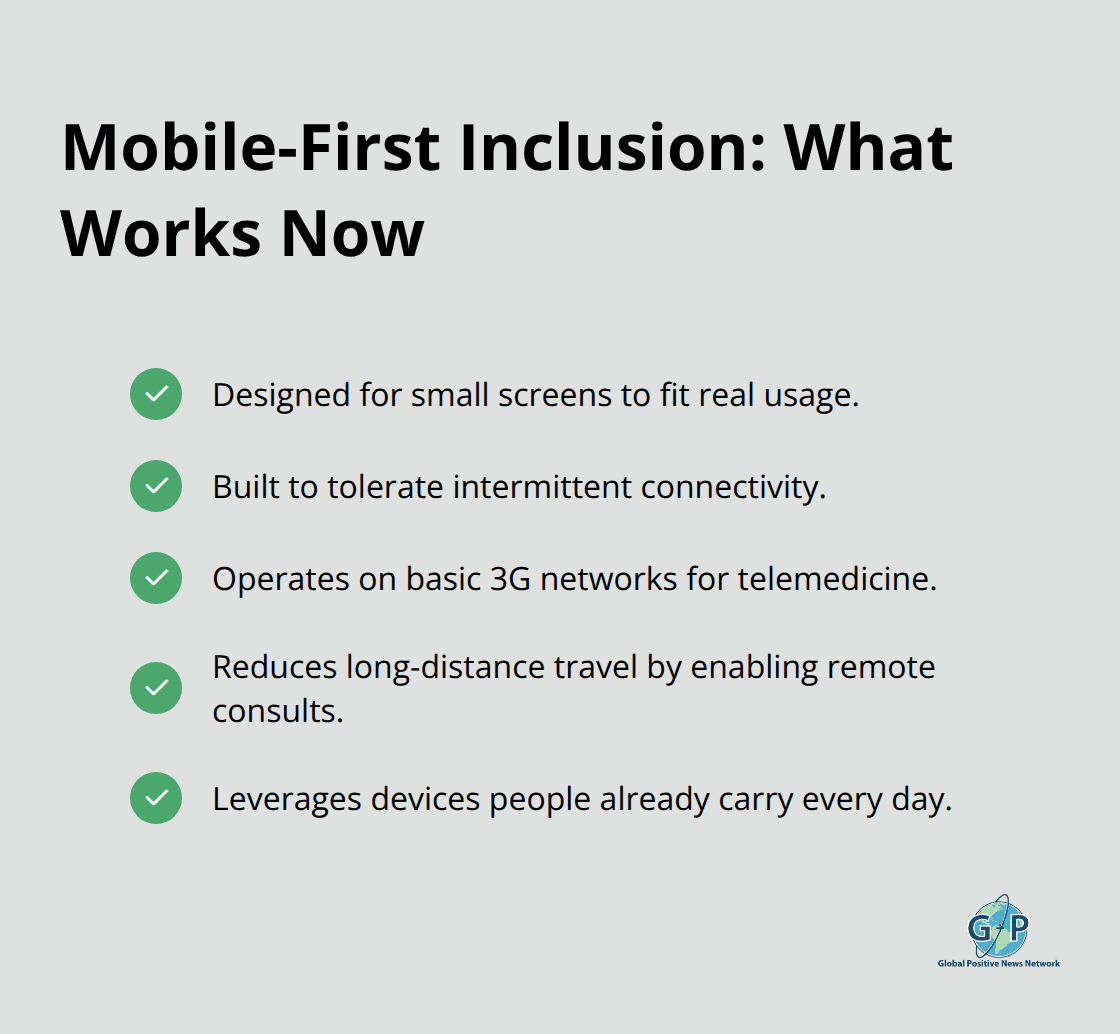
Mobile technology works with what people already carry, making it the practical foundation for digital inclusion in emerging markets.
Service Centers Bring Healthcare and Finance to Villages
India’s Common Service Centers deliver digital services such as healthcare, education, and finance directly to remote villages, bypassing the need for expensive last-mile infrastructure. These centers operate through existing retail spaces, reaching populations that traditional broadband expansion ignores. Patients access diagnostic tools and educational resources today, not after infrastructure catches up. The model proves that communities gain participation in digital services through practical service delivery rather than waiting for perfect technology.
Open-Source Tools Remove Cost Barriers
Open-source software removes the licensing costs that force schools and small businesses to choose between paying for proprietary tools or abandoning digital transformation entirely. Educational content from Code.org runs on minimal bandwidth, teaching coding skills to students in areas where IT training centers do not exist. India’s Atal Tinkering Labs give students hands-on STEM experience using affordable open-source hardware and software, proving that innovation does not require expensive commercial platforms. These approaches work within existing constraints rather than waiting for those constraints to disappear.
Blockchain Solves Coordination Problems
The World Food Programme’s Building Blocks uses blockchain to improve transparency and accountability in delivering humanitarian aid to refugees. This technology enables trust and verification across borders without requiring intermediaries, reducing costs and delays. Communities gain access to resources and support through systems that work reliably, even in unstable environments where traditional infrastructure fails.
Final Thoughts
The innovations explored throughout this post work today. AI diagnostics catch diseases earlier. Solar panels power clinics in villages without grid electricity. Mobile-first platforms deliver healthcare to patients who cannot travel. These hopeful technology innovations prove that transformation does not require waiting for perfect conditions or unlimited resources.
Real change happens when technology meets actual constraints. Heat pumps reduce industrial emissions while cutting energy costs. Thermal batteries stabilize grids powered by renewable sources. Blockchain systems deliver aid transparently across borders. Each breakthrough solves a specific problem that communities face right now, not in some distant future scenario. The strongest argument for optimism rests on evidence, not wishful thinking-millions of people already benefit from faster diagnosis, shorter recovery times, affordable energy, and digital access.
Technology alone does not drive positive change. Human intention paired with practical tools creates progress. Communities adopt solar power. Hospitals implement AI diagnostics. Educators use open-source platforms. Governments build service centers. These decisions reflect a commitment to progress that technology amplifies but does not create. Explore stories of positive change and community impact to discover how innovation serves genuine human needs and inspires action toward a better world.

Having a hard day?
The 2 Minute Hope Reset is a short free guide with three small practices for the days that feel heavy. Two minutes each, nothing to keep up with.
Get the free guideExplore more positive news:
Enjoying stories like this?
Global Positive News Network is reader-supported. If you’d like to support the mission, you can visit the Official GPNN store.