

Family bonds strengthen when positivity becomes part of your daily routine. We at Global Positive News Network believe that small, consistent practices create lasting connections between family members.
Positivity tips for families don’t require grand gestures or expensive activities. This blog post shares practical habits you can start today to build stronger relationships and resilience within your household.
How to Start Your Day With Intention
The First Hour Sets Everything That Follows
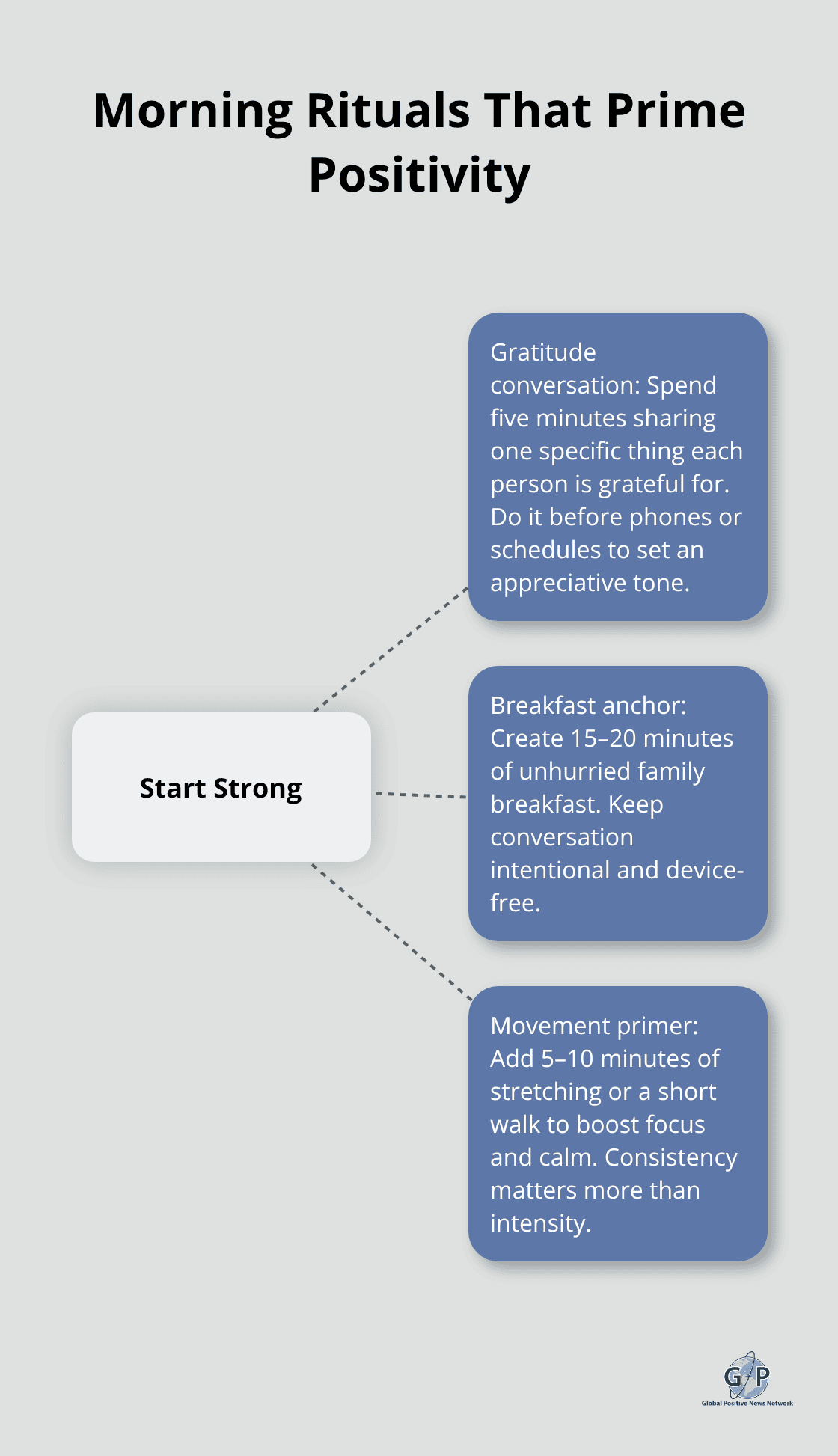
The first hour after waking sets the emotional temperature for everything that follows. Research from the University of California shows that morning cortisol levels spike within 30 minutes of waking, and how families respond during this window directly influences mood and stress resilience throughout the day. Starting with specific gratitude conversations immediately counters this biological reality. Instead of rushing into schedules and demands, sit together for five minutes and ask each family member one specific thing they’re grateful for that day. This isn’t about generic thankfulness-ask for concrete details. Why are they grateful for it? How does it make them feel? Research on gratitude interventions suggests they may increase life satisfaction compared to neutral control conditions. The key is consistency. Do this at the breakfast table before anyone checks their phone or discusses the day’s tasks.
Breakfast Anchors Everyone in the Same Space
Family breakfast traditions work because they anchor everyone in the same physical space without competing demands. Make breakfast about 15-20 minutes of unhurried time, not a rushed fuel stop. Involve children in simple food preparation-they can set the table, pour juice, or mix batter. The American Academy of Pediatrics reports that children who eat breakfast with family members show improved academic performance and better emotional regulation. Rotate who chooses the breakfast menu weekly so each family member feels heard. Themed breakfasts work remarkably well (Waffle Wednesdays or Smoothie Sundays create predictability and give kids something to anticipate). Keep the conversation intentional. Ask open-ended questions about what they’re looking forward to, not just what they’re worried about. Avoid phones, screens, and work talk during these minutes.
Movement Shifts Brain Chemistry Before Chaos Begins
Physical movement in the morning shifts brain chemistry faster than most people realize. A 10-minute stretching routine or short walk together increases blood flow, reduces anxiety, and improves focus for the hours ahead. You don’t need complicated yoga or fitness expertise. Simple activities like shoulder rolls, forward folds, or a walk around the block work equally well. Research on physical activity shows that high-quality studies report significant beneficial effects on academic performance. Make it a non-negotiable part of your morning, like brushing teeth. If time is tight, even five minutes of stretching while listening to music counts. The consistency matters more than the intensity. This practice also models healthy habits for children, showing them that taking care of your body is a priority before the day’s chaos begins.
These morning rituals create a foundation, but real connection deepens when families intentionally carve out time together throughout the week.
How Families Deepen Connection Through Shared Time
Weekly Game Nights Build Predictable Togetherness
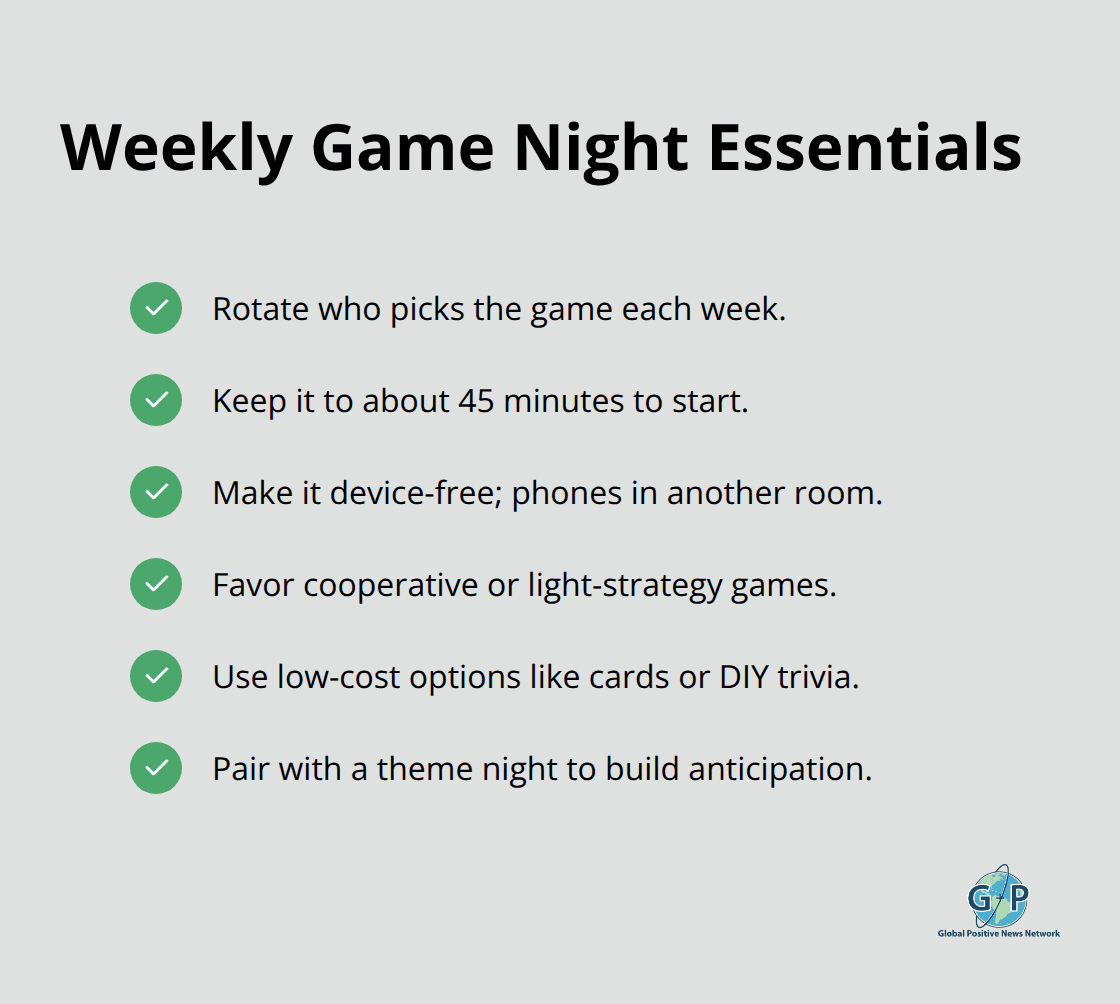
Weekly game nights create predictable, screen-free time that children actually anticipate. Rotate who selects the game so each family member feels their preferences matter. Research from Brigham Young University found that married couples who have regular nights out together report higher levels of relationship quality and sexual satisfaction. Start with 45 minutes once weekly, not occasional marathon sessions. Board games like Ticket to Ride or cooperative games like Forbidden Island shift the dynamic from competition to teamwork. If budget is tight, card games or DIY trivia about family members costs nothing and often generates more laughter than expensive alternatives. Set a firm rule: phones stay in another room. This sounds simple, but the American Psychological Association reports that device-free time significantly improves conversation quality and emotional connection. Themed nights work well too-Pizza Night plus Game Night on Fridays creates anticipation that lasts all week.
Cooking Together Teaches Problem-Solving and Cooperation
Cooking meals together teaches problem-solving and cooperation in ways that formal lessons cannot replicate. Assign each family member a specific role rather than crowding the kitchen with everyone at once. One person handles prep, another manages cooking temperatures, another sets the table. This distributes responsibility and prevents the chaos that kills connection. Research from Cornell University showed that children involved in meal preparation ate more vegetables and made healthier food choices long-term. Monthly cultural cuisine explorations work remarkably well; choose a country and cook one traditional dish together, then research why that dish matters to that culture. Stories emerge naturally during cooking. Ask open-ended questions about what they’d do with extra time, what they’re worried about, or what made them laugh recently. The repetitive tasks of chopping and stirring create a rhythm that makes emotional sharing easier than sitting across from each other at a table.
Community Service Creates Shared Purpose Beyond Home
Community service as a family activity builds compassion while creating shared purpose beyond household walls. Choose one Saturday monthly for a specific volunteer activity rather than bouncing between different causes. Consistency matters more than variety. Whether it’s a local food bank, animal shelter, or neighborhood cleanup, children who volunteer alongside parents develop stronger empathy and see themselves as contributors to something larger. Research from the Corporation for National and Community Service found that teenagers who volunteered regularly reported higher life satisfaction and stronger family relationships. Start small-two hours monthly is sustainable and prevents volunteer burnout. Choose activities where the impact is visible and immediate so children see direct results from their effort. Afterward, sit together and discuss what you noticed, what surprised you, and how it felt to help. This reflection transforms volunteer time from activity into learning. These shared experiences create the emotional glue that holds families together during harder seasons, yet they only work when families also know how to respond when difficulties actually arrive.
How Families Handle Difficulty Without Breaking Apart
Listen First, Fix Later
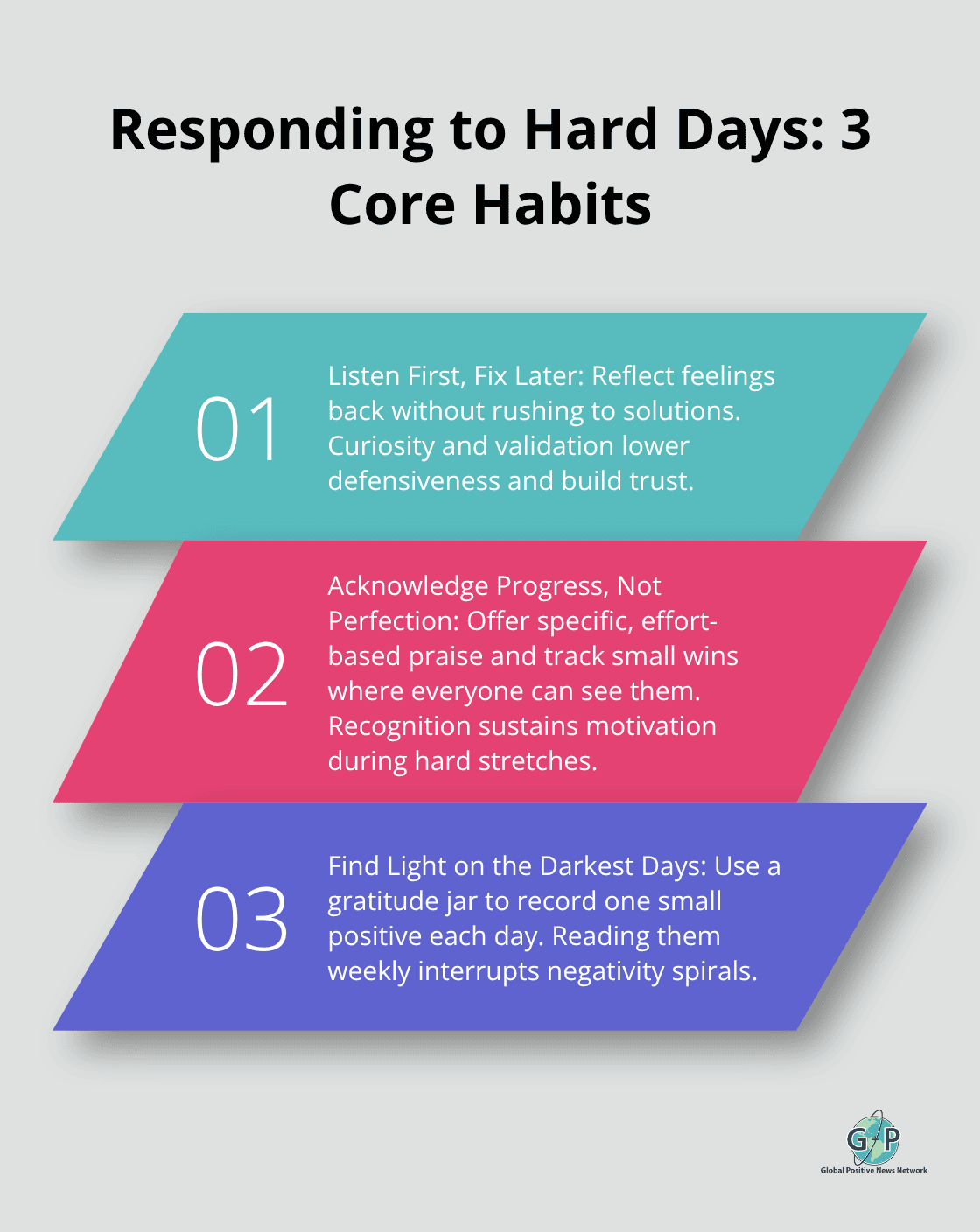
Families who practice active listening during conflict report better outcomes than those who default to problem-solving mode. The key distinction: listen without immediately offering solutions. When a child shares frustration about school, most parents instinctively jump to advice or minimization. Instead, sit with the emotion first. Reflect back what you hear: “It sounds like you felt left out when your friends didn’t include you at lunch.” Wait for confirmation. Ask follow-up questions that show genuine curiosity, not interrogation. Research shows that reflective listening supports emotional well-being in families. Set a specific rule in your household: during emotional moments, the listener’s only job is to understand, not fix. This single shift transforms conversations from defensive arguments into genuine connection. Many families resist this because it feels inefficient, but inefficiency is precisely the point. Giving someone your undivided attention for ten minutes costs nothing and builds trust that lasts years.
Acknowledge Progress, Not Perfection
Celebrating small wins matters far more than most families realize, especially during difficult seasons. When a child completes homework without reminders, acknowledge it specifically rather than generically. Say what you noticed and why it matters: “You finished your math without me asking. That shows you’re building responsibility.” Research on growth mindset shows that specific praise tied to effort increases motivation and resilience compared to generic compliments. Create a visible wins tracker in your kitchen-a whiteboard where anyone can write small victories, no matter how minor. One family’s tracker included items like “Dad made dinner without burning it” and “Sister helped without complaining.” Read these aloud at dinner weekly. This practice sounds simple, but it fundamentally shifts family culture from focusing on problems to noticing progress. During genuinely tough periods, these small celebrations anchor hope.
Find Light on the Darkest Days
A gratitude jar for hard days works differently than a regular gratitude practice. During crisis or extended stress, ask each family member to write one thing that went right that day, no matter how small. “The sun was warm” counts. “No one yelled” counts. “I laughed once” counts. At the end of the week, read these aloud together. This practice prevents the cognitive distortion where families in crisis notice only negative details. Deliberately noticing positive elements, even tiny ones, interrupts the spiral of hopelessness that accompanies prolonged stress. The jar becomes tangible proof that good things existed even on hard days.
Final Thoughts
The practices shared throughout this post work because they remain small enough to start today and consistent enough to reshape family culture over months. Morning gratitude conversations, weekly game nights, cooking together, and community service aren’t complicated strategies requiring special training or expensive resources. They represent deliberate choices to prioritize connection when life pulls families in opposite directions, and positivity tips for families succeed when they become habits rather than occasional efforts.
Research consistently shows that families practicing these routines report stronger emotional bonds, better conflict resolution, and improved resilience during difficult seasons. The cumulative effect matters more than any single activity-one gratitude conversation changes nothing, but fifty gratitude conversations over a year fundamentally shift how family members perceive each other and themselves. Children who grow up in families practicing these habits develop stronger emotional regulation, higher academic performance, and greater empathy toward others.
Starting your family’s positive journey requires only one decision: choose one practice from this post and commit to it for two weeks (not perfectly, just consistently). Pick morning gratitude conversations or weekly game nights or cooking together, then let that single habit anchor your family before adding others. We at Global Positive News Network believe your family’s journey toward stronger bonds begins with the next morning, the next meal, the next conversation.
Having a hard day?
The 2 Minute Hope Reset is a short free guide with three small practices for the days that feel heavy. Two minutes each, nothing to keep up with.
Get the free guideExplore more positive news:
Enjoying stories like this?
Global Positive News Network is reader-supported. If you’d like to support the mission, you can visit the Official GPNN store.