

Most people think positivity requires grand gestures or hours of meditation. We at Global Positive News Network believe simple daily positivity routines are far more powerful than complicated systems.
This guide shows you exactly which habits work, when to practice them, and how to build them into your existing schedule without extra effort.
How to Start Your Morning With Purpose
The First Hour Shapes Your Entire Day
Your morning sets the tone for everything that follows. The first hour after waking determines whether you approach your day with intention or drift through it reacting to whatever comes. Research from the University of British Columbia found that writing about positive experiences showed measurable improvements in mood and life satisfaction. The key is starting before your phone notifications arrive.
Practice Specific Gratitude First
Open your eyes and stay in bed for 60 seconds. Mentally list three specific things you’re grateful for today-not vague gratitude like family or health, but concrete items: the coffee waiting downstairs, the meeting you’re prepared for, the friend texting you back yesterday. Specificity activates different neural pathways than general thankfulness. This three-minute practice rewires how your brain processes the day ahead.
Move Your Body to Shift Your Nervous System
After gratitude, move immediately into physical activity. A 2023 study in Frontiers in Psychology showed that stretching or light movement in the morning increased dopamine levels. You don’t need exercise clothes or equipment. Stand up, reach your arms overhead, touch your toes, rotate your shoulders. Move every major joint. This physical engagement shifts your nervous system from sleep mode to activation mode.
Set Three Actionable Intentions
Spend the remaining time before breakfast on intention setting. Write down three specific outcomes you want today-not aspirational goals like becoming healthier, but actionable targets: completing one difficult task, having one meaningful conversation, or taking one walk. This clarity prevents decision fatigue later and gives your brain a roadmap before the day accelerates.
Stack These Practices in Perfect Order
The entire routine takes 20 minutes maximum. Most people fail at morning routines because they’re overcomplicated or require willpower when the brain is still foggy. Simplicity wins. Gratitude takes three minutes. Movement takes ten minutes. Intention writing takes five minutes.
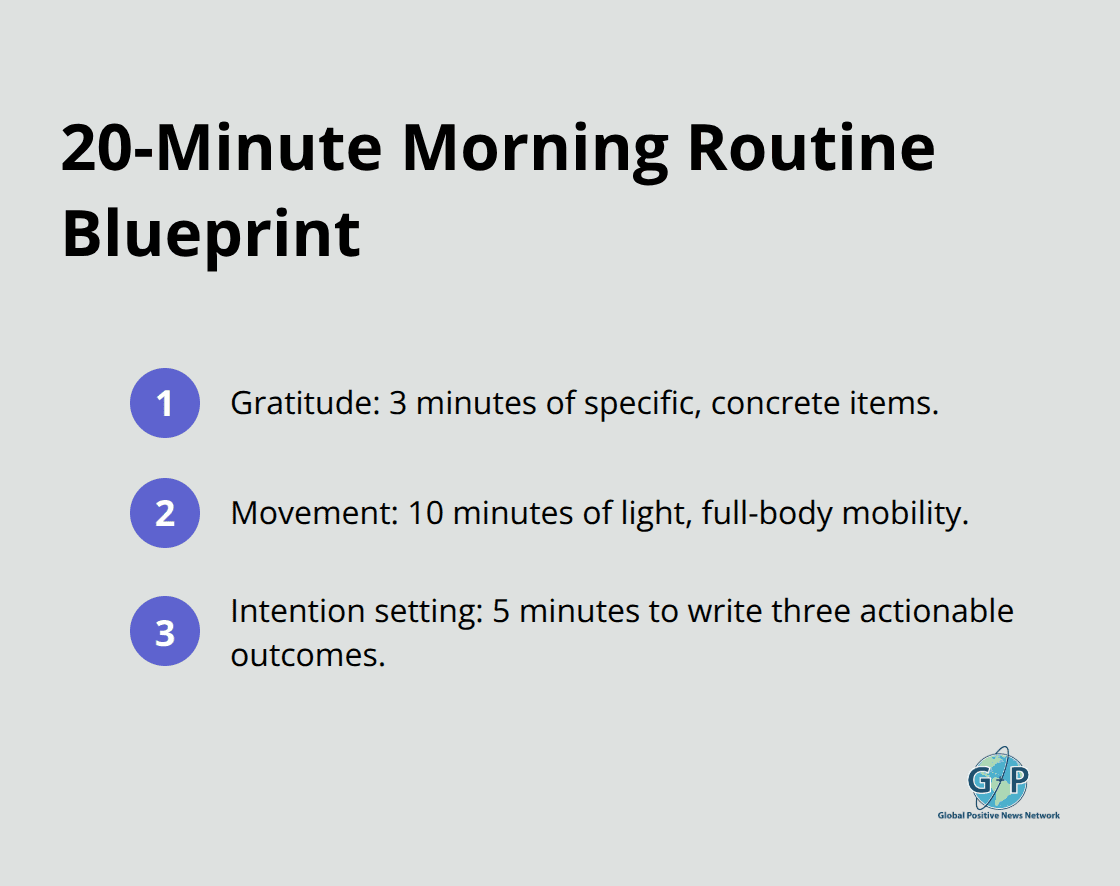
Stack these three practices in this exact order every single morning, and your baseline mood and productivity shift within one week. Once this foundation feels automatic, you’re ready to protect that momentum through the rest of your day. If some days still feel heavy, a small free guide might help you reset and refocus.
Protect Your Afternoon From Distraction
The 2 PM Energy Collapse Is Predictable and Preventable
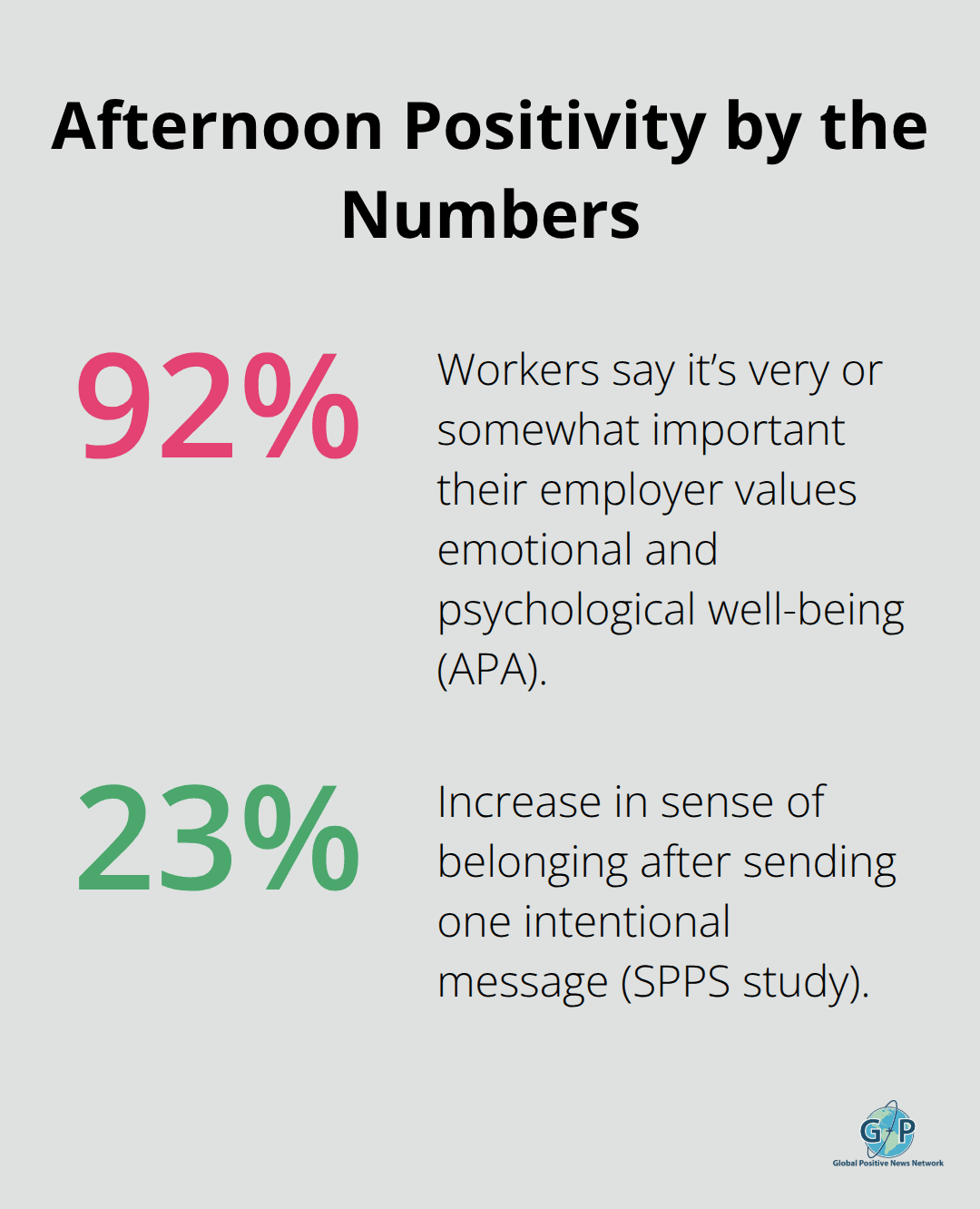
The midday crash hits most people between 2 and 3 PM, and this is precisely when your morning momentum collapses. Research from the American Psychological Association found that 92% of workers said it is very or somewhat important to them to work for an organization that values their emotional and psychological well-being. The solution isn’t caffeine or willpower-it’s deliberate interruption.
Step Away Every Two Hours With Purpose
Every two hours, you need to step away from your workspace for exactly ten minutes. Walk outside if possible. The combination of movement and sunlight triggers a measurable cortisol shift that resets your nervous system. If you’re indoors, stand by a window. This isn’t a luxury break; it’s maintenance for your cognitive performance.
Send One Intentional Message to Another Person
During these breaks, text one person something specific and kind. Not a generic emoji or heart, but an actual message: tell someone you appreciated something they said yesterday, or that you’re thinking of them, or that you noticed they handled something well. This takes ninety seconds and creates measurable connection. A study published in Social Psychological and Personality Science showed that people who sent one intentional message to another person experienced a 23 percent increase in their own sense of belonging.
Midday kindness isn’t about being nice to others-it’s about sustaining your own emotional wellbeing through the afternoon slump.
Replace Reactive Scrolling With Intentional Reading
What you consume mentally in the afternoon shapes your evening mood more than most people realize. Avoid news apps and social media feeds between noon and 5 PM. Instead, read one piece of genuinely uplifting content during your break. Stories of human resilience, community action, and measurable progress create a psychological buffer against the relentless negativity that dominates mainstream feeds. This isn’t escapism; it’s strategic information consumption. The afternoon is when your willpower is weakest and your susceptibility to doom-scrolling is highest. Protect this window aggressively by replacing reactive scrolling with intentional reading.
These three practices-the movement break, the kind message, and the uplifting content-take less than fifteen minutes combined and form an unbreakable chain that carries your morning momentum directly into evening. Your afternoon choices determine whether you arrive at dinner exhausted and depleted or calm and present. The evening practices that follow build on this foundation, transforming how you process the day and prepare for restorative sleep.
How to End Your Day With Intention
The evening determines whether tomorrow starts strong or sluggish. Most people waste their final hours scrolling through news feeds and spiraling into anxiety, then wonder why they wake up depleted. Your evening needs structure just as much as your morning does, but with the opposite purpose: not activation, but deliberate wind-down. The three practices that follow take thirty minutes combined and directly counteract the damage of reactive evening habits. Start these practices at the same time each night. Consistency matters far more than perfection here because your brain releases melatonin on schedule once you establish a reliable pattern. Within two weeks, your body automatically prepares for sleep when you start this routine, making the actual transition to bed effortless.
Record Three Specific Wins Before Dinner
Spend five minutes writing three concrete things that went well today. Not broad statements like the day was good, but specific moments: a conversation that felt genuine, a task you completed despite resistance, a moment when you handled frustration calmly. Research shows that recording specific positive experiences increases life satisfaction and reduces depressive symptoms. The specificity activates memory consolidation differently than vague reflection does. Your brain literally encodes these moments deeper when you name them precisely. This practice directly counters the brain’s negativity bias, which naturally gravitates toward what went wrong. Write these wins by hand if possible because the physical act of writing engages more neural pathways than typing does. Keep these entries in one notebook so you can reread them during difficult weeks. This single practice prevents the mental pattern where you finish a productive day but remember only the one thing that frustrated you.
Eliminate Screens Ninety Minutes Before Sleep
Set a phone alarm for ninety minutes before your target bedtime. When it goes off, put your phone in another room entirely. This isn’t willpower theater; it’s environmental design. The blue light from screens suppresses melatonin production by up to 55 percent according to research from Harvard Medical School, and the content itself triggers your sympathetic nervous system at precisely the moment you need to activate the parasympathetic system. News algorithms are engineered to generate outrage and anxiety because those emotions drive engagement. Scrolling through social media or news feeds in the evening directly sabotages your sleep quality and shapes your emotional state for the next morning. Replace this screen time with something tactile: read a physical book, stretch, prepare tomorrow’s clothes, or organize one small area of your bedroom. The goal is to create a sensory transition away from digital input. If you live with others and they’re still using screens, this becomes harder, but you still control your own device. Protecting this window is non-negotiable if you want consistent sleep and consistent morning momentum.
Build a Fifteen-Minute Bedtime Sequence
Your body needs a clear signal that sleep is approaching. Cold rooms accelerate sleep onset; research from the National Center for Biotechnology Information shows that sleeping in temperatures between 60 and 67 degrees Fahrenheit produces the best sleep quality. Lower your room temperature thirty minutes before bed if you can control it. Dim the lights in your bedroom an hour before sleep. Wear the same pajamas or sleep clothes each night so your body recognizes the pattern. Take a warm shower or bath approximately two hours before bed; the subsequent drop in body temperature triggers sleepiness.
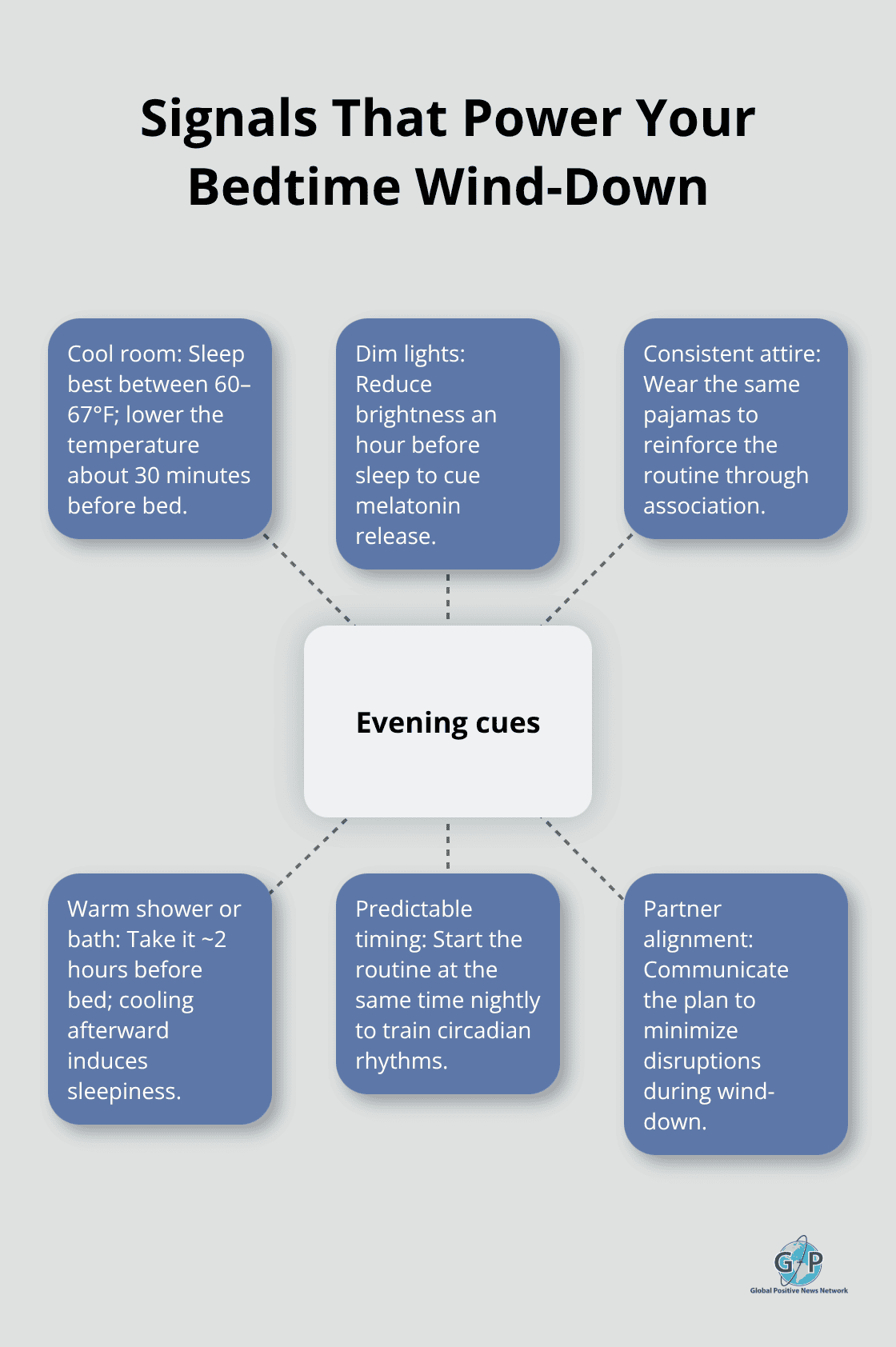
These environmental cues work together to signal your nervous system that sleep is the next phase. If you share a bed, communicate this timing to your partner so they understand this is your protected wind-down window. Consistency here produces results faster than any supplement or sleep hack because you’re working with your body’s natural circadian rhythms rather than against them.
Final Thoughts
The three practices you’ve learned-morning activation, afternoon protection, and evening wind-down-work because they’re simple enough to sustain. Most people abandon complicated systems within weeks, but simple daily positivity routines stick because they require minimal willpower and integrate seamlessly into existing schedules. One week of gratitude, movement, and intention setting shifts your baseline mood measurably, while two weeks of afternoon breaks and intentional connection prevents the energy collapse that derails your day.
The real change happens when you stop treating positivity as something you add to your life and start treating it as the foundation your life is built on. Your morning routine determines your afternoon capacity, your afternoon choices determine your evening mood, and your evening practices determine whether tomorrow starts strong. This isn’t theoretical-it’s a direct chain of cause and effect that you control completely, and three weeks of evening reflection and screen boundaries transforms your sleep quality and morning clarity.
We at Global Positive News Network created this platform specifically to support people building more intentional lives. Visit Global Positive News Network to access curated stories of human resilience and community impact that reinforce the positivity you’re building through these daily practices. Our community exists to remind you that your effort matters and that positive change is happening everywhere around you.
Having a hard day?
The 2 Minute Hope Reset is a short free guide with three small practices for the days that feel heavy. Two minutes each, nothing to keep up with.
Get the free guideExplore more positive news:
Enjoying stories like this?
Global Positive News Network is reader-supported. If you’d like to support the mission, you can visit the Official GPNN store.