

Your mindset shapes your health more than you might realize. Research consistently shows that optimism strengthens immunity, lowers blood pressure, and extends lifespan.
At Global Positive News Network, we believe wellbeing through optimism isn’t just feel-good philosophy-it’s backed by science. This guide reveals how shifting your perspective creates measurable improvements in both body and mind.
The Science Behind Optimism and Physical Health
How Positive Thinking Affects Immune Function
Positive thinking doesn’t just feel better-it physically strengthens your immune response. A study from Carnegie Mellon University found that people with optimistic outlooks had significantly stronger antibody responses to vaccines compared to pessimistic individuals. Your brain directly communicates with your immune system through the nervous system, meaning negative thought patterns actively suppress white blood cell production while optimism amplifies it.
When you maintain an optimistic perspective, your body produces higher levels of antibodies and T-cells, the soldiers that fight infection. Brain imaging shows that optimistic people have measurably different neural activity in regions that regulate immune function. This isn’t metaphorical; it’s a biological upgrade to your body’s ability to resist illness.
Optimism’s Impact on Heart Disease and Blood Pressure
Pessimism literally strangles your heart. Research from the American Heart Association tracked over 5,000 adults and found that those with high optimism had 35 percent reduction in risk of cardiovascular events compared to pessimistic counterparts. Chronic negativity triggers sustained stress hormone release, which narrows blood vessels and increases blood pressure.
Optimistic individuals maintain lower resting blood pressure because their parasympathetic nervous system stays active-the system responsible for calming your body. Try monitoring your blood pressure weekly while deliberately practicing optimistic thinking for a month. Many people see measurable drops of 5-10 millimeters of mercury. The difference between pessimism and optimism on your cardiovascular system rivals the impact of many medications, yet costs nothing and carries no side effects.
The Connection Between Mindset and Longevity
Optimistic people live longer, and the numbers are substantial. The Harvard Study of Adult Development, which followed individuals for over 80 years, revealed that optimistic participants lived 7.5 years longer on average than their pessimistic peers. This longevity advantage persists across different socioeconomic groups and health conditions.
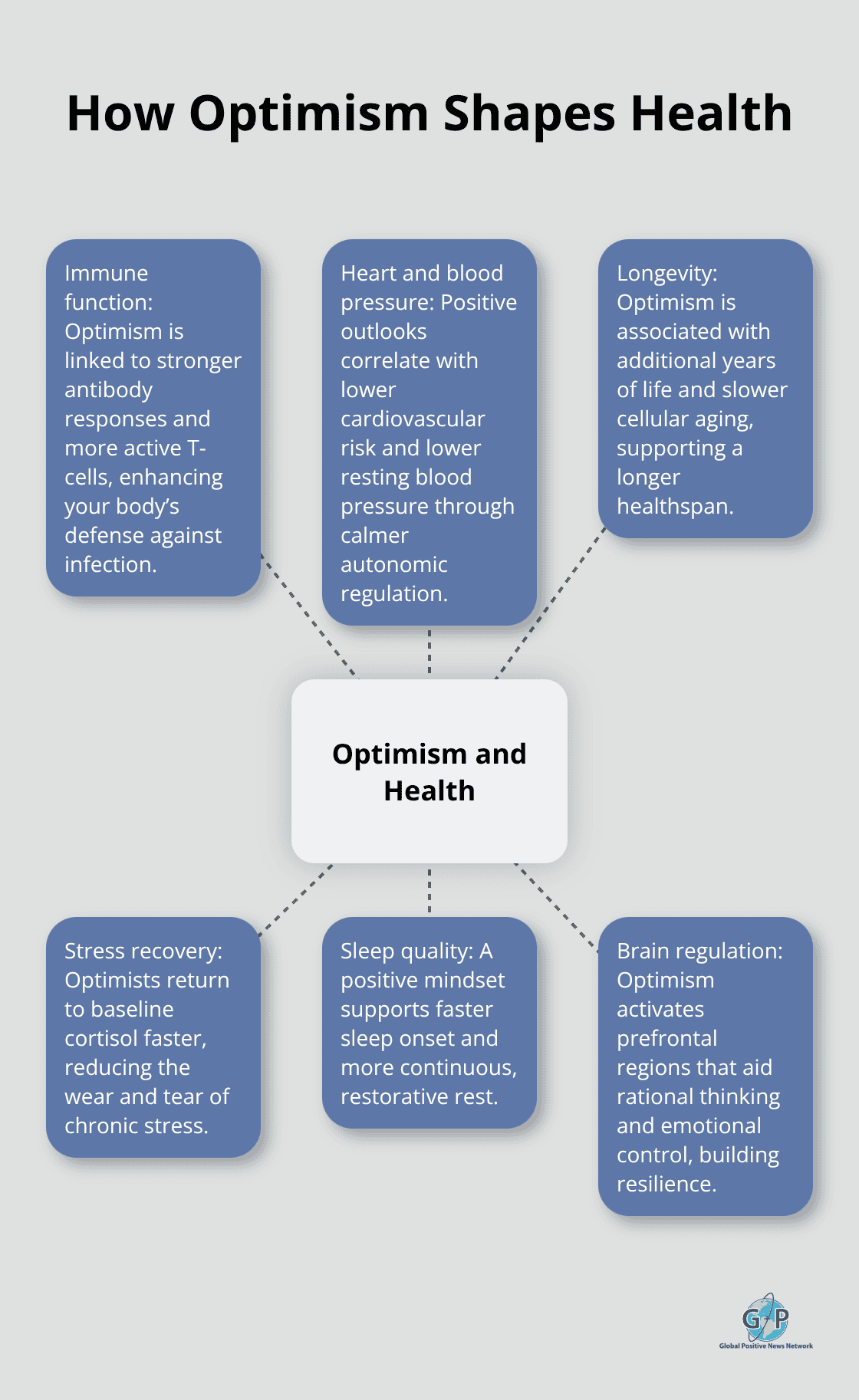
Optimism slows cellular aging at the molecular level. Telomeres, the protective caps on chromosomes that shorten with age, degrade more slowly in optimistic individuals. A study found that optimistic women had 15% longer telomeres than pessimistic women of the same age. This means developing genuine optimism now directly extends your healthspan-more years of functional, active living rather than years spent managing chronic disease. These physical transformations set the stage for the mental health shifts that follow when you commit to a positive outlook.
Mental Health Benefits of Maintaining a Positive Outlook
How Optimism Rewires Your Brain
A positive outlook doesn’t just make you feel better temporarily-it fundamentally alters how your brain processes stress, anxiety, and emotional regulation. Research from the National Institute of Mental Health demonstrates that people who practice optimistic thinking show reduced activity in brain regions associated with depression and anxiety, with measurable improvements appearing within 4-6 weeks of consistent practice. Optimism activates your prefrontal cortex, the region responsible for rational thinking and emotional control, while stimulating changes in the orbitofrontal cortex that may protect against anxiety.
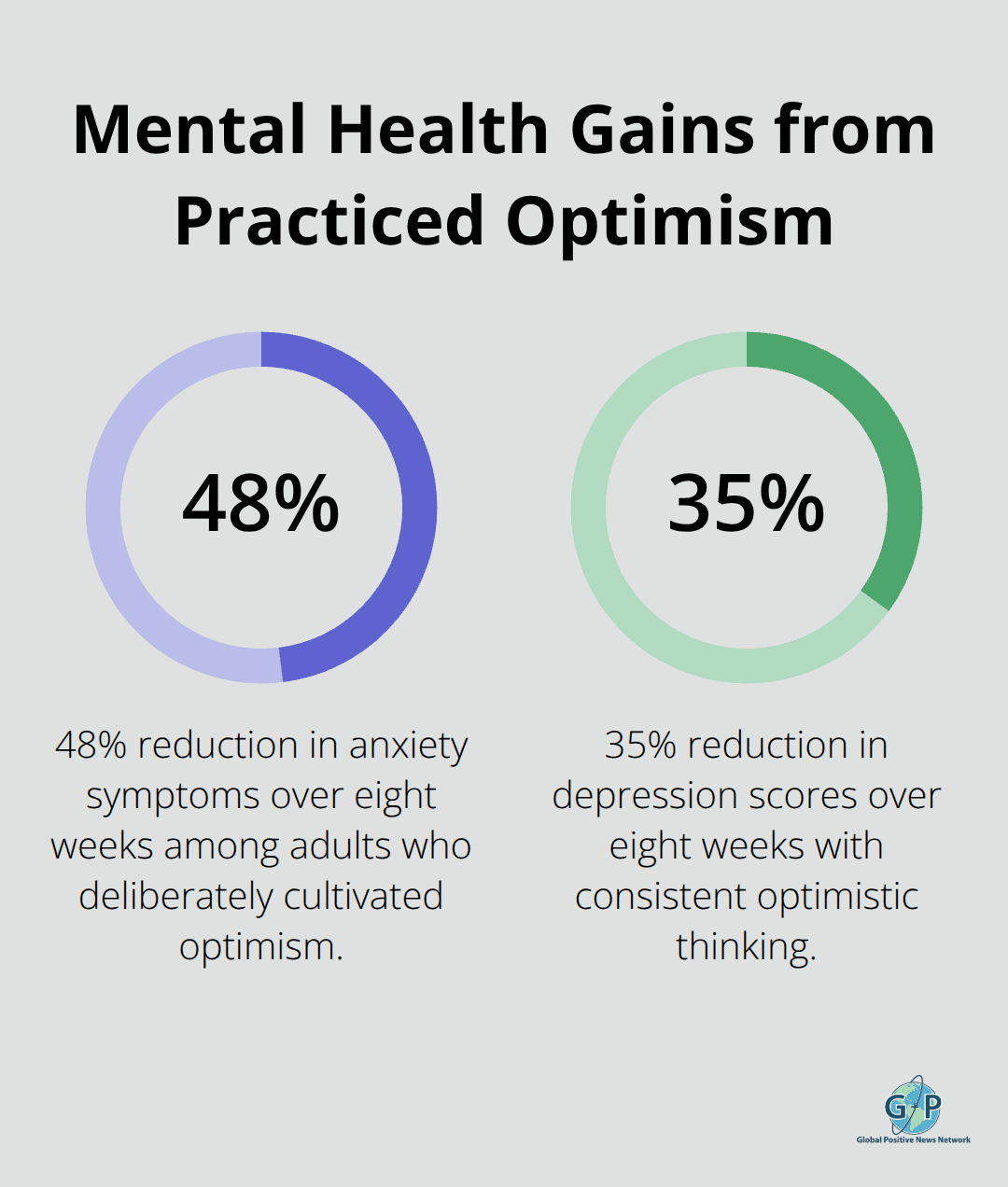
This neurological shift has real consequences. A study tracking 2,000 adults found that those who deliberately cultivated optimism experienced a 48% reduction in anxiety symptoms and a 35% reduction in depression scores over eight weeks. The key isn’t forced positivity or ignoring real problems-it’s training your brain to recognize solutions and possibilities alongside challenges.
When you face a setback, your optimistic brain automatically searches for what went right and what you can control next time, rather than spiraling into helplessness.
Stress Resilience and Recovery
Stress resilience improves when optimism becomes your default lens. The American Psychological Association reports that optimistic individuals recover from stressful events 23% faster than pessimistic counterparts, returning to normal cortisol levels more quickly. This matters because chronic stress literally damages sleep architecture. Pessimistic people experience fragmented REM sleep and spend less time in deep sleep stages, waking fatigued despite eight hours in bed.
Optimists, by contrast, fall asleep faster, sleep more continuously, and wake with higher energy levels. Track your sleep quality for one week while noting your evening thoughts. Then spend the next week writing down three specific things that went well that day, however small. Most people report falling asleep 12-15 minutes faster and waking less during the night.
Energy and Sleep Quality
Your energy levels follow naturally from better sleep-better sleep produces better daytime functioning. The resilience piece compounds these benefits. When optimistic people encounter obstacles, their stress hormones spike initially but return to baseline faster because they interpret challenges as temporary and solvable rather than permanent and overwhelming. This isn’t about denying difficulties; it’s about your brain’s response pattern to them.
These mental health improvements create a foundation for sustainable wellbeing. The next section reveals the practical strategies that transform optimism from an abstract concept into a daily habit you can actually maintain.
Building Optimism Into Your Daily Routine
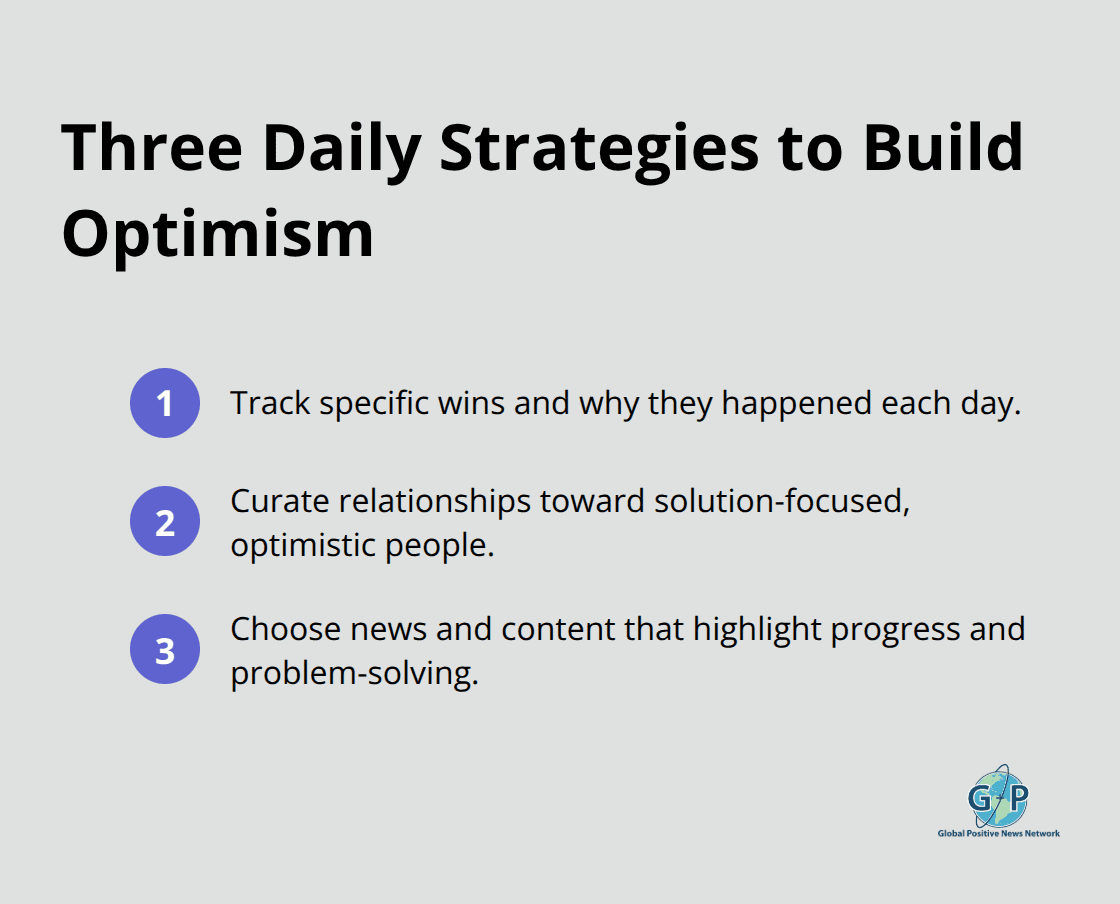
Optimism doesn’t arrive through willpower alone. It requires deliberate daily practices that rewire your brain’s default response patterns. The most effective approach combines three interconnected strategies that reinforce each other: tracking what works, surrounding yourself with the right people, and carefully selecting what information enters your mind.
Start with specific gratitude practices
Generic gratitude produces minimal results. Instead of vague thankfulness, write down three specific things that went well each day along with why they happened. Research shows that people who wrote detailed explanations of positive events experienced improvements in mental health compared to those who simply listed good things. The mechanism matters: when you explain why something positive occurred, your brain shifts from passive luck to recognizing your role in creating good outcomes.
Spend five minutes each evening writing one sentence for each positive event that includes a concrete reason it happened. If your meeting went well, note specifically what you did that contributed to it. If someone helped you, identify what quality of yours attracted that support. This practice trains your brain to spot patterns of capability rather than patterns of helplessness. Three weeks of consistent effort produces measurable shifts in your baseline mood.
Audit your social environment ruthlessly
Pessimism spreads through proximity. Research from Harvard Medical School tracked social networks and found that depression and negativity transmit between people at surprisingly high rates (with effects visible up to three degrees of separation). You cannot maintain genuine optimism while spending significant time with people who habitually catastrophize or dismiss positive possibilities. This doesn’t mean abandoning difficult friends, but it does mean limiting your exposure to chronic complainers and actively increasing time with people who notice solutions.
Identify three relationships where you consistently leave conversations feeling drained, and reduce contact frequency by 50% over the next month. Simultaneously, increase contact with people who ask you questions about your goals or share their own aspirations. Join at least one community group aligned with something you value, whether that’s environmental action, creative pursuits, or skill-building. People within these groups demonstrate optimism through action, which proves far more contagious than forced positivity.
Choose your information sources deliberately
Your news diet shapes your worldview more powerfully than any other single factor. The American Psychological Association reports that heavy consumption of negative news correlates with anxiety and depression. Most mainstream news platforms optimize for engagement through outrage and fear. Spend this week documenting how you feel after consuming your current news sources. Then replace at least one daily news habit with sources that report on genuine progress, innovation, and human kindness. This isn’t about ignoring real problems; it’s about consuming information that shows how people actually solve problems rather than only amplifying the problems themselves. Try allocating 15 minutes daily to sources reporting substantive positive developments-your brain will naturally develop a more accurate baseline of what’s actually happening in the world rather than defaulting to the catastrophic minority of events that capture headlines.
Final Thoughts
The evidence proves that optimism produces measurable improvements in cardiovascular health, immune function, and longevity. People who maintain positive outlooks live longer, sleep better, recover faster from stress, and experience significantly lower rates of anxiety and depression. A 35 percent reduction in cardiovascular risk, 7.5 additional years of life, and 48 percent fewer anxiety symptoms represent transformations that rival pharmaceutical interventions.
Small perspective shifts create these substantial results without requiring you to overhaul your entire worldview overnight. Starting with one gratitude practice, reducing time with one pessimistic relationship, or replacing one negative news source with uplifting content rewires your brain’s default patterns within weeks. Your prefrontal cortex strengthens, your stress recovery accelerates, and your immune response sharpens through these deliberate actions.
Wellbeing through optimism requires protecting three interconnected elements: your daily practices, your social environment, and your information diet. When you practice gratitude deliberately, you naturally gravitate toward people who notice possibilities; when you spend time with optimistic people, you resist catastrophic news; when you consume information showing how problems actually get solved, you develop genuine confidence in your ability to handle challenges. Explore Global Positive News Network to access stories specifically designed to strengthen your optimistic foundation daily.
Having a hard day?
The 2 Minute Hope Reset is a short free guide with three small practices for the days that feel heavy. Two minutes each, nothing to keep up with.
Get the free guideExplore more positive news:
Enjoying stories like this?
Global Positive News Network is reader-supported. If you’d like to support the mission, you can visit the Official GPNN store.