
Technology is reshaping how we live, work, and care for ourselves. From wearables tracking our health to renewable energy powering our homes, hopeful tech solutions are making real differences in everyday life.
At Global Positive News Network, we’ve identified three major areas where innovation is creating tangible benefits. This post explores the breakthroughs that matter most to you.
Wearable Devices Are Transforming Personal Health Monitoring
Smartwatches Detect Heart Problems Before They Become Critical
Wearable health technology has moved beyond fitness gimmicks into genuinely useful health management tools. Smartwatches detect irregular heart rhythms with clinical accuracy, alerting users to potential atrial fibrillation before symptoms become serious. Apple Watch has flagged thousands of users with undiagnosed heart conditions through its ECG feature. This early detection prevents strokes and other complications that would otherwise require emergency intervention. Sleep tracking has become equally practical-devices measure sleep duration and stages to help users identify patterns linked to energy, mood, and productivity. A 2023 study showed that users who tracked their sleep and adjusted habits based on data improved sleep quality by an average of 23 percent.
Activity Monitors Motivate Real Behavioral Change
Fitness trackers prove effective at motivating sustained activity, with research indicating that activity monitors increase daily steps compared to non-users. The visual feedback creates accountability; users see their progress accumulate throughout the day and feel motivated to close activity rings or hit step targets. This simple mechanism transforms abstract health goals into concrete, achievable milestones. Mental health apps deliver immediate support when anxiety or stress spikes, offering guided breathing exercises, cognitive behavioral therapy techniques, and crisis resources accessible within seconds. Apps like Headspace and Calm report that users practicing daily meditation show measurable reductions in cortisol levels and improved emotional regulation.
Prevention Replaces Reactive Treatment
The practical advantage lies in prevention rather than treatment. When users see concrete data showing how late-night screen time disrupts sleep, how skipped workouts correlate with mood decline, or how stress triggers physical symptoms, behavior change happens naturally. Wearable data also enables earlier medical intervention; detecting heart irregularities months or years before they become critical conditions saves lives and reduces healthcare costs. For anyone serious about wellbeing, wearables provide the feedback loop necessary to move beyond vague intentions into measurable progress. The technology works best when users commit to acting on insights, not just collecting data.
These devices set the stage for how technology can address broader health challenges across populations. Renewable energy solutions now tackle another fundamental need-powering our lives sustainably.
Renewable Energy Is Now Practical and Affordable
Solar Panels Deliver Real Financial Returns
Solar panels deliver real financial returns where cost becomes irrelevant for most households. The average residential solar installation in the United States costs around $2.50 to $3.50 per watt, making it financially sensible for homeowners in most regions. About 3.7 percent of US homes had solar panels in 2020, but installation rates have accelerated significantly since then as panel efficiency improved and labor costs declined. A homeowner who installs solar today recovers their investment within 7 to 12 years and then generates essentially free electricity for the remaining 25 to 30 year lifespan of the system.
Tax incentives vary by state and region, so checking local programs before installation reveals whether additional rebates or performance bonuses apply in your area. The practical action here is straightforward: request quotes from at least three installers, verify your roof orientation and shading conditions, and calculate your payback period based on local electricity rates.
Wind Power Expands Where It Makes Economic Sense
Wind power expansion in developing regions demonstrates that renewable infrastructure need not follow wealthy nations’ timelines. Countries like India, Brazil, and Kenya now deploy utility-scale wind farms that generate electricity cheaper than coal-fired plants. This economic advantage drives adoption independent of environmental ideology-renewable energy succeeds because it works financially, not because of environmental conviction alone.
Battery Storage Solves the Grid Stability Problem
Battery storage innovations have removed the primary constraint limiting renewable grid integration. Modern lithium-ion batteries store excess solar and wind generation during peak production periods and release it during demand spikes, eliminating the need for continuous fossil fuel backup power. Tesla’s Megapack, LG’s RESU, and emerging solid-state battery technologies offer increasingly efficient and affordable storage solutions. The grid stability problem that skeptics cited five years ago no longer represents a meaningful barrier to high renewable penetration rates.
Combined solar, wind, and battery systems now operate profitably in competitive markets without subsidies. For individuals and businesses, this shift means renewable investments deliver returns through lower energy costs rather than relying on future policy support that might disappear. These economic realities have transformed renewable energy from an idealistic aspiration into a practical choice that improves household and business finances while reducing emissions.
Renewable energy addresses how we power our lives sustainably. Artificial intelligence now tackles a different challenge-how technology can free humans from routine work and redirect talent toward what matters most.
How AI Solves Real Problems Today
Predictive Healthcare Catches Disease Before Symptoms Appear
Artificial intelligence has moved beyond hype into practical applications that measurably improve lives. Predictive healthcare systems identify disease patterns before patients develop symptoms, reducing preventable suffering and hospitalizations.
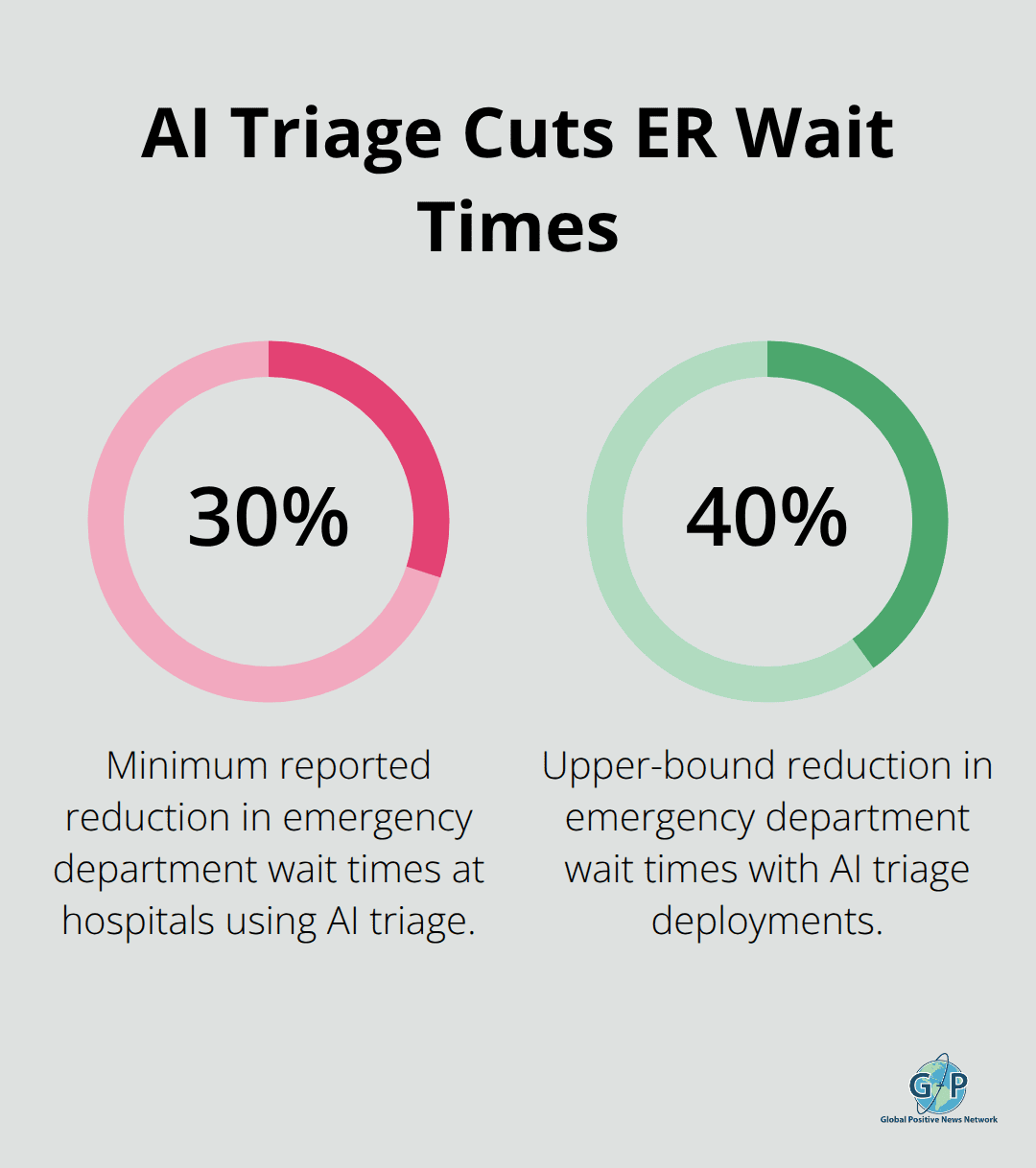
AI-powered diagnostic tools demonstrate non-inferior or superior performance compared to experienced radiologists, catching cancers and cardiovascular disease at earlier stages when treatment succeeds more often. Hospitals implementing AI triage systems reduce emergency department wait times by 30 to 40 percent, meaning patients with critical conditions receive care faster.
AI Assistive Technology Expands Independence for People with Disabilities
The World Health Organization estimates that more than 2.5 billion people globally need one or more assistive products, yet AI assistive technology like speech recognition and image identification help people with disabilities interpret visual information and navigate environments independently. Real tools like Seeing AI enable blind users to identify objects through smartphone cameras, while live caption systems provide real-time transcription for deaf and hard-of-hearing users without requiring manual note-taking. These applications transform daily tasks from obstacles into manageable activities.
Virtual Learning Removes Geographic Barriers to Education
Educational technology expands learning access to populations historically excluded from quality instruction. Students in rural regions and low-income communities now access university-level courses through virtual learning environments, eliminating geography as a barrier to advancement. AI tutoring systems adapt instruction to individual learning speeds, providing personalized explanations when students struggle with concepts rather than forcing everyone through identical pacing.
Automation Redirects Human Talent Toward Meaningful Work
Automation frees workers from repetitive tasks, creating space for genuinely valuable work. Manufacturing facilities deploying robotic systems eliminate dangerous, monotonous assembly line work while shifting human roles toward equipment maintenance, quality oversight, and process improvement that require problem-solving and judgment. McKinsey research indicates that up to 800 million jobs could face displacement by 2030 through automation, yet this same transition creates demand for workers skilled in technology deployment, data analysis, and human-centered roles that machines cannot replicate. The International Labour Organization estimates that a greener economy could generate approximately 24 million new jobs globally by 2030, suggesting that automation’s job displacement occurs alongside genuine opportunity for workforce transition. Workers who develop skills in science, technology, engineering, mathematics, and soft skills like communication and adaptability position themselves to thrive in this shifting landscape rather than compete against machines in tasks automation performs better.
Final Thoughts
Technology has proven itself a genuine force for improving everyday life. Wearable devices catch heart problems before they become emergencies. Solar panels generate electricity at costs lower than grid power. AI systems diagnose diseases earlier and help people with disabilities navigate the world independently. These aren’t theoretical possibilities-they’re happening now, transforming how millions of people live.
The pattern across these hopeful tech solutions reveals something important: innovation works best when it solves real problems and delivers tangible benefits. Smartwatches succeed because they provide actionable health data. Renewable energy expands because it saves money, not just because it reduces emissions. AI assistive technology matters because it restores independence to people who need it most. Technology adoption accelerates when people experience direct improvements in their lives.
Wider adoption of positive tech solutions depends on three factors. Cost continues declining as manufacturing scales and competition intensifies-solar installation costs have dropped 90 percent over the past decade, and battery storage follows the same trajectory. Accessibility matters because technology benefits only those who can access it, which means addressing digital divides and ensuring rural communities receive the same infrastructure investments as urban centers. People need practical guidance on implementation, so explore resources that help you evaluate solar installers and calculate payback periods, or understand which skills matter most for thriving amid automation.

Having a hard day?
The 2 Minute Hope Reset is a short free guide with three small practices for the days that feel heavy. Two minutes each, nothing to keep up with.
Get the free guideExplore more positive news:
Enjoying stories like this?
Global Positive News Network is reader-supported. If you’d like to support the mission, you can visit the Official GPNN store.