

Gratitude isn’t just a nice feeling-it’s a measurable force that rewires your brain and strengthens your body. We at Global Positive News Network believe that gratitude positivity tips are essential tools for anyone seeking real change in their life and relationships.
This guide shows you exactly how to build a gratitude practice that sticks, from morning journaling to spreading kindness in your community. You’ll learn the science, the practical exercises, and how your small acts of appreciation create waves of positive change around you.
How Gratitude Rewires Your Brain and Body
Gratitude operates as a neurological shift that directly alters how your brain processes emotions and stress. Research from a 2023 meta-analysis examining 64 randomized trials found that gratitude interventions increase measured gratitude scores by approximately 3.7%, with participants reporting meaningful improvements in life satisfaction and mental health. When you practice gratitude regularly, your brain strengthens neural pathways in the medial prefrontal cortex and anterior cingulate cortex-regions responsible for emotional regulation and self-awareness. This rewiring happens through repetition; the more you acknowledge what you appreciate, the more your brain defaults to noticing positive experiences rather than fixating on problems.
How Gratitude Activates Your Brain’s Reward System
The mechanism is straightforward: gratitude activates your brain’s reward system, releasing dopamine and serotonin that elevate mood and motivation. These neurotransmitters don’t just make you feel better temporarily; they reshape how your neural networks respond to daily experiences. Your brain literally changes its default mode when you consistently practice appreciation.
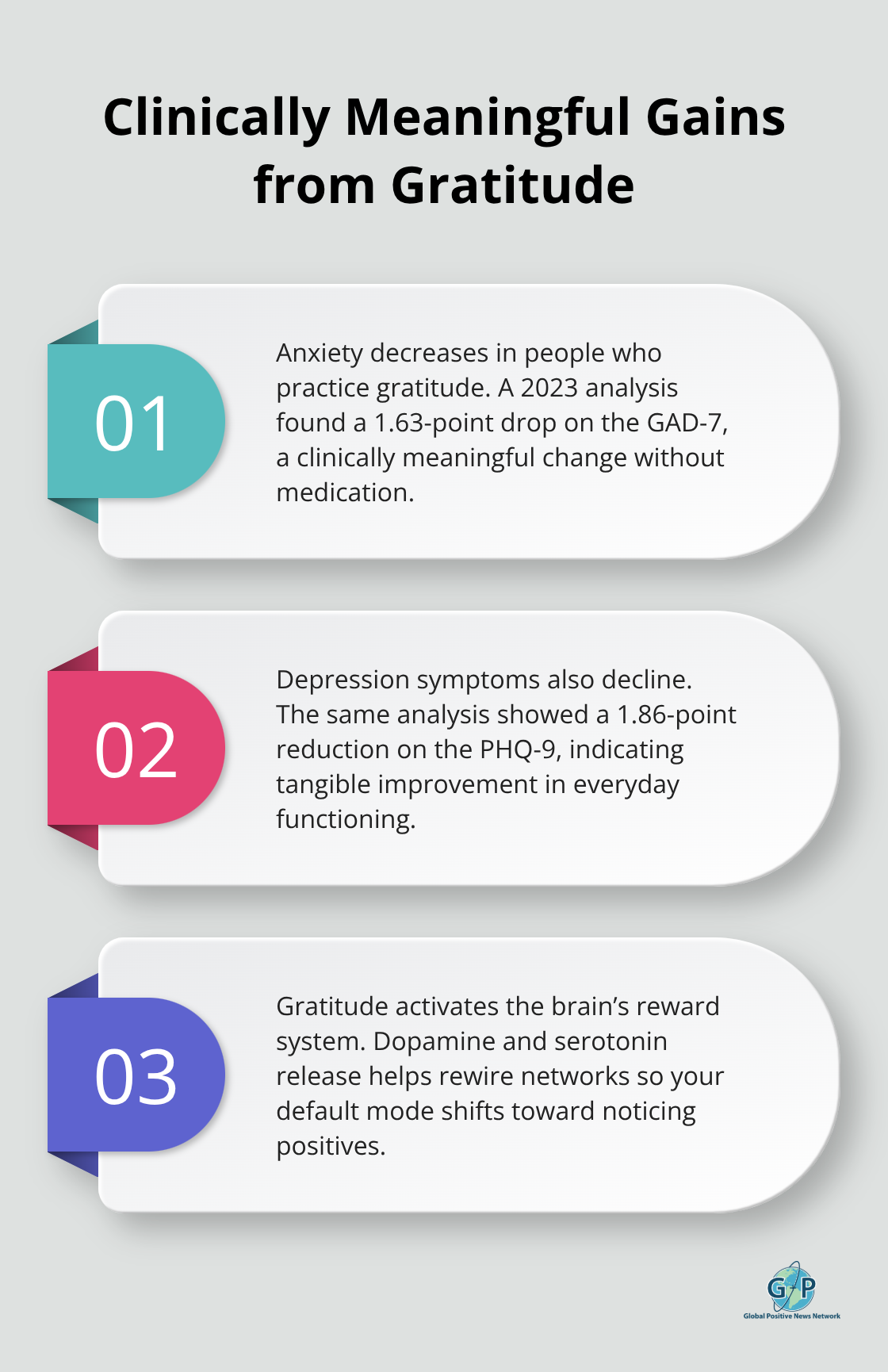
The same 2023 analysis showed that anxiety symptoms decreased by 1.63 points on the GAD-7 scale for people practicing gratitude, while depression symptoms dropped by 1.86 points on the PHQ-9 scale. These represent clinically meaningful improvements without medication.
Your Body’s Relaxation Response Strengthens
Beyond mood, gratitude triggers your parasympathetic nervous system-your body’s relaxation response-which lowers cortisol levels during stress and improves digestion, sleep quality, and immune function. This physiological shift happens at the cellular level, affecting how your body recovers from daily pressures. Regular gratitude practice reduces your stress hormones and strengthens your ability to bounce back from difficult moments.
Your Relationships Transform When Gratitude Becomes Habitual
The social impact of gratitude extends far beyond warm feelings. When you express specific appreciation to people in your life, you strengthen their memory of helping you and increase their likelihood of continued kindness. Research by Grant and Gino demonstrated that explicit gratitude motivates helping behavior, creating a positive cycle where appreciation breeds more generosity. Dinner-time gratitude rituals, as highlighted in Home for Dinner, actively strengthen family identity and belonging through consistent moments of appreciation around shared meals.
The Power of Writing Gratitude Letters
A gratitude letter to someone who significantly impacted your life produces measurable happiness gains lasting at least a month, according to research by Seligman and colleagues. The physical act matters-even if you never send the letter, writing it boosts your wellbeing substantially. Your relationships improve because gratitude shifts how you perceive others, replacing resentment and envy with genuine appreciation for their presence and contributions. This isn’t abstract psychology; it’s observable in how people respond to you differently when they feel valued and acknowledged.
These neurological and relational shifts create the foundation for the practical exercises that follow, where you’ll learn exactly how to activate these benefits in your daily life.
Start Your Gratitude Practice This Week
Build a Five-Minute Evening Habit That Sticks
The gap between knowing gratitude helps and actually doing it comes down to one thing: a system simple enough to stick with. Write three to five specific things you appreciated each evening, ranging from the mundane to the meaningful. Include actual people who showed you kindness, not just abstract concepts like health or family. This specificity matters because your brain encodes personal details differently than generalizations, making the gratitude neurologically stickier.
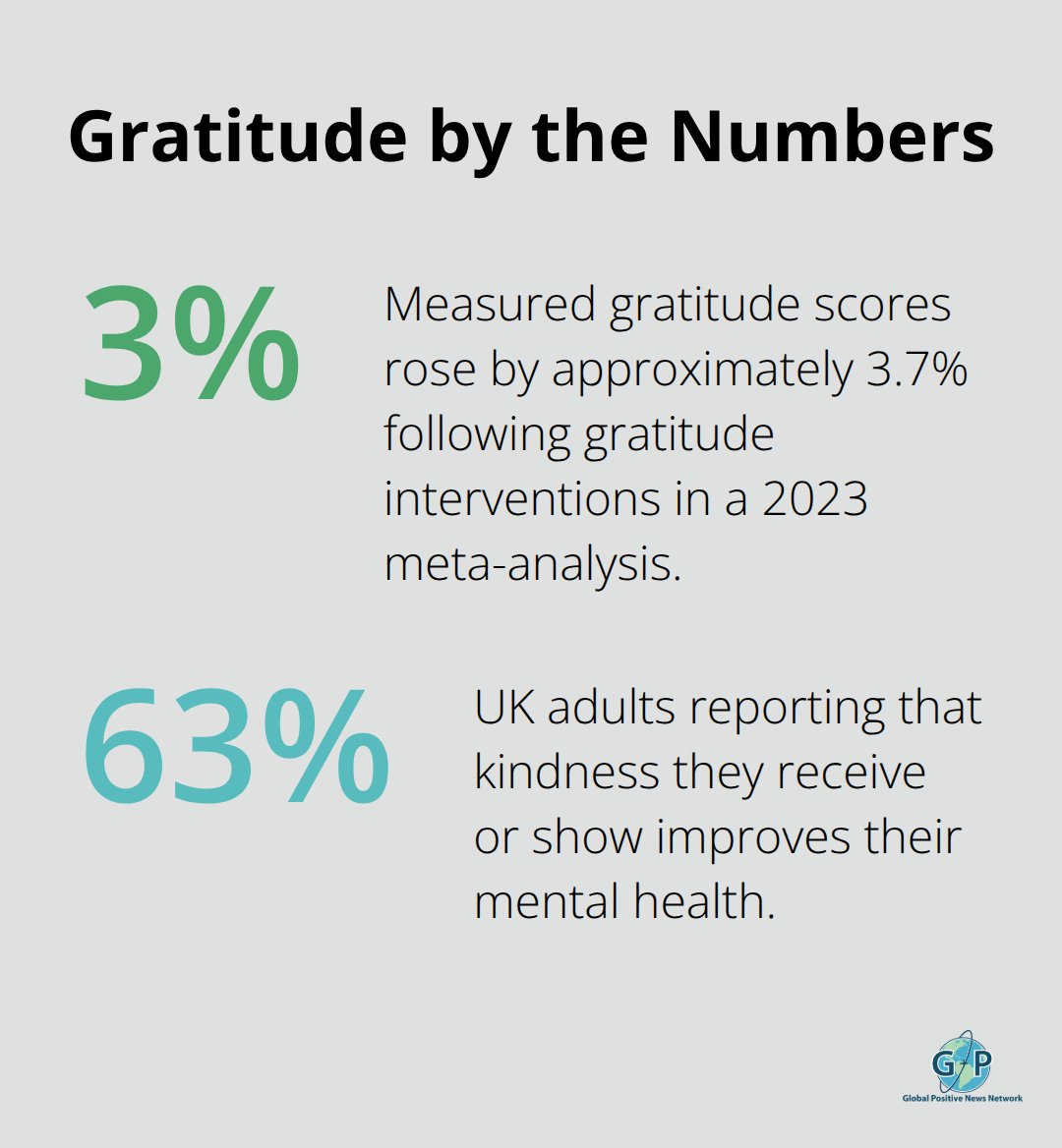
Research from Sonja Lyubomirsky shows that weekly gratitude journaling produces measurable happiness increases, though consistency matters more than intensity. Apps like Feed Your Happy or Gratitude Journal reduce friction by replacing the blank page problem, sending you a notification at the same time each evening so the habit builds automatically. The 2023 meta-analysis found that gratitude interventions across 64 randomized trials increased satisfaction with life by 0.48 points on standardized scales, with mental health improving by 0.29 points. These numbers seem small until you realize they represent clinically meaningful changes without medication or therapy costs.
If writing feels forced after two weeks, switch to speaking your gratitude aloud or contemplating each item for thirty seconds instead. Lyubomirsky’s research shows that varying your method prevents the practice from becoming rote, which kills the emotional impact that makes gratitude work.
Write a Letter That Transforms Your Relationships
Expressing appreciation directly to someone who matters transforms both your relationship and your wellbeing simultaneously. Write a letter to one person who significantly shaped your life, detailing exactly what they did and how it affected you. Seligman’s research found that gratitude letters enhance subjective well-being, with effects remaining strong even if you never send the letter.
The key is specificity: instead of writing that someone was supportive, describe the exact moment they helped you and what difference it made. This isn’t busywork; the specificity activates deeper neural pathways than vague appreciation. You can deliver the letter in person, mail it, or read it aloud on a meaningful occasion to amplify the impact.
Find Gratitude When Stress Narrows Your View
In challenging moments, gratitude works not by denying difficulty but by widening your attention to include what remains good alongside what’s hard. During stress, anxiety, or loss, deliberately notice one small thing that still functions or one person who still cares. This creates a neurological counterweight to the amygdala’s stress response.
The parasympathetic nervous system engages when you acknowledge these positive elements, lowering cortisol and giving your body the physiological space to think more clearly. This isn’t positive thinking that ignores real problems; it’s cognitive balance that prevents stress from narrowing your perspective into tunnel vision. These personal practices form the foundation for something larger-how your gratitude ripples outward and influences the people around you.
How Your Community Shifts When Gratitude Becomes Visible
Gratitude practiced alone stays personal. Gratitude practiced visibly transforms how people around you behave and what they believe matters. When you shift from private appreciation to public kindness, you create permission structures that make others feel safe expressing appreciation too. This isn’t manipulation; it’s social proof operating in the direction of generosity instead of consumption. About 63% of UK adults report that kindness from others and kindness they show themselves improves their mental health, according to the Mental Health Foundation. That statistic exists because kindness spreads through visibility.
Start With One Concrete Act in Your Circle
Call a neighbor you’ve been meaning to check on, send a handwritten thank-you note to someone at work, or help a colleague learn new software. These acts cost almost nothing but signal to everyone watching that appreciation matters enough to act on. Volunteering amplifies this effect because it concentrates kindness in one place.
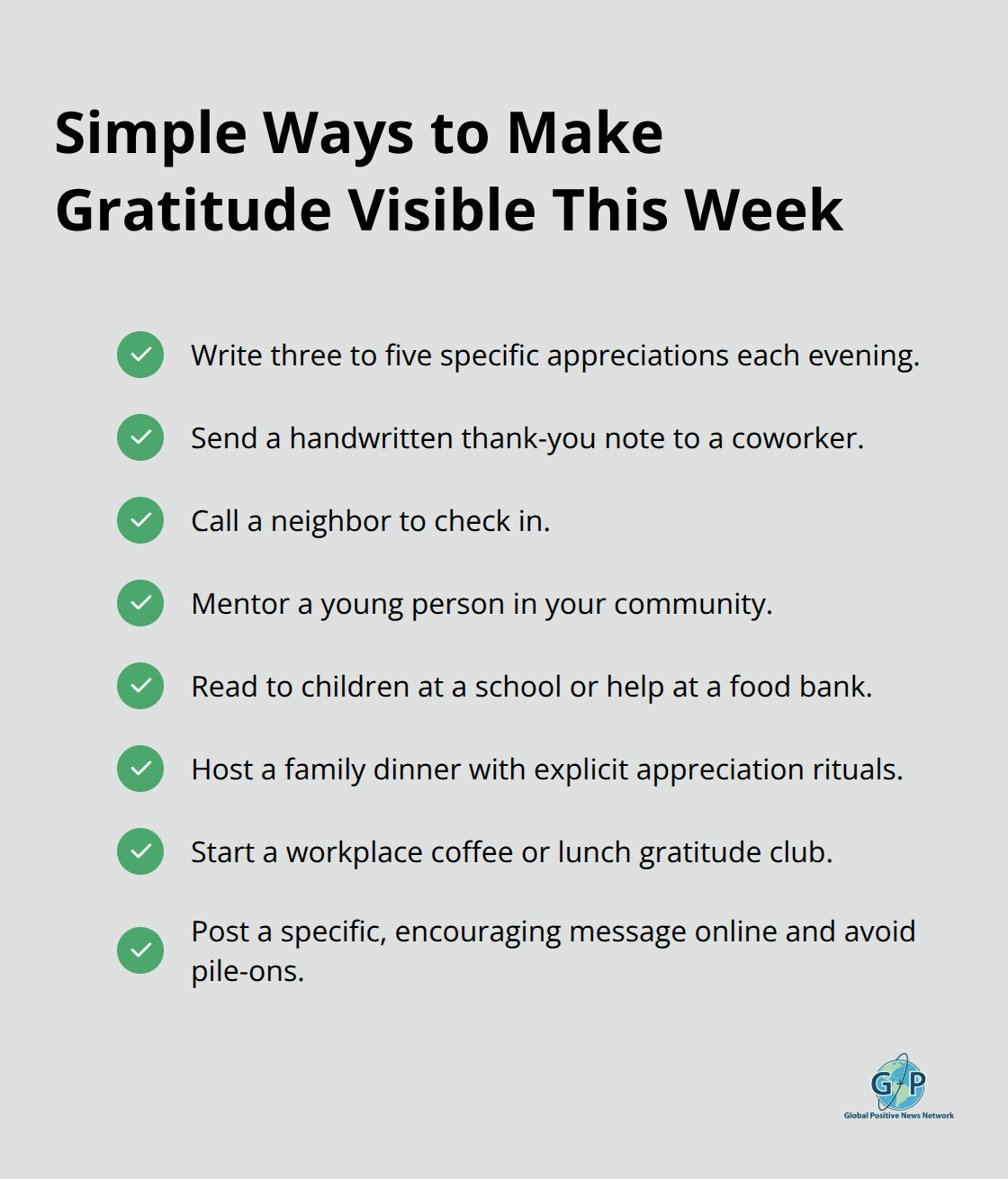
Mentor a young person, read to children at a local school, or help at a food bank to ground your gratitude in real-world impact where you see the direct result of your effort. Research shows volunteering boosts self-esteem and strengthens social connection across different ages. When others see you volunteering, they experience what researchers call the ripple effect: your visible kindness encourages them to pay kindness forward, spreading positivity beyond your immediate circle.
Where Shared Appreciation Actually Happens
Dinner tables remain one of the most underused spaces for building community gratitude. Anne K. Fishel’s research in Home for Dinner documented that regular family meals with explicit appreciation strengthen identity and belonging. Organize monthly neighborhood dinners where people share one specific thing they appreciated about someone else that month. This works because structure removes the awkwardness; people know exactly what to do and say. At work, establish a coffee or lunch club where colleagues intentionally learn about new staff members and offer listening ears to those struggling. These spaces function as gratitude containers where appreciation becomes normalized rather than exceptional. On social media, take deliberate time to reconnect with people rather than passively scroll, post encouraging messages that validate others’ specific struggles, and actively avoid pile-ons that normalize cruelty. Your example teaches people that online spaces can function as appreciation networks instead of judgment platforms.
Why Small Acts Compound Into Cultural Change
Simple acts of kindness can contribute to boosting your mood, reducing stress, and possibly alleviating symptoms of depression or anxiety. These acts seem trivial individually but operate like compound interest for social trust. When enough people in a neighborhood greet each other and acknowledge small kindnesses, the entire culture changes from anonymous to connected. Organize a local environmental project or fundraising activity that lets people contribute their specific skills rather than generic volunteering. Someone skilled with technology can help neighbors with software problems. Someone who cooks well can prepare meals for families managing illness. Someone who gardens can teach children how food grows. This approach respects people’s actual abilities rather than forcing everyone into identical volunteer roles, which increases participation and makes the work feel genuinely helpful rather than performative.
Final Thoughts
The gratitude positivity tips you’ve learned throughout this guide work because they operate at three levels simultaneously: rewiring your brain, strengthening your relationships, and shifting the culture around you. These changes happen through systems simple enough to sustain and visible enough to influence others. Start this week with one practice-the evening journaling habit, a single gratitude letter, or one neighborhood dinner where appreciation becomes the focus.
The 2023 meta-analysis of 64 randomized trials showed that gratitude interventions reduce anxiety by 1.63 points and depression by 1.86 points on clinical scales, which represents measurable change without medication. Your brain will begin rewiring within days of consistent practice, your relationships will deepen as people feel genuinely valued, and your community will notice that you’ve made appreciation visible and normal. The ripple effect starts small: one person expresses gratitude to a colleague, that colleague feels valued and extends kindness to someone else, a family dinner includes specific appreciation for each member, and strangers become neighbors.
This isn’t abstract theory-it’s how cultures shift from transactional to relational, from isolated to connected, from focused on what’s missing to grounded in what remains. Your gratitude practice becomes everyone’s permission to practice gratitude, and your visible kindness becomes everyone’s invitation to be kind. Visit Global Positive News Network to explore more stories of personal triumphs and community impact that reinforce what you’re building in your own life.
Having a hard day?
The 2 Minute Hope Reset is a short free guide with three small practices for the days that feel heavy. Two minutes each, nothing to keep up with.
Get the free guideExplore more positive news:
Enjoying stories like this?
Global Positive News Network is reader-supported. If you’d like to support the mission, you can visit the Official GPNN store.