
Your mindset shapes how you experience each day. At Global Positive News Network, we believe that daily positivity mindset tips aren’t luxuries-they’re practical tools that rewire how you respond to life.
The habits you build today become the lens through which you see tomorrow. Small, consistent practices create lasting shifts in your outlook.
How to Start Your Morning Right
The First Hour Sets Your Mental Trajectory
Your first hour after waking determines your mental trajectory for the entire day. Research from the University of California shows that morning routines establish neural pathways that influence emotional regulation throughout waking hours. This means the choices you make before breakfast matter far more than most people realize.
Practice Gratitude Before You Check Your Phone
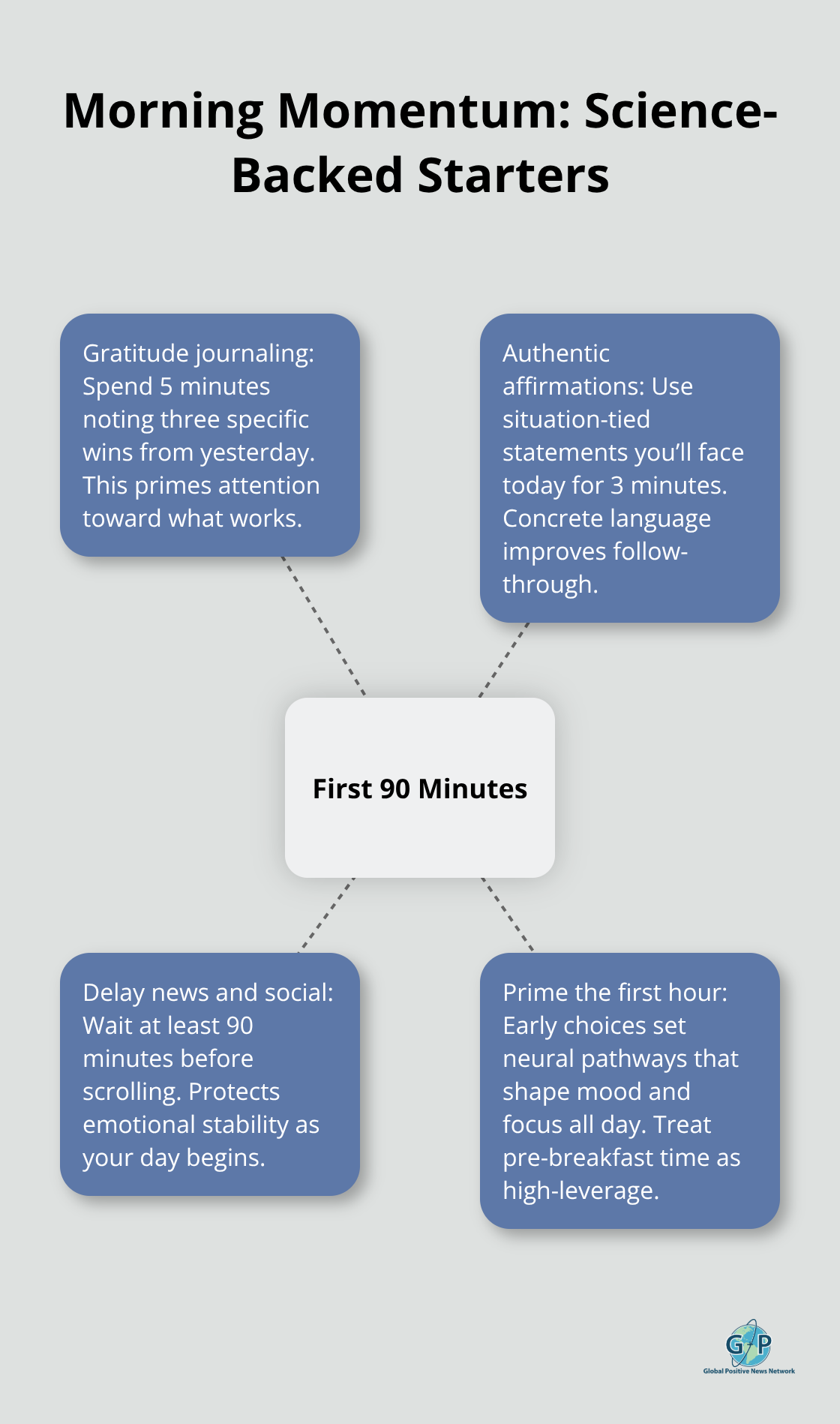
Start by spending five minutes on gratitude journaling before checking your phone. Write down three specific things that went well yesterday, no matter how small. This isn’t about ignoring problems; it’s about training your brain to notice what actually works.
Studies on positive psychology show that this practice supports mental health and shifts your baseline emotional state toward resilience. Your nervous system responds to this intentional focus, and the effect compounds over weeks and months of consistent practice.
Use Affirmations Tied to Real Situations
Spend three minutes on affirmations that feel authentic to you. Instead of generic statements, use affirmations tied to real situations you’ll face today. If you have a difficult meeting scheduled, your affirmation might be: “I can handle challenging conversations with calm and clarity.” If you’re working on a project, try: “I solve problems creatively when I stay focused.”
The specificity matters because your brain responds to concrete language rather than abstract positivity. Your mind activates differently when you anchor affirmations to actual events in your day.
Delay News and Social Media for 90 Minutes
Finally, wait at least 90 minutes before engaging with news and social media. The average person scrolls for 3 hours and 43 minutes daily (according to DataReportal), and morning scrolling floods your system with information overload before you’ve built emotional stability.
Those 90 minutes protect your mental space and let your optimism establish itself before external noise arrives. Once you’ve anchored your mind in gratitude and intention, you’re ready to move forward with strategies that maintain this momentum throughout your day.
How to Redirect Your Thoughts When Negativity Strikes
Interrupt Negative Patterns Immediately
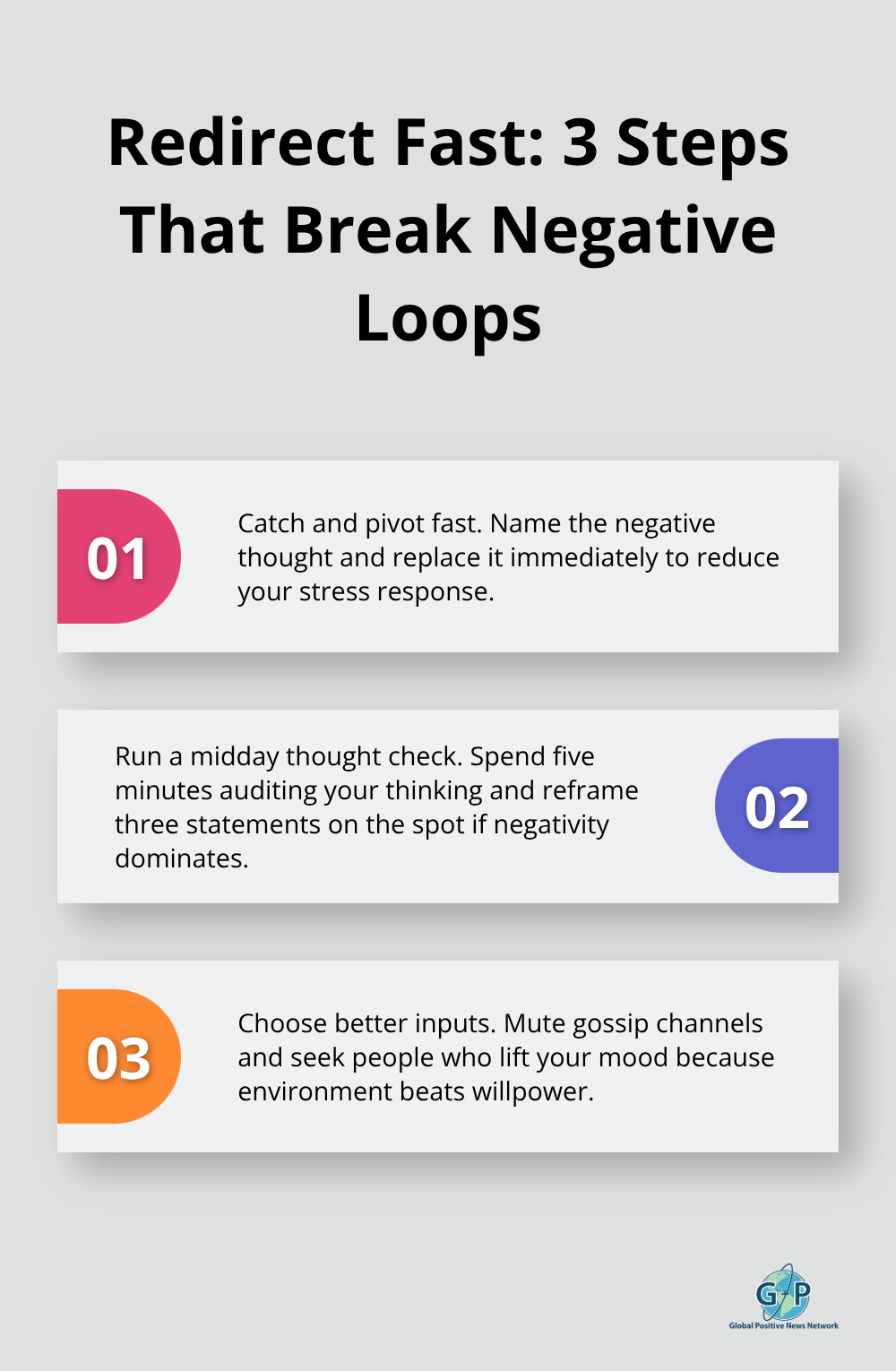
The moment negative thoughts arrive is the moment you have power. Most people wait for negativity to pass on its own, which means spending hours stuck in unproductive mental loops. Instead, interrupt the pattern immediately by reframing negative self-talk. When you catch yourself thinking “I can’t do this,” shift to “I can do this if I focus and commit to it.” When you think “It’s too complicated,” replace it with “I’ll tackle it from a different angle.” Research shows that this practice reduces your stress response and activates problem-solving regions of your brain rather than panic centers.
The key is speed-the faster you catch negative self-talk, the less damage it does to your emotional state. Set a phone reminder for midday to check your thoughts for five minutes. If most of your thinking leans negative, deliberately reframe three statements before continuing your day. This isn’t about toxic positivity that ignores real problems; it’s about choosing productive responses instead of spiral responses.
Choose Your Social Environment Strategically
Your social environment shapes your thoughts more than willpower alone ever will. Spend your breaks with people and communities that actually lift your mood rather than drain it, and create distance from those who don’t. If your workplace has a group chat that’s primarily complaints and gossip, mute notifications and join a different conversation instead.
Seek out online communities or local groups focused on shared interests or growth-whether that’s hiking clubs, professional networks, or hobby groups. These spaces provide the uplifting influence your mind needs to maintain optimism when challenges arrive.
Take Breaks That Restore Your Energy
During your workday, take regular breaks where you step away from screens and do something you actually enjoy for ten to fifteen minutes. Walk outside, call someone who makes you laugh, read something unrelated to work, or listen to music that lifts your energy. These aren’t luxuries; they’re maintenance for your mental resilience.
When you return to your tasks, you bring a clearer mind and stronger emotional foundation. This consistent practice of interrupting negativity, choosing supportive people, and protecting your mental space through breaks creates the conditions for your next challenge: building small habits that compound into lasting perspective shifts.
Habits That Compound Into Lasting Change
Track Positive Moments to Rewire Your Attention
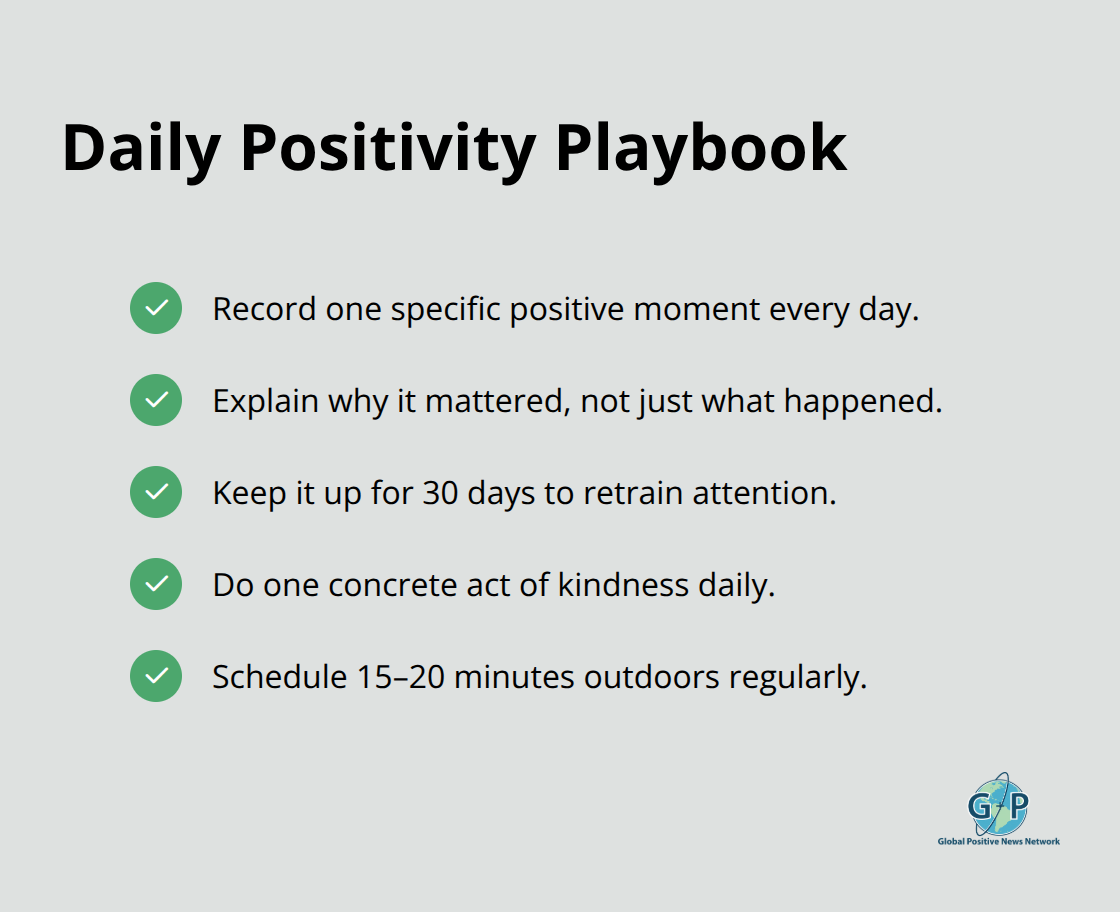
The gap between knowing what works and actually building it into your life is where most people stall. Small, specific habits matter far more than occasional bursts of motivation. A simple document or notebook where you record one specific good moment each day forces your brain to actively notice what’s working instead of defaulting to negativity bias. Research shows that negative events feel far more impactful than positive ones, which means you must actively counteract this tendency.
Write down why each moment mattered, not just what happened. This isn’t about forcing happiness; it’s about training your attention to spot what’s actually occurring around you. After thirty days of this practice, your baseline emotional state shifts measurably because your brain physically rewires through repetition.
Practice Daily Kindness to Break Self-Critical Loops
Acts of kindness operate differently than other habits because they create immediate emotional feedback for both you and the recipient. When you perform a specific act of kindness daily, your sense of purpose strengthens. These don’t have to be grand gestures-buying coffee for the person behind you in line, sending a genuine compliment to a colleague, or helping someone carry groceries takes five minutes but triggers real neurological changes.
People who practice kindness report higher life satisfaction and lower anxiety levels. The mechanism works because kindness pulls your focus outward, breaking the loop of self-critical thinking that maintains negativity.
Spend Time Outdoors to Regulate Your Nervous System
Exposure to natural light regulates your circadian rhythm, which directly controls your mood, sleep quality, and stress resilience. The Journal of Environmental Psychology reports that fifteen to twenty minutes in nature reduces stress hormones and increases attention span for hours afterward. This means a midday walk outside isn’t a break from productivity; it’s an investment that makes your afternoon work sharper and your evening mood steadier.
Make it specific rather than vague. Instead of planning to go outside sometime, schedule a fifteen-minute walk at 12:30 PM on weekdays or a thirty-minute park visit on Saturday mornings. Consistency matters more than duration because your nervous system responds to predictable exposure to natural environments (and this predictability itself becomes stabilizing for your mood and focus).
Final Thoughts
The practices you’ve learned throughout this guide work because they’re built on how your brain actually functions, not on wishful thinking. Gratitude rewires your attention, affirmations anchor your responses to real situations, and reframing interrupts negative loops before they compound. Kindness breaks self-critical patterns while nature regulates your nervous system, and when you stack these daily positivity mindset tips together over weeks and months, your baseline emotional state shifts measurably.
Consistency matters far more than intensity. A five-minute gratitude practice every morning beats occasional motivation, and a fifteen-minute walk three times weekly outperforms sporadic outdoor time. One act of kindness daily creates more lasting change than random bursts of generosity because your brain responds to predictable repetition and builds neural pathways that become automatic.
Start with one habit this week-not all of them. Pick the single practice that feels most doable for your current life and commit to it for thirty days before adding another (if mornings work best for you, begin with gratitude journaling; if afternoons drain your energy, schedule outdoor time). At Global Positive News Network, we curate stories of personal triumphs and community impact specifically to help you maintain an optimistic outlook when challenges arrive.
Having a hard day?
The 2 Minute Hope Reset is a short free guide with three small practices for the days that feel heavy. Two minutes each, nothing to keep up with.
Get the free guideExplore more positive news:
Enjoying stories like this?
Global Positive News Network is reader-supported. If you’d like to support the mission, you can visit the Official GPNN store.