

Leadership shapes everything-from how teams perform to whether people actually want to show up to work. We at Global Positive News Network believe positive leadership examples matter more than ever, especially when workplaces feel fractured and burned out.
This post shows you exactly how real leaders build trust, inspire growth, and create lasting change. You’ll find concrete strategies you can use starting today.
Leadership Qualities That Make a Difference
Authenticity Separates Real Leaders From Title Holders
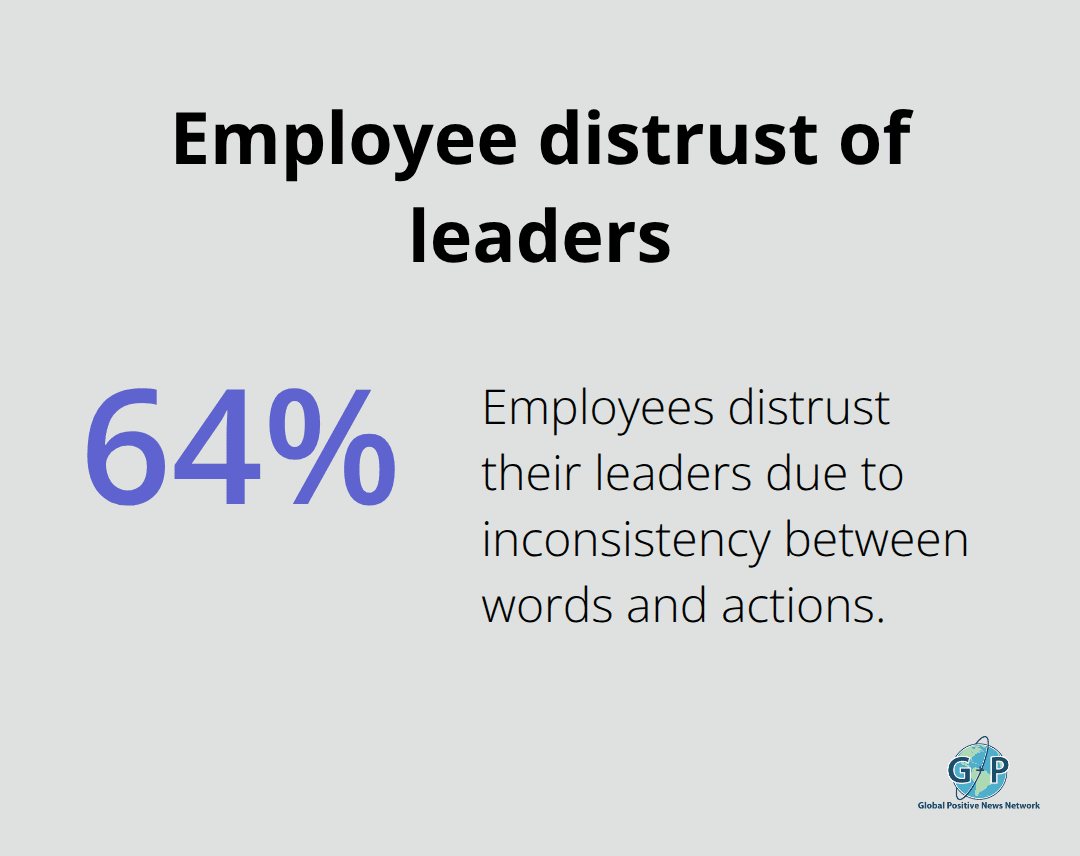
Authenticity separates leaders who build lasting trust from those who merely hold titles. When leaders make decisions, they need to explain their reasoning openly, not hide behind corporate speak or deflect blame. A study from the Harvard Kennedy School found that 64% of employees distrust their leaders, and the primary reason is inconsistency between what leaders say and what they do. The fix is straightforward: tell your team what you decided, why you decided it, and what trade-offs you made.
If a decision affects revenue or headcount, walk through the numbers. If it contradicts something you said last quarter, acknowledge it and explain what changed. Leadership transparency and trust doesn’t weaken authority-it strengthens it. Teams move faster when they understand the actual constraints their leaders face, not sanitized versions of reality.
Empathy Requires Action, Not Just Listening
Empathy without action is just performance. Real leaders listen to their teams’ concerns and then change something because of what they heard. When leaders only listen and nod, employees feel unseen and eventually stop speaking up. The Center for Creative Leadership emphasizes that compassion requires acting on what you learn from others’ concerns, not just listening passively.
This means if your team says they’re overwhelmed, you cut scope or hire help. If they say they don’t understand how their work connects to company goals, you redesign how you communicate priorities. Active listening is the starting point, but your behavior proves whether you actually cared.
Vision Connects Tomorrow’s Goals to Today’s Work
Vision matters, but only if it connects to daily work. Leaders who inspire others don’t talk about abstract futures-they show how today’s tasks build toward something meaningful. You need to articulate what success looks like in concrete terms, tie individual roles to that outcome, and revisit it regularly.
Teams with clear vision alignment show higher engagement and performance, because people understand what they’re working toward and why it matters. This alignment transforms how your team approaches each day and shapes the leaders you’ll develop next. When you combine movement, mental challenge, and social connection intentionally, you strengthen the foundation for sustained engagement and growth within your organization.
Leaders Who Walk Their Values
Consistency Proves What Leaders Actually Believe
Positive leadership isn’t performance-it’s consistency over time. The best leaders in tech, social impact, and business don’t just talk about values; they structure their companies around them and prove it through decisions that cost money. Yvon Chouinard converted Patagonia to a benefit corporation and transferred 100% of the company’s voting stock to the Patagonia Purpose Trust, created to protect the company’s values. This wasn’t a marketing move; it locked the company’s values into its structure permanently.
Wellbeing-First Companies Outperform the Competition
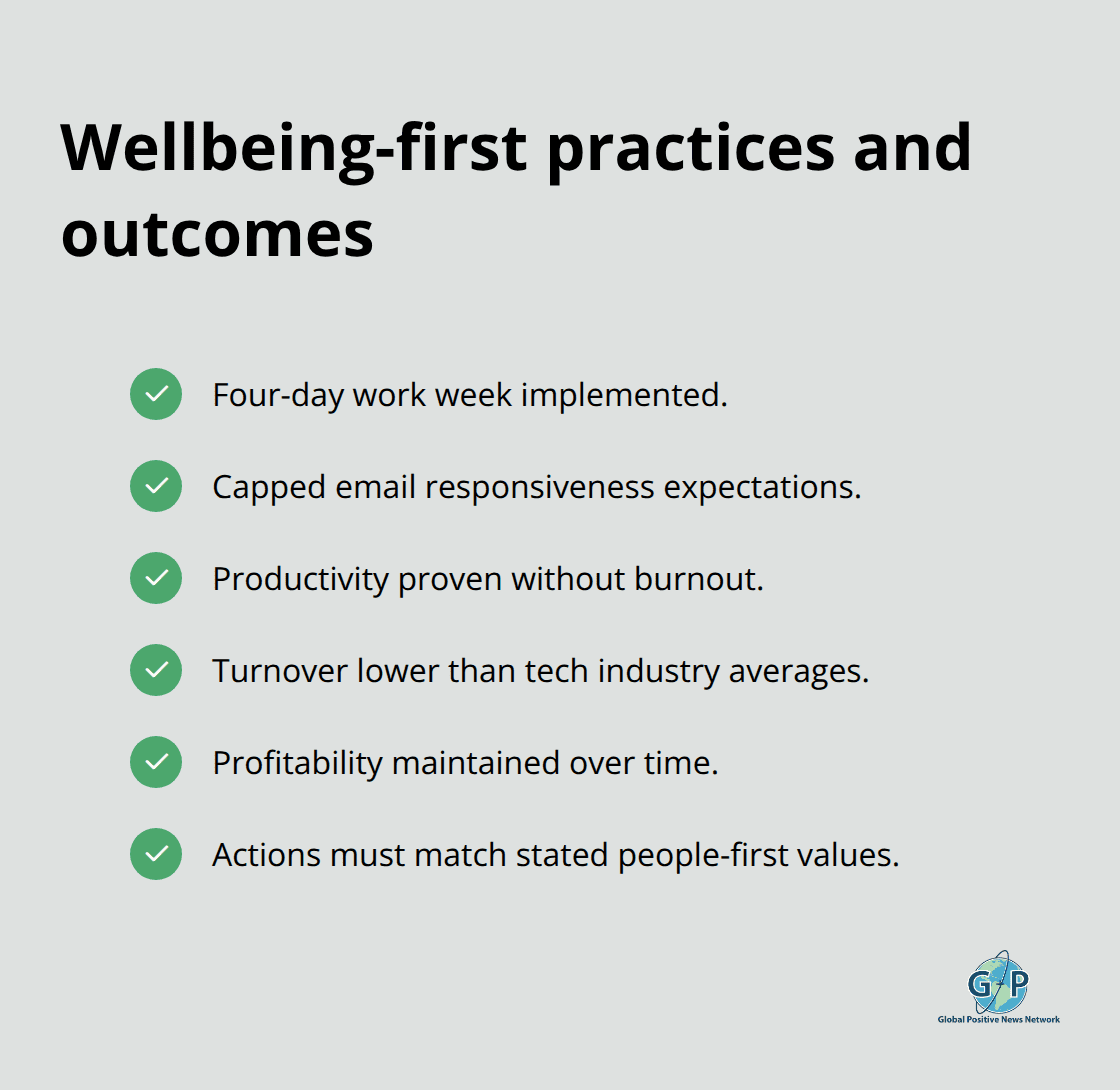
Tech companies like Basecamp have radically restructured work around employee wellbeing. They implemented a four-day work week and capped email responsiveness expectations, proving that productivity doesn’t require burnout. Their annual turnover is significantly lower than tech industry averages, and they’ve maintained profitability while doing it. The practical lesson is sharp: if you claim to value people but schedule back-to-back meetings, demand constant availability, or promote based on face time, your team knows you’re lying.
Accountability Through Public Measurement
Real leaders in sustainable business measure impact and report it publicly, making themselves accountable. Unilever’s Sustainable Living Plan commits to reducing environmental footprint across operations, and they publish results annually, including failures. This transparency builds credibility because teams see actual trade-offs being made, not empty promises. When you lead with values, start by identifying one specific behavior you’ll change this month that contradicts what you claim to believe. Then measure it and share the results with your team.
Values Transform Into Action
Communities change when leaders stop treating values as slogans and start treating them as constraints on how business gets done. The leaders who inspire lasting followership aren’t the ones who sound good in speeches-they’re the ones whose decisions prove what they actually prioritize when pressure rises. This foundation of authentic leadership sets the stage for how you’ll create positive work vibes with your team and develop the next generation of leaders in your organization.
How to Actually Walk Your Values Every Day
The Gap Between Words and Rewards Reveals Everything
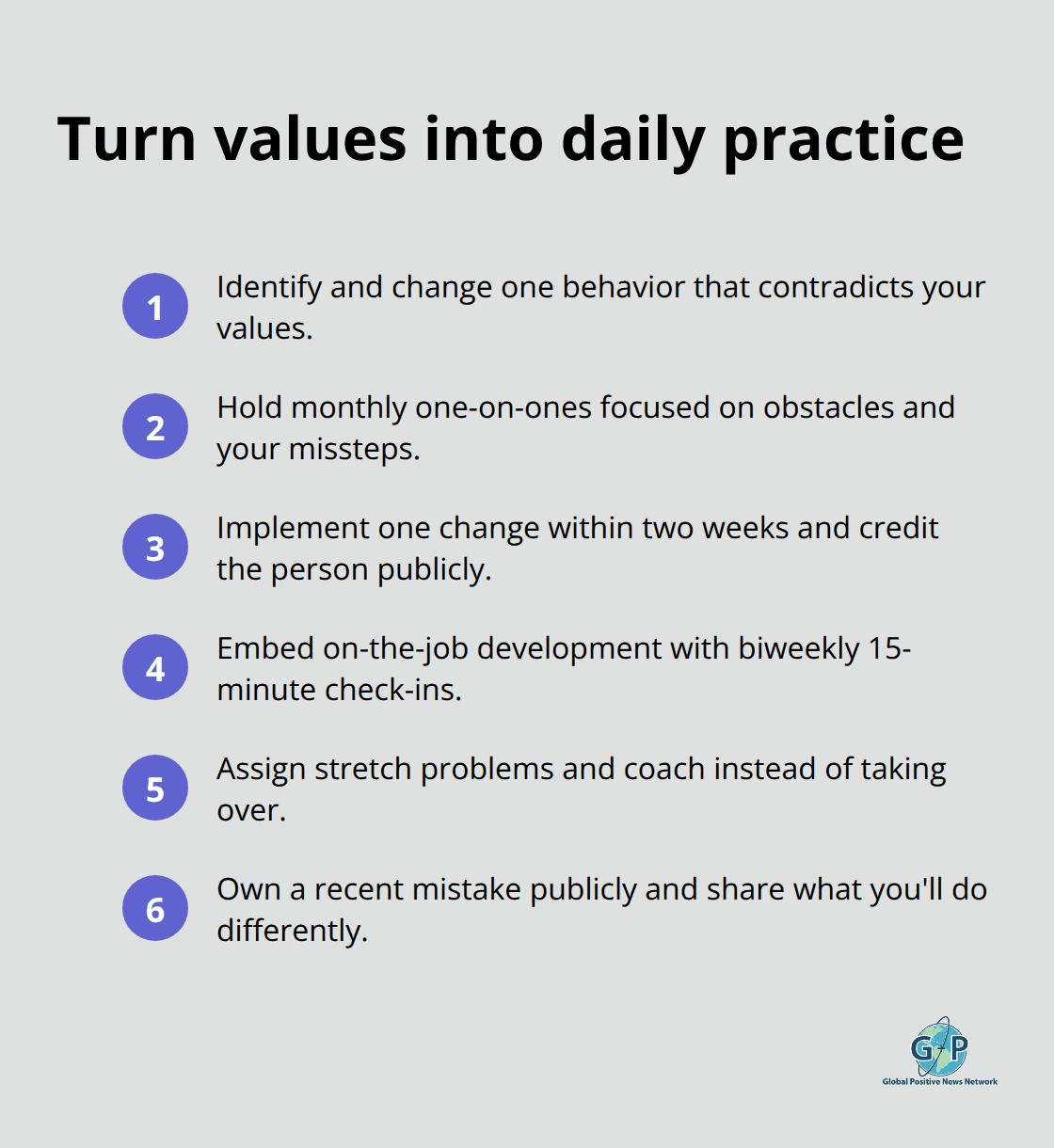
Talk is free, but decisions cost money. If you claim to value work-life balance but promote the person who answers emails at midnight, your team knows which value actually matters. Start this week by identifying one specific behavior that contradicts your stated values, then change it visibly. Tell your team what you noticed and what you’re doing differently. This single act of accountability builds more trust than a year of mission statements.
Create Conditions Where People Actually Speak Up
Open communication requires structural changes, not just tone. Gallup research shows that engaged employees drive stronger business outcomes across every industry. Schedule monthly one-on-ones with direct reports where you explicitly ask what you’re doing wrong and what’s blocking their work. Don’t defend yourself or explain why they’re mistaken-write down what they say and implement one change based on their feedback within two weeks. Share what you changed and credit them by name in front of the team. This proves that speaking up leads to action, not punishment.
Embed Development Into Daily Work
Development isn’t a program you run once a year-it’s a discipline embedded into how work happens daily. On-the-job learning is the best way people learn and grow. When your team faces a hard problem, assign it to someone slightly below the skill level needed, then coach them through it instead of solving it yourself. You build capability while getting work done. Create a specific development goal with each person that connects to their career direction, then spend 15 minutes every other week reviewing progress. Ask what obstacles they’re hitting and what they need from you. If someone wants to move into a different role, actively help them build that skill by giving them small projects in that domain.
Own Your Mistakes Publicly
When you own your mistakes publicly, you give permission for your team to take risks without hiding failures. Don’t wait for mistakes to become crises before acknowledging them. In your next team meeting, describe a recent decision you made poorly, what you learned, and how you’ll approach similar situations differently. This behavior signals that mistakes are data, not character flaws. Leaders who never admit error teach their teams to hide problems until they explode. Leaders who own mistakes teach their teams to surface problems early (when they’re still fixable) and move forward faster.
Final Thoughts
Positive leadership examples reveal one consistent truth: leaders who build trust and inspire growth align their actions with their words every single day. This alignment requires discipline, but it transforms how your organization performs. You communicate openly about decisions and trade-offs, listen to your team and act on what you hear, connect daily work to meaningful outcomes, and own your mistakes publicly.
The impact compounds over time because teams move faster when they understand actual constraints instead of guessing at hidden agendas. When you embed development into daily work rather than treating it as an annual program, people build real capability and stay longer. When you promote based on values alignment instead of face time, you attract people who actually care about the work, and these structural changes shift organizational performance far more than soft skills ever could.
Start this week by identifying one specific behavior that contradicts what you claim to believe, then change it visibly and tell your team what you noticed. Schedule a one-on-one where you ask what you’re doing wrong, implement one change based on their feedback within two weeks, assign a hard problem to someone slightly below the skill level needed and coach them through it, and own a recent mistake publicly in your next team meeting. We at Global Positive News Network believe that positive leadership examples matter because they show what’s actually possible when leaders stop holding titles and start building followership.
Having a hard day?
The 2 Minute Hope Reset is a short free guide with three small practices for the days that feel heavy. Two minutes each, nothing to keep up with.
Get the free guideExplore more positive news:
Enjoying stories like this?
Global Positive News Network is reader-supported. If you’d like to support the mission, you can visit the Official GPNN store.