
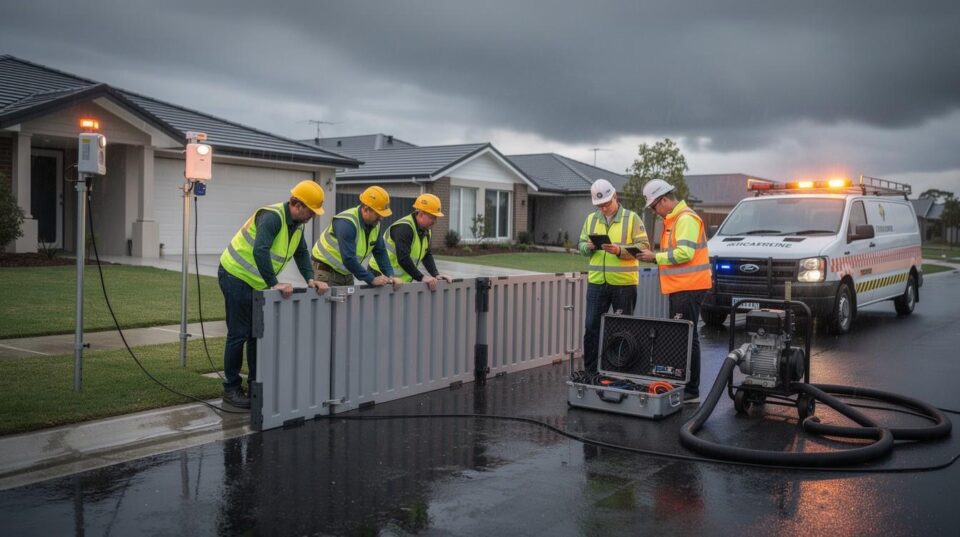
Every year, storms and disasters claim thousands of lives and displace millions of people worldwide. Yet communities equipped with the right tools and knowledge can dramatically reduce these losses.
At Global Positive News Network, we’re highlighting the disaster resilience innovations that are transforming how societies prepare for and respond to natural disasters. From early warning systems to resilient infrastructure, real solutions are already saving lives.
Early Warning Systems That Actually Work
Real-Time Monitoring Networks Save Lives
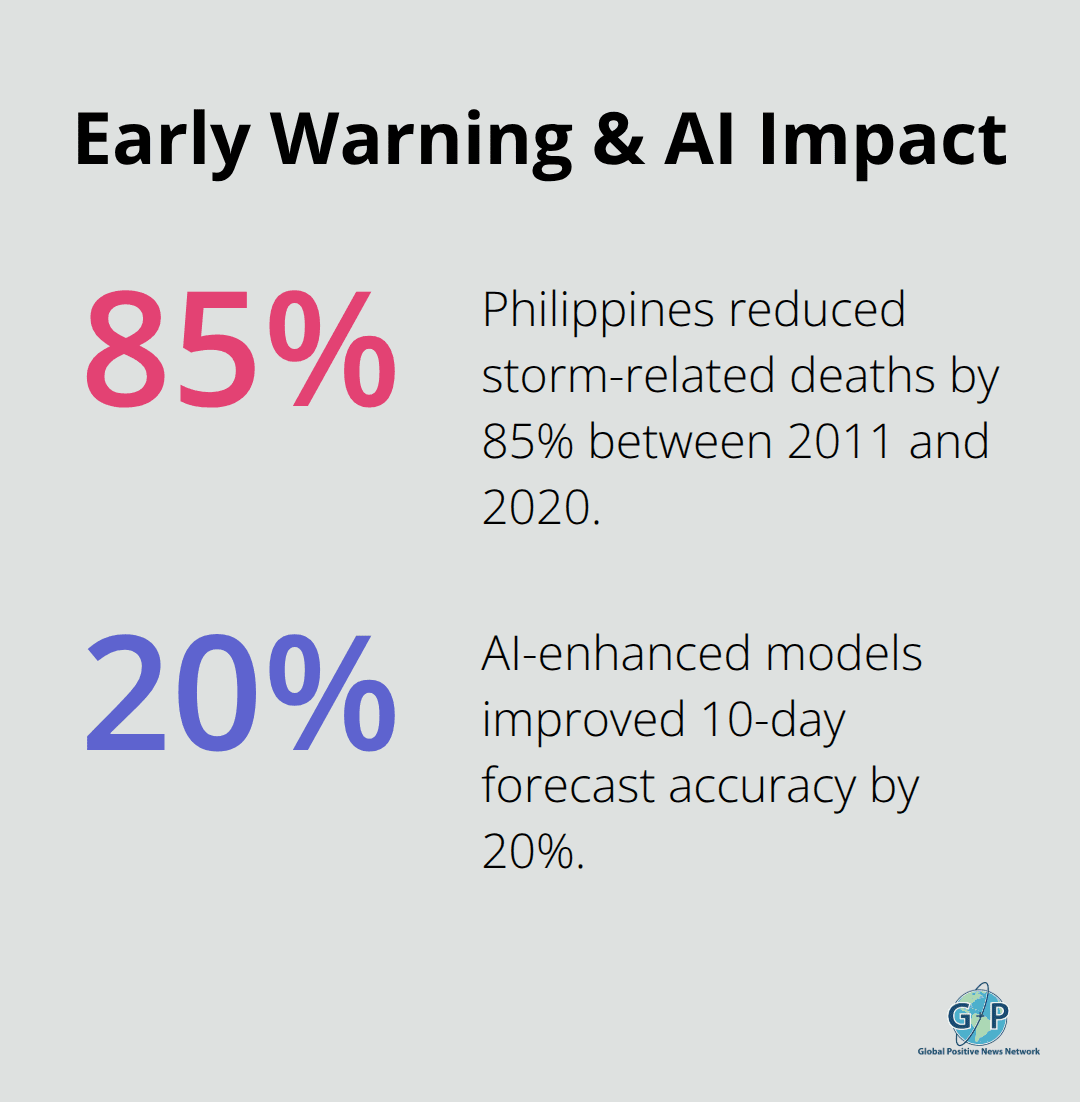
Real-time monitoring networks form the backbone of effective disaster response. The Philippines installed a nationwide early warning system that reduced storm-related deaths by 85% between 2011 and 2020. These systems combine satellite imagery, ground sensors, and oceanographic data to detect dangerous weather patterns hours or days before impact. Countries like Japan and the Netherlands have invested heavily in this approach-Japan’s earthquake early warning system now reaches mobile phones within seconds of seismic activity. Communities that activate these systems gain actionable time to evacuate, secure property, and move vulnerable populations to safety.
AI Models Predict Storm Behavior with Greater Accuracy
Artificial intelligence has transformed how meteorologists predict storm behavior and intensity. Modern AI models analyze historical weather patterns, ocean temperatures, and atmospheric pressure changes to forecast storm paths with significantly higher accuracy than traditional methods. The European Centre for Medium-Range Weather Forecasts reported that AI-enhanced models improved 10-day forecast accuracy by 20% in recent years. Emergency managers use these predictions to pre-position resources, activate shelters, and coordinate evacuations with precision rather than guesswork.
Mobile Alerts Reach Communities Instantly
Mobile alert systems amplify the advantage of AI-powered forecasting. Over 90% of people in developed nations now receive emergency alerts on their smartphones, and countries like South Korea have expanded these systems to include outdoor speakers and sirens that activate only for verified threats. This targeted approach prevents alert fatigue while ensuring that critical warnings reach those in danger. Communities that combine AI-powered forecasting with mobile alert infrastructure see dramatic improvements in evacuation rates and survival outcomes (making the investment in these technologies a straightforward calculation of lives saved per dollar spent).
The convergence of these three technologies-real-time monitoring, AI prediction, and mobile alerts-creates a foundation for disaster preparedness. Yet technology alone cannot protect communities. The infrastructure that communities build and the training they receive determine whether early warnings translate into actual survival.
Building Structures That Withstand Disasters
Resilient Design Saves Lives
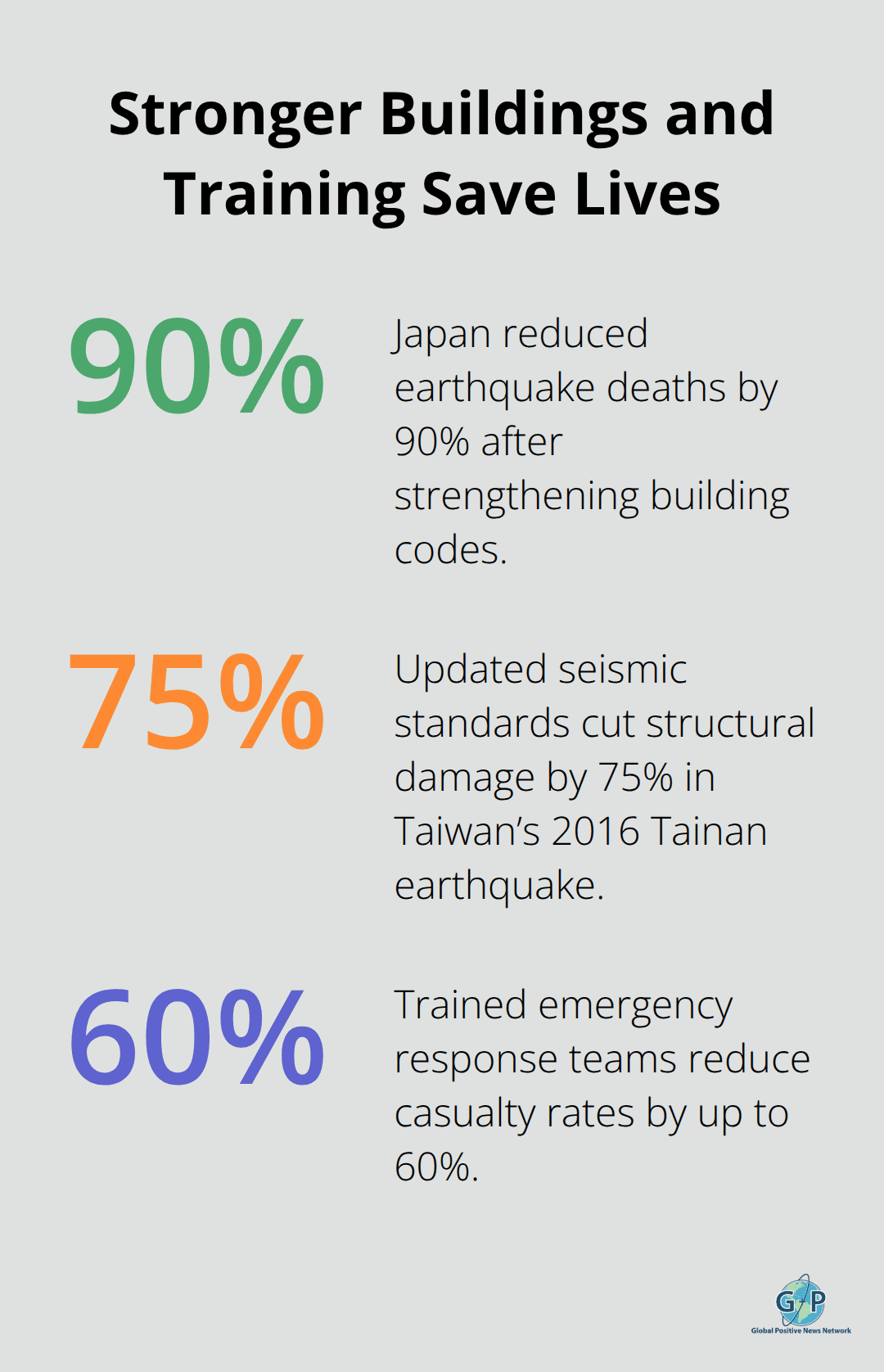
Early warning systems give communities time to react, but that time means nothing without buildings designed to survive what’s coming. Resilient infrastructure separates communities where people walk away from disasters and communities where disasters claim lives. Countries taking this seriously have seen measurable results. After Japan strengthened building codes in 1981 to withstand earthquakes, deaths from seismic events dropped by 90% over the following decades despite the country sitting on one of Earth’s most active fault lines. The cost of retrofitting existing structures and enforcing stricter codes for new construction runs high, but it costs far less than rebuilding after catastrophe.
Materials and Engineering Make the Difference
Materials matter enormously here. Reinforced concrete with proper steel reinforcement, flexible foundations that absorb ground movement, and aerodynamic roof designs that resist wind loads all translate to real survival rates. Taiwan’s National Center for Research on Earthquake Engineering found that buildings meeting updated seismic standards experienced 75% less structural damage during the 2016 Tainan earthquake compared to older structures in the same area. Communities must demand that local governments enforce these standards without compromise. The Philippines Building Code now requires specific wind resistance standards for typhoon zones, yet enforcement remains inconsistent in rural areas where vulnerability runs highest. This gap costs lives unnecessarily.
Training Teams That Respond Effectively
Training and preparation separate communities that respond effectively from those that panic when disaster strikes. The Red Cross reports that communities with trained emergency response teams reduce casualty rates by up to 60% during actual events. These teams need regular drills, not annual meetings. South Korea conducts quarterly earthquake evacuation drills in schools and workplaces, and residents can identify their nearest shelter within seconds. Indonesia’s community-based disaster management programs train neighborhood leaders to coordinate evacuations without waiting for central authority, cutting response times dramatically.
Education Creates Instinctive Responses
Education must start young and stay consistent. Countries incorporating disaster preparedness into school curricula from elementary through high school produce adults who instinctively know how to respond. New Zealand’s National Emergency Management Agency integrates earthquake and tsunami response into standard curriculum, resulting in children who teach their own families proper procedures. Communities that skip this investment face chaos when seconds count.
Protecting Vulnerable Populations
Vulnerable populations need specific attention. Elderly residents, people with disabilities, and non-native speakers require tailored communication and evacuation support that generic preparedness programs miss. Bangladesh’s cyclone preparedness program specifically trains staff at senior care facilities and disability centers, resulting in near-zero mortality among these groups during recent storms while neighboring areas saw significant losses among the same demographics. These targeted interventions reveal a critical truth: infrastructure and training alone cannot protect everyone. Communities must also align their policies and investments with the realities of who lives among them and what support they actually need.
Investment and Policy Frameworks
Government Funding Remains Critically Underfunded
Governments across the world chronically underfund disaster resilience despite overwhelming evidence that prevention costs far less than recovery. The World Bank estimates that every dollar invested in disaster risk reduction saves four to seven dollars in disaster losses, yet most nations allocate less than 1% of their budgets to preparedness. This gap between what we know works and what we actually fund represents a catastrophic policy failure.
Countries that break this pattern see measurable results. After the 2004 Indian Ocean tsunami, Indonesia invested heavily in early warning systems and building codes. When the 2012 Indian Ocean earthquake struck, Indonesia’s death toll dropped by 95% compared to the 2004 event, despite similar earthquake magnitude. The calculation here is straightforward: resilience investments saved thousands of lives.
Japan’s Model Demonstrates Long-Term Commitment
Japan’s earthquake preparedness budget exceeds $1 billion yearly, and the country experiences far fewer deaths per seismic event than nations with comparable seismic activity but minimal preparation spending. Governments must stop treating resilience as a luxury expense and start treating it as mandatory infrastructure investment, equivalent to roads and power grids.
Private Sector Partnerships Create Financial Incentives
Private companies increasingly recognize that disaster-resilient communities make better markets. Insurance companies now offer premium discounts to communities with proven early warning systems and building code enforcement, creating financial incentives for resilience investment. Swiss Re and Munich Re, two of the world’s largest reinsurance firms, have launched programs that fund resilience projects in developing nations because reducing claims directly improves their profitability.
This approach works. The Caribbean Catastrophe Risk Insurance Facility, backed by private insurers and development banks, has paid out over $300 million in claims to member countries since 2007 while simultaneously funding resilience improvements.
International Cooperation Amplifies Resources
International cooperation amplifies these efforts exponentially. The United Nations Office for Disaster Risk Reduction coordinates funding from multiple nations for cross-border resilience projects, recognizing that storms ignore political boundaries. The Southeast Asian Disaster Management Program pools resources from six nations to maintain shared early warning systems and conducts joint training exercises. This cooperation costs less per country than maintaining separate systems while improving detection accuracy through data sharing.
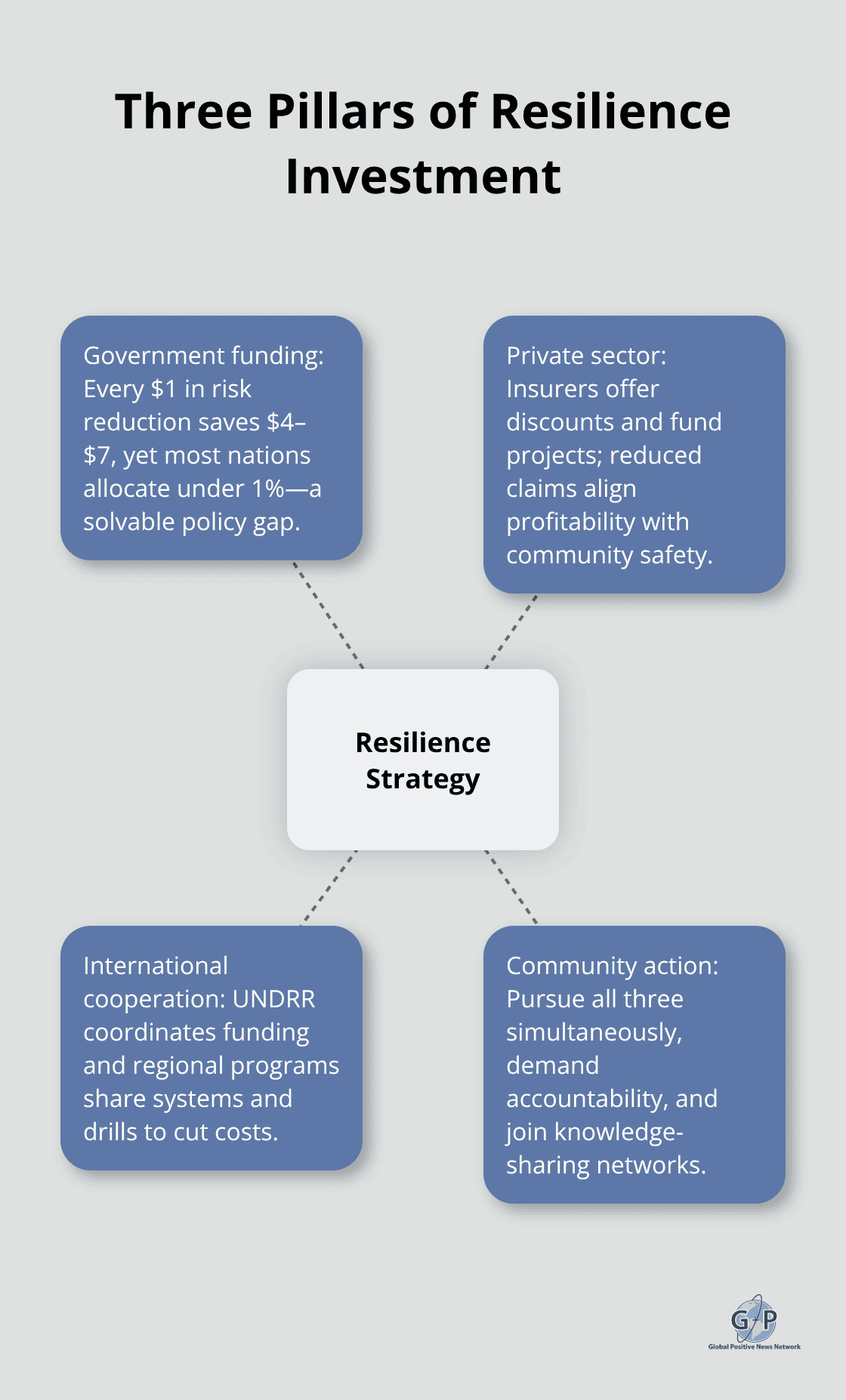
Communities waiting for perfect government funding or perfect private partnerships will wait forever. The most resilient communities pursue all three simultaneously: they demand government accountability for preparedness budgets, partner with private insurers and companies on mutually beneficial resilience projects, and participate in international knowledge-sharing networks that reduce the cost of proven solutions.
Final Thoughts
The disaster resilience innovations covered throughout this article reveal a consistent pattern: communities that invest in early warning systems, resilient infrastructure, and coordinated training dramatically reduce casualties when storms strike. The Philippines cut storm deaths by 85% through systematic early warning deployment, Japan reduced earthquake fatalities by 90% through building code enforcement, and Indonesia’s 95% reduction in deaths during the 2012 earthquake compared to 2004 demonstrates that sustained investment in preparedness works. Technology and infrastructure alone cannot protect people-communities themselves drive resilience forward.
When residents understand evacuation procedures, when neighborhood leaders coordinate response without waiting for central authority, and when vulnerable populations receive tailored support, survival rates climb sharply. Bangladesh’s targeted training for elderly care facilities and disability centers shows that specificity matters more than generic programs. The path forward requires simultaneous action across three fronts: governments must treat resilience spending as mandatory infrastructure investment rather than optional expense, private insurers and companies must continue recognizing that disaster-resilient communities represent better markets and lower claims, and international cooperation must expand to allow nations to share detection systems and proven solutions at lower cost.
Communities waiting for perfect conditions will wait forever-the most resilient societies pursue all three approaches simultaneously while demanding accountability at every level. They refuse to accept preventable deaths as inevitable and understand that disaster resilience innovations save lives only when communities actually implement them with consistency and commitment. We at Global Positive News Network believe communities deserve access to stories about what works and what saves lives.
Having a hard day?
The 2 Minute Hope Reset is a short free guide with three small practices for the days that feel heavy. Two minutes each, nothing to keep up with.
Get the free guideExplore more positive news:
Enjoying stories like this?
Global Positive News Network is reader-supported. If you’d like to support the mission, you can visit the Official GPNN store.