

Gratitude isn’t just a nice feeling-it’s a scientifically proven way to improve your mental health and strengthen your relationships. When you practice daily gratitude reminders, you’re actively rewiring your brain to focus on what’s working in your life instead of what’s broken.
At Global Positive News Network, we’ve seen firsthand how consistent thankfulness practices transform people’s stress levels and overall outlook. This guide shows you exactly how to build a gratitude habit that sticks.
Why Gratitude Rewires Your Brain and Strengthens Relationships
The Science Behind Gratitude’s Brain Changes
Research from UC Berkeley and Harvard Medical School confirms that gratitude physically rewires your neural pathways. A 2021 study published in Frontiers in Psychology found that people who practiced daily gratitude showed increased activity in the prefrontal cortex, the part of your brain responsible for decision-making and emotional regulation. Your brain literally strengthens the neural connections that support positive thinking when you consistently acknowledge what you’re thankful for.
The University of Miami discovered that participants who wrote down three things they were grateful for experienced improved sleep. This matters because chronic stress destroys your immune system, accelerates aging, and makes anxiety worse. When you practice gratitude daily, you build biological resilience against stress and anxiety.
How Gratitude Affects Your Stress Response
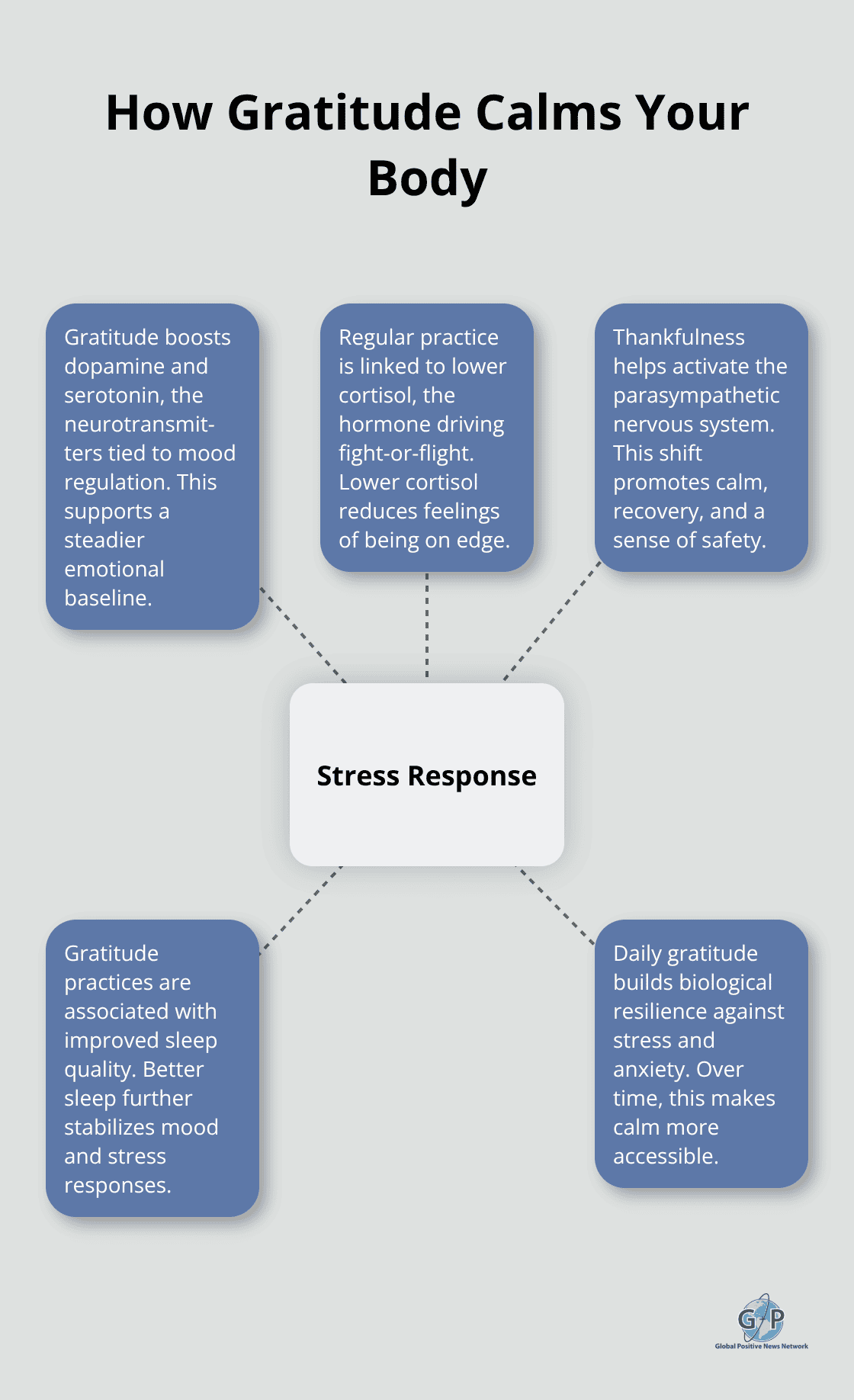
Gratitude boosts dopamine and serotonin production, the neurotransmitters responsible for mood regulation. People who maintain a regular gratitude practice show measurably lower cortisol levels (the hormone that triggers your fight-or-flight response). This biological shift happens at the cellular level, not just in your thoughts.
Your nervous system responds to thankfulness by shifting out of survival mode. Instead of staying locked in stress, your body activates the parasympathetic nervous system, which promotes calm and recovery. This physiological change makes gratitude one of the most direct ways to interrupt the stress cycle.
How Gratitude Transforms Your Relationships
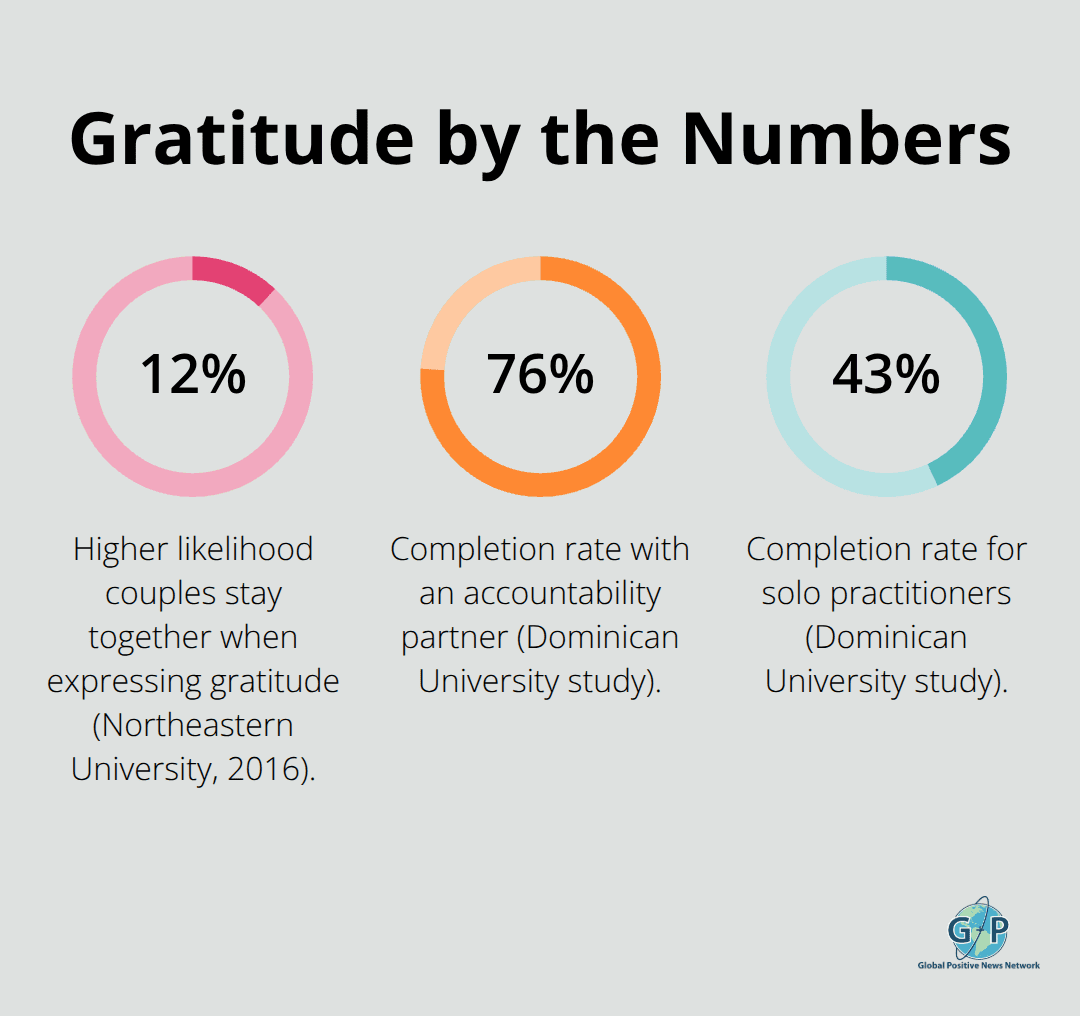
The connection between thankfulness and relationship quality is direct and measurable. A 2016 study from Northeastern University showed that couples who expressed gratitude to each other experienced significantly higher relationship satisfaction and were 12 percent more likely to stay together long-term. When you acknowledge what you appreciate about someone, you reinforce positive behaviors and build emotional safety.
People feel valued when their efforts receive recognition, which creates a cycle of mutual appreciation. This transforms how you communicate with partners, friends, and family members (instead of focusing on complaints or disappointments, you highlight what’s working). Research shows that expressing gratitude in relationships increases trust and deepens emotional intimacy far more effectively than superficial compliments.
The Power of Specific Gratitude
Generic praise creates surface-level connection, but specific gratitude creates lasting bonds. Saying you’re grateful for someone listening to you during a difficult conversation creates deeper connection than vague appreciation. The specificity activates genuine emotional recognition in both people.
This distinction matters because your brain responds differently to targeted versus general statements. When you name exactly what someone did and why it mattered, you activate stronger neural pathways associated with trust and belonging. Now that you understand how gratitude transforms your brain and relationships, the next step is learning how to actually build this practice into your daily routine.
How to Build Gratitude Into Your Daily Routine
The gap between knowing gratitude matters and actually practicing it daily is where most people fail. You need a system that fits into your existing life, not another task competing for attention. The most effective approach combines multiple touchpoints throughout your day so gratitude becomes automatic rather than forced.
Set Phone Notifications at Strategic Times
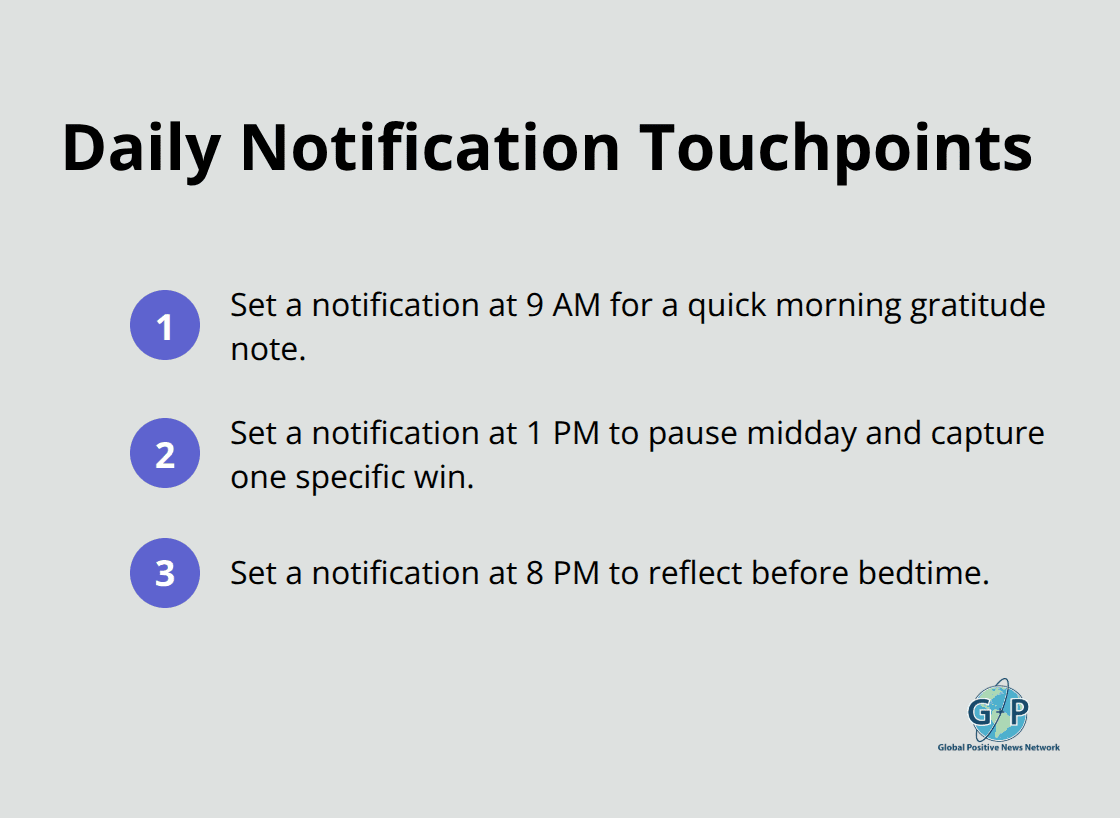
Phone notifications work best when timed to moments you already pause. Set reminders for 9 AM, 1 PM, and 8 PM-times when most people check their phones naturally. When the notification arrives, write down one specific thing you’re grateful for in your notes app or a dedicated gratitude app.
Research shows that phone notifications at consistent times support mental health benefits including reduced anxiety and improved sleep quality. The consistency matters far more than the method. Apps like Grateful, Daylio, and Reflectly send customizable notifications and store your responses so you can track patterns over time.
Choose One App and Commit to It
The key is selecting a single app and committing to it for at least 30 days before switching, since your brain needs repetition to form the habit. Journaling during these notification moments creates a permanent record that reinforces the practice. Instead of typing vague statements like “I’m grateful for family,” write specifically what happened: “I’m grateful my daughter asked me about my day without me prompting her, which made me feel seen.”
This specificity activates stronger neural pathways than generic gratitude. Try spending three to five minutes per session-longer journaling sessions actually decrease consistency because people abandon the practice when it becomes time-consuming.
Anchor Gratitude to Existing Routines
Meal times and bedtime routines offer natural anchor points for gratitude that require zero additional time. Before eating, pause for 15 seconds and mentally identify one ingredient or person involved in preparing the meal. At bedtime, spend two minutes reviewing three specific moments from your day that went well, focusing on details rather than vague positivity.
Research shows that gratitude practices reduce anxiety and depression, which are common emotional challenges affecting daily wellbeing. Bedtime gratitude improves sleep quality within one week, since you end your day with positive neural activation rather than stress-related thoughts.
These anchor-point practices require no additional apps or systems-they integrate into activities you already do. Once you establish these daily touchpoints, the next step involves selecting the right tools and resources that support your emerging gratitude habit.
Tools That Actually Work for Your Gratitude Practice
Apps That Eliminate the Friction
The difference between people who maintain a gratitude habit and those who quit comes down to friction. Apps that require multiple steps fail fast. The best tools integrate seamlessly into moments you already experience. Grateful, Daylio, and Reflectly each take different approaches, but they share one critical feature: they send timed notifications and store your entries so you can review patterns.
Grateful focuses purely on gratitude with a minimal interface that takes 60 seconds per entry. Daylio combines mood tracking with gratitude prompts, which helps you correlate thankfulness with emotional shifts throughout your month. Reflectly uses AI-generated prompts tailored to your previous entries, making each session feel personalized rather than repetitive.
Research from the University of California shows that app-based gratitude practices maintain consistency rates when users commit to 30 days, compared to journal-only approaches. This happens because notifications eliminate the mental load of remembering to practice.
Why Notifications Transform Gratitude Into Habit
Your nervous system doesn’t distinguish between motivation and habit, so removing the decision-making step transforms gratitude from willpower into automatic behavior. Pick whichever app matches your personality, but commit to one for a minimum of 90 days before evaluating whether it works. Switching apps constantly resets your habit formation clock.
Accountability Partners Amplify Your Results
Accountability partners amplify this effect significantly. Pairing with someone who shares your gratitude practice means you send each other daily gratitude entries or check in weekly about what you noticed. A study from Dominican University found that people who shared their goals with an accountability partner showed 76 percent completion rates versus 43 percent for solo practitioners.
Your brain activates social reward centers when you report progress to another person, making the practice feel meaningful rather than obligatory. Find an accountability partner through Reddit communities like r/gratitude, Facebook groups dedicated to mindfulness, or apps that connect users pursuing similar goals.
Building Connection Through Shared Practice
Meet virtually once weekly for 15 minutes to discuss what gratitude revealed about your life that week. This conversation transforms individual practice into shared growth, making consistency feel less like discipline and more like genuine connection with someone pursuing the same transformation. The weekly check-in creates external structure that supports your internal motivation (without requiring you to rely solely on willpower).
Final Thoughts
Daily gratitude reminders interrupt your brain’s default pattern of scanning for threats and problems. Gratitude isn’t motivation or positive thinking-it’s a biological shift that rewires your nervous system toward calm and connection. Research confirms that people who practice thankfulness consistently show measurable improvements in sleep, stress levels, and relationship quality within 30 days.
The transformation happens through repetition, not intensity. Phone notifications at 9 AM, 1 PM, and 8 PM create touchpoints that gradually make gratitude automatic, while journaling or apps like Grateful and Reflectly remove the friction that stops most people. An accountability partner amplifies your results by 76 percent, according to research from Dominican University, making this addition far more than an optional extra.
Start with one app and one anchor point-either a meal time or bedtime routine-and commit for 30 days before evaluating whether it works. Find an accountability partner through community groups or online forums, then meet virtually once weekly to discuss what gratitude revealed about your life. At Global Positive News Network, we believe gratitude forms the foundation for building a life aligned with what actually matters to you.
Having a hard day?
The 2 Minute Hope Reset is a short free guide with three small practices for the days that feel heavy. Two minutes each, nothing to keep up with.
Get the free guideExplore more positive news:
Enjoying stories like this?
Global Positive News Network is reader-supported. If you’d like to support the mission, you can visit the Official GPNN store.