
Hope isn’t a luxury-it’s a necessity for mental health. At Global Positive News Network, we believe daily encouragement for readers creates real change in how people face their challenges.
This post shares practical strategies, real stories, and tools that help you build lasting hope. You’ll find concrete techniques you can start using today.
Building Daily Habits That Keep Hope Alive
Positivity isn’t something that happens to you-it’s something you build through deliberate daily actions. Research from Charles R. Snyder’s Hope Theory shows that hope is a motivational force requiring goal-directed energy and the ability to generate pathways toward what matters to you. This means hope is a learnable skill, not an innate trait some people have and others lack. The most hopeful people aren’t naturally optimistic; they’ve trained themselves to notice what works and adjust when plans fail.
Small acts matter far more than grand gestures. When you help someone with a practical task-dropping off groceries, listening without interrupting, or sending a thoughtful message-you activate neural pathways associated with purpose and connection. Studies show that about one in three people feel worse after scrolling Facebook, which means your media diet directly impacts your mental state. Unplugging from constant news and social media noise creates space for the thoughts and emotions that actually sustain hope.
Replace Draining Inputs With Energizing Ones
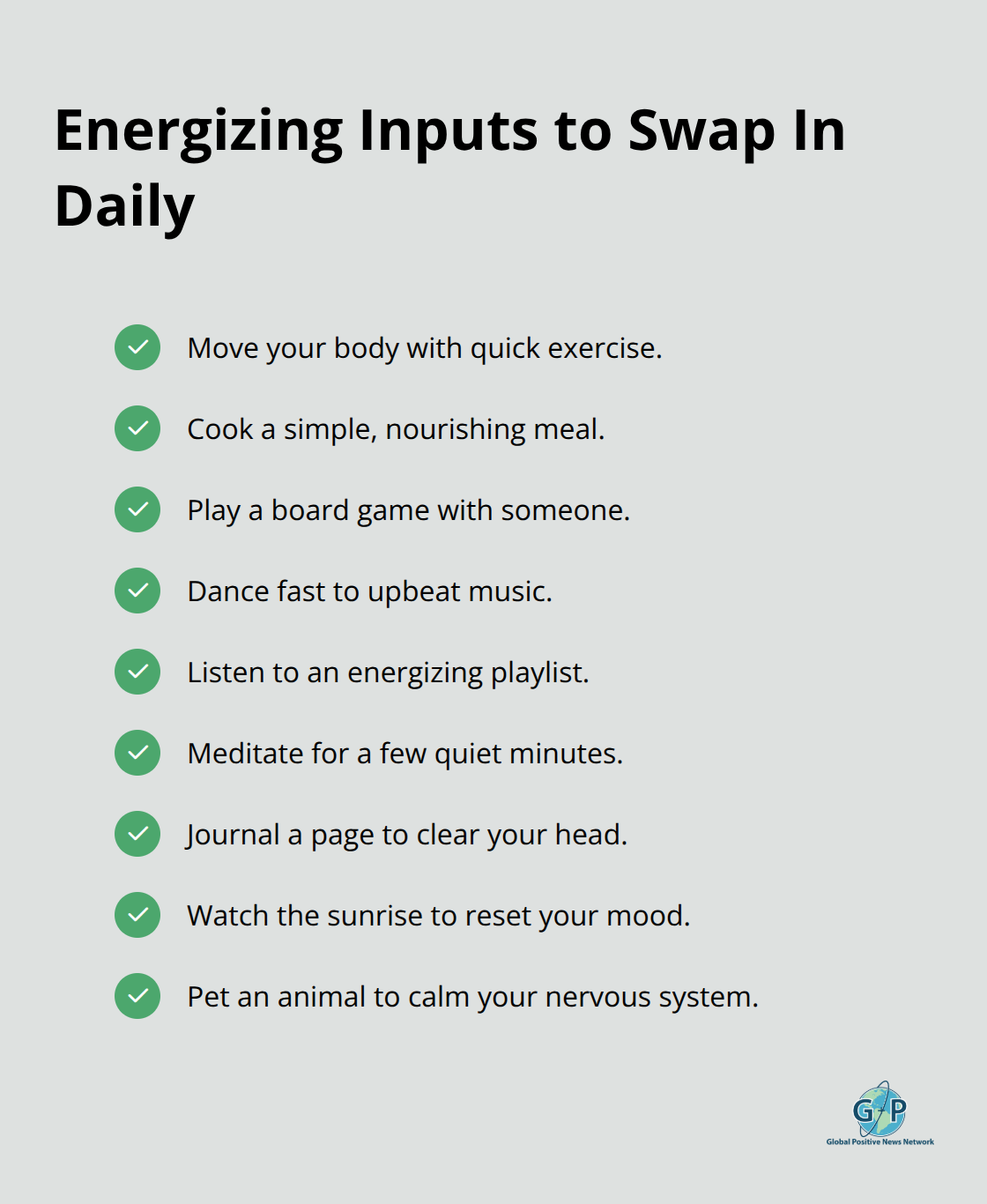
The goal is to replace draining inputs with energizing ones. Physical exercise, cooking, playing board games, fast dancing, or listening to upbeat music genuinely shift your neurochemistry. Equally important are soothing activities like meditation, journaling, watching the sunrise, or petting an animal-these calm your nervous system so you can think clearly about what comes next.
Track Your Emotional Patterns Daily
Track your emotional state each morning using a simple color-coded system or a one-sentence journal entry. This isn’t about judging yourself; it’s about gathering data on what actually works for you. If you notice that mornings with exercise feel different from mornings without it, that’s actionable information. Brené Brown emphasizes in Atlas of the Heart that hope is as vital as air, and protecting it requires knowing your own patterns.
When negative thoughts arrive-and they will-challenge them directly. Ask whether the thought is actually true or just feels true. Apply the self-talk you’d offer a friend in your position; treat yourself with the same compassion you’d extend to someone you care about. The Shunammite woman’s story in 2 Kings 4 shows persistence and faith transforming desperate situations. She endured infertility and later received a miraculous response through the prophet Elisha. This teaches that turning toward sources of blessing and support can bring renewal. Your equivalent sources might be trusted people, spiritual practice, creative outlets, or communities that feed your hope rather than drain it.
Guard Your Time and Choose Your Circle Strategically
Toxic relationships and draining environments actively work against hope. Warren Buffett’s approach to time management applies here: very successful people say no to almost everything. Guard your time the same way. Cut off or limit contact with people who consistently pull you down. Extract yourself from situations that drain your energy. Instead, move toward environments and people that support a hopeful mindset.
Make a daily good confession by speaking hopeful, faith-filled words rooted in Proverbs 18:21 about life and death in the tongue. A 21-day habit approach works well here-recite a personalized affirmation each morning to train your brain toward hope. This isn’t positive thinking divorced from reality; it’s intentional focus on what’s true and what’s possible. John C. Maxwell teaches that you gain strength from what you learn when things don’t go as planned. This reframing transforms failures into data rather than defeats.
Balance Purpose With Present Moments
Focus on your God-ordained purpose and the unique assignment each day offers. Balance career ambitions with relationships so constant planning doesn’t make you miss meaningful moments with family and loved ones. These practices form the daily infrastructure that keeps hope functioning. The next section explores the real stories of people who’ve applied these habits and discovered what hope actually looks like in action.
What Real People Did to Survive Their Hardest Seasons
When Hurricane Katrina hit New Orleans in 2005, thousands faced devastation that tested every ounce of their resilience. What separated those who rebuilt from those who remained stuck wasn’t luck or exceptional circumstances-it was deliberate action paired with community. People who survived and thrived didn’t wait for hope to arrive; they constructed it daily through specific behaviors.
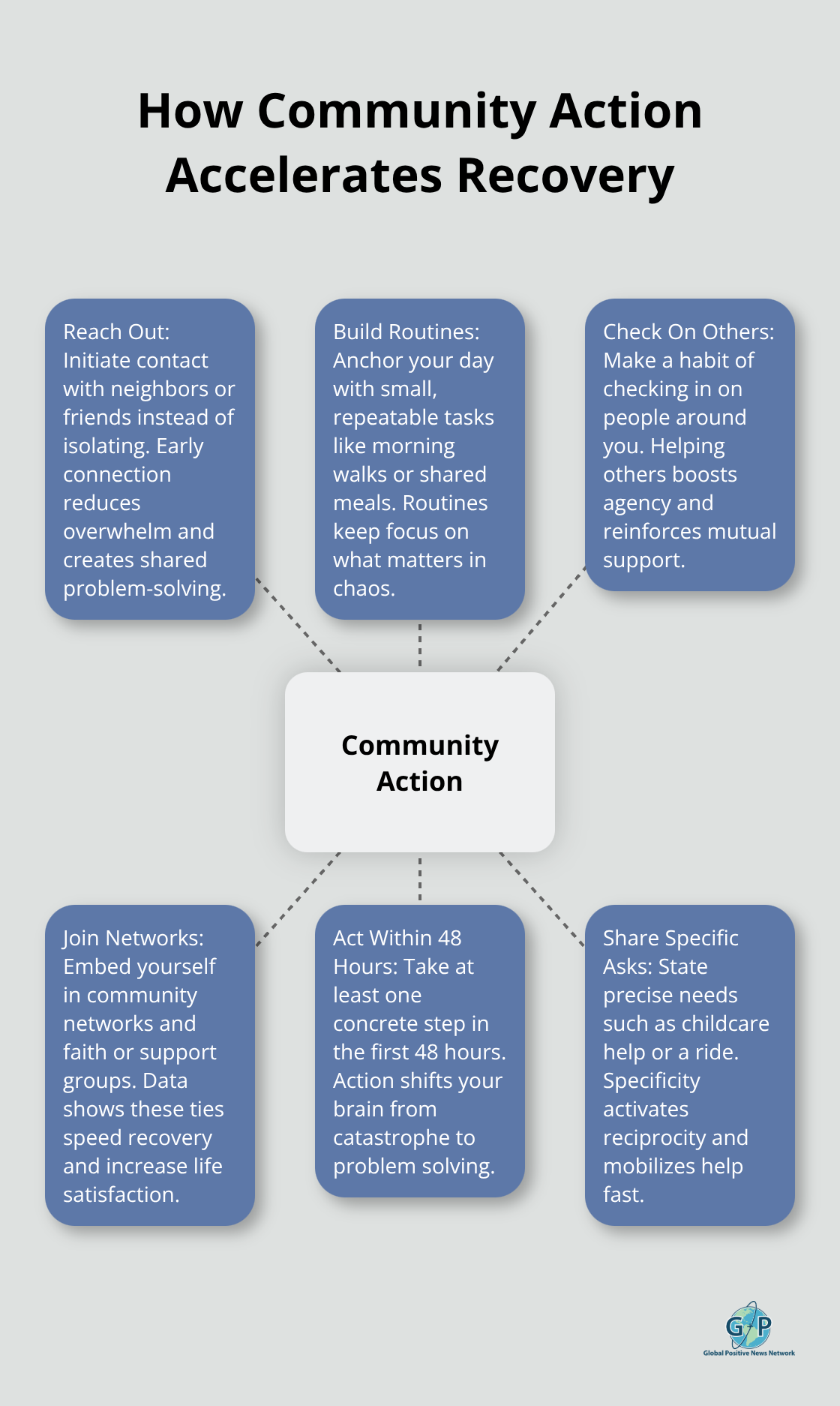
They reached out to neighbors instead of isolating. They created small routines (morning walks, meal preparation with family, checking in on others) that kept their minds anchored to what mattered. Recovery data from Katrina shows that people embedded in community networks recovered faster and reported higher life satisfaction five years post-disaster than those who tried to rebuild alone. This pattern repeats across personal crises: job loss, health diagnoses, relationship breakdown, grief. The individuals who moved forward fastest were those who took concrete action within 48 hours of the crisis.
How Immediate Action Shifts Your Mental State
One woman diagnosed with stage three cancer immediately joined a support group, not because she felt like it, but because she knew isolation would destroy her mentally. Within three weeks, she shifted from catastrophic thinking to problem-solving mode. She researched treatment options, asked her group members specific questions about their experiences, and created a detailed calendar of medical appointments and recovery milestones. Her mindset didn’t transform overnight; her actions transformed her mindset. This sequence matters: action precedes the emotional shift, not the other way around.
Community Isn’t Optional, It’s Essential to Survival
The research on social connection is unambiguous: people with strong community ties recover from trauma faster than isolated individuals. Yet many people resist reaching out during crisis, believing they should handle things alone. This belief directly contradicts what actually works. When you tell someone specifically what you need-not “I’m struggling,” but “I need someone to sit with me Tuesday at 3 PM” or “I need help with my kids Thursday afternoon”-people respond. Vulnerability that includes a concrete ask activates reciprocity. People feel useful. They feel needed. Your crisis becomes less about you being weak and more about the community functioning as it should.
One man facing bankruptcy didn’t tell anyone for six months. When he finally mentioned it to his faith community, three people immediately offered practical help: one connected him with a job lead, another helped him understand his finances, a third simply showed up weekly to listen. He later said the six months of silence cost him emotionally far more than the bankruptcy itself. The recovery happened when he stopped managing his image and started accepting help. Communities and networks that feed hope aren’t always about positive thinking or motivational speeches. They’re about people showing up, asking specific questions, remembering details from previous conversations, and treating your struggle as real rather than something to fix quickly.
The Daily Practice That Separates Survivors From Those Who Get Stuck
People who emerged stronger from adversity shared one habit: they tracked what actually helped and repeated it. Not what they thought should help, but what genuinely shifted their emotional state. One person discovered that 20 minutes of gardening before anything else happened reset her entire day. Another found that cooking a specific family recipe while calling his mother created the mental space he needed to think clearly. A third committed to a 21-day affirmation practice, speaking the same declaration each morning about her identity and purpose. After three weeks, her brain had literally rewired its default response to stress. These aren’t mystical practices; they’re behavioral patterns that create neurological change (and they work regardless of your starting point or past failures).
The people who stayed stuck typically knew what helped but didn’t do it consistently. They had support available but didn’t ask. They understood their values but made daily decisions that contradicted them. The difference between thriving and merely surviving came down to implementation, not inspiration. The most transformative moment for readers happens when they move from consuming hope-focused content to actually practicing it. Reading about daily habits helps. Doing the habits changes everything.
The next section explores the specific tools and resources that make this transition from knowledge to action possible-the platforms, techniques, and communities that turn understanding into lived experience.
Tools That Actually Work for Building Hope
Write Your Way to Clarity
Write your way to clarity works because it externalizes the thoughts spinning in your head, creating distance between you and the anxiety. The key is specificity. Instead of writing “I feel bad today,” write what specifically triggered the feeling, what you did about it, and what happened next. After two weeks of this practice, patterns emerge that generic advice never reveals. You’ll notice that certain activities genuinely shift your state while others waste time. You’ll see which people energize you and which ones drain you.
Journaling can help you manage anxiety, reduce stress, and cope with depression. Writing forces your brain to organize chaotic thoughts into coherent narratives, which activates your prefrontal cortex and quiets the amygdala’s alarm response. Start with five minutes daily. Write three things that happened and rate each on a scale of one to ten for how it affected your hope level.
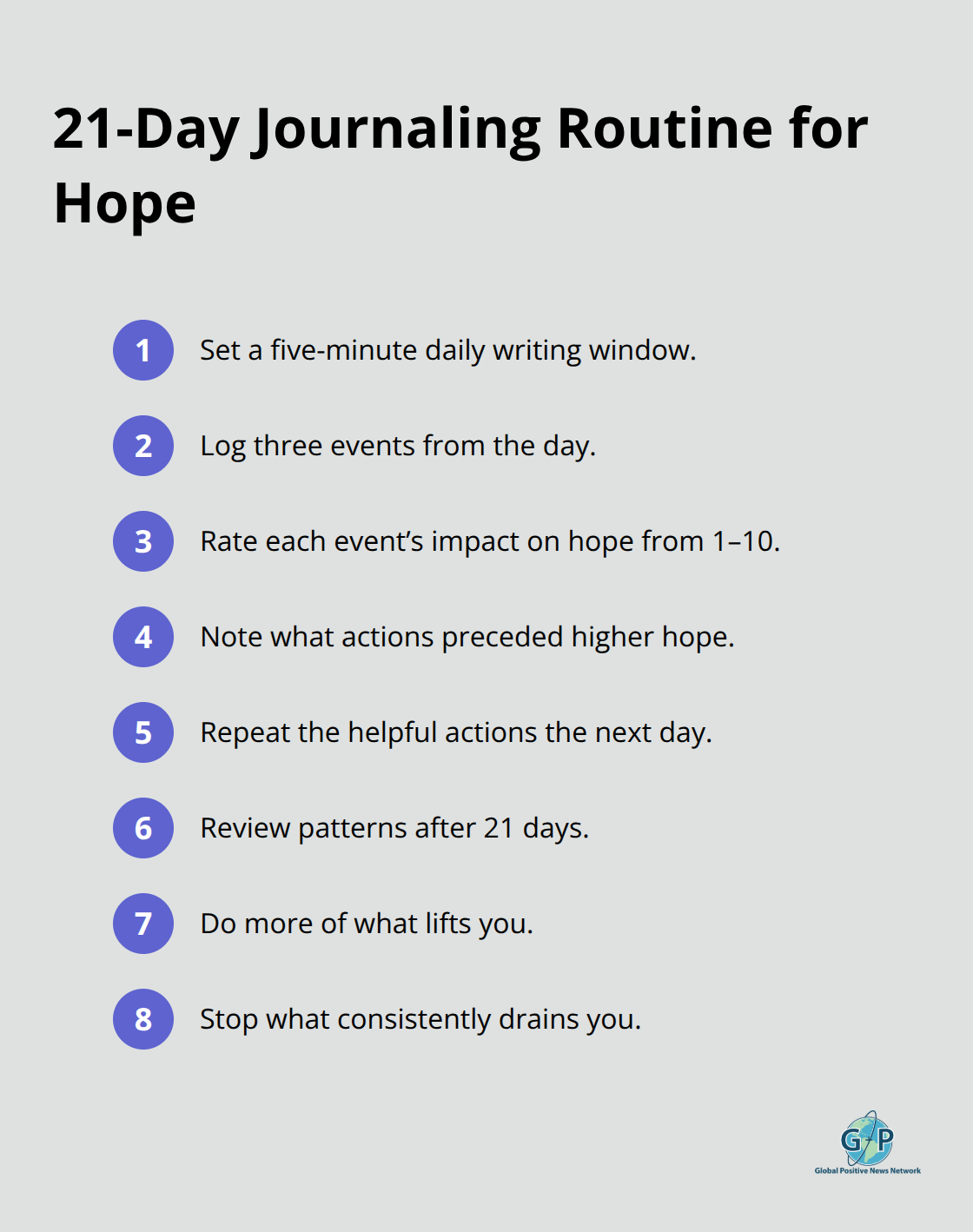
After 21 days, review the entries and identify which activities, people, and practices consistently moved that needle upward. Then do more of those things. Stop doing the ones that dragged you down.
Find Your People and Show Up Consistently
Communities matter more than content because other people will call you out when you’re lying to yourself. The real power comes from showing up consistently to the same group-whether that’s a faith community, a support group, a fitness class, or an accountability partnership. When you know specific people will ask how your week went and remember details from previous conversations, you’re far more likely to actually implement what you’ve learned instead of just consuming content.
Proverbs 31 Ministries publishes daily devotionals and operates The Proverbs 31 Podcast Network, offering structured daily encouragement alongside community connection. Choose a platform or community where you’ll see the same faces regularly, where people know your name, and where vulnerability is expected rather than judged.
Resist the Isolation Trap
The isolation trap is real: people struggling with hope often avoid community because they think they should handle things alone or because they’re embarrassed. Resist this completely. Communities aren’t optional add-ons-they’re the infrastructure that makes every other tactic work. When you tell someone specifically what you need (not “I’m struggling,” but “I need someone to sit with me Tuesday at 3 PM”), people respond. Vulnerability that includes a concrete ask activates reciprocity. People feel useful. They feel needed. Your crisis becomes less about you being weak and more about the community functioning as it should.
Final Thoughts
Daily encouragement for readers works because it treats hope as a skill you develop through consistent practice, not as something that arrives when circumstances improve. You’ve learned that your brain responds to specific actions: journaling quiets your amygdala, movement shifts your neurochemistry, and reaching out to people with concrete needs activates reciprocity. Start with one habit that resonates most-perhaps a five-minute journaling practice, a community commitment, or a daily affirmation-and practice it for 21 days while tracking what shifts in your emotional state.
The people who thrive aren’t those with perfect circumstances but those who built infrastructure around hope through routines, communities, and daily practices that keep them anchored when storms arrive. You have that capacity right now, and the strategies in this post work because they’re grounded in how your nervous system actually functions. Visit Global Positive News Network to explore stories of personal triumph and find resources that feed your optimistic outlook.
Having a hard day?
The 2 Minute Hope Reset is a short free guide with three small practices for the days that feel heavy. Two minutes each, nothing to keep up with.
Get the free guideExplore more positive news:
Enjoying stories like this?
Global Positive News Network is reader-supported. If you’d like to support the mission, you can visit the Official GPNN store.