
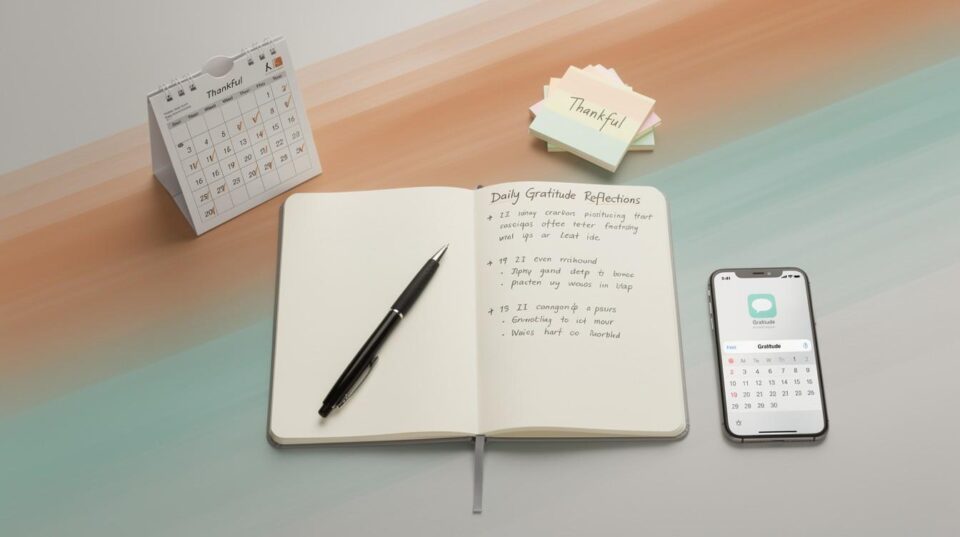
Gratitude isn’t just a nice feeling-it’s a scientifically proven way to improve your mental health and reduce stress. At Global Positive News Network, we’ve seen how daily gratitude reflections can transform the way people experience their lives.
Starting a gratitude practice doesn’t require hours of your time or complicated techniques. This guide shows you practical ways to build thankfulness into your everyday routine, no matter how busy you are.
Why Gratitude Transforms Your Health Right Now
Gratitude works faster than most people expect. A study of 4,825 participants using daily check-ins found that people higher in gratitude experienced lower heart rates and blood pressure compared to those who rarely felt thankful. The research, conducted through the MyBPLab app with smartphone sensors tracking physiological data over up to 21 days per person, showed measurable improvements in cardiovascular markers simply from cultivating thankfulness. These weren’t modest changes either-people with stronger gratitude traits reported significantly less stress frequency and lower stress intensity throughout their daily lives. UCLA Health reports that 15 minutes of gratitude practice five days a week for six weeks can create lasting shifts in mental wellness. This means you’re not investing months to see results; meaningful changes appear within weeks when you commit to the practice consistently.
Stress and Anxiety Drop When You Focus on Gratitude
Gratitude actively counters anxiety and interrupts the negative thought patterns that fuel worry. When anxious thoughts emerge, identifying something you’re genuinely grateful for right now anchors your attention to the present moment, where anxiety loses its grip. The physiological mechanism is direct: gratitude activates your parasympathetic nervous system, the part of your body responsible for relaxation. This activation slows your breathing, reduces heart rate, and lowers blood pressure-the opposite of what happens during anxiety. A 2021 gratitude journaling review found it significantly lowered diastolic blood pressure, a key cardiovascular risk marker. The practical takeaway from research is simple: when anxiety strikes, pause and name one specific thing you’re grateful for in that exact moment, not something vague. This specificity matters because it forces your brain to engage with real details rather than anxious abstractions.
Sleep Quality Improves Through Evening Gratitude Habits
People with a gratitude mindset sleep better because they stress less and maintain healthier daytime habits. The connection runs deeper though-gratitude shapes positive thoughts about life and social support right before sleep, which directly improves both sleep quality and duration. Positive thoughts before bed, naturally fostered through a gratitude practice, correlate with measurably better sleep. The research from the 4,825-participant study showed that optimism improved sleep slightly more than gratitude alone, but when combined, both traits created additive benefits. This suggests your evening reflection should include both appreciation for what happened today and anticipation for tomorrow. Spend five minutes before sleep recalling the best part of your day and rating how much you enjoyed it, then note one thing you’re looking forward to tomorrow.
Why Consistency Matters More Than Intensity
The real power of gratitude emerges not from occasional bursts of thankfulness but from steady, daily practice. Research shows that consistent daily gratitude practice works best when you integrate it into everyday routines rather than treat it as a fixed personality trait. People who practice gratitude consistently (even for just minutes each day) experience cumulative benefits that reshape how they respond to stress, sleep, and social interactions. The 4,825-participant study revealed substantial between-person variance in physiology, meaning those who maintained regular gratitude habits showed distinctly different baseline measurements than those who didn’t. This pattern holds true across multiple dimensions: lower stress frequency, better sleep quality, and stronger appreciation for close relationships all strengthen with consistent practice. Your next step involves choosing which gratitude practices fit naturally into your existing schedule, because the ones you’ll actually maintain are the ones that work.
Three Practices That Actually Work
Write Specific Gratitude Each Morning
Start your morning with written gratitude instead of scrolling through your phone. Write down three specific things you appreciate, but here’s the critical part: specify exactly why you appreciate each one rather than listing them vaguely. Instead of writing that you’re grateful for your family, write that you’re grateful your partner made coffee this morning because it meant you started your day feeling cared for.

UCLA Health research shows this specificity matters because it forces your brain to engage with real details and genuine appreciation. Practicing gratitude for 15 minutes a day, five days a week for at least six weeks can enhance mental wellness. The research revealed that people who practiced morning gratitude reported more positive expectations for the day, actively looking forward to it rather than dreading it. This shift happens because you’ve already identified concrete reasons to feel hopeful before anxiety or stress can take hold.
Interrupt Your Day With 60-Second Gratitude Pauses
Throughout your workday or routine, pause for 60 seconds every four to five hours and identify one thing happening right now that you appreciate. This isn’t about finding something major; notice the coffee tastes good, your colleague made you laugh, or you completed a task successfully. These gratitude pauses interrupt the stress cycle before it builds momentum. The research showed that people higher in gratitude experienced lower stress intensity throughout their daily lives, and these micro-practices throughout the day create that cumulative effect. The specificity rule applies here too: don’t just think about what went well, actually articulate why it mattered to you.
Reflect on Your Day and Tomorrow’s Possibilities
End your evening by spending five minutes reflecting on the best part of your day and rating how much you enjoyed it, then note one thing you’re looking forward to tomorrow. This dual approach combines present appreciation with future optimism, and research indicated this combination created additive benefits for mood, stress, and sleep quality. When you articulate why the best part mattered to you and what you’re anticipating about tomorrow, you activate both gratitude and optimism-two psychological states that work independently and together to reshape your daily experience. The next chapter explores how you can sustain these three practices over weeks and months, transforming them from conscious effort into automatic habits that require minimal thought.
Making Gratitude Stick Without Overwhelming Yourself
Start With One Practice, Not Three
The biggest mistake people make with gratitude is starting too ambitious. You don’t need 30 minutes of journaling or elaborate rituals to build a sustainable practice. Pick whichever technique feels most natural to your existing routine-the morning gratitude writing, the midday pause, or the evening reflection. Research shows that consistency matters far more than intensity, which means five minutes daily beats 30 minutes once a week. Commit to that single practice for exactly two weeks before adding a second technique. This staged approach prevents the common pattern where people abandon gratitude entirely because they tried to overhaul their entire day at once.
Track what happens during those two weeks by noting one simple metric: your stress level on a scale of one to ten each evening. Studies reveal that people who maintained regular gratitude habits showed distinctly different baseline stress measurements than those who didn’t, so you’ll likely notice a shift within days. After two weeks, add your second practice and track for another two weeks before considering the third. This timeline respects your actual capacity rather than forcing an unrealistic ideal.
Adapt Your Practice When Life Changes
Adaptation separates people who maintain gratitude for months from those who quit after weeks. Your morning routine might work perfectly for three weeks, then your schedule changes and suddenly 10 minutes of writing feels impossible. When this happens, compress your practice rather than abandon it. If morning journaling stops working, switch to the 60-second pause throughout your day, which requires no materials and no quiet space. If evening reflection conflicts with your schedule, move it to morning and focus on anticipating the day ahead instead of reviewing it.
The specificity requirement stays constant regardless of format, but the structure flexes based on your life. Some people find that writing works better in their phone notes app rather than a physical journal, while others prefer speaking their gratitude aloud during a commute. Test different formats within your chosen practice until you find the version that feels effortless enough to maintain when motivation dips.
Attach Gratitude to Habits You Already Have
People with a gratitude mindset don’t possess superior willpower; they’ve simply built their practice into existing habits rather than creating entirely new routines. Attach your gratitude pause to something you already do daily (like attaching evening reflection to your nighttime routine or morning gratitude to your coffee ritual). This attachment method eliminates the need to remember or motivate yourself, because gratitude becomes automatic alongside something you’re already doing. The specificity rule applies here too-when you pause, articulate exactly why the moment matters to you rather than listing vague appreciation.
Final Thoughts
The research proves that daily gratitude reflections reshape how your body and mind respond to stress, sleep, and relationships. A study of 4,825 participants found that people who practiced gratitude consistently showed lower heart rates, reduced blood pressure, better sleep quality, and significantly less stress throughout their days. These benefits emerge within weeks when you commit to a simple, sustainable practice.
What makes gratitude powerful is the specificity you bring to noticing what matters. When you write that you’re grateful your partner made coffee because it meant you started your day feeling cared for, your brain engages with real appreciation rather than vague thankfulness. When you pause midday to articulate why a moment mattered, you interrupt the stress cycle before it builds. When you reflect on your day’s best part and anticipate tomorrow, you activate both present appreciation and future optimism, creating additive benefits for your mood and sleep.
Choose one practice that fits naturally into your existing routine-morning gratitude writing, a 60-second midday pause, or evening reflection all work equally well when practiced consistently. Track your stress levels for two weeks and watch how a few minutes of daily thankfulness reshapes your experience. We at Global Positive News Network believe that gratitude is one of the most accessible tools for building a more hopeful life.
Having a hard day?
The 2 Minute Hope Reset is a short free guide with three small practices for the days that feel heavy. Two minutes each, nothing to keep up with.
Get the free guideExplore more positive news:
Enjoying stories like this?
Global Positive News Network is reader-supported. If you’d like to support the mission, you can visit the Official GPNN store.