

Gratitude isn’t just a feel-good concept-it’s a measurable tool for rebuilding emotional strength after hardship. Research shows that people who practice thankfulness experience lower cortisol levels and improved mental health outcomes.
At Global Positive News Network, we’ve seen how healing through gratitude transforms lives across communities and workplaces. This guide shows you exactly how to harness that power for yourself.
How Gratitude Physically Changes Your Brain
Gratitude restructures the neural networks responsible for processing emotions and managing stress. When you practice thankfulness, your brain activates the prefrontal cortex, anterior cingulate cortex, and ventral striatum-the same regions involved in reward processing and emotional regulation. Research found that consistent gratitude practice leads to increased gray matter volume in areas linked to positive affect and resilience, meaning your brain physically grows stronger in its capacity to handle adversity.
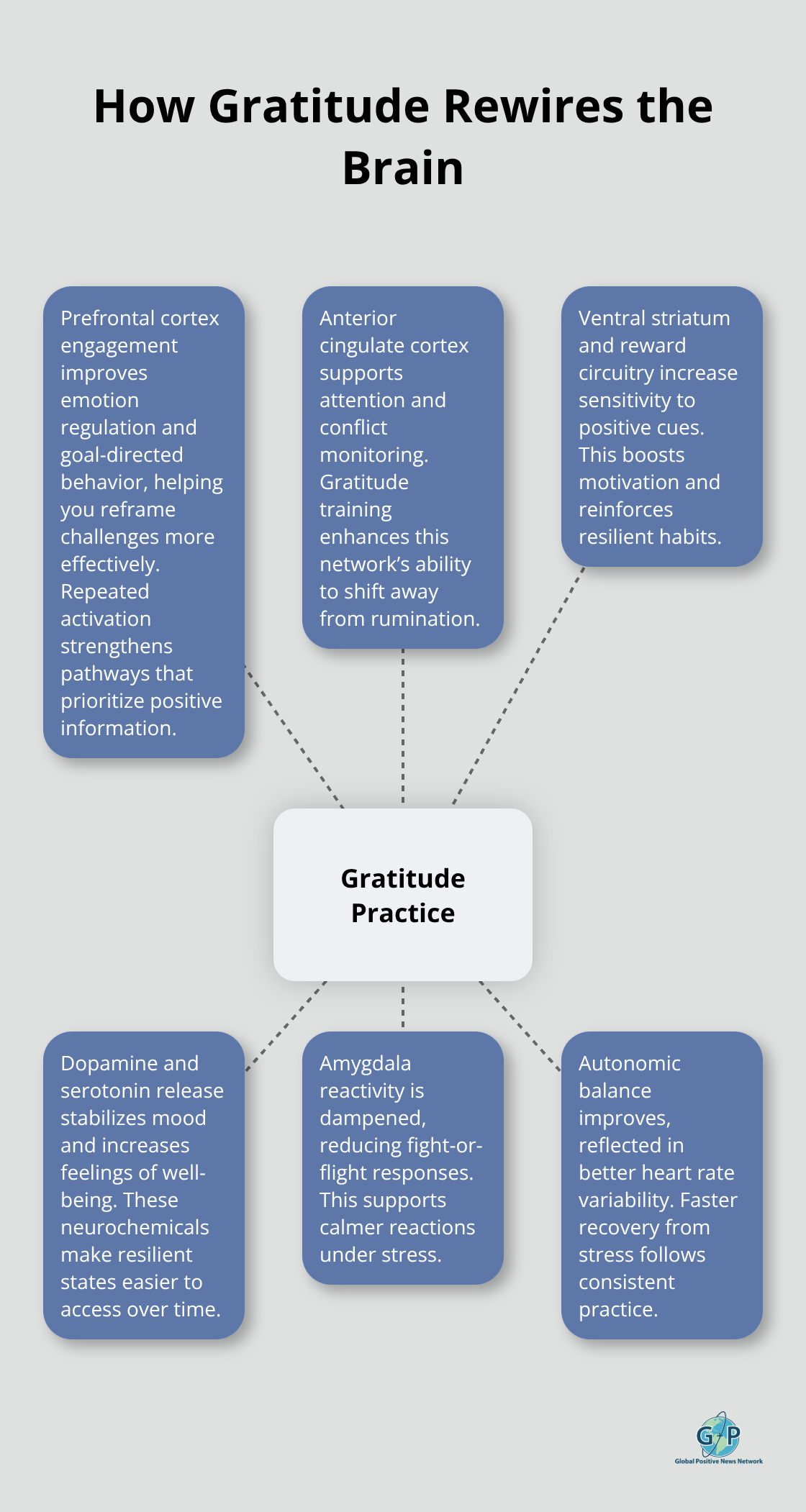
The neurochemical shifts triggered by thankfulness prove immediate and lasting. Increased dopamine and serotonin release reinforce positive emotional states and make resilience easier to access over time. Emmons and McCullough’s landmark 2004 study demonstrated that people who wrote about gratitude showed measurable improvements in optimism and life satisfaction within just 10 weeks, proving that the brain’s reward pathways respond quickly to deliberate thankfulness.
How Gratitude Dampens Your Stress Response
The amygdala, your brain’s alarm system, becomes overactive when you’re stressed or anxious. Thankfulness dampens this reactivity by promoting parasympathetic nervous system activity, which calms your body’s fight-or-flight response. Studies show that grateful individuals have lower cortisol levels and reduced autonomic arousal, meaning their bodies recover faster from stressful situations.
Heart rate variability improvements with gratitude practice demonstrate a key marker of nervous system balance. This matters because chronic stress hormones damage resilience and leave you vulnerable to anxiety and depression. When you shift your attention toward what you’re thankful for, you redirect your brain away from rumination and toward positive life aspects. Hazlett and colleagues found in 2021 that trait gratitude correlates with fewer health complaints and better immune function, confirming that this mental shift produces real physical consequences.
How Thankfulness Strengthens Emotional Regulation
Gratitude activates moral and social cognition networks in your brain, which strengthens your ability to regulate difficult emotions and connect with others. People who practice gratitude show reduced depressive symptoms and lower suicide risk compared to those who don’t. Seligman from the University of Pennsylvania discovered that delivering a gratitude letter to someone who had never been properly thanked produced a significant happiness increase lasting about a month for both the giver and receiver.
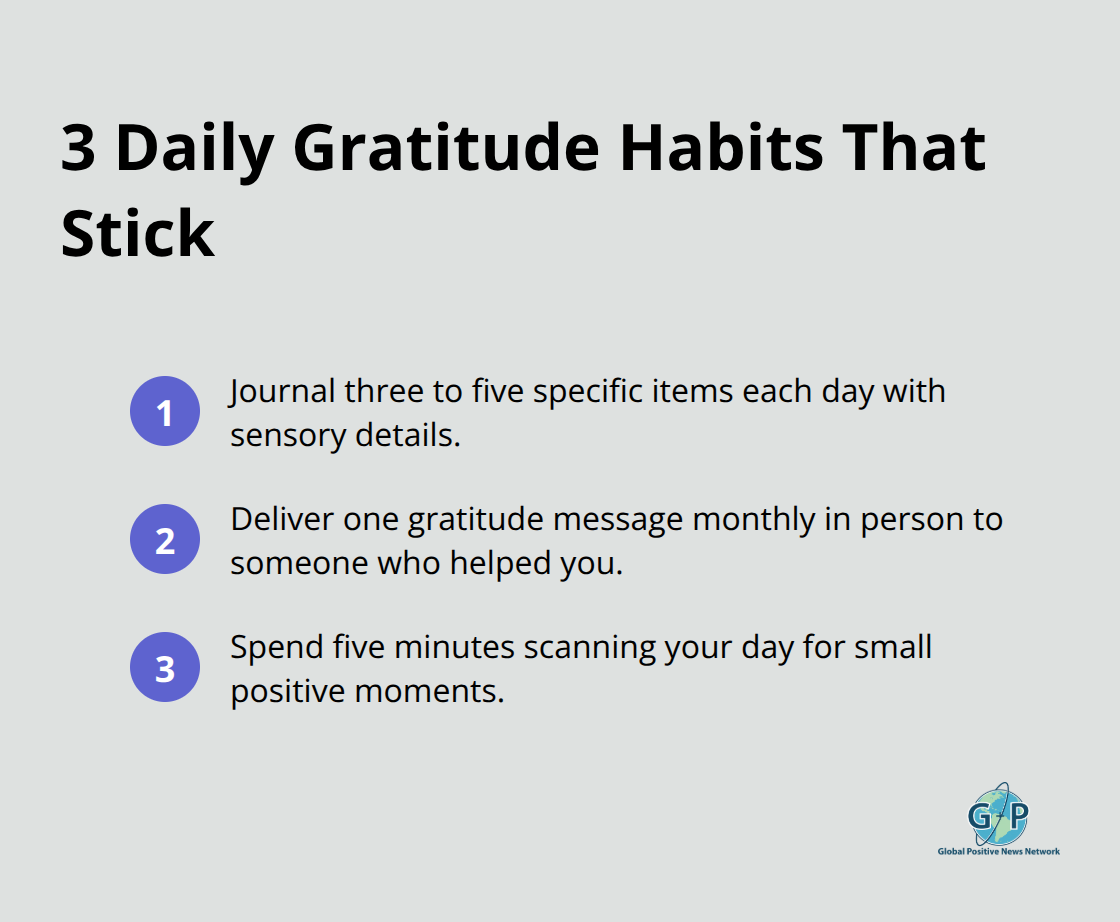
This reveals that thankfulness isn’t just internal-it rewires how you relate to people and process social bonds. Gratitude journaling with specific, detailed entries about what you’re grateful for produces stronger effects than vague thankfulness. Try five minutes daily, writing three to five concrete things you’re grateful for, and focus on sensations and details rather than listing items abstractly. This practice trains your prefrontal cortex to prioritize positive information, making resilience feel natural rather than forced, and sets the stage for the practical techniques that transform gratitude from theory into daily habit.
How to Start a Daily Gratitude Practice That Actually Sticks
Write with Specificity and Consistency
The difference between gratitude that transforms your life and gratitude that fades within weeks comes down to specificity and consistency. Vague statements like “I’m grateful for my family” produce minimal brain changes, while detailed entries about what your family member said that made you laugh, how their voice sounded, and the exact feeling in your chest activate your reward pathways far more powerfully. Emmons from UC Davis found that people who wrote about gratitude for 10 weeks became more optimistic and felt better about their lives.
Write three to five concrete items daily, focusing on sensations and details rather than abstract concepts. Set a fixed time-ideally morning or evening-and commit to five minutes minimum. Use a physical journal rather than your phone because handwriting engages your motor cortex and deepens encoding in memory. Write what happened, who was involved, and what you felt in your body. This specificity matters because your brain’s prefrontal cortex learns to prioritize positive information when you consistently highlight it this way.
Deliver Gratitude Face-to-Face
Expressing gratitude directly to others amplifies the neurochemical benefits for both you and them. Martin Seligman discovered that delivering a gratitude letter in person to someone who had never been properly thanked produced significant happiness increases lasting about a month for the receiver and substantial mood improvements for the sender. You don’t need elaborate words; write one thank-you note per month to someone who shaped your life, explaining specifically how their actions affected you and what difference they made.
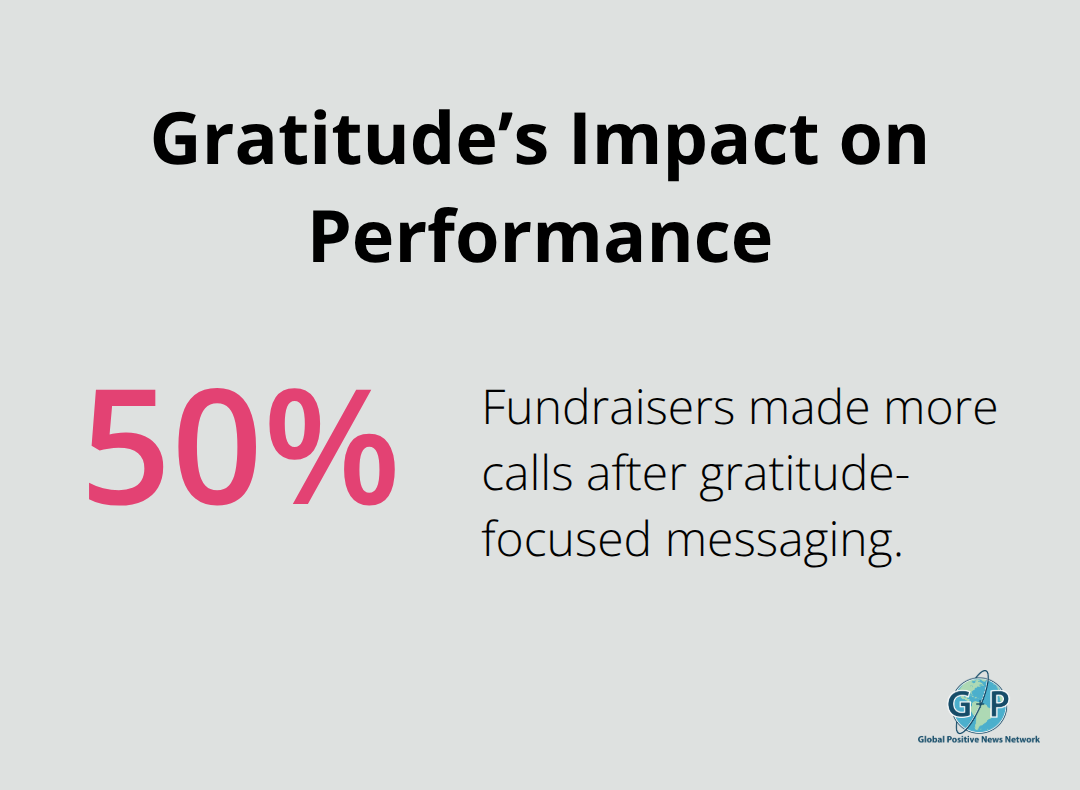
Read it aloud in person rather than mailing it, because the combination of written gratitude plus face-to-face delivery strengthens both the emotional impact and the neural pathways being rewired. The Wharton School at University of Pennsylvania found that gratitude-focused messaging increased fundraiser call volume by 50 percent, showing that thankfulness directly boosts motivation and effort.
Practice Mindful Attention to Small Moments
Spend five minutes daily sitting quietly and mentally scanning through your day for moments of goodness you might have rushed past. Notice small things: a warm coffee cup, a kind word from a colleague, sunlight through a window. This practice trains your brain to detect positive information in real time rather than only recognizing it when you sit down to journal.
These three practices work because they’re specific, repeated, and tied to real moments in your life rather than abstract concepts about being grateful. Once you establish these foundational habits, you’re ready to explore how gratitude reshapes your relationships and social connections-the next frontier in building lasting emotional resilience.
How Gratitude Works in Real Lives
Gratitude transforms from abstract concept to measurable reality when you see it operating in actual situations. A 2011 study by Lau and Cheng involving 83 Chinese adults found that participants who wrote gratitude notes showed significantly fewer death anxiety symptoms compared with groups focusing on worries or neutral tasks. This wasn’t theoretical improvement-these were measurable reductions in a specific mental health marker after a simple writing intervention. The Wharton School at University of Pennsylvania documented that fundraisers who received gratitude-focused pep talks made 50 percent more calls than those without the message, proving that thankfulness directly translates into increased effort and motivation in professional settings.
Gratitude Shifts Workplace Productivity
Organizations that systematize gratitude see concrete shifts in employee engagement and productivity. When workplaces implement regular appreciation programs-whether through peer recognition systems, manager gratitude training, or team appreciation meetings-employees report higher job satisfaction and lower turnover. Gratitude activates dopamine reward pathways, making work feel more meaningful rather than obligatory. Companies that introduce monthly gratitude initiatives where staff acknowledge colleagues’ contributions report improved collaboration and reduced conflict.
The practice works best when it’s specific: instead of generic praise, employees should articulate exactly what someone did, how it helped, and what impact it created. This specificity activates the prefrontal cortex’s ability to process social information more deeply than vague compliments ever could. A simple system-whether a digital recognition board, monthly team gratitude meetings, or peer nomination programs-costs almost nothing but produces measurable improvements in workplace culture within weeks.
Community Appreciation Strengthens Social Bonds
Neighborhoods and community groups that organize around appreciation initiatives create resilience that extends far beyond individual practice. Community gratitude projects like neighborhood appreciation days, intergenerational gratitude circles where elderly residents share life wisdom with younger people, and local thank-you campaigns for essential workers generate social cohesion that buffers against isolation. Communities where members regularly express appreciation develop stronger mutual aid networks and social bonds.
Gratitude strengthens oxytocin pathways and moral cognition networks-the brain systems responsible for prosocial behavior and social bonding. A neighborhood that organizes quarterly appreciation events where residents publicly acknowledge each other’s contributions builds social capital that makes people more likely to help during crises. Start with monthly community meetings focused on sharing appreciation, create a neighborhood bulletin board for thank-you messages, or organize volunteer appreciation events for local service workers. These activities cost minimal resources but create measurable increases in community trust and belonging that directly reduce loneliness and anxiety among participants.
Final Thoughts
Gratitude works because it shifts how your brain processes information and manages stress, not because of wishful thinking. People who practice thankfulness experience lower cortisol, improved emotional regulation, and stronger social connections-physical changes in your prefrontal cortex, amygdala, and dopamine pathways that compound over weeks and months. Healing through gratitude requires consistency, but the transformation proves reliable and measurable.
Three concrete practices activate your brain’s reward systems immediately: write three to five specific things daily in a physical journal (focusing on sensations and details rather than vague statements), deliver at least one gratitude message monthly to someone who shaped your life ideally in person, and spend five minutes daily noticing small moments of goodness you might otherwise miss. The real transformation happens through sustained effort, not through occasional thankfulness. People who maintain gratitude practices for months report measurable increases in resilience during adversity, stronger relationships, and better physical health markers.
We at Global Positive News Network share stories of people who’ve transformed their lives through appreciation and community initiatives that prove thankfulness creates lasting change. Explore more stories of resilience and gratitude to discover how thankfulness is reshaping lives across communities worldwide. Your gratitude practice starts today-not with perfection, but with one specific thing you’re thankful for right now.
Explore more positive news:
Enjoying stories like this?
Global Positive News Network is reader-supported. If you’d like to support the mission, you can visit the Official GPNN store.