

Most people rush through their days without pausing to connect with what matters. At Global Positive News Network, we believe positive rituals are the antidote to this constant motion.
Sacred moments aren’t luxuries reserved for weekends or vacations. They’re small, intentional practices you can weave into your everyday routine to reduce stress, strengthen relationships, and find genuine meaning.
Why Sacred Moments Rewire Your Brain
Sacred moments directly impact your nervous system in measurable ways. Research from a cancer care study involving clinicians and patients found that 100% of patients experienced sacred moments during their treatment, and those moments created tangible shifts in how they felt about their care. Among the clinicians studied, 100% reported feeling professionally fulfilled during these moments, and 82.6% said they practiced consistently in line with their personal values. This isn’t abstract benefit-it’s neurological change. When you pause to connect with intention, your brain shifts from reactive stress patterns into a state of coherence. That three-minute morning ritual before you check your phone isn’t wasted time; it’s the foundation that determines whether your entire day unfolds from a place of calm or chaos.
The number 100% seems to be not appropriate for this chart. Please use a different chart type.
The First Minutes Set Your Entire Day
The first few minutes after waking have a ripple effect across your entire day, shaping whether you feel grounded or scattered. Your body and brain transition from rest to active engagement during that window, which means this is when you have the most leverage to set your emotional tone. Instead of scrolling your phone first thing and triggering a cascade of cortisol, you initiate your day on your own terms, which builds both autonomy and resilience. This shift from reaction to intention changes everything about how you move through the hours ahead.
Purpose Builds Through Small, Repeated Acts
Most people wait for purpose to arrive like a lightning bolt, then wonder why they feel disconnected. Purpose builds through small, repeated acts of intention. When you ritualize everyday tasks-turning morning coffee into a moment of reflection, making dinner preparation a family practice, or ending your day with three minutes of gratitude-you train your brain to recognize meaning in ordinary moments. Clinicians in the oncology study specifically mentioned that sacred moments happened because they learned patients’ names, asked about their hobbies, and spent sufficient time in conversations without rushing. Those weren’t grand gestures; they were consistent choices to treat each interaction as meaningful.
Start With One Routine, Not Everything
For your own life, this means picking one routine and making it sacred rather than trying to overhaul everything at once. Start with hydration, movement, or sunlight in the morning-these simple actions anchor your nervous system and create the mental space for clarity. The stress reduction happens because you no longer operate in constant reaction mode. You’re no longer trapped in the cycle of external stimuli dictating your emotional state; instead, you direct your attention toward what matters most to you.
This foundation of intentional morning practice positions you to recognize and create sacred moments throughout your day, not just at the start.
How to Build Sacred Moments Into Your Everyday Routine
Start Your Day With Three Intentional Minutes
The three-minute morning ritual works because it interrupts the cascade of reactive decisions before they start. Set a timer for exactly three minutes before you touch your phone, coffee, or anything else. During this window, choose one activity: meditation, stretching, journaling, listening to birds, or watching the sunrise. The neuroscience here matters. Research on savoring by Eric Garland, PhD, shows that intentionally enjoying small positive experiences strengthens the neural circuits that counter stress and scattered thinking. Your brain doesn’t differentiate between a 30-minute meditation and a three-minute practice if both receive your full attention. What matters is that you initiate your day on your terms, not on the terms of notifications and external demands.
End those three minutes with three deep breaths and a single intention for how you want the day to unfold. Use a non-jarring alarm like the Philips Wake-Up Light or Lumie Sunrise Alarm Clock to ease the transition from sleep. Keep the lights low and avoid any screens until the practice is complete. If you love coffee or tea, enjoy your beverage during the practice, but nothing else. This single shift determines whether your entire day unfolds from a place of calm or chaos.
Transform Transitions Into Sacred Moments
Throughout your day, treat transitions as entry points for sacred moments instead of wasted time. The afternoon slump at 2 p.m. isn’t a problem to power through; it’s an invitation to step outside for ten minutes of sunlight, which regulates your mood and circadian rhythm. Mealtime offers another anchor point. Instead of eating while working, spend five minutes preparing food with intention, involve your family in cooking or cleanup, and eat without screens. These small shifts create pockets of presence throughout your hours.
Anchor Your Evening With Reflection
During evening wind-down, spend three to five minutes writing three handwritten pages of reflection or gratitude. The act of writing by hand slows your brain enough to process the day meaningfully. Missing days disrupts momentum, so consistency matters more than perfection.
Your sacred moments don’t require extended time blocks or complicated setups. They require one thing: deciding that ordinary moments deserve your full attention. This commitment to presence transforms how you move through your day, and it also shifts how you show up for the people around you. When you practice sacred moments consistently, you develop the capacity to recognize and create them with others-which is where the real power emerges.
Making Space for Sacred Moments When Time Feels Impossible
Audit Your Actual Time Use
You don’t have extra time in your schedule. No one does. But you have time you’re already spending in ways that don’t serve you. The real work isn’t finding new hours; it’s reclaiming wasted phone time for sacred moments without sacrificing anything meaningful. Most people spend between two and four hours daily on their phones, according to global usage data. That’s not a judgment-it’s a fact that matters because those hours exist. You can redirect even 15 minutes of that time into sacred moments without sacrificing anything meaningful.
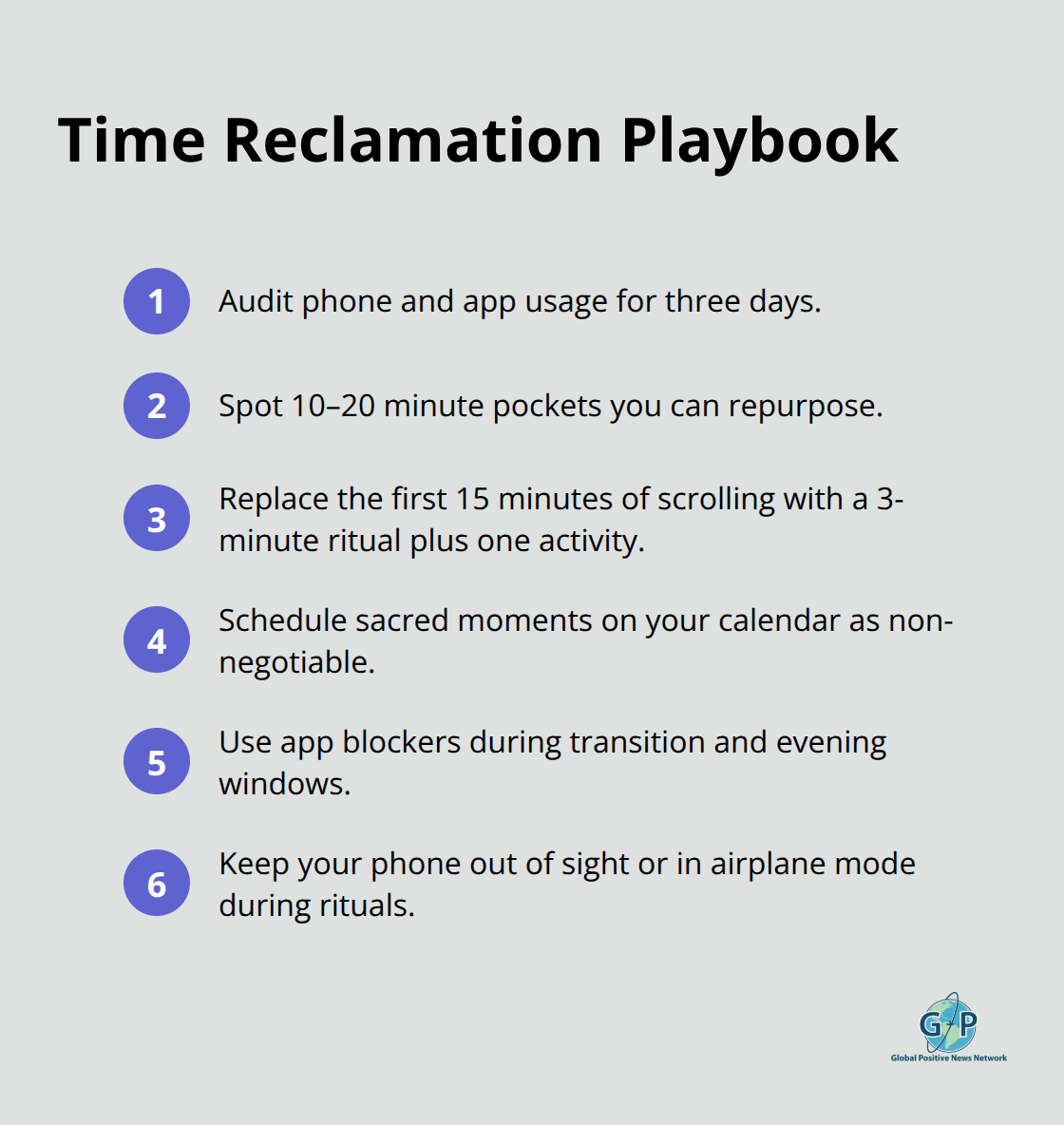
Start by auditing where your time actually goes for three days. Use your phone’s built-in screen time tracker or an app like RescueTime to see the precise breakdown. You’ll likely find pockets you didn’t know existed: the 12 minutes scrolling before breakfast, the 8 minutes between tasks, the 20 minutes before bed. These fragments add up to 40 minutes or more daily. That’s enough for a complete morning ritual, an afternoon transition moment, and evening reflection.
Make Hard Trade-Offs
The second step requires brutal honesty about what you’ll stop doing. Sacred moments require trade-offs. If you want a meaningful morning practice, something else has to go-either you wake earlier or you eliminate something from your current routine. Most people choose to replace the first 15 minutes of phone scrolling with their three-minute ritual plus a second activity like stretching or journaling. This isn’t deprivation; it’s choosing presence over distraction.
Eliminate Digital Interruptions
Digital interruptions are the primary saboteur of sacred moments. Your phone is engineered to pull your attention away from intention. During your sacred moment windows, place your phone in another room or activate airplane mode-not just silent. Attention residue from phone proximity reduces your cognitive capacity during mindfulness practices. When you sit down for your three-minute morning practice and your phone sits visible on the nightstand, part of your brain still monitors it. Remove the temptation entirely.
For afternoon transitions and evening reflection, use app blockers like Freedom or Cold Turkey to disable social media and email during specific times. Set these blockers to activate automatically at the same time daily so the friction disappears. One practical approach: schedule your sacred moments into your calendar as non-negotiable appointments with yourself, the same way you’d treat a work meeting. When your three-minute morning ritual appears as a calendar event at 6:15 a.m., your brain treats it as binding. This simple act of visibility increases follow-through significantly.
Build Accountability With Others
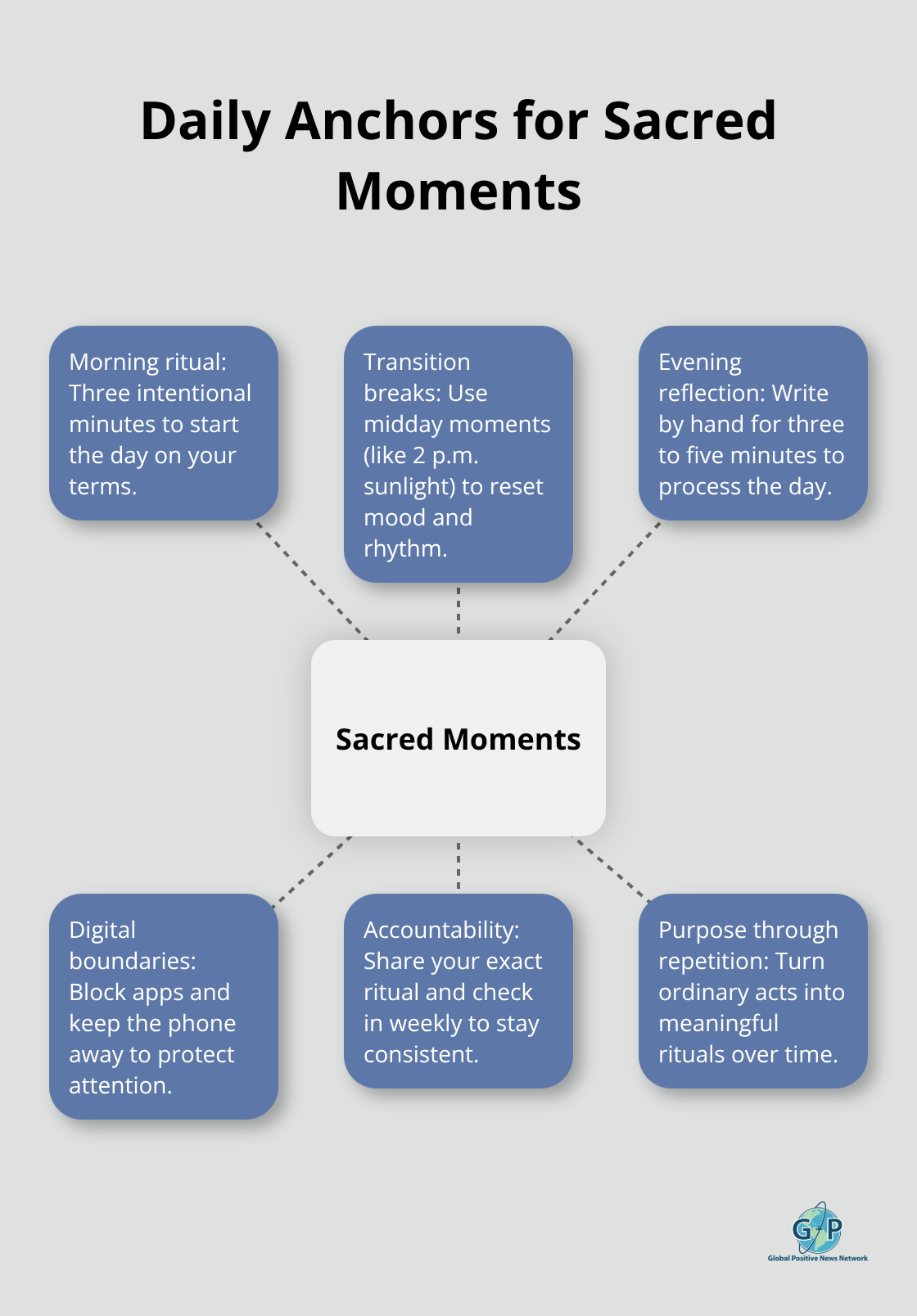
Accountability with others amplifies consistency dramatically. The oncology clinicians in the research study we mentioned earlier maintained sacred moments partly because they worked within systems and teams that valued them. You can create the same structure by telling one person what your chosen ritual is and checking in weekly. Share your specific practice-not a vague goal like becoming more mindful, but something concrete like a three-minute sunrise practice every morning before coffee. When someone knows your exact commitment, you’re far more likely to honor it.
Some people photograph their ritual space or journal entry and share it in a group chat or with an accountability partner. This visible commitment costs nothing but creates real social pressure that works in your favor.
Final Thoughts
Your first step is choosing one routine to ritualize and transforming it into something intentional. Pick something you already do daily: your morning coffee, a lunch break, or your evening wind-down. Will you spend three minutes in silence before checking your phone, eat one meal without screens, or write three sentences of gratitude before bed? The specific practice matters less than your commitment to do it consistently, and positive rituals reshape your nervous system through repetition over weeks, not days.
The second step is removing friction so your intentions actually stick. Delete the apps that interrupt you during your sacred moments, schedule your ritual into your calendar, and tell someone what you’re doing so they hold you accountable. You’ll skip your ritual on some days-that’s normal-but returning to it the next day without judgment is what matters. Progress beats perfection every single time.
Sacred moments produce measurable changes in your stress levels, relationships, and sense of purpose, and the research throughout this article proves that intentional practices create genuine fulfillment and connection. Visit Global Positive News Network for more stories and resources that inspire positive change in your life. Your sacred moments start today with one small choice to pause and connect with what matters most.
Having a hard day?
The 2 Minute Hope Reset is a short free guide with three small practices for the days that feel heavy. Two minutes each, nothing to keep up with.
Get the free guideExplore more positive news:
Enjoying stories like this?
Global Positive News Network is reader-supported. If you’d like to support the mission, you can visit the Official GPNN store.