

Most people scroll through news feeds filled with conflict and crisis, which leaves them feeling drained and anxious. At Global Positive News Network, we believe your mental health deserves better.
Positive news consumption habits aren’t about ignoring reality-they’re about choosing stories that inform and inspire you. This guide shows you how to build a news routine that actually makes you feel good.
How Positive News Affects Your Mental Health
Negative news cycles hit harder than positive ones. Research from the American Psychological Association found that exposure to continuous negative news increases anxiety and stress levels. The constant stream of conflict, disasters, and social problems trains your brain to expect the worst. This isn’t weakness-it’s how human attention works. Your brain prioritizes threats because survival once depended on it.
Modern news feeds exploit this ancient wiring, flooding you with information that has no direct impact on your life but leaves you emotionally exhausted. Intentionally consuming positive news counteracts this pattern. Studies show that people who regularly read uplifting stories report lower stress levels and improved sleep quality. Consuming positive news regularly can help manage news-related stress and media saturation overload.

The Science Behind Positive Mood Shifts
Positive news activates different neural pathways than negative content. When you read about human kindness, community solutions, or personal achievements, your brain releases dopamine and serotonin-the chemicals responsible for motivation and contentment. This isn’t about ignoring real problems; it’s about balancing your information diet.
People who mix positive stories with factual reporting maintain better emotional resilience and make clearer decisions. Research shows that optimistic people recover faster from setbacks and handle stress more effectively. They’re not naive-they simply have better emotional reserves because they’ve trained their brains differently. Consuming positive news regularly builds what psychologists call psychological resilience, which makes you better equipped to handle genuine challenges when they arise.
Building Long-Term Perspective
One positive news habit creates a domino effect on how you view the world. People who intentionally seek uplifting stories start noticing more solutions and progress in their actual communities. They become more likely to volunteer, support local initiatives, and engage constructively with problems. This shift isn’t accidental-it’s a direct result of training your attention differently.
Your brain becomes primed to recognize positive developments rather than only threats. Over time, people report feeling more hopeful about the future, more connected to others, and more motivated to contribute meaningfully. This matters because hopeful people take action, while anxious people often freeze or withdraw. When you feel better mentally, you perform better at work, maintain stronger relationships, and make healthier choices.
How Intentional Curation Changes Everything
The real power emerges when you stop passively accepting whatever appears in your feed. Intentional curation means you actively select sources and stories that align with your values and mental health needs. This approach requires effort upfront, but the payoff justifies the investment. Your news consumption directly shapes your emotional state and worldview, so treating it as a deliberate choice rather than a habit makes all the difference.
The next section shows you exactly how to build this intentional practice into your daily routine.
How to Curate Your News Feed Intentionally
The difference between passive scrolling and intentional curation comes down to one thing: you make deliberate choices instead of letting algorithms decide what you see. Most people spend zero minutes thinking about their news sources, then wonder why they feel terrible. Start by auditing what you currently follow. Spend one day tracking which outlets and accounts show up in your feed. Write down how each one makes you feel. This honest assessment takes 15 minutes but reveals patterns you’ve probably ignored.
News sources like BBC News, NPR, and Reuters mix serious reporting with solutions-focused stories. If you follow outlets that exclusively cover crises and conflict, your emotional state reflects that diet. The outlets you select shape your perspective more than you realize.

Set Time Limits That Actually Stick
News consumption without boundaries becomes compulsive. Research showed that limiting news intake to 30 minutes per day significantly reduces anxiety compared to constant checking. Pick two specific times to read news rather than grazing throughout the day. Morning news before work and evening news after dinner work well for most people.
Use your phone’s built-in screen time tools to enforce these limits. iPhone users can set App Limits within Settings, while Android users can use Digital Wellbeing. Set a 30-minute daily cap on news apps. When the timer hits zero, the app becomes unavailable until tomorrow. This removes willpower from the equation entirely. Many people report that strict time boundaries feel uncomfortable for one week, then become automatic. Your anxiety actually decreases faster when you stop checking constantly, though the withdrawal feels real initially.
Choose Sources That Prioritize Solutions
Not all positive news outlets are equal. Some focus on feel-good fluff that lacks substance, while others report on genuine progress with journalistic rigor. The best sources combine factual reporting with stories about how communities solve problems. Look for outlets that cover topics like renewable energy adoption, crime reduction statistics, medical breakthroughs, and educational improvements.
Verify that these sources cite their data and include expert perspectives. Publications like The Good News Movement and Positive News explicitly focus on solutions journalism. These outlets don’t ignore challenges; they report on real problems alongside the people addressing them. Follow three to five high-quality sources maximum. More sources create overwhelm and waste your 30-minute daily limit on redundant stories.
Organize Content Before You Need It
Use RSS readers like Feedly or Inoreader to centralize your chosen sources in one place. This eliminates algorithm-driven feeds that push sensational content. Create separate folders for different topic areas: community stories, health breakthroughs, environmental progress, and personal achievement. When you open Feedly, you see exactly what you subscribed to, nothing more.
This takes 20 minutes to set up initially but saves hours of aimless scrolling. Pocket and Instapaper let you save articles to read later during your designated news time. This prevents the trap of reading multiple articles simultaneously and losing focus. Some people use simple spreadsheets to track their favorite sources and check them manually. The method matters less than having a system that removes decision fatigue.
Once you’ve built this infrastructure, the real work begins-transforming these habits into a sustainable daily practice that actually sticks.
Making Positive News Part of Your Daily Routine
The gap between knowing you should read positive news and actually doing it consistently comes down to routine. Most people fail at new habits because they rely on motivation instead of systems. Motivation fluctuates; systems work regardless of how you feel.
Anchor News to Existing Activities
Start by anchoring positive news consumption to an existing daily activity. If you drink coffee every morning, read your curated sources during that 15 minutes. If you take a lunch break at noon, that becomes your second news window. Research from James Clear’s habit formation studies shows that habits attached to existing behaviors stick 80 percent more reliably than standalone activities.
The key is consistency over duration. Reading five positive stories every single day beats reading fifty stories once per week. Your brain builds neural pathways through repetition, not volume. Set your phone reminder for these two specific times and treat them like appointments you cannot move. Within three weeks, this routine becomes automatic and requires almost no willpower.
Share Stories to Strengthen Your Habit
Sharing what you read transforms passive consumption into active engagement that strengthens your habit. When you tell a colleague about a breakthrough in cancer treatment or a city that reduced homelessness by 30 percent, you reinforce the story’s impact on your own mind while potentially shifting someone else’s perspective.

People who actively share information about positive developments report higher life satisfaction than those who consume quietly. Start a weekly group chat with two or three friends where each person shares one positive story they read. This takes five minutes but creates accountability and exposes your network to uplifting content. Some workplaces use internal communication channels like Slack to share positive news from solutions-focused outlets. This normalizes positive news consumption at an organizational level.
Track Your Perspective Shift
Track your own perspective shift by journaling one sentence weekly about how your worldview has changed. After six weeks, most people notice they catch themselves expecting better outcomes rather than worst-case scenarios. They make different decisions at work, feel more energy in relationships, and tackle problems with greater confidence. This measurable shift in your thinking proves that your curated news habit directly shapes your reality.
Final Thoughts
Intentional news curation works because it treats your information diet with the same care you’d give your physical health. Positive news consumption habits directly reduce anxiety, build resilience, and shift how you interpret the world around you. Your brain literally rewires itself through repeated exposure to solutions-focused reporting, and after six weeks you’ll notice you catch yourself expecting positive outcomes rather than catastrophes.
People who consistently read uplifting stories make different career decisions, maintain stronger relationships, and contribute more actively to their communities. This shift in perspective isn’t naive optimism; it’s a realistic assessment based on the actual progress happening in the world that mainstream outlets rarely cover. Start this week by auditing your current sources and setting your two daily news windows.
We at Global Positive News Network built our platform specifically to support this journey, with curated stories about breakthroughs in medicine, environmental restoration, and human connection that balance your information diet without sacrificing accuracy or substance. Pick three quality outlets, add them to an RSS reader, and within one month you’ll feel the difference as your anxiety decreases and your outlook genuinely shifts.
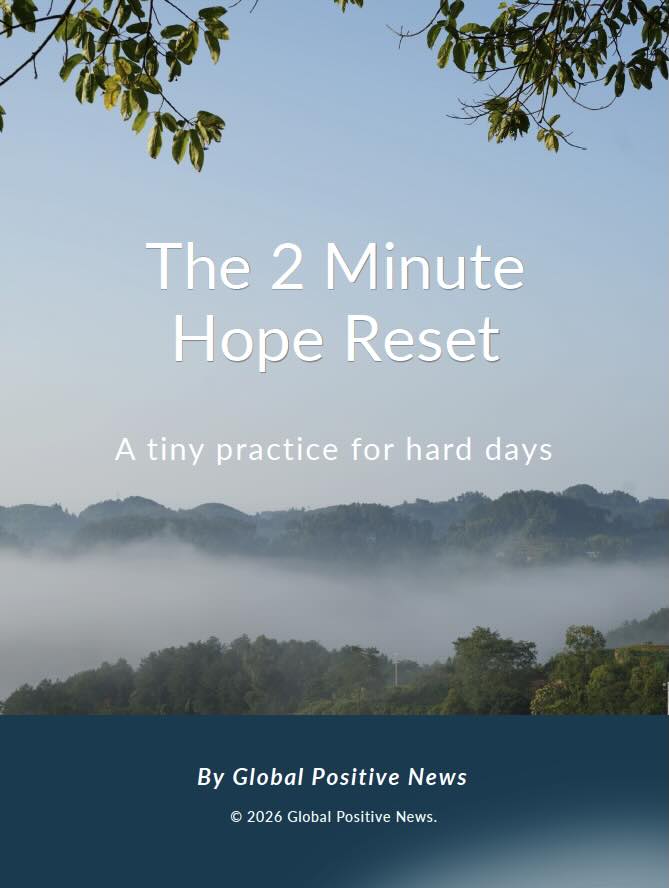
Having a hard day?
The 2 Minute Hope Reset is a short free guide with three small practices for the days that feel heavy. Two minutes each, nothing to keep up with.
Get the free guideExplore more positive news:
Enjoying stories like this?
Global Positive News Network is reader-supported. If you’d like to support the mission, you can visit the Official GPNN store.