

Gratitude isn’t just a feel-good concept-it physically changes how your brain works. When you practice daily gratitude practices consistently, you trigger measurable shifts in neural pathways that boost resilience and emotional stability.
At Global Positive News Network, we’ve seen how accessible these practices are. You don’t need complicated routines or hours of meditation to rewire your mindset.
How Gratitude Physically Changes Your Brain
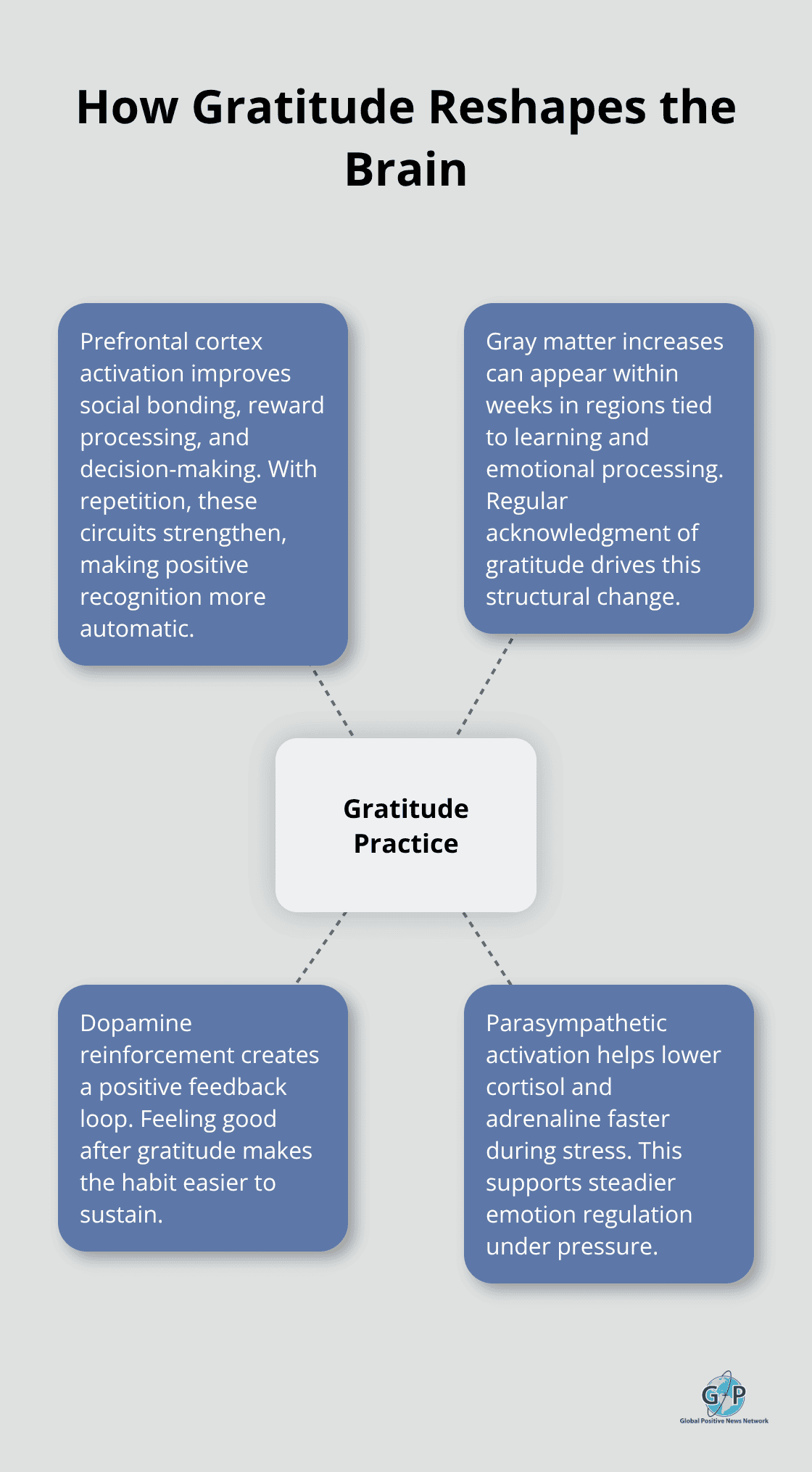
Gratitude isn’t just a feel-good concept-it physically restructures your brain. Research from UC Berkeley’s Greater Good Science Center shows that consistent gratitude practice activates the ventromedial prefrontal cortex, the region responsible for social bonding, reward processing, and decision-making. When you practice gratitude daily, this activation strengthens neural pathways that make it easier for your brain to recognize positive experiences in the future.
A 2019 study published in Frontiers in Psychology found that people who maintained gratitude journals for just three weeks showed measurable increases in gray matter volume in areas linked to learning and emotional processing. This isn’t abstract neuroscience-your brain physically restructures itself when you regularly acknowledge what you’re grateful for. The most important takeaway is that these changes happen relatively quickly. Meaningful brain changes occur within weeks of consistent gratitude work, not months.
Dopamine and the Gratitude Loop
Gratitude triggers dopamine release in your brain’s reward system, which explains why the practice feels good and why it becomes easier to maintain over time. When you consciously notice something you’re grateful for, your brain releases dopamine, which reinforces the behavior and makes you more likely to seek out gratitude experiences again. This creates a positive feedback loop that strengthens with repetition.
Research from the National Institute of Mental Health indicates that sustained dopamine levels improve motivation, focus, and emotional regulation far more effectively than temporary spikes from external rewards. The practical implication is straightforward: the more consistently you practice gratitude, the more your brain naturally gravitates toward noticing positive elements in your life (without requiring willpower or forced effort). This neurological mechanism explains why people who stick with gratitude practices report that positivity becomes their default mental state rather than something they have to manufacture.
Emotional Resilience Under Pressure
The prefrontal cortex strengthening from gratitude practice directly improves your ability to regulate emotions during stress. When difficult situations arise, a brain trained in gratitude activates the parasympathetic nervous system more efficiently, lowering cortisol and adrenaline levels faster than untrained brains. Research from Harvard Medical School shows that gratitude boosts well-being, improves sleep, and lessens depression.
This means gratitude isn’t just making you feel better in good moments-it’s fundamentally changing how your nervous system responds to adversity. During challenging periods, your gratitude-trained brain automatically searches for elements worth appreciating, which interrupts the stress response cycle and prevents you from spiraling into rumination or anxiety. These neurological shifts set the stage for the practical techniques that actually build and sustain your gratitude habit.
Start Your Gratitude Practice Today
The neurological shifts we discussed require consistent action, and that action starts with simple, repeatable techniques you can implement immediately. The most effective gratitude practices aren’t complicated rituals or time-consuming exercises. They’re specific, measurable habits that fit into your existing routine. Research suggests that practicing gratitude regularly can improve well-being. This means you don’t need daily hour-long sessions to see results.
The key is consistency over duration, which makes gratitude accessible even for people with packed schedules.
Write What Actually Matters
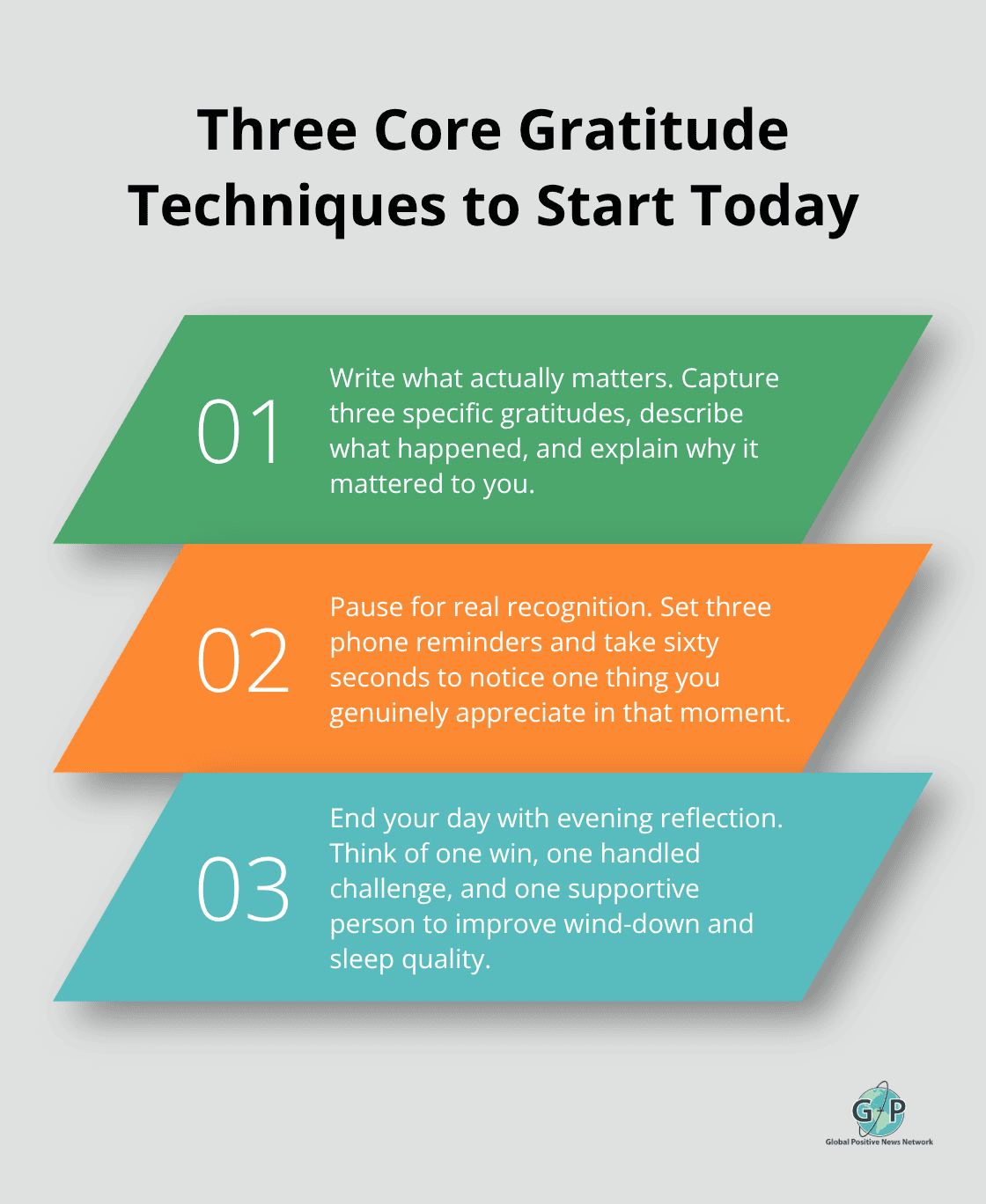
Gratitude journaling works, but only when you write with specificity. Instead of writing general statements like “I’m grateful for my family,” write exactly what happened and why it affected you. For example: “I’m grateful my colleague stayed late to help me finish the project because it meant I could leave on time and have dinner with my kids instead of working until midnight.” Specific entries create stronger neural activation in your reward centers than vague statements.
A study from Emmons and McCullough in the Journal of Personality and Individual Differences showed that people who listed three to five specific gratitudes twice per week experienced greater mood improvements than those who listed more items without detail. Limit your journal entries to three specific gratitudes, describe what happened, and explain why it mattered to you. Write for five to ten minutes maximum. This approach prevents gratitude journaling from becoming a chore while maximizing the neurological benefit.
Morning represents the optimal time because it primes your brain to notice positive elements throughout the day, but evening works if mornings don’t fit your schedule.
Pause for Real Recognition
Gratitude pauses throughout your day work better than a single journaling session because they interrupt rumination cycles when stress actually occurs. Set phone reminders at three specific times daily, not random moments. When your reminder goes off, pause for sixty seconds and identify one thing happening right now that you appreciate. It could be your coffee tasting good, a successful meeting, or simply that you’re sitting down. The specificity matters less than the interruption itself.
Your brain can’t simultaneously focus on stress and genuine appreciation, so these pauses function as circuit breakers during difficult moments. People who took deliberate gratitude pauses daily showed improvements in mental health compared to control groups. Set reminders for morning, midday when stress typically peaks, and early evening before you leave work. This prevents the practice from feeling forced while maximizing impact during high-stress periods.
End Your Day With Evening Reflection
End your day with a two-minute appreciation ritual instead of scrolling through your phone. Think through one moment from your day that went well, one challenge you handled, and one person who supported you. Don’t write it down, just think it through. Research from Frontiers in Psychology showed that people who engaged in evening gratitude reflection fell asleep 10 minutes faster on average and reported better sleep quality than those who used screens before bed.
The blue light from phones suppresses melatonin, while gratitude activates your parasympathetic nervous system, preparing your body for rest. This ritual costs nothing, requires no equipment, and directly counteracts the sleep-disrupting effects of evening screen time. The practice also prevents your brain from cycling through work stress or tomorrow’s worries as you’re trying to sleep. These three techniques work together to create momentum, but obstacles will still appear as you establish your practice routine.
Overcoming Common Obstacles to Gratitude Practice
Skepticism kills gratitude habits before they start. Many people dismiss gratitude as superficial positivity that doesn’t address real problems, so they never commit to trying it consistently. This resistance is understandable but misguided. The neurological changes we discussed earlier require weeks of actual practice to materialize, not theoretical belief. You don’t need to feel convinced that gratitude works before starting.
Start With a Fourteen-Day Trial
Start the three-technique routine for fourteen days without judgment, then evaluate the results. Research from UC Davis tracked people who approached gratitude with initial doubt, and after two weeks of consistent practice, their skepticism shifted simply because they experienced measurable improvements in sleep quality, focus, and mood. The data changes minds faster than arguments do. Your brain doesn’t care whether you believe in gratitude initially. It responds to consistent action.
Set a concrete endpoint for your trial period so you’re not committing to a vague forever scenario. Fourteen days removes the pressure of permanence while giving your brain enough time to show real changes.
Maintain Your Practice During Difficult Periods
Consistency collapses when life becomes difficult, which is precisely when gratitude matters most. Gratitude practices during stressful periods can counteract depression and improve well-being. The opposite is true. Your gratitude practice becomes most valuable during hardship because it prevents your brain from spiraling into catastrophic thinking.
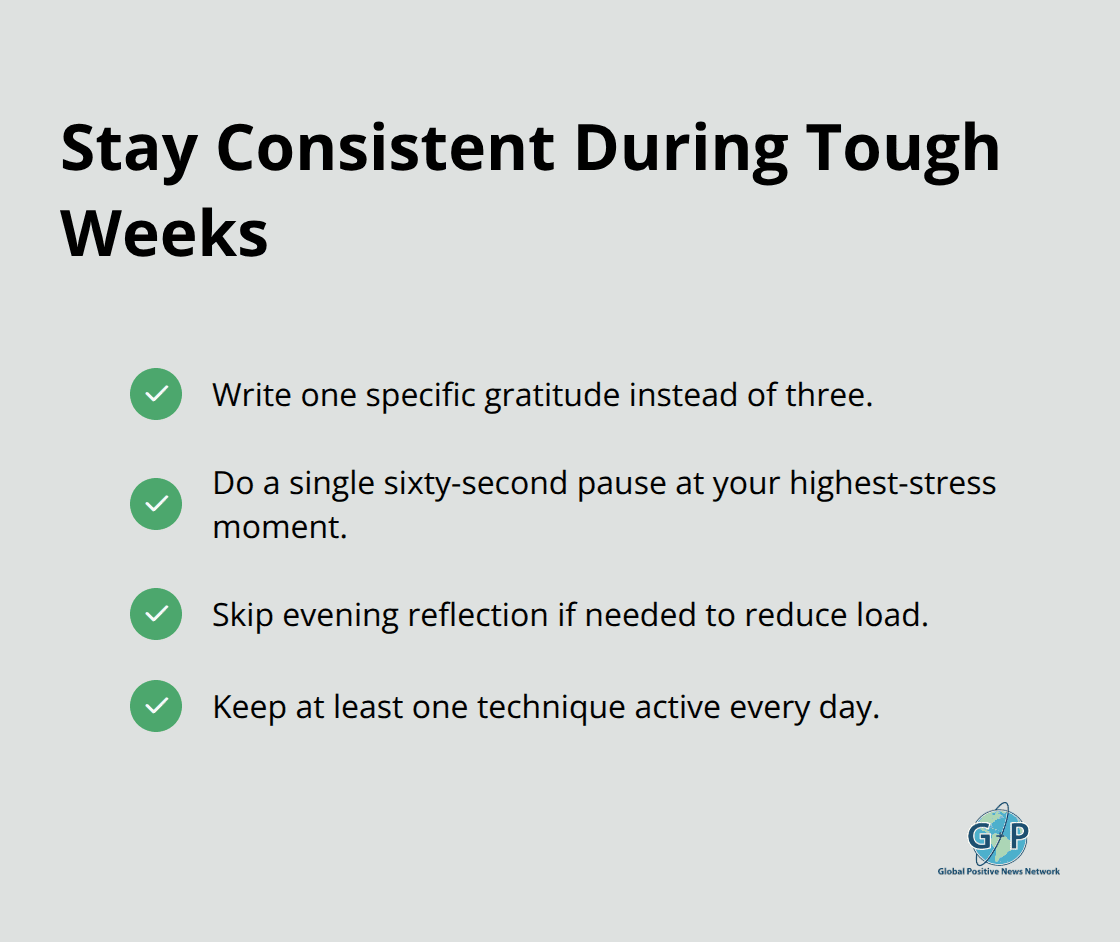
During difficult weeks, reduce your practice intensity rather than abandoning it entirely. Instead of journaling three specific gratitudes, write one. Replace all three daily pauses with a single sixty-second pause at your highest-stress moment. Skip evening reflection if necessary, but maintain at least one technique daily.
This scaled-down approach preserves the neural pathway activation without overwhelming you when energy is scarce.
Break Through Plateaus With Variation
Plateaus feel like your practice stopped working after three to four weeks of improvement. Your brain actually adapted to the routine, which is neurologically healthy but psychologically frustrating. Combat obstacles by rotating your practice methods. If morning journaling feels stale, switch to evening journaling for two weeks. Change what you write about or how you write it. Add a fourth daily pause when the original three lose impact.
Small variations force your brain to engage with the practice differently, reactivating the reward pathways that had stabilized. Research from Psychological Science showed that people who varied their gratitude methods maintained benefits long-term, while those who repeated identical routines experienced diminishing returns after eight weeks. Variation isn’t cheating the system. It’s how your brain stays engaged with the practice (and how you sustain momentum over months rather than weeks).
Final Thoughts
The neurological changes from daily gratitude practices compound over months and years, fundamentally reshaping how your brain processes experience. People who maintain gratitude habits for six months find that positivity becomes their automatic response to situations rather than something they manufacture through effort. Your mindset shifts from scanning for problems to naturally recognizing opportunities and positive elements in ordinary moments.
When you operate from a gratitude-based mindset, your interactions with others change measurably-you become more patient with colleagues, more present with family, and more generous with friends. Research shows that people practicing gratitude report stronger relationships and increased social connection. Your shifted perspective influences how others perceive situations around you, creating ripples of positivity through your immediate community.
Start your fourteen-day trial using the three techniques we covered, then evaluate what worked and what felt forced. Keep the practices that fit your life and adjust the ones that don’t. Visit Global Positive News Network to explore how others build more positive lives and contribute to their communities.
Having a hard day?
The 2 Minute Hope Reset is a short free guide with three small practices for the days that feel heavy. Two minutes each, nothing to keep up with.
Get the free guideExplore more positive news:
Enjoying stories like this?
Global Positive News Network is reader-supported. If you’d like to support the mission, you can visit the Official GPNN store.