
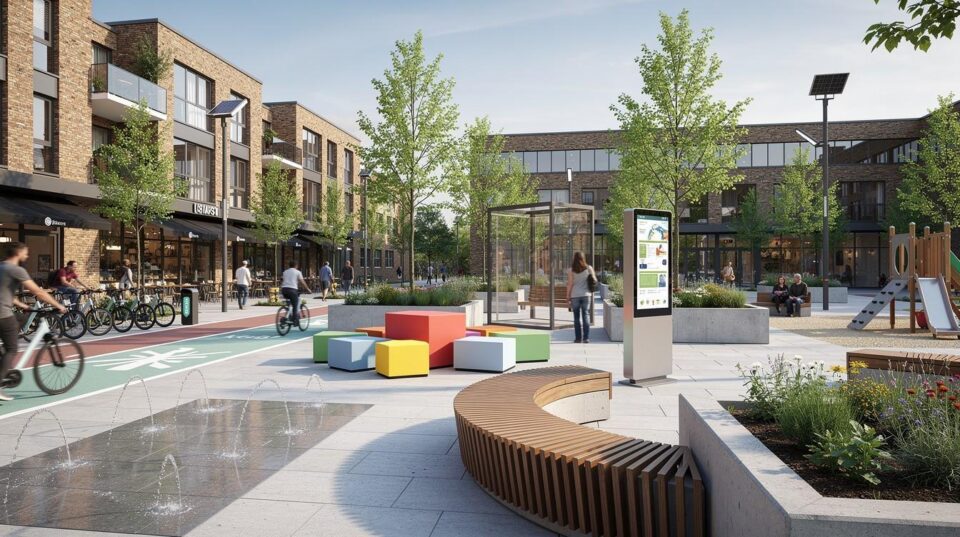
Cities shaped by hope produce measurable results. Research shows that access to green spaces increases mental wellbeing by up to 16%, while walkable neighborhoods reduce social isolation and strengthen community bonds.
At Global Positive News Network, we believe joyful city innovations aren’t luxuries-they’re practical investments in human flourishing. This article explores how affordable housing, smart infrastructure, and thoughtful public spaces transform urban life into something genuinely better.
How Green Spaces and Public Life Shape Joyful Cities
Access to quality green spaces isn’t optional in cities that prioritize wellbeing. Research consistently shows that access to urban green spaces is associated with reduced stress, improved mental health, and greater social cohesion. Barcelona’s superblock initiative restricted traffic in residential neighborhoods and converted streets into green gathering zones. When cities remove barriers between people and nature, participation follows naturally. Parks generate immediate mental health gains, but their real power lies in creating predictable places where strangers become neighbors. A study from the University of Essex found that just 5 minutes in green spaces reduces stress levels measurably, making neighborhood parks essential infrastructure rather than amenities.
Walkability Creates Natural Social Bonds
Cities designed for walking generate spontaneous human connection. Copenhagen prioritized pedestrian infrastructure over car lanes and increased retail spending in walkable areas by 20-40% according to local business associations. When people move through neighborhoods at human speed, they notice each other, stop for conversations, and build informal networks. Tokyo’s mixed residential-commercial streets (where apartments sit above shops and services) create constant foot traffic that strengthens social ties without formal events. Walkable neighborhoods reduce social isolation particularly for elderly residents and families without cars. Portland’s Southwest Neighborhoods Inc. documented that residents in highly walkable districts reported 30% fewer feelings of loneliness compared to car-dependent areas. Cities that prioritize walking infrastructure see lower rates of depression and anxiety while simultaneously supporting local businesses.
Public Squares Activate Civic Life
Well-designed public squares concentrate community energy into specific locations. Bogotá’s Ciclovía program closes major streets to cars every Sunday, drawing 2 million participants monthly who reclaim urban space for walking, cycling, and gathering. These regular activations shift how residents perceive their city-from a place to pass through to a place to inhabit. Lisbon’s Praça do Comércio and Barcelona’s Las Ramblas demonstrate that prominent public squares become cultural centers only when cities actively program them with markets, performances, and seasonal celebrations. Cities that leave squares empty and unprogrammed see them become underutilized. The difference between a vibrant square and an abandoned one often comes down to consistent activation and maintenance. Small cities like Medellín transformed public spaces through regular community events, which increased civic participation rates by 45% in participating neighborhoods according to local government reports.
Moving Toward Economic Opportunity
These green and walkable spaces form the foundation for cities that work for everyone. The next section examines how affordable housing and economic opportunity policies complete this picture, turning joyful public life into sustainable prosperity.
Building Prosperity Through Mixed-Income Communities
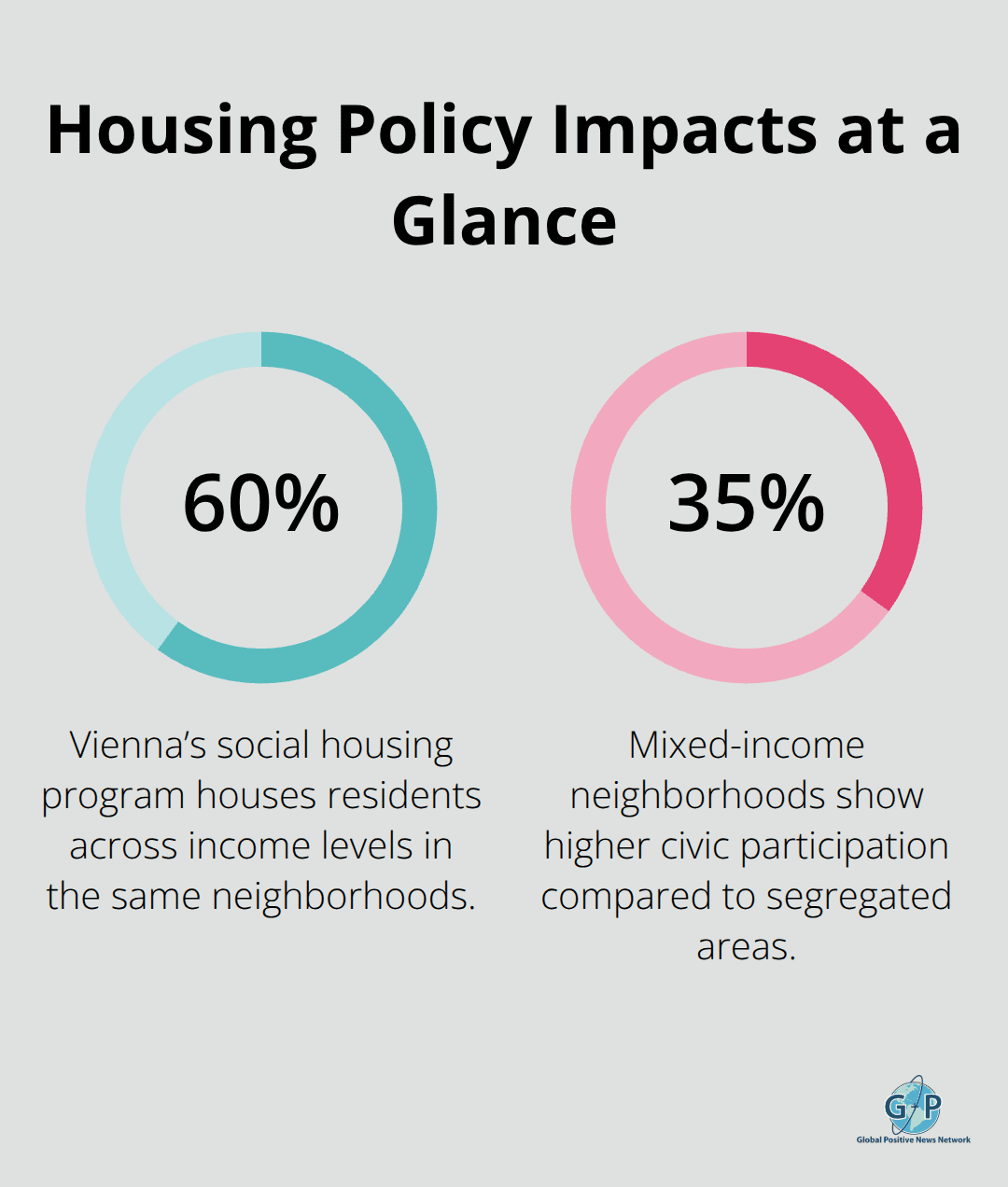
Housing policy determines who lives in joyful cities and who faces displacement. Mixed-income housing developments counter the segregation that fractures community bonds. Vienna’s social housing program houses 60% of residents across income levels in the same neighborhoods, producing measurable civic health. When wealthy families, working professionals, and lower-income households share the same streets, schools, and parks, social division weakens. Research from the Urban Land Institute found that mixed-income neighborhoods show 35% higher civic participation rates than segregated areas.
Shared infrastructure forces interaction across class lines, breaking down stereotypes through daily contact. Cities that mandate inclusionary zoning policies-requiring developers to include affordable units in new projects-maintain economic diversity. Montgomery County, Maryland implemented inclusionary zoning in 1974 and has produced over 12,000 affordable units while maintaining neighborhood stability. This approach works because it prevents the boom-bust cycles that destroy communities when renters face sudden displacement.
Local Business Networks Generate Real Employment
Cities that actively support small businesses create jobs that pay living wages without requiring workers to commute hours. Local business improvement districts in cities like San Francisco and New York have documented that neighborhood retail districts generate 40% more employment per square foot than chain-dominated areas. Technical assistance programs, affordable commercial rent subsidies, and equipment grants help entrepreneurs survive the critical first three years. Bangladesh’s Grameen Bank model, adapted globally, shows that microfinance for small business creation produces sustainable employment at lower cost than traditional job programs. Cities that partner with community development financial institutions to fund local business expansion see measurable returns-for every dollar invested, local businesses generate approximately four dollars in economic activity according to the Local Initiatives Support Corporation. Cities establish small business loan funds with below-market interest rates and mentorship programs that pair new entrepreneurs with experienced owners. This direct investment in local ownership keeps profits circulating within neighborhoods rather than flowing to distant corporate headquarters.
Fair Housing Enforcement Changes Who Lives Where
Housing discrimination persists because enforcement remains weak in most cities. Fair housing audits-where trained testers apply for housing to detect discrimination-reveal systematic exclusion patterns that residents never see. When cities actively conduct these audits and penalize violations, discriminatory landlords face real consequences. Fair housing enforcement actions increased by 23% between 2020 and 2024 in cities with dedicated enforcement staff. Cities that hire dedicated fair housing officers and fund legal aid for discrimination victims see measurable shifts in neighborhood diversity. Minneapolis passed strong fair housing ordinances in 2021 that expanded protected classes and increased penalties, resulting in documented increases in housing applications from previously excluded groups. Joyful cities require active enforcement, not passive policies. Without investigation, audit, and penalty, fair housing laws sit unused while discrimination continues behind closed doors.
Smart Infrastructure Supports Economic Participation
Technology and infrastructure now determine whether prosperity reaches all residents or concentrates among the wealthy. Sustainable communities that prioritize walking, biking, and transit access reduce transportation costs for lower-income households while improving public health. The next section examines how smart city solutions and sustainable transportation complete the economic picture, turning mixed-income stability into widespread wellbeing.
How Cities Use Technology to Connect and Protect
Smart Infrastructure Solves Real Problems
Smart city infrastructure works best when it addresses actual problems residents face daily. Cities like Barcelona and Copenhagen deployed real-time traffic monitoring systems that reduced congestion by 20-30% while simultaneously lowering emissions, according to municipal transportation reports. These systems don’t just move cars faster-they free up time residents spend commuting, time that returns to families and communities. Seoul installed IoT sensors across 25,000 streetlights that adjust brightness based on pedestrian movement, cutting energy consumption by 40% while improving safety in dark areas. The practical benefit extends beyond cost savings: residents feel safer, which increases foot traffic and spontaneous social interaction.
Crime prevention through environmental design (CPTED) principles show that well-lit, monitored public spaces with clear sightlines reduce property crime by 26% compared to poorly maintained areas. Cities that invest in visible, functional infrastructure send a message that public safety matters, which strengthens residents’ psychological sense of security. However, surveillance technology only works when paired with actual police response and community trust. Medellín’s neighborhood-based security cameras, managed by community boards rather than distant government agencies, gained public support because residents controlled how footage was used.
Transit Networks Determine Economic Access
Sustainable transportation networks directly determine whether lower-income residents can afford to live in cities. Car-dependent neighborhoods force households earning below $35,000 annually to spend 25-35% of income on transportation, according to the Center for Neighborhood Technology, leaving nothing for healthcare or education. Transit-rich neighborhoods reduce this burden to 9-15%, fundamentally changing economic opportunity.
Cities like Curitiba, Brazil prioritized alternative fuels and advanced vehicles over car infrastructure and saw transit ridership reach 2.3 million daily trips across a metropolitan area of 4 million residents. The key: dedicated bus lanes that move buses faster than private cars, making transit the rational choice rather than the sacrifice. Vienna’s annual transit pass costs residents 365 euros while car ownership averages 8,000 euros annually, yet transit carries 38% of all trips because it actually works.
Digital Integration Amplifies Transportation Benefits
Digital connectivity platforms amplify transportation benefits when cities integrate payment systems, real-time arrival data, and trip planning across all modes. Singapore’s unified mobility app combines buses, trains, bike-sharing, and ride-hailing into one interface where residents pay one fare regardless of mode, increasing transit usage by 18% since implementation.
Digital access programs matter equally: cities that provide free public WiFi in transit stations and community centers see increased job applications from lower-income residents who gain access to employment searches and skill-building resources. Philadelphia’s Keystone Opportunity Program distributes subsidized internet access to 50,000 households earning below 200% of poverty level, enabling residents to work from home, access telehealth services, and pursue online education without bearing full connectivity costs.
Final Thoughts
Joyful city innovations work because they address real human needs with measurable results. Cities that prioritize green spaces, walkable neighborhoods, mixed-income housing, and sustainable infrastructure produce concrete improvements in mental health, economic opportunity, and social connection. Residents in these cities report lower stress levels, stronger community bonds, and greater civic participation.
Communities can start immediately by advocating for fair housing enforcement in their neighborhoods, supporting local business improvement districts, and pushing city councils to fund accessible green spaces. Neighborhood groups can organize regular activation of public squares through markets and community events, while transit advocates pressure municipal governments to prioritize bus lanes and affordable passes over car infrastructure. These actions compound over time, shifting how cities function at a fundamental level.
Cities built on hope strengthen social fabric because they remove barriers between people and create predictable places for interaction. When residents can afford housing, reach jobs through transit, and gather in safe public spaces, they invest in their communities rather than merely surviving in them. Global Positive News Network believes these stories of urban transformation deserve attention because they show what’s possible when cities prioritize human flourishing.
Having a hard day?
The 2 Minute Hope Reset is a short free guide with three small practices for the days that feel heavy. Two minutes each, nothing to keep up with.
Get the free guideExplore more positive news:
Enjoying stories like this?
Global Positive News Network is reader-supported. If you’d like to support the mission, you can visit the Official GPNN store.