

Optimism isn’t just a feel-good concept-it’s a measurable force that shapes your mental and physical health. At Global Positive News Network, we’ve seen how wellbeing through optimism creates real, lasting change in how people live and connect with others.
This guide walks you through the science, practical techniques, and community impact of building a genuinely optimistic mindset.
How Optimism Rewires Your Brain
Optimism doesn’t work through wishful thinking-it operates through concrete neurological changes. When you maintain an optimistic outlook, your brain increases production of serotonin and dopamine, the neurotransmitters directly responsible for mood regulation and motivation. A study from the University of Pennsylvania found that individuals who scored highest on optimism measures showed significantly lower cortisol levels, the primary stress hormone. This matters because chronic cortisol elevation damages your immune system, accelerates aging, and increases inflammation throughout your body.
Optimism and Heart Disease Risk
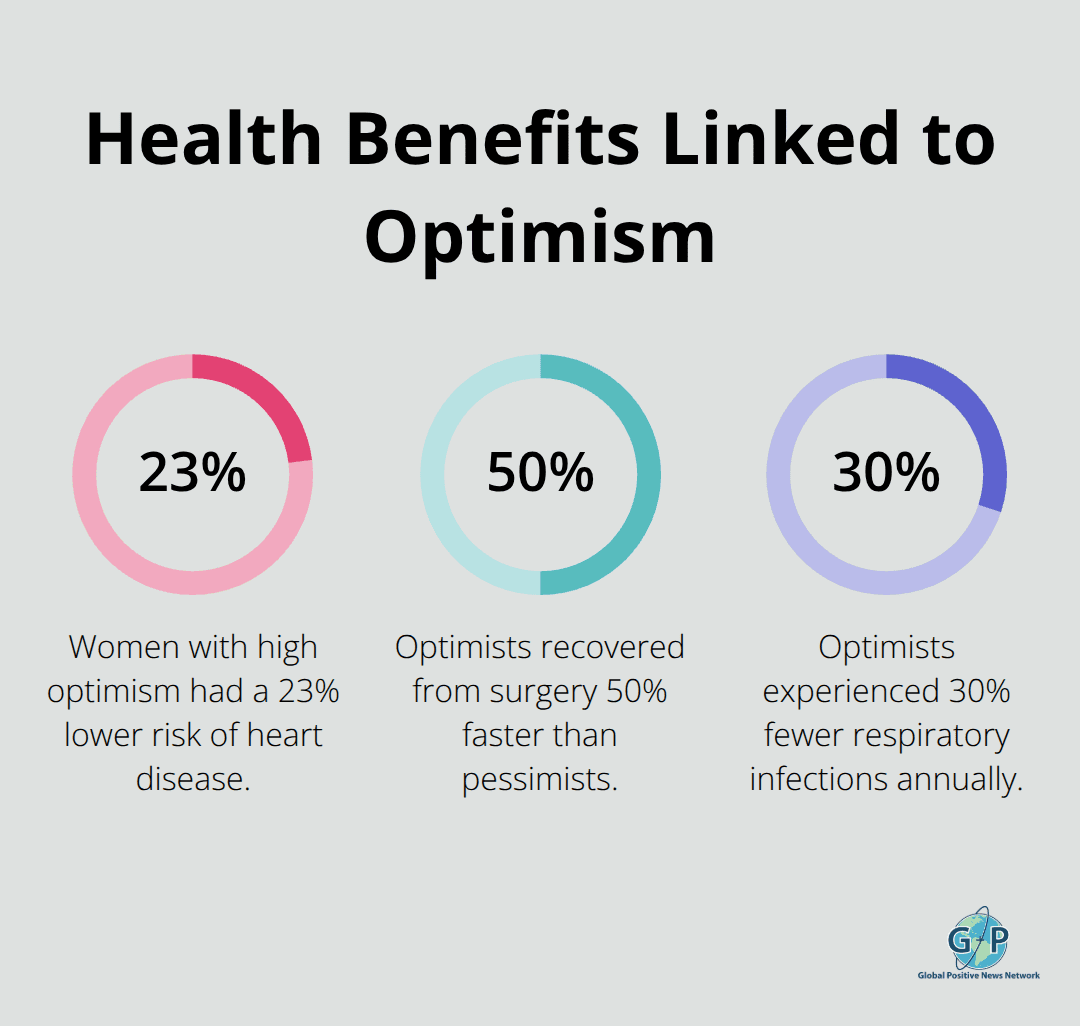
Research published in the American Journal of Epidemiology tracked 70,000 women over eight years and found that those with the highest optimism levels had a 23% lower risk of heart disease compared to pessimistic counterparts. Your brain literally functions differently when you practice optimism-the prefrontal cortex, responsible for rational thinking and emotional regulation, shows increased activity in optimistic individuals, while the amygdala, which triggers fear responses, becomes less reactive.
Physical Health Outcomes Track With Optimistic Thinking
The connection between optimism and physical health isn’t theoretical. Harvard Medical School researchers followed 1,500 adults and discovered that optimists recovered from surgery 50% faster than pessimists, with fewer post-operative complications. Optimistic people show measurably better blood pressure control, stronger immune function, and lower inflammation markers. A longitudinal study in Health Psychology demonstrated that optimists had 30% fewer respiratory infections annually.
The mechanism is straightforward: optimism reduces stress hormones, which frees your immune system to function properly instead of being suppressed by constant cortisol flooding. Optimists also make better health decisions-they’re 40% more likely to exercise regularly and maintain healthier diets according to research from the American Psychological Association. This creates a reinforcing cycle where optimism leads to better behaviors, which produce better health outcomes, which strengthen optimism further.
Longevity Gains From Sustained Optimism
Optimism directly predicts lifespan. A Boston University School of Medicine study following 70,000 women found that the most optimistic individuals lived 8.5 years longer on average. Men showed similar patterns-research in JAMA Psychiatry tracked 2,500 men and found optimists had a 76% higher likelihood of living into their 85s. The research is unambiguous: optimism correlates with longer life independent of genetics, wealth, or education level.
This longevity advantage compounds because optimistic people experience less chronic stress, maintain better social connections, and exhibit stronger resilience during health crises. When researchers control for health behaviors and socioeconomic factors, optimism still accounts for significant additional lifespan extension, suggesting the neurological and physiological benefits operate independent of lifestyle choices alone. These measurable gains in both lifespan and health outcomes reveal why the next step matters-translating this science into actionable daily practices that reshape how you think and respond to life’s challenges.
Building an Optimistic Mindset Through Practical Techniques
Interrupt Negative Thoughts With Cognitive Reframing
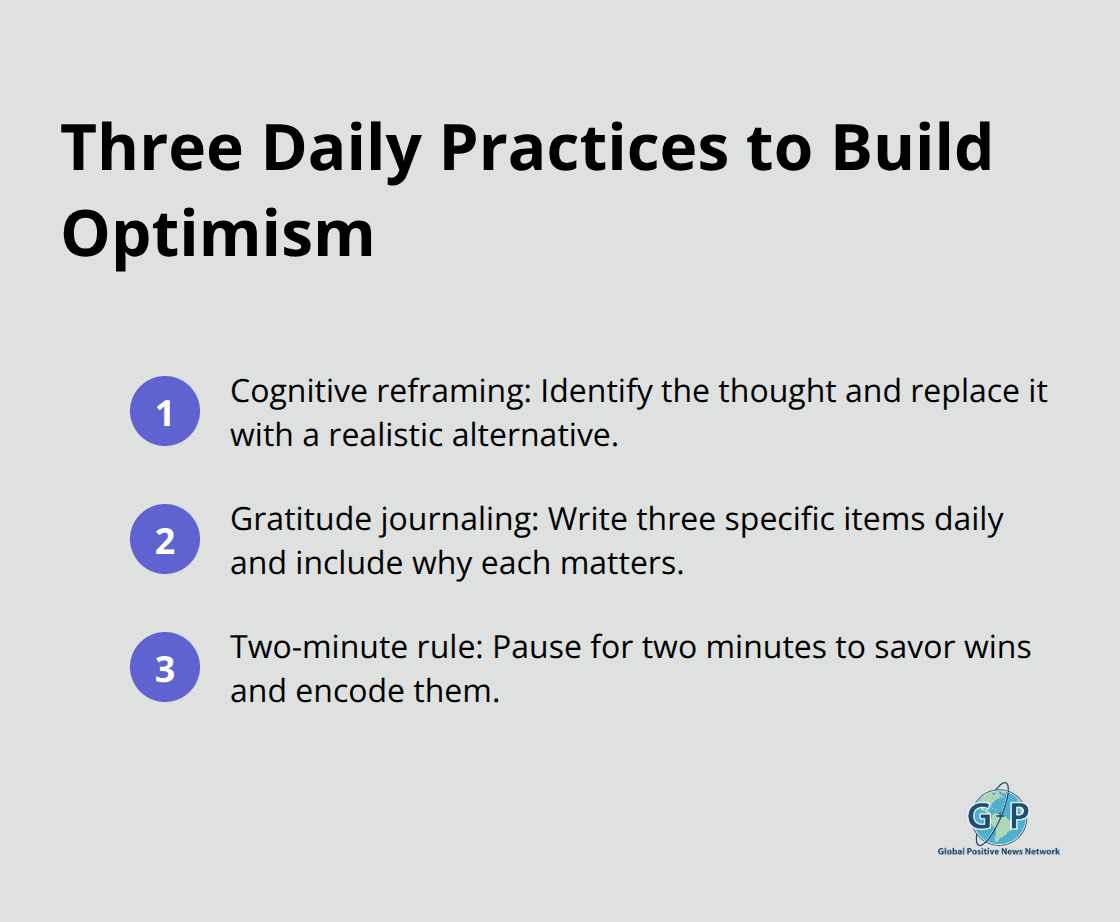
The science shows optimism works, but knowing this doesn’t automatically shift how your brain responds when something goes wrong. You need concrete techniques that interrupt the automatic negative thought pattern before it spirals. The most effective method is cognitive reframing, which doesn’t mean pretending problems don’t exist-it means training yourself to identify the specific thought, question its accuracy, and generate a more realistic alternative.
When you catch yourself thinking “I always fail at this,” pause and ask three questions: Is this absolutely true? What evidence contradicts this? What would I tell a friend in this situation? This three-question framework helps interrupt negative thought patterns and activate more realistic thinking.
Start with situations that trigger moderate frustration rather than your most painful experiences. If you miss a deadline, instead of spiraling into “I’m incompetent,” reframe it to “I missed this deadline due to poor planning, and next time I’ll use a project management tool to track deadlines better.” This shifts from a character judgment to a specific, fixable problem. The difference matters neurologically-your brain stops flooding your system with stress hormones and instead activates the prefrontal cortex, the part responsible for problem-solving.
Make Gratitude Journaling Specific and Intentional
Gratitude journaling works differently than general optimism practices because it forces specificity rather than vague positivity. Write down three concrete things daily, but include why each one matters to you-not just what happened. Instead of writing “Had coffee this morning,” write “Had coffee this morning because my neighbor gave me the beans from her garden, which reminded me that people think of me.” This activates the same neural pathways as reframing but from the opposite direction.
The timing matters-morning journaling primes your brain for noticing positive details throughout the day, while evening journaling consolidates those observations into long-term memory patterns. Consistency in this practice builds stronger neural pathways than sporadic longer sessions.
Anchor Optimism With the Two-Minute Rule
Combine journaling with one simple daily habit: the two-minute rule. When something goes well, pause for two minutes and consciously notice it. Did someone smile at you? Did you complete a task? Did you handle frustration without snapping at someone? These micro-moments rewire your attention system to spot evidence that supports optimism rather than pessimism.
Your brain naturally gravitates toward threat detection, so this practice essentially overrides that default setting by forcing deliberate attention toward positive evidence. The consistency matters more than intensity-two minutes daily produces stronger results than occasional longer sessions. These three techniques work together to create lasting change: reframing addresses how you interpret events, gratitude journaling trains your attention toward positive details, and the two-minute rule anchors those observations into your neural patterns. Once these practices become automatic, your brain’s default response to challenges shifts fundamentally, which sets the stage for how optimism transforms your relationships and community connections.
How Optimism Transforms Your Relationships
Conflict Resolution and Relationship Satisfaction
Optimistic people attract stronger relationships because they respond differently to conflict and disappointment. When a relationship hits friction, pessimists interpret it as a permanent character flaw in themselves or the other person. Optimists view the same situation as a specific, fixable problem. Research tracked couples over time and found that partners who maintained optimistic outlooks resolved conflicts faster and reported higher relationship satisfaction scores.
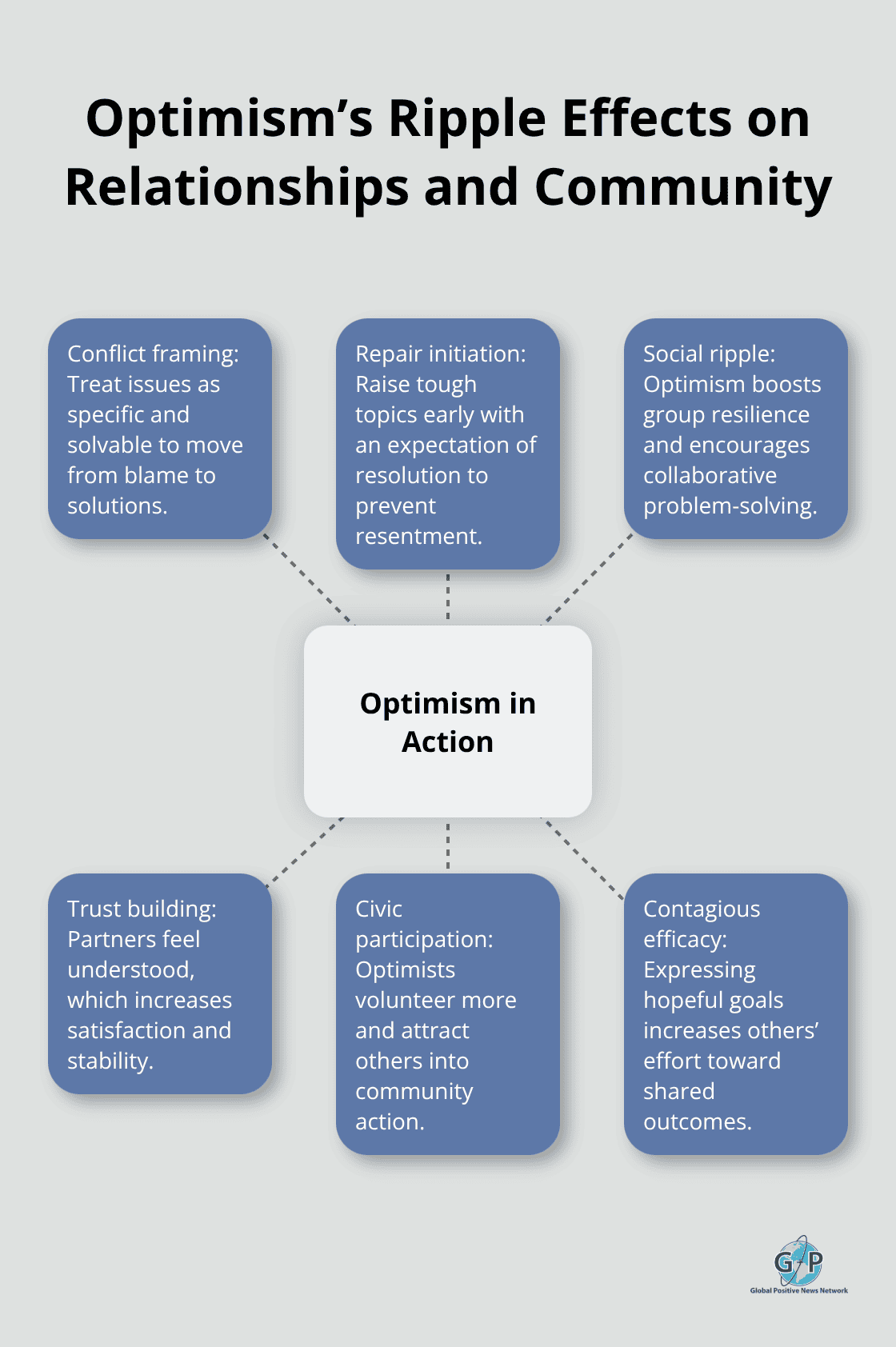
The mechanism operates through how each person frames the problem. Optimistic people ask constructive questions like “What can we do differently next time?” instead of “Why does this always happen to us?” This shifts conversations from blame toward solutions. When your partner forgets an important date, an optimistic response focuses on understanding the cause and preventing recurrence rather than questioning their commitment. This approach strengthens trust because your partner feels understood rather than attacked.
Initiating Repair and Building Stronger Bonds
Optimists initiate difficult conversations more readily because they expect resolution rather than catastrophe, which paradoxically makes those conversations more productive. Research in relationship science found that optimistic individuals initiated relationship repair conversations more frequently than pessimists, and those conversations led to measurably stronger bonds. This willingness to address problems directly prevents resentment from accumulating and keeps relationships resilient through inevitable challenges.
The Ripple Effect in Your Social Circle
Your optimism directly influences how others perceive and respond to you, creating a self-reinforcing cycle. When you express optimism about shared outcomes, people around you become more likely to contribute effort toward those goals. This isn’t about toxic positivity or ignoring real problems-it’s about framing challenges as solvable.
In your social circle, your optimistic response to setbacks gives others permission to problem-solve rather than spiral into worry. Research tracking friend groups over time found that groups with at least one consistently optimistic member showed better collective resilience during personal crises. Your presence literally changes how your friends and family respond to adversity.
Community Action and Civic Participation
At the community level, optimistic people become natural organizers of positive action. They volunteer more frequently, and their involvement attracts others into civic participation. When you approach community challenges with genuine belief that improvement is possible, you activate problem-solving in others instead of resignation.
This creates measurable community outcomes: neighborhoods with higher average optimism show stronger social cohesion. The practical application means showing up consistently, talking about specific improvements you want to see, and taking visible action toward those improvements rather than complaining about what’s broken. Your optimism becomes contagious, transforming how entire communities respond to their challenges.
Final Thoughts
The evidence proves that optimism isn’t optional for wellbeing. Your brain chemistry shifts measurably, your physical health improves, and your lifespan extends when you practice genuine optimism. These changes ripple outward, transforming how you connect with others and mobilize your community toward shared goals.
Start your optimistic practice with the three techniques outlined earlier: cognitive reframing in situations that frustrate you moderately, specific gratitude journaling each morning, and the two-minute rule to anchor your progress. These practices interrupt your brain’s default threat-detection system and train it to notice evidence supporting optimism instead. The neurological changes begin immediately, though the full benefits compound over years and decades.
Wellbeing through optimism creates real transformation in how people live, and Global Positive News Network shares stories of personal triumphs and community impact to help you maintain this outlook. Your journey toward a more optimistic mindset starts today, with one reframed thought, one gratitude entry, and one two-minute pause to notice what went right.
Having a hard day?
The 2 Minute Hope Reset is a short free guide with three small practices for the days that feel heavy. Two minutes each, nothing to keep up with.
Get the free guideExplore more positive news:
Enjoying stories like this?
Global Positive News Network is reader-supported. If you’d like to support the mission, you can visit the Official GPNN store.