
Age is not a barrier to meaningful contribution. At Global Positive News Network, we believe positive aging means staying active, engaged, and vital at every stage of life.
Society’s outdated views on productivity are changing fast. People in their 60s, 70s, and beyond are starting businesses, volunteering, learning new skills, and building stronger communities than ever before.
Age Isn’t Stopping Anyone From Contributing
The Data Proves Older Adults Are Reshaping Their Lives
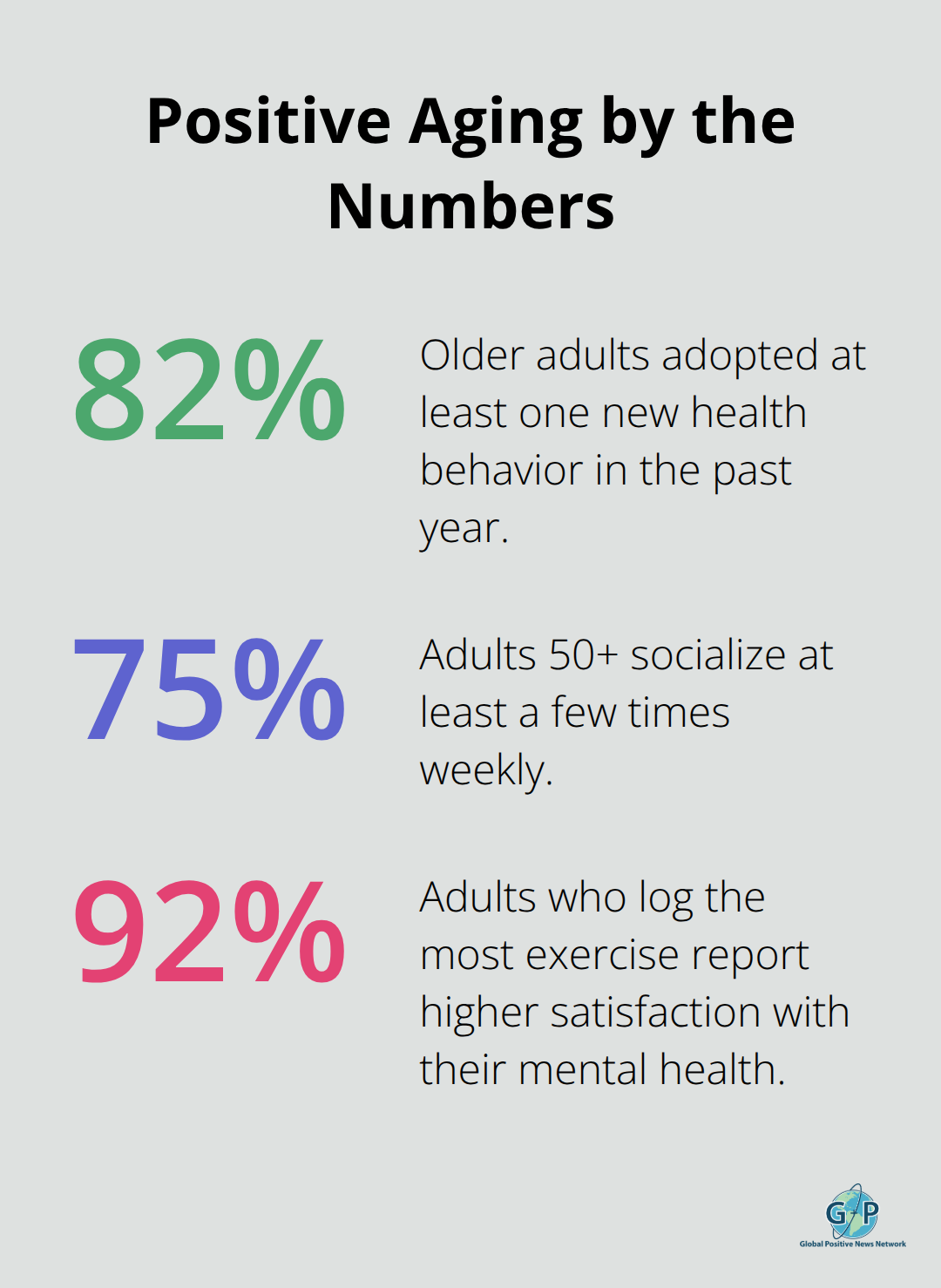
The numbers speak clearly. According to the NORC and AARP Foresight 50+ FastTrack study, 82% of older adults adopted at least one new health behavior in the past year, with adults aged 65 and older starting more health-related activities than those aged 50–64. This reflects real change across millions of people. Those who retired engaged in significantly more activities than those still working, which suggests that freedom and time fuel contribution and growth. The stereotype that older adults slow down or withdraw from life contradicts what actually happens in communities across the country.
Career Switchers Prove Capability Trumps Age
People in their 60s, 70s, and beyond start businesses, switch careers into fields like cybersecurity, nursing, and environmental protection, and take on roles that demand both skill and stamina. Midlife career switchers often move into these fields specifically because they offer meaningful work and stability. Healthcare roles attract people who seek purposeful work where they can apply decades of accumulated experience. Project management, IT, and public-sector positions value the problem-solving and leadership skills that come with time in the workforce. The barrier isn’t capability-it’s outdated assumptions about who should work and contribute.
Workplace Culture Determines Success More Than Age
Supportive supervisors and inclusive workplaces dramatically boost the success of older workers transitioning into new roles. When employers remove age-related barriers and invest in training, workers thrive. Trades and technical roles like maintenance work, bus driving, and postal work offer steadier schedules and lower burnout compared to high-stress positions. Many people deliberately move from demanding careers into roles with better work-life balance, not because they’re slowing down but because they’re optimizing their energy. Self-employment and freelancing in consulting, design, and security provide autonomy and flexibility that traditional employment often lacks.
Social Connection and Movement Amplify Vitality
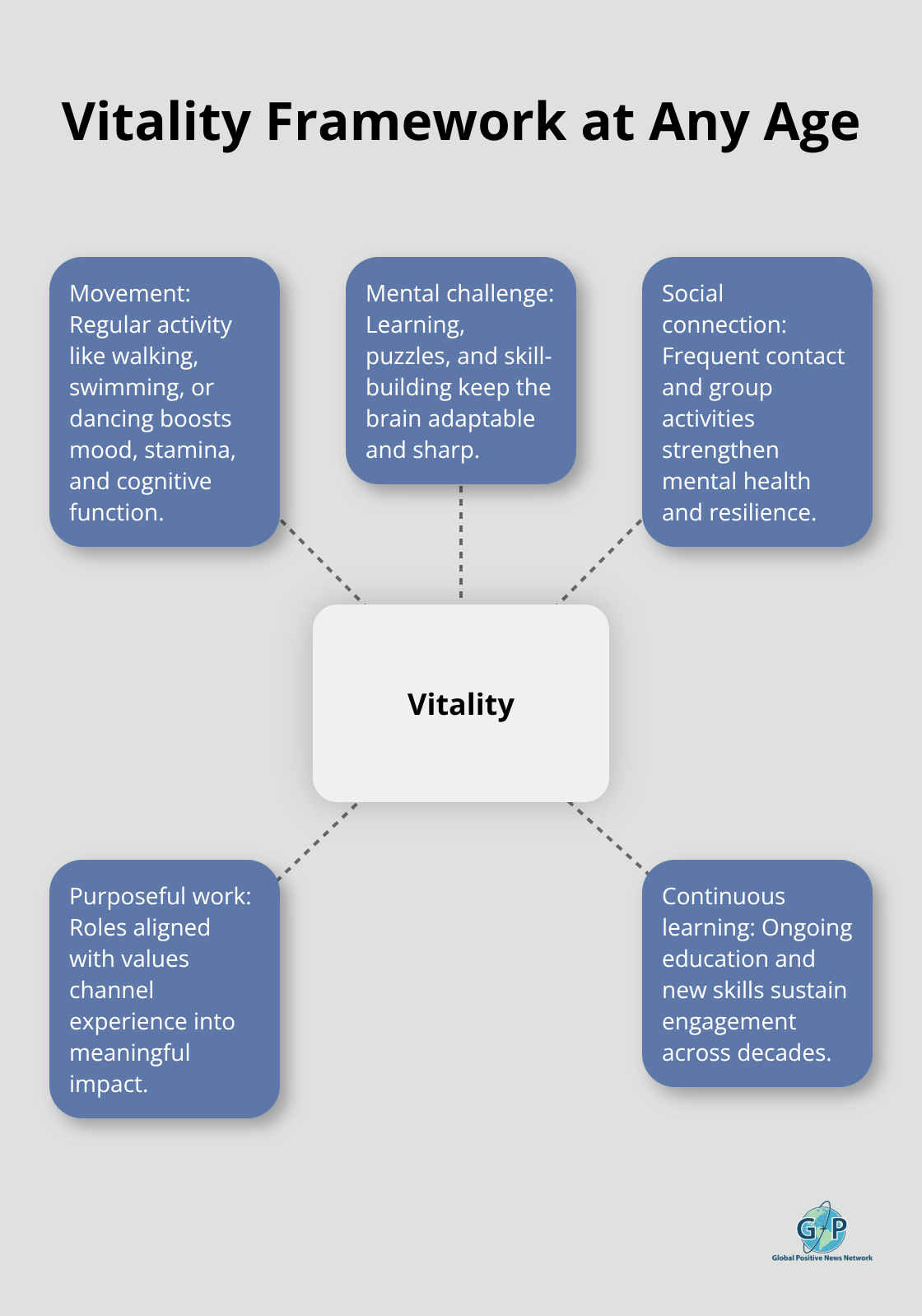
Social connection strengthens this shift-among adults 50 and older, 75% socialize at least a few times weekly, and those who maintain regular social contact report significantly better mental health. Group activities and volunteering build new friendships while deepening existing ones. Physical activity compounds these benefits. Weekly exercisers report excellent or very good mental health at rates near 80%, compared to lower rates among sedentary adults. Vitality emerges from combining regular movement, social ties, purposeful work, and continuous learning-all achievable at any age. These elements work together to create the conditions where people not only survive but thrive across every decade of life, setting the stage for how we can all stay engaged and vital.
How to Build Vitality Into Your Weekly Routine
Vitality requires deliberate choices about how you spend your time and energy. According to the NORC and AARP Foresight 50+ FastTrack study, adults who log the most exercise report significantly higher satisfaction with their mental health (92%) and overall well-being. The pattern is clear: people who move regularly, stay mentally sharp, and maintain social ties feel better and accomplish more. The question isn’t whether vitality is possible at any age-the data confirms it is. The question is how to make it happen in your actual life, not just in theory.
Movement matters more than intensity
Walking, swimming, dancing, and yoga all count as moderate-to-vigorous activity. Group-based physical activity works particularly well because it combines movement with social connection simultaneously. You don’t need a gym membership or expensive equipment to start. A 30-minute walk three times a week, or a weekly swimming session, or a dance class creates measurable improvements in physical health, mood, and cognitive function. The people who sustain these activities aren’t those who choose the most intense workouts-they’re the ones who pick something they actually enjoy and can fit into their schedule consistently. If you hate running, don’t run. If you love gardening or walking with a friend, start there. The best activity is the one you’ll actually do next week and the week after.
Mental sharpness requires active challenge
Reading, learning new skills, puzzles, and meaningful conversations all keep your brain functioning at higher levels. The critical piece isn’t passive consumption-it’s active engagement with material that requires thinking. Learning a new language or skill, working through crossword puzzles, or joining a book club with discussion creates measurable cognitive benefits. Online platforms, community colleges, and libraries offer low-cost or free options for learning. Programming that combines mental stimulation with social connection recognizes that isolation diminishes cognitive benefits even when people stay mentally active on their own. If you’ve always wanted to learn photography, write, or understand how solar panels work, now is the time to start. These pursuits aren’t luxuries-they’re maintenance for your brain.
Social frequency predicts mental health outcomes
Among adults 50 and older, regular social frequency and mental health outcomes show that social participation benefits mental well-being. The difference is substantial: people who maintain regular social contact feel markedly better than those who see others only occasionally. Volunteering, group fitness classes, community organizations, and regular gatherings with friends accomplish this. You don’t need large social circles-consistency matters more than quantity. Meeting the same people weekly for coffee, joining a volunteer group, or attending regular classes creates the continuity that strengthens mental health. Schedule recurring social activities the same way you schedule medical appointments. Treat them as non-negotiable parts of staying well.
From routine to real-world impact
These three elements-movement, mental challenge, and social connection-form the foundation of sustained vitality. When you combine them intentionally, you create conditions where contribution becomes natural. The next step moves beyond personal wellness into how these practices position you to take on meaningful roles in your community and workplace, where your experience and energy create tangible value.
How Work and Contribution Are Reshaping Across Generations
The traditional career model-work from 25 to 65, then retire and step aside-no longer reflects how people actually live. Adults in their 60s and 70s start businesses, move into second careers, and take on leadership roles that demand both experience and energy. This shift isn’t sentimental or theoretical. It’s driven by economics, longer lifespans, and the simple fact that many people refuse to stop contributing when they still have decades ahead.
The Data Behind Career Longevity
NORC and AARP Foresight 50+ research gathers perceptions of the influential 50-and-over demographic, representing more than a third of Americans. This data reflects real momentum. Retirement status directly correlates with higher engagement-those who retired engage in more activities than those still working, suggesting that flexibility and autonomy fuel both personal vitality and community participation.
Where Midlife Career Switchers Find Opportunity
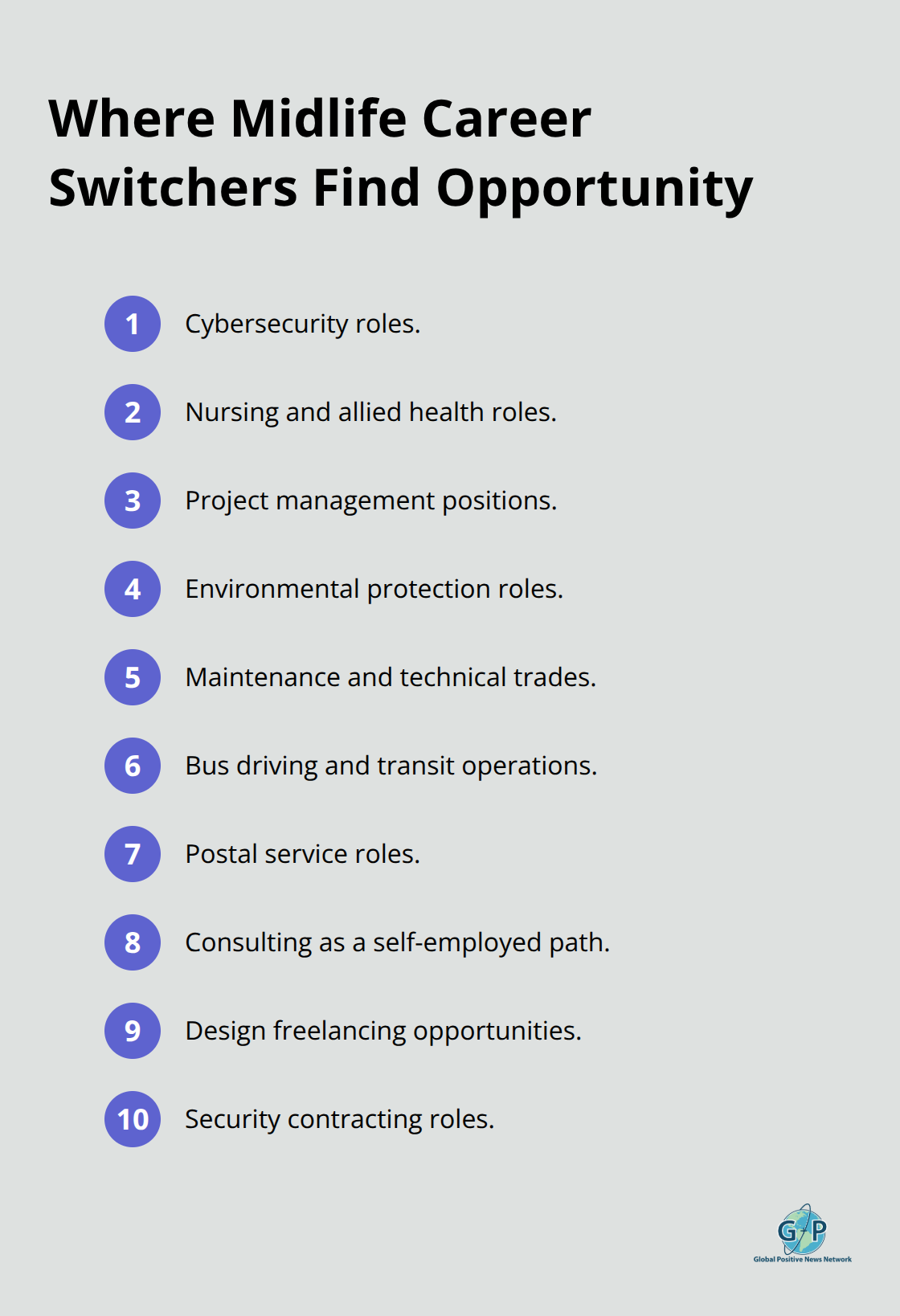
Cybersecurity, nursing, project management, and environmental protection roles increasingly attract midlife career switchers because these fields offer stability, meaning, and demand the problem-solving skills that come from decades of work experience. The barrier has never been capability. It’s been outdated hiring practices and workplace cultures that undervalue experience.
When organizations remove age-related barriers and invest in training, workers thrive and stay longer.
Trades and technical roles like maintenance, bus driving, and postal work offer steadier schedules and lower burnout than high-stress corporate positions, making them particularly attractive to people optimizing for health and longevity rather than maximum income. Self-employment and freelancing in consulting, design, and security provide the autonomy that many people actively seek after years in traditional employment.
Why Organizations Benefit From Multigenerational Teams
Older workers reduce turnover costs, bring institutional knowledge, and mentor younger staff-benefits that extend far beyond individual job performance. Communities gain when experienced people volunteer, lead organizations, and share expertise. Mentoring and advocacy roles leverage decades of accumulated judgment without requiring the same physical intensity as earlier career stages.
Supportive supervisors and inclusive workplaces determine success far more than age itself. Organizations that deliberately build intergenerational teams report stronger innovation, better knowledge transfer, and improved retention across all age groups.
Redefining What Productivity Means
The shift toward roles with societal impact-education, health, environmental work-attracts people motivated by purpose rather than purely by salary. Many move from high-stress positions into lower-pressure roles that align with their values and energy levels, not because they’re slowing down but because they’re being intentional about where their effort goes. This redefines productivity entirely. Contribution no longer means climbing a single ladder or working the longest hours. It means applying your skills where they matter most, at a pace you can sustain, for work that feels meaningful.
Final Thoughts
The evidence is clear: vitality across life stages isn’t determined by age-it’s determined by choice. The 82% of older adults who adopted new health behaviors last year, the career switchers moving into meaningful work in their 60s and 70s, and the millions maintaining strong social ties all demonstrate that positive aging means staying engaged, learning, and contributing on your own terms. Redefining contribution matters because the old model no longer fits how people actually live.
When someone moves from a high-stress corporate role into mentoring, volunteering, or a second career aligned with their values, that person steps forward with intention, not backward. When a person learns a new skill, joins a community group, or starts a business at 70, they live fully rather than defy age. Organizations, communities, and families that recognize experience as an asset-not a liability-thrive across generations.
Building a more inclusive future for all ages requires shifting how we talk about productivity, contribution, and purpose. We must remove barriers that have nothing to do with capability and everything to do with outdated assumptions. We must create pathways for people to work, volunteer, learn, and lead in ways that match their energy and values. We at Global Positive News Network celebrate these stories of people thriving at every life stage, because positive aging is a chapter to live fully, with the freedom to choose how you spend your time and the community to support you along the way.
Having a hard day?
The 2 Minute Hope Reset is a short free guide with three small practices for the days that feel heavy. Two minutes each, nothing to keep up with.
Get the free guideExplore more positive news:
Enjoying stories like this?
Global Positive News Network is reader-supported. If you’d like to support the mission, you can visit the Official GPNN store.