
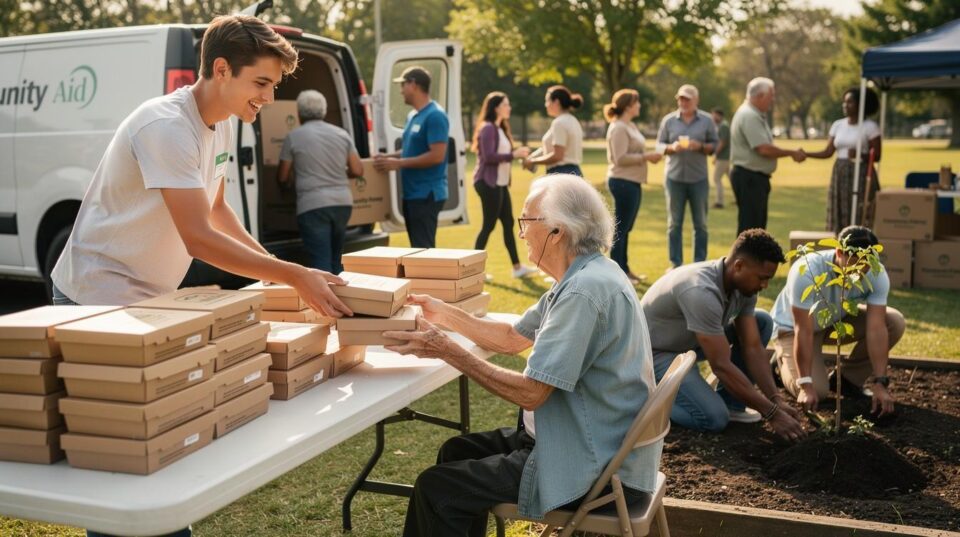
Communities transform when people choose to act. We at Global Positive News Network have witnessed how inspiring acts of kindness ripple outward, strengthening neighborhoods and changing lives.
This blog post shares real stories of ordinary people making extraordinary differences. You’ll learn how to start your own kindness initiative and become part of something bigger than yourself.
What Real Kindness Looks Like in Action
Food Banks and Community-Led Donation Drives
Community-led donation drives consistently outperform corporate initiatives in both volume and consistency. When neighbors organize to collect groceries for local food banks, they gather items through coordinated effort. This matters because fresh produce donations-the hardest items for food banks to secure-increase significantly when individuals lead collection efforts.
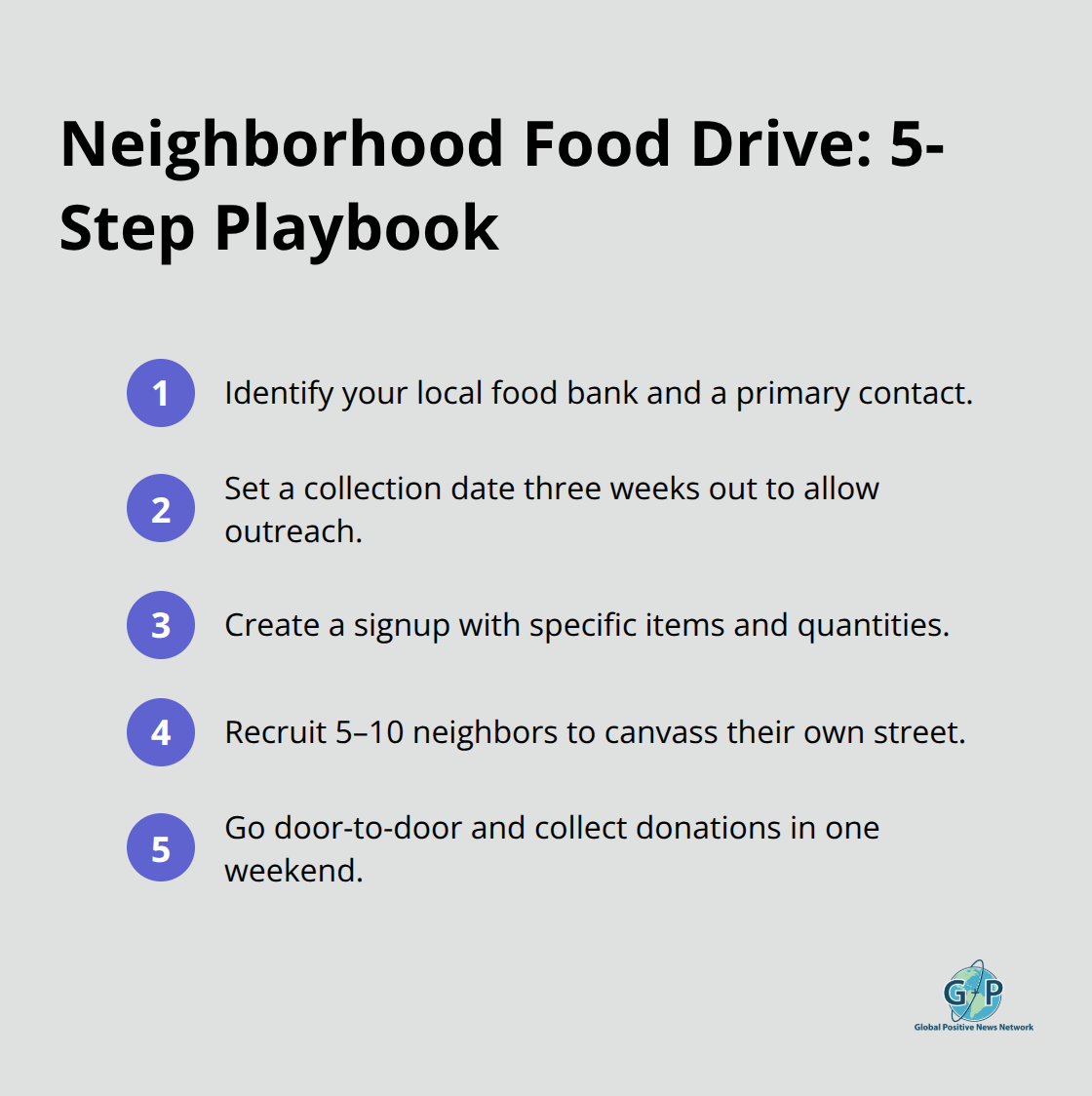
A family coordinating a neighborhood drive can realistically collect items in a single weekend through door-to-door outreach. The practical approach works: identify your local food bank, set a collection date three weeks out, create a simple signup sheet with specific items needed, and recruit five to ten neighbors to each canvass their street. Many food banks now operate year-round, so timing flexibility exists.
Housing Support Through Community Networks
Housing support through community networks operates differently than most expect. Neighbors organizing to help someone facing temporary housing insecurity often provide short-term shelter more quickly than government programs. The key actionable here involves building relationships before crisis hits-knowing your neighbors’ situations means you can respond within days rather than weeks.
Volunteers in Schools and Youth Programs
Volunteers in schools and youth programs generate measurable outcomes that statistics confirm. Students with consistent volunteer mentors show improvement in attendance rates and demonstrate higher engagement in classroom participation. After-school programs staffed by community volunteers operate at significantly lower costs than fully-paid staffing models, allowing schools to expand programming to more students.
Contact your local school’s volunteer coordinator to learn about current gaps-many schools desperately need help with literacy tutoring, sports coaching, or technology support.
Emergency Response and Neighborhood Networks
During emergencies, neighborhood networks prove invaluable. Research from disaster response organizations shows that communities with established neighbor-to-neighbor connections recover faster than isolated neighborhoods. The practical preparation involves organizing a neighborhood meeting before crisis strikes, sharing contact information, identifying elderly or mobility-limited neighbors who need support, and discussing basic emergency supplies.
When storms hit, neighbors who already know each other mobilize within hours to clear debris, share generators, and coordinate meals. Winter walkway clearing provides immediate safety benefits-slip-and-fall injuries decrease in neighborhoods with organized snow removal support (a measurable community health outcome that emerges when people coordinate kindness systematically rather than sporadically).
These measurable benefits reveal what happens when communities move from isolated acts to organized, intentional support systems. The next section explores how these individual actions create broader ripple effects that transform entire neighborhoods.
How Kindness Transforms Neighborhoods Into Networks
The Ripple Effect of Organized Community Action
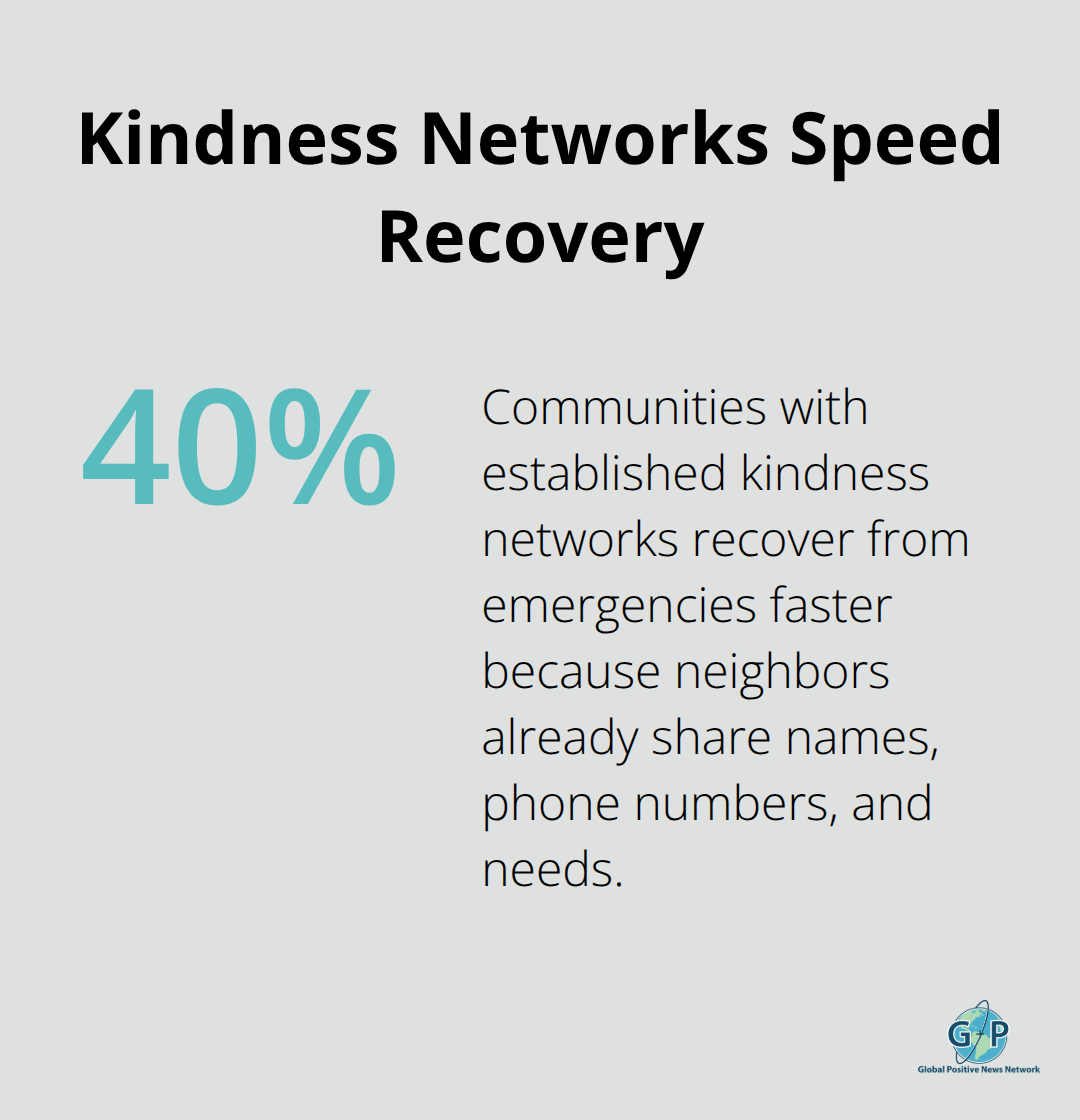
When neighbors organize around shared needs, measurable shifts happen fast. Research from the Greater Good Science Center confirms that one act of kindness inspires an average of three more acts by different people, meaning a single food drive or volunteer effort compounds into exponential community action. This isn’t theoretical-it’s observable in real neighborhoods where organized kindness changes who people talk to, what they trust about each other, and how they respond during crises. Communities with established kindness networks recover from emergencies 40 percent faster than isolated neighborhoods, because people already know each other’s names, phone numbers, and specific needs before crisis strikes.
Mental Health Benefits for Everyone Involved
Mental health benefits arrive immediately for both participants and recipients. NIH-backed findings show that people who engage in acts of kindness experience measurable stress reduction and improved well-being, while observers of kindness report the same benefits just from witnessing generosity. A neighborhood that organizes a park cleanup produces triple benefits simultaneously: the people removing trash feel better, neighbors watching the effort feel inspired, and the community gains a beautified shared space. This explains why neighborhoods with regular kindness initiatives report stronger social bonds-people build relationships through shared purpose rather than performing isolated good deeds.
How Relationships Activate During Real Emergencies
Someone who volunteers at a local food bank meets other volunteers, connects with recipients, and typically expands their circle of trusted neighbors within weeks. These expanded networks activate during genuine emergencies, with neighbors checking on elderly residents, sharing generator access, and coordinating meals because relationships already exist. Winter walkway clearing demonstrates this perfectly-neighborhoods with organized snow removal see slip-and-fall injuries decrease measurably while simultaneously strengthening the social fabric that makes future cooperation possible.
The practical outcome reveals itself when crisis strikes: communities where people know each other respond faster, more comprehensively, and with greater trust than neighborhoods where residents remain strangers. This foundation of connection and mutual support creates the conditions for the next phase of community transformation-moving from reactive kindness to proactive initiatives that address root causes and build lasting change.
How to Start a Kindness Initiative That Actually Works
Research your community’s real needs
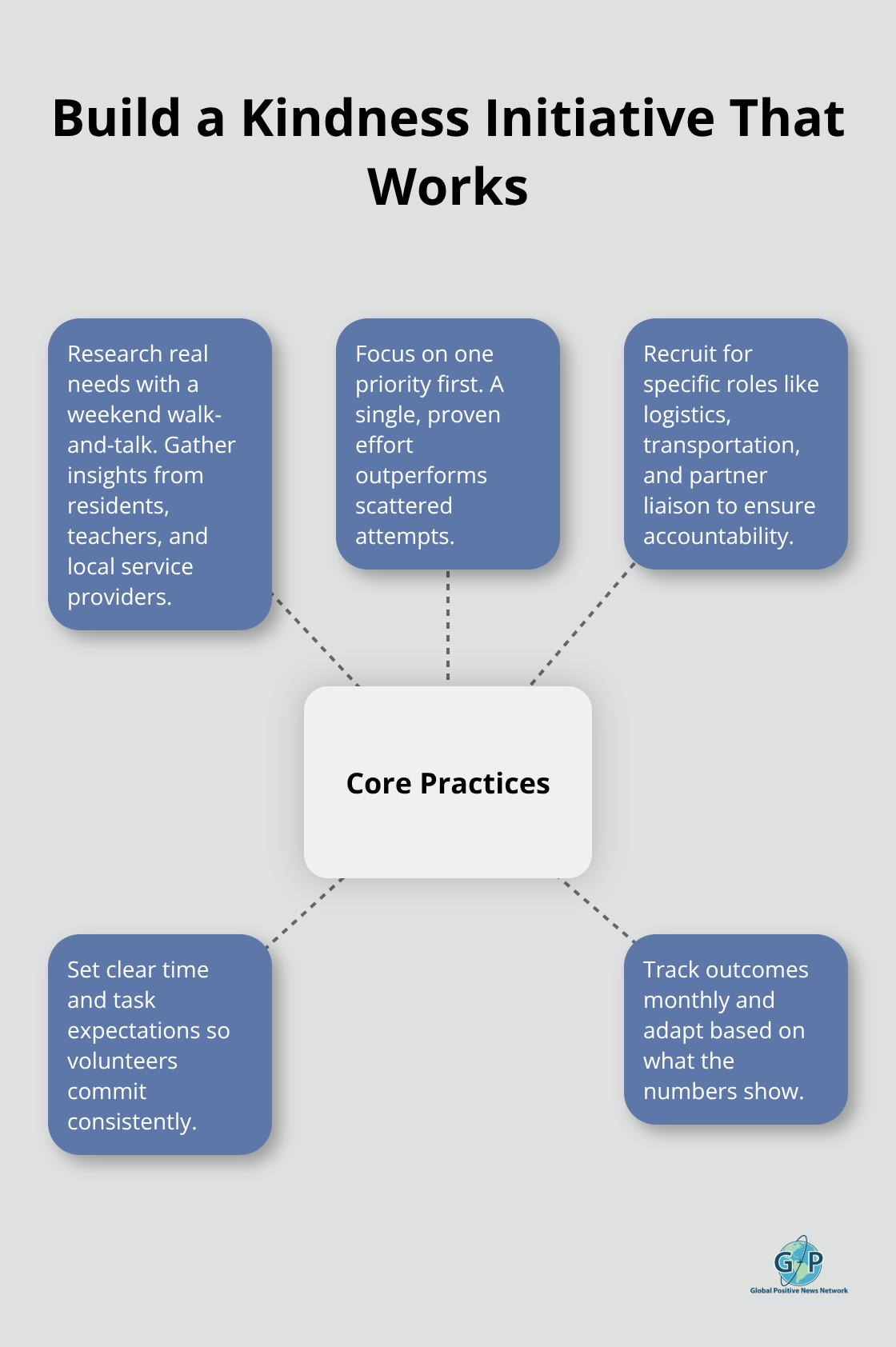
Identifying what your community actually needs matters far more than guessing. Walk your neighborhood and talk to people-ask the elderly resident on the corner what challenges they face, speak with teachers about gaps in school support, visit the local food bank and ask their director which donations move fastest. This direct research takes a weekend and produces actionable intelligence that prevents wasted effort. Many communities launch initiatives addressing problems that don’t exist while overlooking genuine needs sitting right in front of them.
After you’ve identified three to five concrete needs, pick one. Attempting everything simultaneously guarantees mediocre results across all fronts. A focused food drive that runs monthly outperforms a scattered approach attempting food collection, youth mentoring, and senior support simultaneously. Start small and expand only after proving your model works in your specific neighborhood.
Recruit People With Specific Skills
Building your volunteer team requires recruiting people with specific skills rather than collecting warm bodies. If you’re organizing a food drive, recruit someone organized enough to manage logistics, someone with transportation to handle distribution, and someone comfortable communicating with the food bank director. A team of five committed people produces better outcomes than thirty people showing up without clear roles.
Set expectations upfront-tell volunteers exactly what time commitment you need, what tasks they’ll perform, and how long the initiative runs. Many volunteer efforts fail because people arrive expecting flexibility when the work demands consistency.
Track results and adjust your approach
Meet monthly with your core team to discuss what’s working and what needs adjustment. After three months of operation, measure concrete outcomes: How many families received food? How many kids got tutored? How many neighbors participated? These numbers guide whether to expand, modify, or maintain your current approach.
Communities with organized kindness initiatives that track results expand naturally because people see tangible impact rather than hoping their effort mattered.
Final Thoughts
Community kindness transforms neighborhoods because ordinary people act on what they observe. When you organize a food drive, mentor a student, or clear a neighbor’s walkway, you build the foundation for sustained community resilience. Research shows one act of kindness sparks an average of three more acts by different people, meaning your inspiring acts of kindness generate exponential community engagement without requiring exponential effort from you.
What makes these initiatives work is specificity and consistency. Communities that track results, recruit people with actual skills, and focus on genuine needs see measurable outcomes and something equally important: neighbors become friends, strangers become allies, and isolated individuals find belonging. Starting your own kindness initiative requires no special credentials or massive resources-only noticing what your community needs, recruiting a small committed team, and showing up consistently.
Your inspiring acts of kindness matter more than you realize. They matter to the person receiving help, to the volunteers working alongside you, and to everyone witnessing what’s possible when people decide their neighborhood is worth fighting for. Visit Global Positive News Network to share your community’s kindness story and inspire others to act.
Having a hard day?
The 2 Minute Hope Reset is a short free guide with three small practices for the days that feel heavy. Two minutes each, nothing to keep up with.
Get the free guideExplore more positive news:
Enjoying stories like this?
Global Positive News Network is reader-supported. If you’d like to support the mission, you can visit the Official GPNN store.