

You’ve probably noticed that your happiest moments rarely happen alone. At Global Positive News Network, we believe connection before technology is what actually sustains your wellbeing.
The research is clear: strong relationships reduce stress, boost mood, and protect against depression in ways that no app or screen time ever will. This blog post shows you exactly how to build the real connections that ground your positivity.
How Relationships Physically Change Your Brain
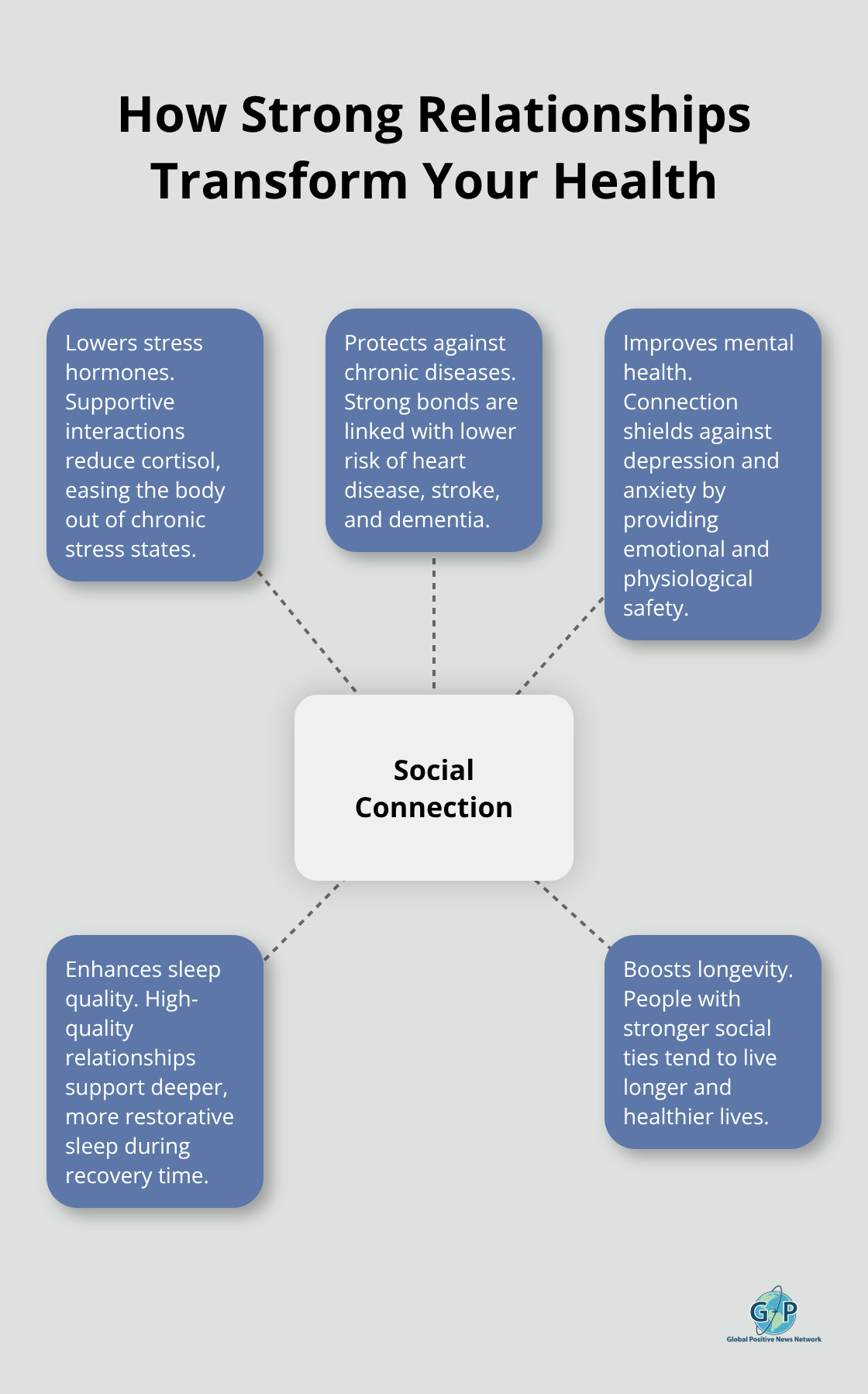
Strong relationships aren’t just emotionally satisfying-they rewire your nervous system. When you spend quality time with someone you trust, your body releases oxytocin and dopamine, two neurochemicals that directly reduce cortisol, the stress hormone that damages your health over time. Research shows that people with stronger social bonds live longer and healthier lives. The data is stark: social connection protects against chronic diseases including heart disease, stroke, and dementia, while also shielding you from depression and anxiety. This isn’t metaphorical protection-it’s measurable physiological change. High-quality relationships manage stress, anxiety, and depression while improving sleep quality, which means you’re not just feeling better in conversations, you’re healing at a cellular level during recovery time.
Why Isolation Harms Your Health
Loneliness works like a slow-acting poison. The CDC research confirms that social isolation and loneliness put a person at risk of developing serious mental and physical health conditions. When you lack meaningful connections, your body stays in a chronic stress state, keeping cortisol elevated and your immune system weakened. People who experience prolonged loneliness show increased risk of depression, but more surprisingly, they also show higher rates of cardiovascular disease and cognitive decline. The practical takeaway is this: if you’re isolated, adding one consistent relationship matters more than any wellness supplement or meditation app.
The Concrete Support That Changes Everything
Social connection provides both emotional support during hard times and practical support-rides to medical appointments, childcare on short notice, meals when you’re overwhelmed. These concrete acts reinforce your sense of belonging and safety in ways that screen-based interactions cannot replicate. When someone shows up physically in your life, your nervous system registers that you matter. That registration happens faster and deeper than any digital notification ever could. The people who support you become part of your biological stress-management system, not just your emotional comfort.
What Happens When You Act on Connection
The shift from isolation to connection doesn’t require a massive social overhaul. One person who knows you well and shows up consistently can interrupt the stress cycle that loneliness creates. Your body responds to that single reliable relationship by lowering cortisol, stabilizing sleep, and strengthening immune function. This is why the next step matters so much-understanding how to actually build and maintain these relationships requires more than good intentions.
How Shared Positivity Works Differently Than Solo Happiness
Happiness experienced alone stays localized to your brain. Happiness shared with another person creates a feedback loop that amplifies the original emotion. When you laugh with someone, their laughter triggers mirror neurons in your brain that intensify your own experience, according to neuroscience research on social mirroring. This isn’t subtle-people who share positive moments experience positive outcomes like well-being and life satisfaction compared to those who experience wins in isolation.
The practical difference matters: celebrating a promotion alone by scrolling through your phone generates a brief dopamine spike. Celebrating it over dinner with someone who genuinely cares produces sustained elevation in mood, stronger memory formation of the event, and reinforcement of your sense of belonging.
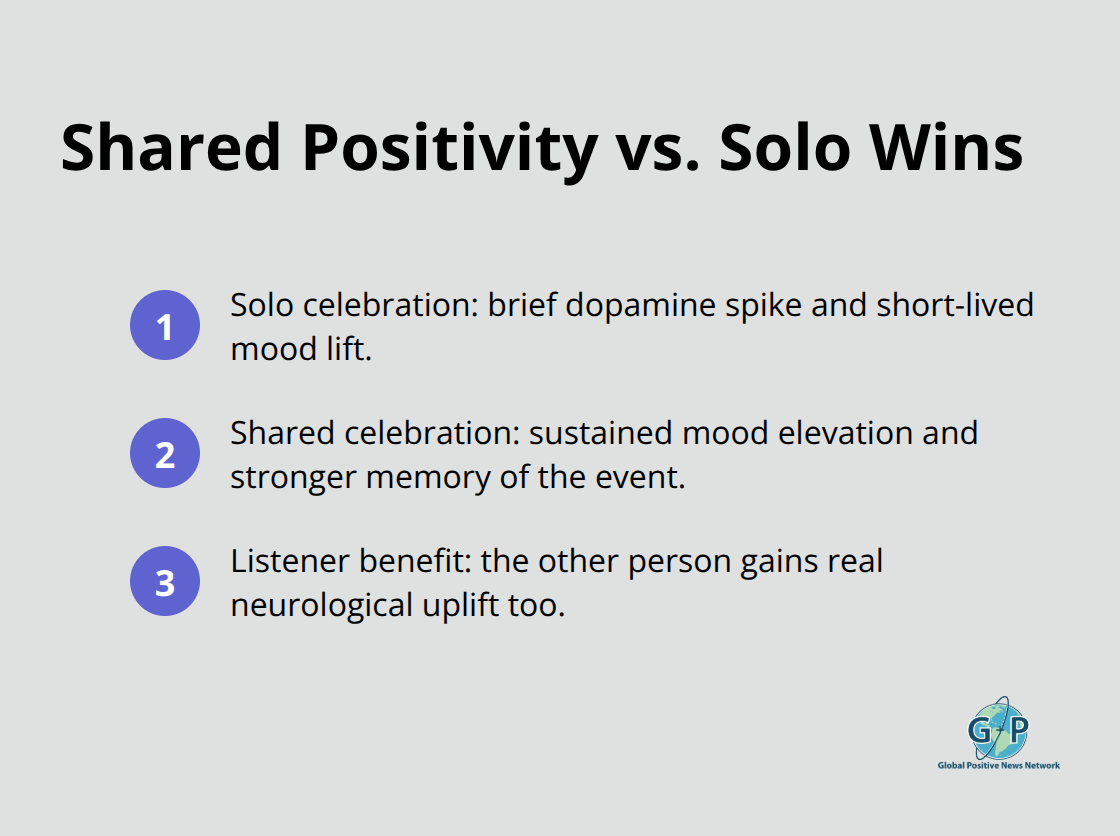
Real relationships create what researchers call emotional contagion, where positive feelings transfer between people and actually strengthen both individuals. This means the person listening to your good news experiences real neurological benefit too. You’re not just telling someone about your success-you’re creating a shared emotional state that bonds you both while simultaneously making the moment more meaningful for each of you.
Vulnerability Builds Resilience Faster Than Self-Reliance
The instinct to handle difficult emotions alone actually backfires. When you process pain or fear in isolation, your nervous system stays activated longer, and your brain loops on the problem without resolution. When you share what’s actually happening with someone trustworthy, your body shifts into a calmer state almost immediately.
Support networks provide emotional security during hard times, which directly reduces anxiety and depression. This isn’t weakness-it’s how your nervous system is designed to function. The people who recover fastest from setbacks aren’t those with the strongest individual coping skills; they’re those who reach out and let others in. Vulnerability with the right person creates safety, and safety allows your brain to move from threat-detection mode into problem-solving mode.
This is why confiding in one reliable person about your struggles produces measurably better mental health outcomes than attending therapy alone or journaling in private. Authenticity with others accelerates healing because another person’s presence and validation literally changes your brain chemistry. When someone listens without judgment and reflects back that they understand, your cortisol levels drop and your sense of isolation breaks. The person who shows up consistently during your difficult times becomes part of your biological recovery system.
Consistency Over Crisis Response
Many people treat relationships as emergency resources-reaching out only when everything falls apart. This approach leaves you isolated most of the time and puts unfair pressure on relationships when you finally do connect. The shift that actually works is showing up in ordinary moments.
Regular face-to-face contact, even brief weekly coffee or a monthly dinner, keeps your nervous system regulated and prevents the deep isolation that makes crises feel catastrophic. People with consistent relationships experience lower baseline stress, which means when actual challenges hit, they have resilience already built in. This consistency also prevents the shame that often accompanies reaching out after long periods of disconnection. When you’re already in regular contact with people who know you, asking for support during difficult times feels natural rather than burdensome.
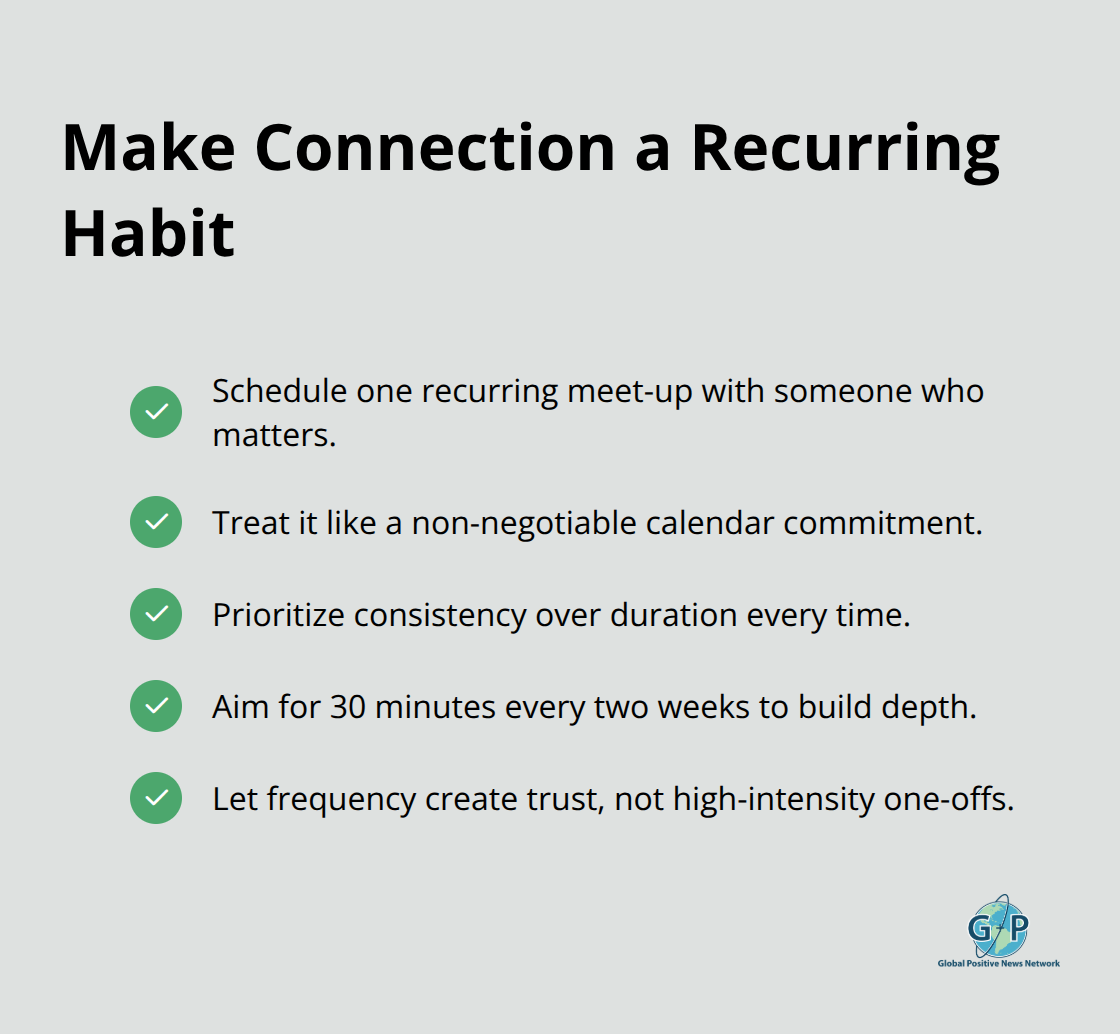
Try scheduling this time with the same priority you give work meetings-treat it as non-negotiable rather than optional. Someone you see twice a month provides far more emotional protection than someone you only contact during emergencies, even if that emergency person is well-intentioned. This foundation of regular connection transforms how you experience both ordinary days and unexpected hardships, which means you’re ready to explore what actually happens when you commit to showing up for others in the same way.
Build Real Relationships Without Waiting for Perfect Timing
The biggest obstacle to stronger relationships isn’t lack of desire-it’s treating connection like something you’ll prioritize when life slows down. Life never slows down. The people with the strongest relationships make a deliberate choice to interrupt their schedules and show up consistently, which means moving face-to-face contact from your someday list to your actual calendar. Research shows that people who schedule regular in-person time maintain significantly stronger emotional bonds than those who rely on texts and video calls. The difference matters because your nervous system responds differently to physical presence. When you sit across from someone, your brain registers subtle cues-tone shifts, facial expressions, body language-that video calls compress into two dimensions.
Schedule One Recurring Commitment
Pick one person important to you and add them to your calendar. This could be a monthly dinner, a weekly coffee, or even a biweekly walk. Treat it like a work meeting that you don’t reschedule. Most people find that consistency matters far more than duration. Thirty minutes every two weeks builds deeper connection than sporadic four-hour hangouts separated by months of silence. The frequency creates the trust, not the intensity of individual moments.
Listen Without Fixing
Active listening sounds simple until you try it. Most conversations involve waiting for your turn to talk or mentally preparing advice while the other person speaks. Real listening means setting aside your agenda entirely and asking questions that show you’re tracking what someone actually said, not what you assumed they meant. When someone shares a struggle, resist the urge to immediately offer solutions. Instead, ask what they need in that moment. Some people need practical advice; others need to feel heard first. The difference determines whether your response strengthens or strains the relationship.
Active listening is a fundamental aspect of professional interaction that strengthens relationships. Try this approach: after someone shares something significant, pause and say something like, “So what I’m hearing is…” and then summarize what they told you. This simple step prevents misunderstandings and signals that you’re fully present. People remember who listens to them far more than they remember what was said.
Show Up During Celebrations and Struggles Equally
Many relationships deteriorate because people only reach out during crises, which creates an imbalance. The person who celebrates your promotion, attends your child’s recital, or simply texts to check in on an ordinary Tuesday becomes woven into the fabric of your life in ways that emergency support never achieves. Consistency during good times builds the foundation that makes support during hard times feel natural rather than transactional. Your presence during celebrations signals that you genuinely care about their joy, not just their pain. This balanced approach transforms how people experience both ordinary moments and unexpected hardships.
Final Thoughts
Real relationships rewire how your brain handles stress, joy, and resilience-not because connection feels good in the moment, but because it physically transforms your nervous system. Connection before technology sustains your wellbeing in ways that no app or screen time ever will. The science proves it, and your body confirms it every time you sit across from someone who knows you and genuinely cares.
Building these relationships requires intentional effort and presence. You cannot drift into strong connections or maintain them through occasional texts and annual catch-ups. The people with the deepest relationships made a deliberate choice to interrupt their schedules, show up consistently, and listen without agenda. They celebrate ordinary moments alongside the hard ones and reach out during good news as readily as during crises.
Start this week by reaching out to one person who matters to you and scheduling something concrete-a coffee, a walk, a meal-and commit to making it recurring. When you meet, practice listening fully and ask what they actually need instead of assuming. That single relationship will change how you experience stress, celebrate wins, and navigate difficulty, and we at Global Positive News Network believe this is where real change begins.
Having a hard day?
The 2 Minute Hope Reset is a short free guide with three small practices for the days that feel heavy. Two minutes each, nothing to keep up with.
Get the free guideExplore more positive news:
Enjoying stories like this?
Global Positive News Network is reader-supported. If you’d like to support the mission, you can visit the Official GPNN store.