

Most people think giving only helps the person receiving help. That’s incomplete thinking.
At Global Positive News Network, we’ve seen the research: generosity economics shows that giving transforms both sides. The giver gains mental health benefits, stronger purpose, and lower stress. The receiver gets practical support and renewed hope.
This blog post breaks down exactly how giving works as a two-way street and shows you concrete ways to start giving today.
Why Giving Boosts Your Mental Health
Generosity directly impacts your brain chemistry in measurable ways. When you give, your brain releases dopamine and activates reward centers tied to pleasure and social connection. This isn’t abstract feel-good language-it’s neuroscience. Charitable giving triggers the same reward pathways as eating food or winning money, producing what researchers call a helper’s high (a genuine mood elevation that can last hours after the act). Megan Hays, Ph.D. from the University of Alabama at Birmingham, confirms that acts of generosity activate your brain’s reward system and create positive emotions alongside a strengthened sense of purpose. Personal, direct giving produces stronger effects than anonymous donations. When you deliver a meal to a neighbor or help someone face-to-face, the mental health payoff is substantially larger because you witness the immediate impact.
Stress Reduction Through Tangible Action
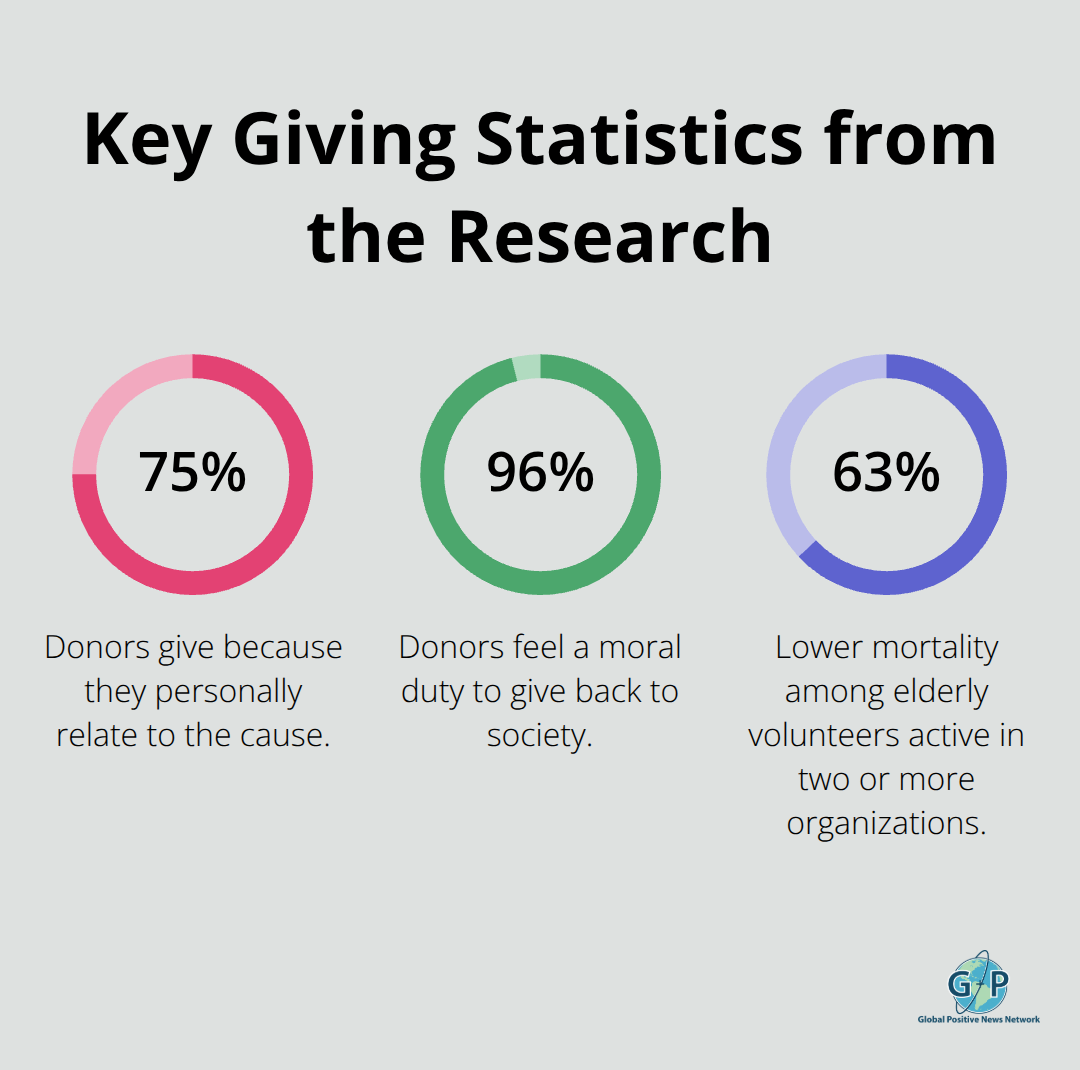
Stress drops measurably when you help others because action reduces anxiety. Providing support to others lowers your blood pressure, according to research from Rachel Piferi at Johns Hopkins and Kathleen Lawler at the University of Tennessee in 2006. This physiological benefit isn’t temporary-it compounds with consistency. Elderly volunteers who committed to two or more organizations experienced 63 percent lower mortality compared to non-volunteers. When you focus on helping someone else, you shift mental energy away from your own worries. This isn’t escapism; it’s psychological rebalancing. Megan Hays notes that small, everyday acts of kindness yield meaningful well-being benefits when you perform them consistently and with clear intent. Volunteering for even one hour weekly can interrupt stress cycles more effectively than passive relaxation.
Purpose Creates Lasting Satisfaction
Life satisfaction increases when your giving aligns with your values. A 2008 Harvard Business School study by Michael Norton and colleagues found that giving money to others produces more happiness than spending it on yourself. The critical detail: the happiness boost reaches its peak when your giving targets causes you personally relate to. If you donate to a cause matching your lived experience or beliefs, the satisfaction deepens. This explains why 75% of donors give because they personally relate to the cause, according to the Charities Aid Foundation.
Satisfaction from giving also compounds over time. Sonja Lyubomirsky’s research showed that performing five acts of kindness weekly for six weeks boosted happiness that persisted beyond the study period. Identify one cause connected to your own story, then commit to consistent, small contributions rather than sporadic large ones. Consistency matters more than scale for long-term mental health gains, and this foundation of personal satisfaction sets the stage for understanding how your generosity ripples outward into your community and beyond.
How Your Giving Strengthens Communities and Creates Real Change
Generosity Spreads Through Social Networks
Your single act of giving activates networks that extend far beyond the immediate recipient. Research from James Fowler and Nicholas Christakis published in the Proceedings of the National Academy of Sciences shows that generosity spreads through social networks up to three degrees of separation-meaning your contribution can inspire others you’ve never met to give as well. This isn’t theoretical; it’s measurable social contagion.
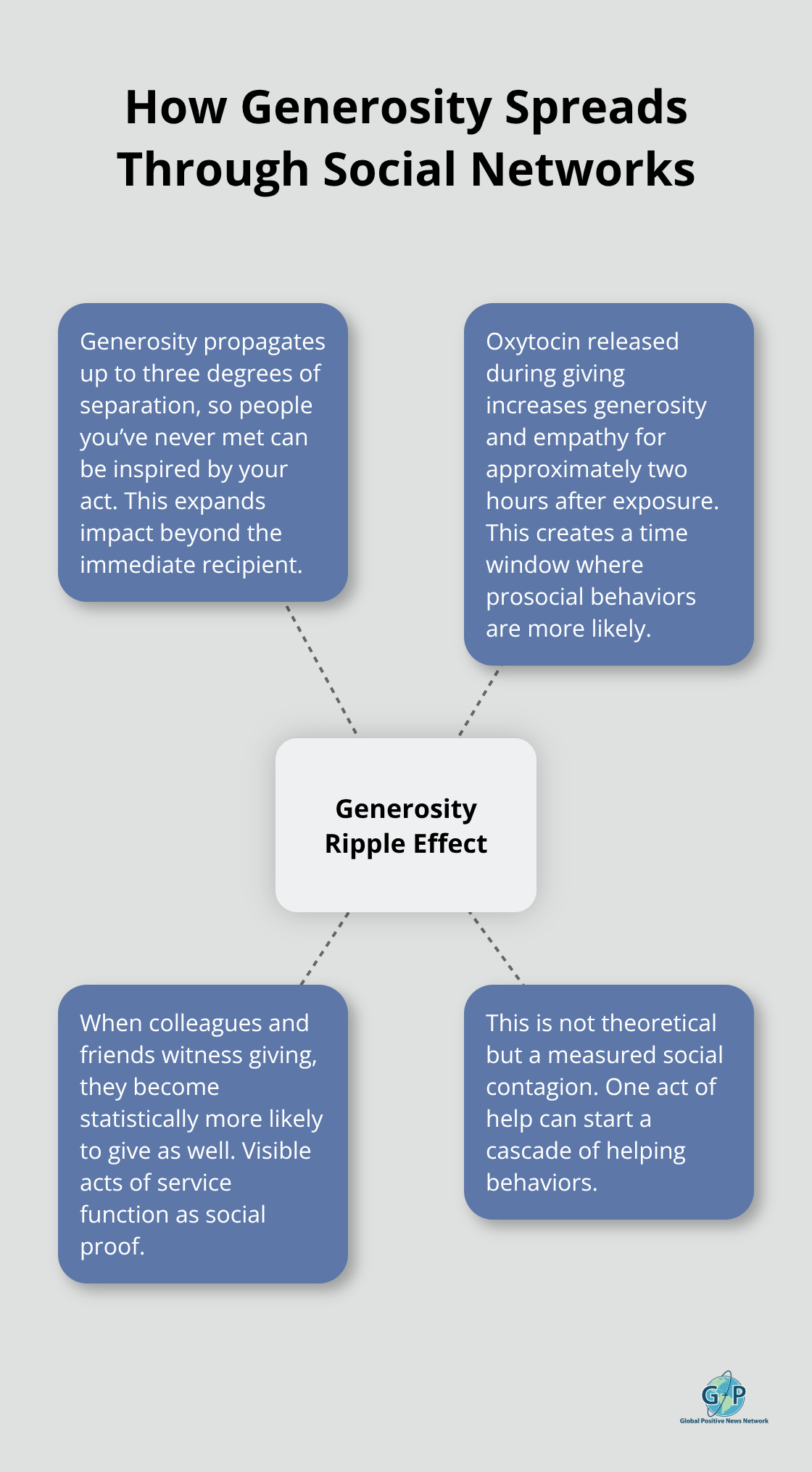
Oxytocin, the neurochemical released during giving, increases generosity and empathy in others for approximately two hours after exposure, according to Paul Zak from the Center for Neuroeconomics Studies. When one person volunteers at a food bank or donates to a local cause, colleagues and friends witness that action and become statistically more likely to give themselves.
Communities Transform When Helping Becomes Normal
Communities with higher volunteering rates report stronger social bonds, lower crime rates, and better collective problem-solving capacity. The Charities Aid Foundation reports that 96 percent of donors feel a moral duty to give back to society, creating a cultural baseline where generosity becomes normalized and expected. This cultural shift matters enormously because it transforms how communities function-people help neighbors without waiting for formal requests, local organizations receive consistent support, and social trust deepens. The University of Michigan research found that providing support to neighbors is associated with lower mortality risk, revealing that communities where helping is common experience measurable health improvements.
Economic Ripples Strengthen Local Development
Charitable organizations create jobs, purchase goods and services from local businesses, and generate tax revenue through economic activity. When you donate to a local food bank, your money doesn’t disappear-it pays staff salaries, funds warehouse operations, and purchases food from regional suppliers. The Charities Aid Foundation data shows the average UK donor contributed approximately £27 monthly in 2020–21, and when multiplied across millions of donors, this creates substantial economic stimulus in communities. Nonprofits and community organizations employ millions of people globally, and these jobs exist because donors, volunteers, and supporters sustain them financially and through active participation.
Alignment With Your Values Sustains Long-Term Impact
Giving aligned with your personal values produces the strongest outcomes because you maintain long-term commitment. The 2008 Harvard Business School study by Michael Norton found that donors experience maximum happiness when their gifts target causes matching their lived experience, and this satisfaction reinforces ongoing participation rather than one-time transactions. This foundation of personal connection and measurable community impact sets the stage for understanding the practical methods that fit your specific life circumstances and schedule.
Practical Ways to Give That Fit Your Life
Giving doesn’t require abandoning your schedule or emptying your bank account. The research is clear: micro-volunteering opportunities, strategic donations, and knowledge-sharing fit seamlessly into existing routines and deliver measurable benefits to both you and recipients. Megan Hays, Ph.D. from the University of Alabama at Birmingham, emphasizes that one-hour volunteer shifts interrupt stress cycles more effectively than passive relaxation, and micro-volunteering opportunities now exist across most communities specifically designed for people with limited availability. The key is matching your giving method to your actual capacity rather than guilt-driven overcommitment.
Start with honest assessment: how much time realistically fits your schedule weekly, and which causes align with your lived experience or values. A person working full-time with family obligations might commit to one four-hour monthly volunteer shift at a local food bank rather than attempting weekly commitments that lead to burnout. Financial giving works similarly-the Charities Aid Foundation data shows the average UK donor contributed approximately £27 monthly in 2020–21, demonstrating that consistent small donations outperform sporadic large donations in both personal satisfaction and organizational planning.
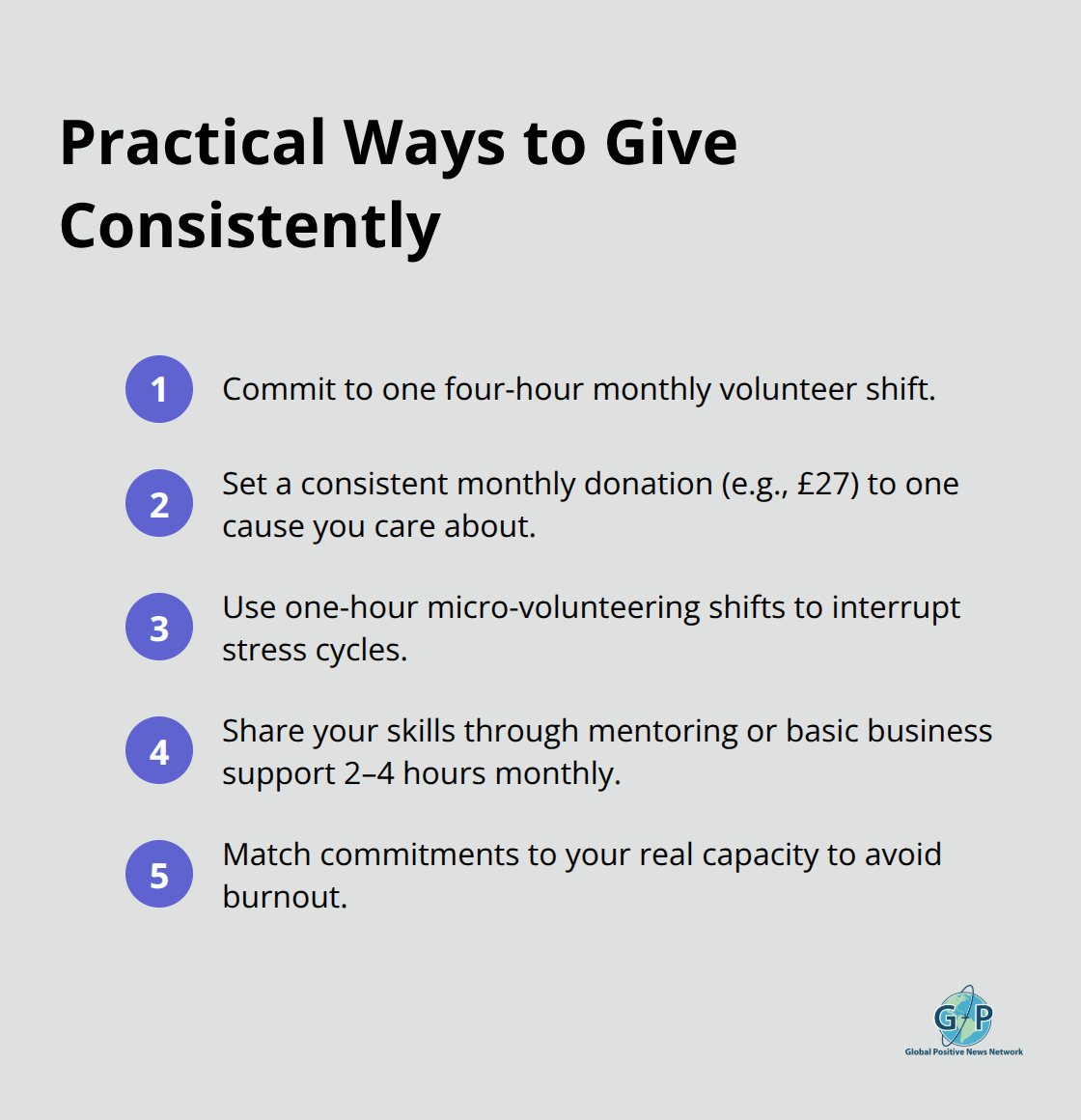
Direct giving to causes matching your personal story produces stronger happiness gains than vague or diffuse giving, according to the 2008 Science study by Dunn, Aknin, and Norton, so targeting your £27 monthly to one organization you genuinely care about yields better outcomes than splitting it across five causes.
One-Hour Shifts Beat Occasional Marathon Efforts
Time-limited volunteering prevents the physical exhaustion and compassion fatigue that derail long-term givers. Megan Hays identifies the warning signs: physical exhaustion, negative feelings toward the work, or doubts about impact. Rather than pushing through these signals, adjust your volunteering frequency downward rather than abandoning it entirely. A soup kitchen shift once monthly sustains your mental health benefits without triggering burnout, whereas attempting weekly shifts while overwhelmed creates the opposite effect.
Holiday periods especially demand realistic assessment-determine your actual availability before committing rather than saying yes to every opportunity then canceling last-minute. One-time holiday volunteer activities like food drives or toy donations eliminate the obligation cycle entirely while still providing meaningful contribution.
Your Skills Matter More Than Your Money
Knowledge transfer and mentoring create impact that money alone cannot achieve. Teaching someone job interview skills, helping a small business with basic accounting, or coaching a young person through education decisions addresses root causes rather than symptoms. Megan Hays notes that people derive more satisfaction from giving voluntarily when their actions produce tangible difference, and skill-based volunteering delivers visible outcomes immediately.
Professional mentoring networks, local business associations, and nonprofit boards actively seek people willing to share expertise for 2–4 hours monthly. This approach transforms your career experience into community benefit without requiring additional financial resources.
Final Thoughts
Giving transforms both sides of the equation through what researchers call generosity economics-a system where the giver experiences measurable mental health improvements, reduced stress, and deeper life satisfaction while the receiver gains practical support and renewed hope. Your single act of giving ripples outward through social networks, inspiring others to contribute, strengthening community bonds, and creating economic activity that sustains jobs and local development. When you volunteer one hour monthly at a food bank or donate consistently to a cause matching your values, you build the social infrastructure that makes communities function better.
Starting your giving journey requires one honest decision: what fits your actual life right now? Not what you think you should do, but what you can sustain without burning out-that might be a monthly four-hour volunteer shift, a £27 monthly donation to one organization, or sharing your professional skills with someone who needs mentoring. The scale matters far less than the consistency and alignment with your values. Your neighbor sees you volunteering and becomes more likely to help; your colleague notices your donation and reconsiders their own giving; your mentee learns that contributing to others matters and carries that forward into their own life.
Explore stories of personal triumphs, acts of kindness, and community impact at Global Positive News Network to connect with a community committed to spreading hope and discover how generosity works in real life. Your giving matters, and it starts today, wherever you are.
Having a hard day?
The 2 Minute Hope Reset is a short free guide with three small practices for the days that feel heavy. Two minutes each, nothing to keep up with.
Get the free guideExplore more positive news:
Enjoying stories like this?
Global Positive News Network is reader-supported. If you’d like to support the mission, you can visit the Official GPNN store.