

Technology is solving humanity’s biggest problems right now. Renewable energy costs are plummeting, AI is catching diseases earlier, and clean water is reaching communities that never had it before.
At Global Positive News Network, we spotlight these hopeful innovations because they’re reshaping how we live. This post shows you the breakthroughs that matter most.
Renewable Energy Breakthroughs Changing Our World
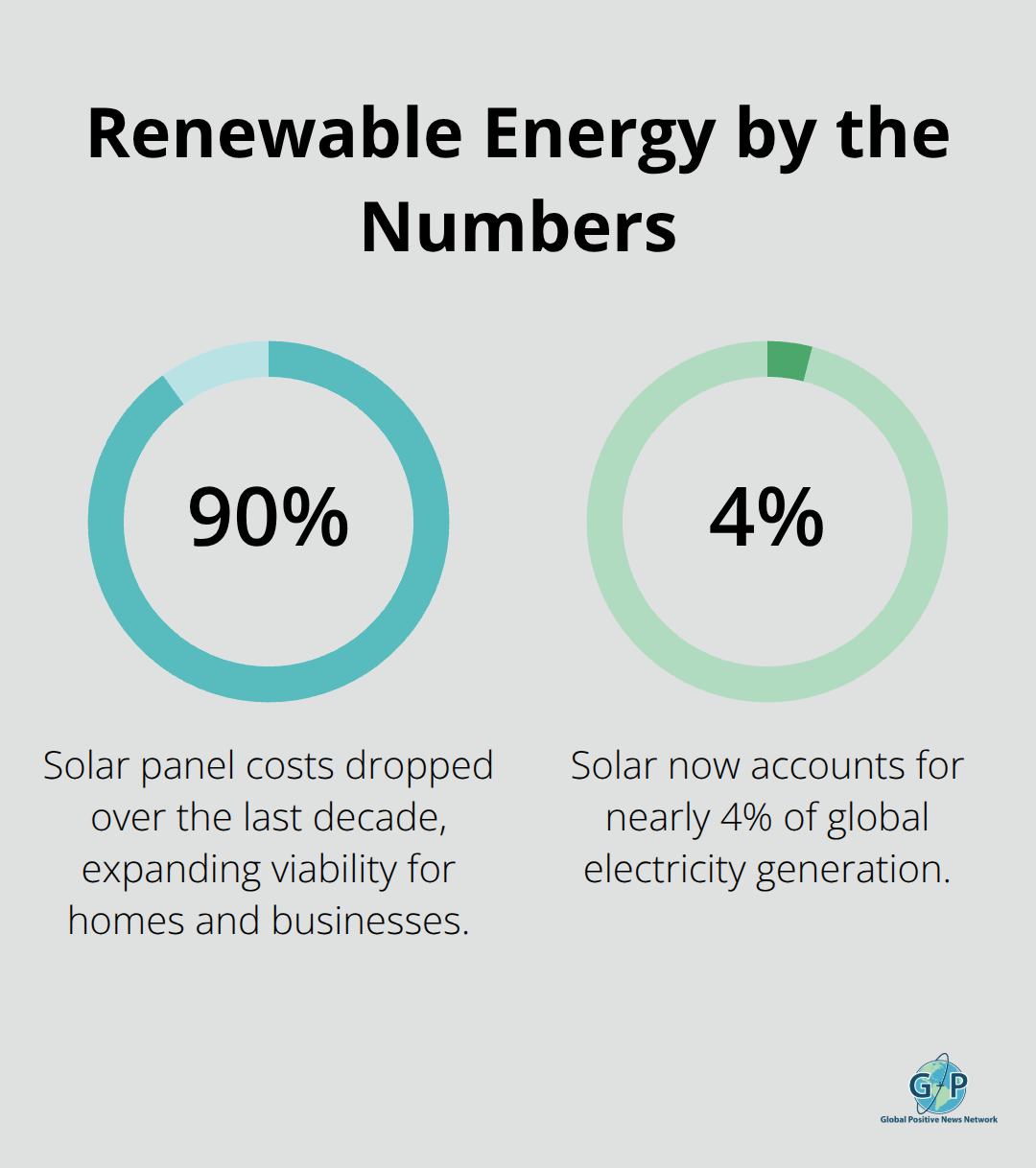
Solar panel costs have dropped 90% in the last decade, making residential and commercial installations economically viable in regions that once relied entirely on fossil fuels. The International Energy Agency reports that solar now accounts for nearly 4% of global electricity generation, with installations accelerating fastest in India, China, and parts of Europe. Perovskite solar cells advance toward commercialization with the potential to lower costs further while improving energy density-track reliability certifications and long-term performance data as these technologies mature.
Wind energy capacity worldwide reached over 1,100 gigawatts by 2024, with offshore wind farms delivering higher capacity factors than their land-based counterparts. Countries like Denmark and Germany demonstrate that wind can supply 40-50% of national electricity demand when integrated strategically with grid infrastructure.
The Storage Challenge That Changes Everything
The real challenge isn’t generating renewable power anymore-it’s storing and distributing it reliably. Energy storage technologies become the actual game-changer for grid stability because they solve the mismatch between when the sun shines and when people need electricity. Solid-state and lithium-metal batteries advance energy density significantly, enabling longer-range electric vehicles and improved grid storage that lasts multiple days rather than hours. The International Energy Agency emphasizes that long-duration storage solutions are essential for scaling renewables and ensuring reliable power supply, particularly in regions with seasonal weather variations.
Geothermal and Bi-Directional Power
Modular factory-built geothermal energy systems complement solar and wind by delivering around-the-clock electricity, improving reliability for communities needing consistent cooling and affordable renewable power without geographic limitations. Next-generation bi-directional charging technology enables electricity to flow both into and out of vehicle batteries, boosting grid flexibility and stability by turning millions of parked electric vehicles into distributed energy storage. This transforms how communities manage peak demand periods and integrate variable renewable sources into existing power networks without massive infrastructure overhauls.
These storage breakthroughs set the stage for what comes next: how healthcare technology harnesses similar innovation to extend and improve human life.
Healthcare Technology Reshaping Diagnosis and Treatment
AI Catches Disease Before Symptoms Appear
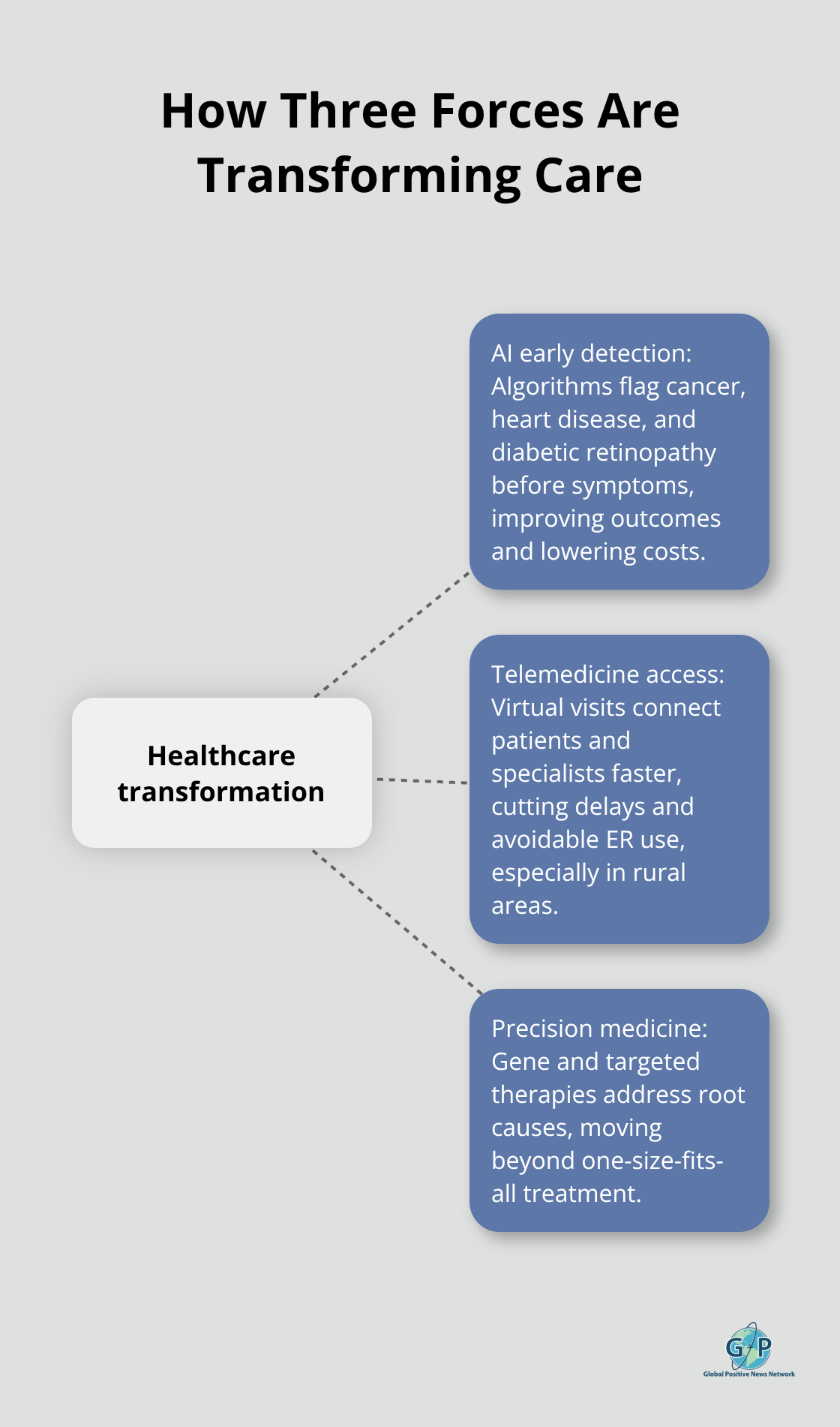
AI-powered diagnostic tools fundamentally change how quickly doctors catch diseases. According to Nature Medicine and Nature Biotechnology, AI-assisted drug discovery and design speed up target identification and lead optimization, reducing development timelines significantly. The FDA has approved an increasing number of AI-based medical devices, signaling genuine clinical adoption rather than experimental hype. These systems analyze imaging scans for cancer, detect diabetic retinopathy in eye exams, and identify early signs of heart disease with accuracy matching or exceeding human radiologists. Early detection happens before symptoms appear, when treatment costs less and outcomes improve dramatically-this practical advantage transforms patient outcomes and reduces overall healthcare spending.
Telemedicine Removes Geography as a Barrier
Telemedicine eliminates distance as an obstacle to care. The WHO confirms that remote patient monitoring expands access in underserved and rural areas while improving early detection and chronic disease management. A patient in rural Kansas can now consult a cardiologist in Boston without traveling, reducing delays that historically meant conditions worsened before diagnosis. Real-world impact shows reduced emergency room visits when people access preventive care through video consultations, cutting both healthcare costs and unnecessary hospitalizations. Specialists reach patients who previously had no access to expert care, transforming health outcomes across entire regions.
Precision Medicine Targets Root Causes
Breakthrough treatments powered by precision medicine represent the third transformation. CRISPR and gene-editing therapies show genuine promise for treating genetic diseases, with research advancing toward safe and effective clinical applications, according to Nature Biotechnology. The FDA approved gene therapies for sickle cell disease, offering patients relief from lifelong pain and complications. Bi-specific antibodies and oligonucleotide therapeutics drive significant clinical advances by targeting disease mechanisms with unprecedented specificity. Treatments now match individual genetic profiles rather than applying one-size-fits-all approaches that work for some patients and fail for others.
How These Three Forces Converge
AI catches disease early, telemedicine connects patients with specialists instantly, and targeted treatments address root causes rather than just symptoms. Healthcare costs less, works faster, and actually extends healthy lifespan instead of merely extending time spent managing illness. This convergence sets the foundation for the next critical challenge: ensuring that clean water and sanitation reach the communities that need these health advances most.
Clean Water and Sanitation Technologies Making Impact
Regenerative desalination technology solves water scarcity by pairing advanced membranes with renewable energy to produce drinking water. Thermal desalination processes consume more energy than membrane-based systems because the former consumes a large amount of energy for water production. The World Economic Forum identifies regenerative desalination as one of ten emerging technologies capable of addressing planetary challenges, and targeted local investment could expand freshwater access across arid regions including the Middle East, North Africa, and parts of Asia within the next five years.
Scaling Solutions to Reach Communities in Crisis
Communities currently rationing water or relying on contaminated sources can implement these systems without waiting for massive infrastructure overhauls. Smart water management technology compounds this impact by using AI-powered IoT sensors to detect leaks and pipeline failures in real time, minimizing water loss. Machine learning models analyze water pressure and distribution patterns to prevent waste before it occurs, recovering enough water to supply additional neighborhoods. Every percentage point of waste reduction translates directly into extended freshwater availability for growing populations.
Affordable Filtration Reaches Underserved Communities
Affordable filtration systems reach underserved communities because manufacturing costs have dropped as production scales up. Households in rural India and sub-Saharan Africa now access point-of-use filters that remove bacteria, parasites, and chemical contaminants for under ten dollars per unit, with replacement cartridges costing just a few dollars annually. Organizations implementing these solutions report that waterborne illness rates drop by 40-60 percent within months of deployment, reducing childhood mortality and school absences that historically trapped families in poverty cycles.
Three-Part Foundation for Water Security
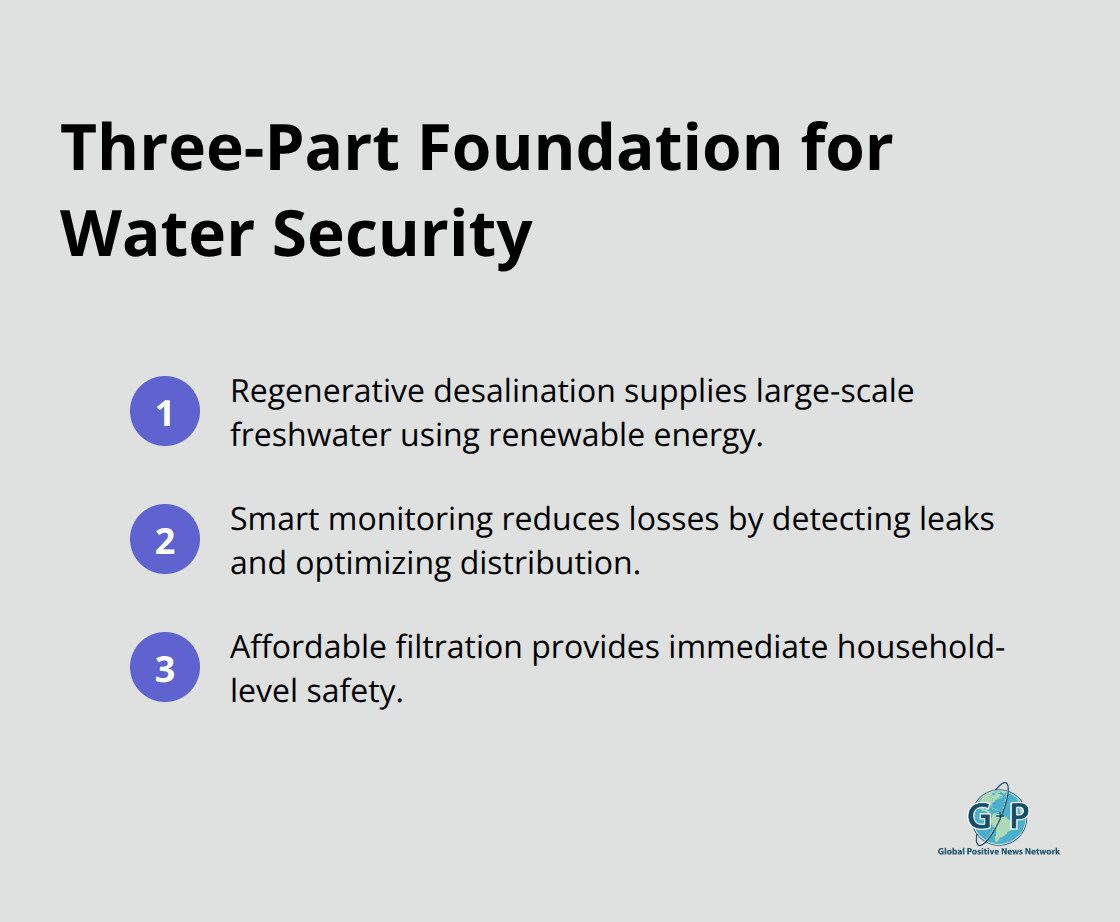
Regenerative desalination paired with smart monitoring and affordable filtration creates a three-part foundation where energy-intensive desalination handles large-scale supply, intelligent distribution prevents waste, and distributed filtration provides immediate safety at household level. The World Economic Forum emphasizes that scaling these proven solutions requires investment, infrastructure, policy support, and responsible governance to move from isolated pilots to widespread impact.
What distinguishes genuine progress from empty promises is whether technology reaches actual communities facing actual water crises (not theoretical populations in hypothetical scenarios). This practical approach transforms how regions address water insecurity and builds resilience against future scarcity.
Final Thoughts
Renewable energy, healthcare innovation, and clean water technology solve real problems for real people right now. Solar costs dropped 90% in a decade, making clean power accessible where fossil fuels once dominated. AI diagnostic tools catch diseases before symptoms appear, extending healthy lifespans instead of prolonging illness. Regenerative desalination paired with smart water management brings freshwater to communities facing acute scarcity.
Investment flowing toward proven technologies, policy frameworks that remove barriers, and governance structures ensuring equitable access work together to scale these solutions. The World Economic Forum identifies this convergence as essential for moving from isolated pilots to widespread impact. Governments acting as customers of first resort through targeted pilots can prove utility and accelerate adoption across regions.
Transformative technology isn’t coming-it’s here. The question isn’t whether these innovations work, but how quickly communities can access them. We at Global Positive News Network spotlight these breakthroughs because they reshape how humanity addresses its greatest challenges, and we invite you to explore more stories of hopeful innovations that are changing lives today.

Having a hard day?
The 2 Minute Hope Reset is a short free guide with three small practices for the days that feel heavy. Two minutes each, nothing to keep up with.
Get the free guideExplore more positive news:
Enjoying stories like this?
Global Positive News Network is reader-supported. If you’d like to support the mission, you can visit the Official GPNN store.