

Most people feel stuck in stress and negativity, not realizing that simple gratitude practices can shift their entire perspective. At Global Positive News Network, we’ve seen how small daily actions create measurable changes in mental health and happiness.
The good news is that gratitude doesn’t require complicated rituals or hours of your time. You can start today with straightforward techniques that fit into your existing routine.
How Gratitude Rewires Your Brain for Better Mental Health
The Science Behind Gratitude’s Mental Impact
Gratitude doesn’t just feel nice-it physically changes how your brain processes stress and emotion. Research shows that gratitude boosts happiness by increasing positive feelings, and this isn’t a temporary mood lift. When you practice gratitude consistently, you train your brain to notice positive experiences more readily, which reduces your tendency toward anxiety and rumination. Studies published in the Journal of Positive Psychology found that people who practice gratitude regularly report significantly lower levels of anxiety and depression compared to those who don’t.
The mechanism is straightforward: your brain has limited attention capacity, and when you direct that attention toward what you’re grateful for, there’s less mental space for worry and stress to take hold. Neuroscience confirms that repeated gratitude practice strengthens neural pathways associated with positive emotion, making grateful thoughts more automatic over time. This means the benefits compound-the more you practice, the easier it becomes.
Sleep and Physical Health Improvements
People who journal about gratitude three to five times per week fall asleep faster and report better sleep quality, which then cascades into improved immune function and lower inflammation markers. A college study using weekly text prompts to promote gratitude found that participants became calmer, less stressed, and more focused within just seven weeks. The Greater Good Science Center emphasizes that consistency matters more than intensity-spending just three minutes daily on gratitude reflection produces measurable results within weeks.
One practical approach that delivers real outcomes involves ending each day by listing three specific things you’re grateful for, including at least one person who helped or supported you that day. This specificity matters because vague gratitude produces weaker results than naming exact moments or people. Your body responds to this shift as well: lower cortisol levels, reduced blood pressure, and improved digestion all follow from regular gratitude practice. These aren’t theoretical benefits-they’re measurable physiological changes that happen when you deliberately redirect your attention toward appreciation rather than complaint.
What Comes Next
These brain and body changes create the foundation for building sustainable gratitude habits that actually stick. The real challenge isn’t understanding why gratitude works-it’s establishing daily practices that fit seamlessly into your life and keep you motivated over weeks and months.
Start Your Day With Three Things
The most effective gratitude practice isn’t complicated, but it does require specificity. Write down three things you’re grateful for each morning or evening, and make sure at least one includes a person who helped you that day. Research shows that gratitude journaling produces measurable improvements in sleep quality, stress reduction, and overall mood. The key lies in naming exact moments rather than vague concepts. Instead of writing “grateful for family,” write “grateful that my partner made coffee this morning” or “grateful my colleague answered my question without impatience.” This specificity activates your brain’s reward system more powerfully than general statements.
A study using the GiveThx app found that high school students who journaled gratitude for six weeks reported higher positive affect, lower anxiety, and improved emotion regulation. The practice works best when you choose a consistent time-morning, lunch break, or before bed-because routine removes friction and turns gratitude into automatic behavior rather than something you have to remember to do.
Food as Your Gratitude Anchor
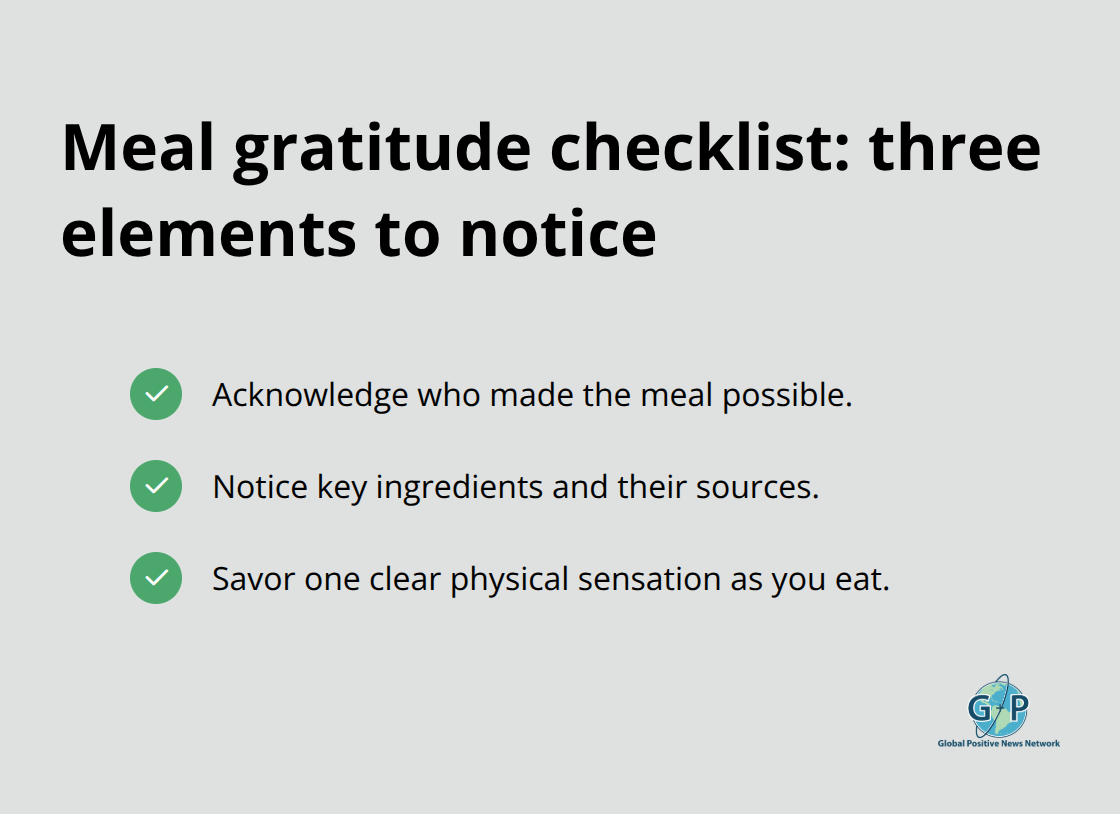
Turn meals into deliberate moments of appreciation instead of rushed refueling. Before eating, pause for ten to twenty seconds and mentally note three elements: the person or people who made the meal possible, the specific ingredients and where they came from, and one physical sensation as you eat. This transforms eating from mindless consumption into active presence.
Mindful eating practices reduce overeating, improve digestion, and increase satisfaction from smaller portions. More importantly, anchoring gratitude to an activity you already do three times daily means you build the habit without adding time to your schedule. Start with breakfast since mornings are when your brain is most receptive to establishing new patterns. Notice the temperature of your coffee, the texture of bread, or the sweetness of fruit. This practice trains your attention toward abundance rather than scarcity, which neuroscience confirms strengthens positive emotional pathways over time.
The Immediate Power of Direct Thanks
Stop waiting for the right moment to tell someone they matter. Send a brief message today to one person who helped you recently-a colleague, family member, or service worker. Harvard Health Publishing confirms that expressing gratitude strengthens social bonds and produces measurable happiness gains for both the giver and receiver.
Most people underestimate how positively others respond to genuine thanks and overestimate how awkward the moment feels. A handwritten note carries more impact than email, but a sincere text message works if it’s specific. Name exactly what they did and how it affected you (this directness matters because vague appreciation produces weaker results). Doing this once weekly compounds into stronger relationships and reinforces your own awareness of the support around you.
The neurological benefit isn’t one-directional-expressing gratitude activates the same reward centers in your brain that receiving thanks does, which is why people who regularly thank others report higher life satisfaction and lower depression rates. This foundation of direct appreciation sets the stage for building sustainable habits that actually stick over time.
How to Make Gratitude Stick Without Losing Motivation
Anchor Gratitude to Your Existing Routine
The difference between people who benefit from gratitude and those who abandon it after two weeks comes down to one thing: system design. You need a specific anchor point in your day, a way to track whether you’re actually doing it, and permission to change your approach when something stops working.
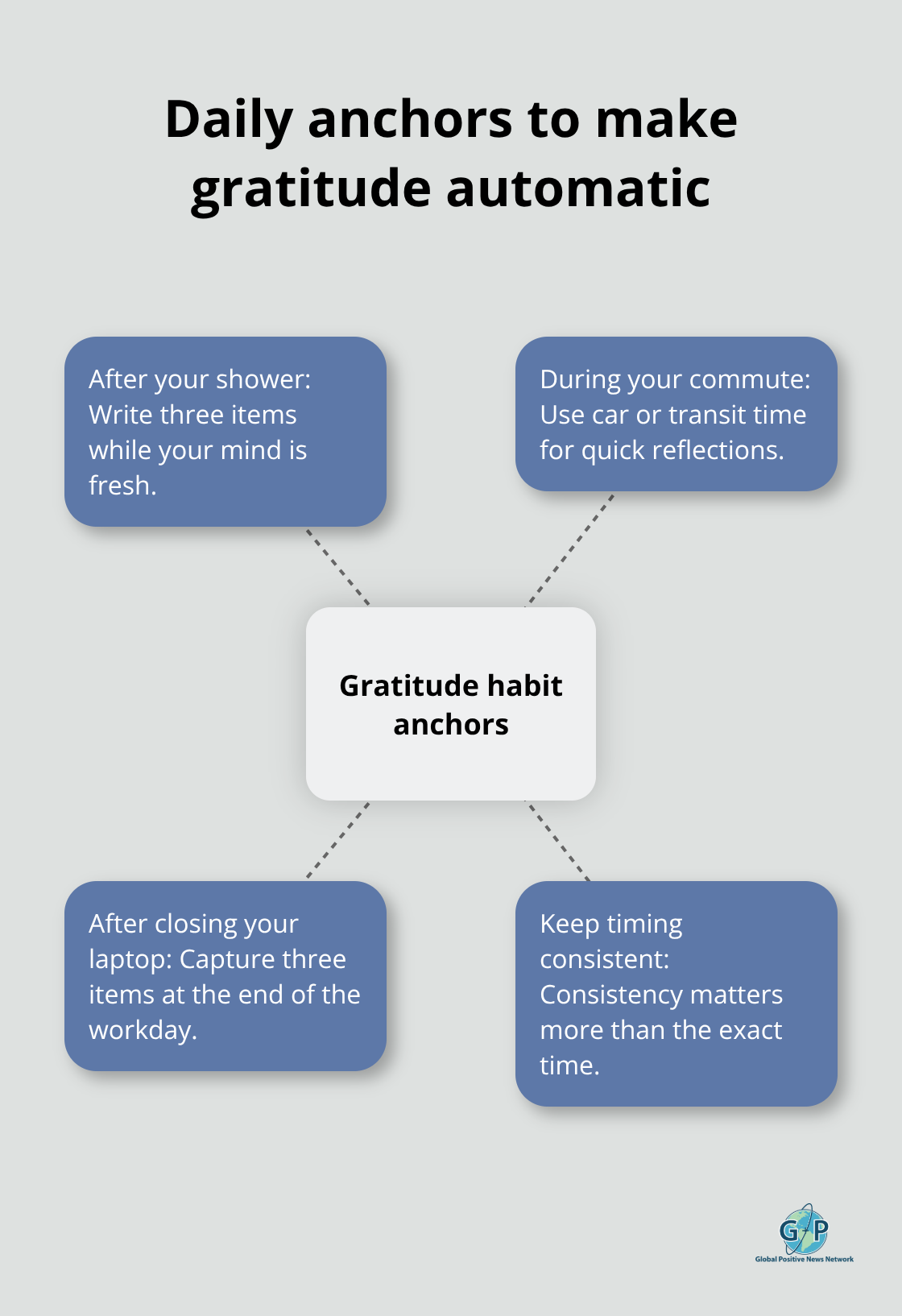
Picking the wrong time kills the habit before it starts. Morning routines can be effective, but the actual time matters less than consistency. If you shower at 6:15 AM every day, that’s your trigger point-write your three gratitude items immediately after while your mind is still fresh. If you commute by car or transit, that’s another strong anchor. If you work from home, the moment you close your laptop at day’s end works well.
Research shows that people who attach gratitude to an existing behavior stick with it longer than those who try to add it as a standalone activity. Your brain already has a neural pathway for that existing behavior, so you’re just adding gratitude to something automatic rather than creating something entirely new. This removes decision fatigue and makes the practice sustainable.
Track Your Progress Visibly
Tracking progress matters more than most people realize because gratitude can feel invisible in the moment. A simple approach involves marking an X on a calendar for each day you complete your practice-nothing more complicated than that. After four weeks of consistent marks, you’ll see a pattern that motivates continuation.
If you miss a day, the worst thing you can do is abandon the entire practice. Research on habit formation shows that one missed day doesn’t reset your progress, but three consecutive missed days significantly weakens the behavior. So if you skip one day, simply resume the next day without guilt or commentary.
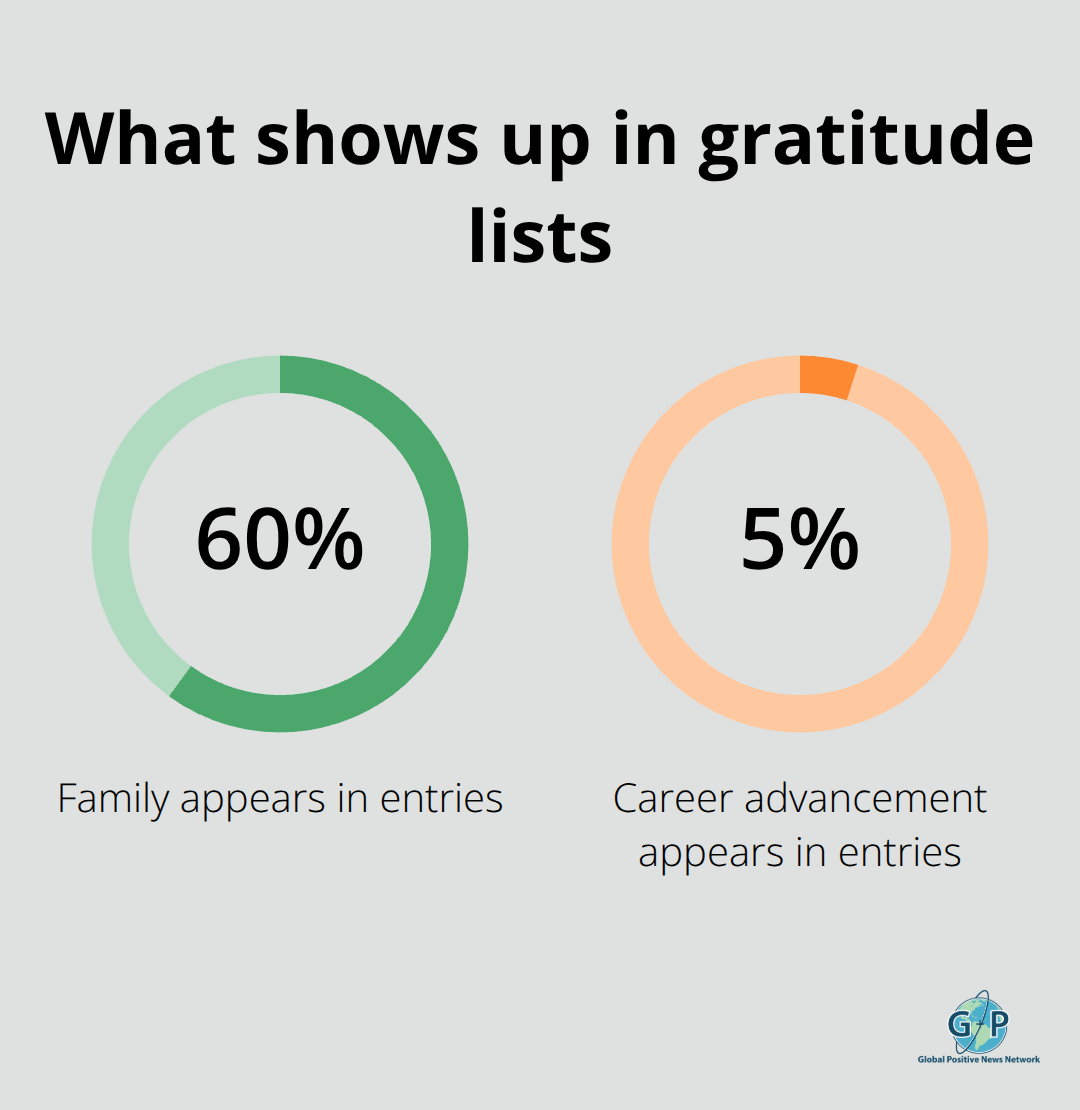
Another tracking method that works involves a spreadsheet with the date and the three things you wrote down. After eight weeks, you can review what appeared repeatedly in your gratitude list, which reveals what actually matters most to you versus what you think should matter. This self-knowledge is powerful. If family appears in 60% of your entries but career advancement appears in 5%, you’ve got clear data about your true values.
Experiment With Different Methods
Some people find that sharing their practice with an accountability partner strengthens it significantly. One person texts their gratitude partner three items weekly, and that person responds with their own three items. This mutual commitment creates social pressure that keeps both people engaged.
What works for one person fails for another, so experimentation is necessary. If written journaling feels like a chore after three weeks, switch to speaking your gratitudes aloud while walking, or texting them to that accountability partner, or creating a voice memo on your phone. Variety in method actually sustains engagement better than rigid repetition. A person might journal for two weeks, then try gratitude conversations at dinner for two weeks, then switch back to journaling. This rotation prevents the practice from becoming rote.
Commit to Specificity and Timing
The one non-negotiable element is specificity. Whether you’re writing, speaking, or texting your gratitudes, naming exact moments and people produces measurable results while vague statements do not. Three weeks is the minimum timeframe before you can fairly evaluate whether a particular approach works for you. Many people quit after ten days because they haven’t felt the benefits yet, but that’s too early. Give any new gratitude method at least three weeks of consistent practice before deciding it doesn’t work.
Final Thoughts
The shift from stress and negativity to genuine appreciation happens faster than most people expect when they commit to simple gratitude practices. Three weeks of consistent practice produces measurable changes in sleep quality, anxiety levels, and how you perceive daily events. These aren’t minor improvements-they’re the foundation for sustained happiness and resilience that compounds over months and years.
What makes gratitude powerful isn’t complexity but rather specificity and consistency. Naming one person who helped you today, pausing at a meal to notice what you’re eating, or sending a single thank-you message creates real neurological shifts that accumulate into a fundamentally different relationship with your life. People who stick with these practices report not just feeling better, but actually noticing more good things happening around them because their brain has been trained to recognize what’s working rather than fixate on what’s broken.
The hardest part isn’t understanding why gratitude works-it’s starting. Pick one anchor point in your day (morning coffee, lunch break, or bedtime) and commit to three weeks. Track your progress visibly so you can see what you’ve accomplished, and if one method stops working, switch to another. Visit Global Positive News Network to explore stories of personal transformation and connect with others building more positive lives through the power of appreciation.
Having a hard day?
The 2 Minute Hope Reset is a short free guide with three small practices for the days that feel heavy. Two minutes each, nothing to keep up with.
Get the free guideExplore more positive news:
Enjoying stories like this?
Global Positive News Network is reader-supported. If you’d like to support the mission, you can visit the Official GPNN store.