

Purpose isn’t a luxury for the fortunate few. It’s the foundation that transforms your voice and agency into real-world impact.
At Global Positive News Network, we’ve seen how people who align their values with their actions don’t just feel more fulfilled-they influence their communities, shift industries, and create movements. This blog post shows you exactly how to identify your purpose and turn it into measurable change.
How Your Values Shape What You Actually Do
The Gap Between Intention and Action
The space between wanting to make a difference and actually making it happen is real. Research from the Greater Good Science Center shows that people often feel disconnected from their stated values because they haven’t translated them into concrete action. This matters because the moment you stop treating purpose as something abstract and start anchoring it to specific behaviors, everything changes. When you identify what genuinely matters to you, you stop wasting energy on goals that don’t align with who you are.
Clarifying What Actually Drives You
The Valued Living Questionnaire and similar assessment tools help clarify which values actually drive you, not which ones sound noble. Once you know these values, the next step is immediate: small, repeatable actions that prove to yourself and others that you mean what you say. A fundraising study cited by researchers at Stanford showed that when beneficiaries spoke directly to staff about impact, donations increased significantly. This reveals something powerful: when you see how your work benefits others, motivation and engagement skyrocket.
Starting Small, Acting Now
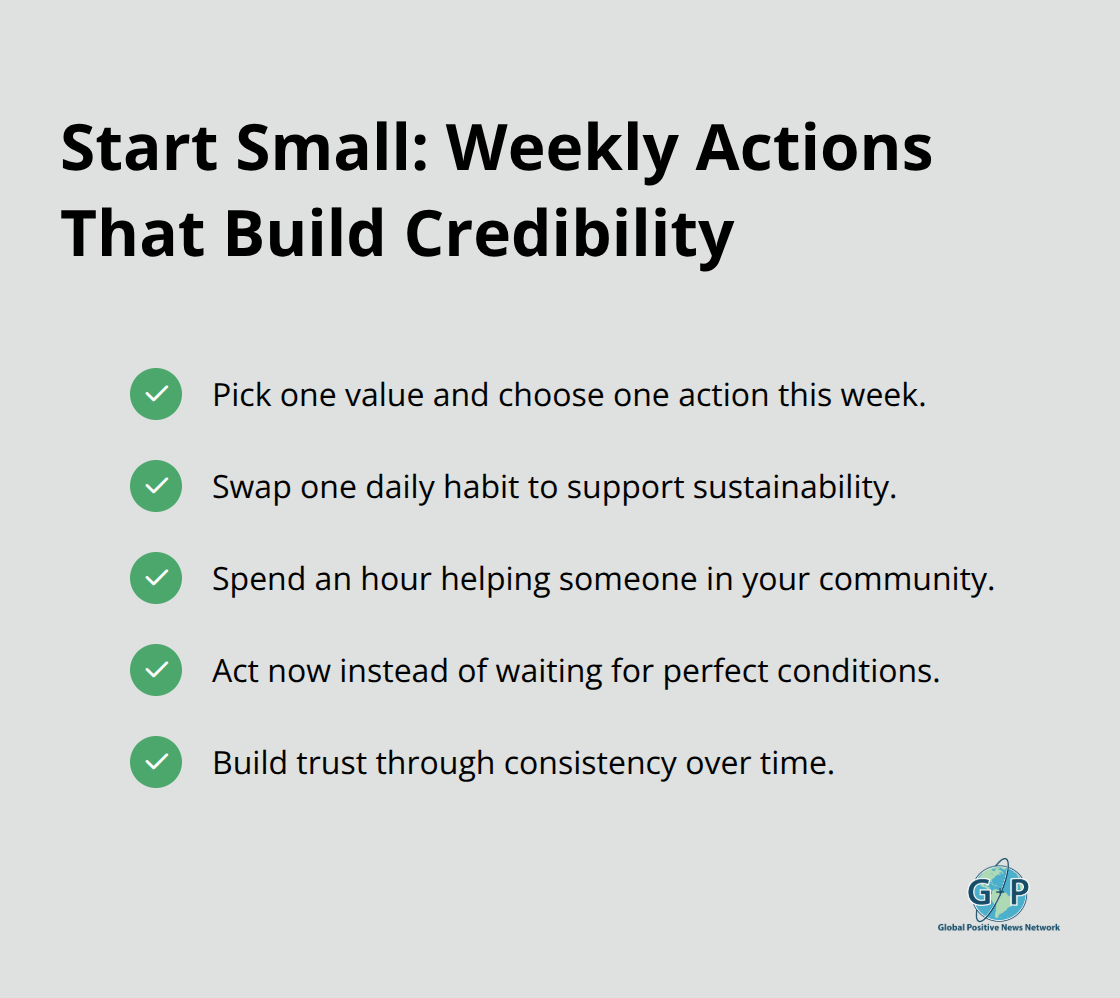
You don’t need permission or perfect conditions to start. You just need to pick one value and act on it this week. If you care about sustainability, swap one daily habit. If you care about community, spend an hour helping someone specific. These aren’t symbolic gestures; they’re the building blocks of authentic influence. The people who create lasting change aren’t waiting for certainty. They build trust through consistency.
Building Credibility Through Repeated Action
When your actions match your words repeatedly, people notice. They begin to see you as someone who walks the talk, and that credibility becomes your platform. This is how individual choices ripple outward. One person’s commitment to a value can inspire a friend, then a team, then a network. That’s not theory; it’s how movements start.
Testing Your Purpose Before You Scale
The practical path forward involves three simultaneous moves: clarify what you care about (imagine how you would change the world and why it matters), recognize your actual strengths using the VIA Character Strengths Survey, and then test your purpose in low-stakes environments before scaling up. Volunteering with organizations aligned to your interests gives you a safe space to experiment. You learn whether the work energizes you or drains you, and you build connections with people who share your values. These networks matter because they provide the accountability and encouragement that sustain purposeful action over months and years. Small wins compound. Each time you act on your values, you strengthen the neural pathways that make purposeful living automatic rather than effortful. This foundation of tested, lived experience prepares you to move into the next phase: building the systems and accountability structures that transform occasional purposeful action into a way of life.
What Real Purpose Actually Looks Like in Action
One Person, One Action, Global Movement
Greta Thunberg started with one person sitting outside the Swedish Parliament with a handmade sign. She did not wait for perfect conditions or a massive platform. She acted on her conviction that climate inaction was unacceptable, and that single act of consistency catalyzed a global movement. The Fridays for Future movement now mobilizes millions across 190 countries. This matters because Thunberg’s path reveals something most people miss: purpose-driven impact does not require you to be famous, wealthy, or connected.
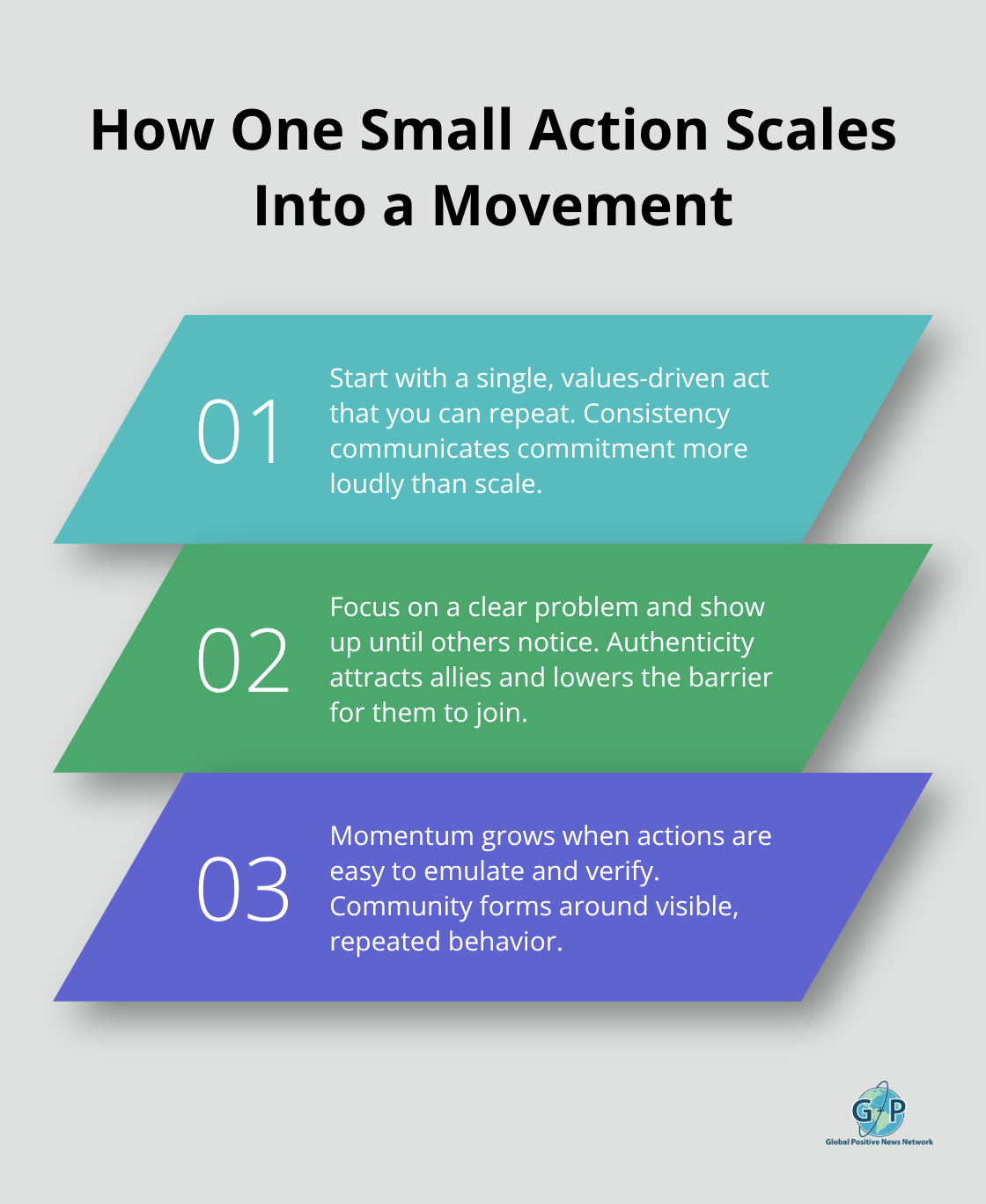
It requires you to take the first small action and then keep showing up. When you demonstrate through repeated behavior that you genuinely care about something, others recognize that authenticity and join you.
Policy Change Through Structured Advocacy
The Citizens’ Climate Lobby operates on this principle. Their members engage in structured advocacy around carbon pricing policy, and their work directly influenced the Energy Innovation and Carbon Dividend Act, which proposes a carbon fee at production with monthly dividends returned to households. This is tangible impact from ordinary people who clarified their values, found others who shared them, and built systems to push for specific outcomes. They did not theorize about climate change; they identified a concrete policy lever and pulled it.
Testing Purpose Before You Scale
What separates people who create lasting change from those who do not is this: they test their purpose in small, measurable ways before scaling. Someone committed to reducing plastic waste might start by eliminating single-use plastics at home, then shift their workplace purchasing, then advocate for policy changes. Each step builds credibility and reveals whether the work actually energizes them. Entrepreneurs who build movements around their mission follow this same pattern. They start with a clear problem they have personally experienced or witnessed, they solve it in a limited way first, and they only expand when they have proven the model works.
How Consistency Compounds Into Movements
The difference between a hobby project and a movement is consistency plus community. When you find people who share your values and create accountability structures together, individual actions compound into systemic change. This is why volunteering with organizations aligned to your interests matters so much: it is not just about the immediate good you do. It is your testing ground. You discover whether the work fills you or depletes you, you build relationships with people who hold similar convictions, and you develop the credibility that allows you to influence larger systems later.
Building Leverage Through Demonstrated Competence
People who transform industries follow the same trajectory. They do not start by trying to change an entire sector. They identify one specific problem within their industry, they become known for solving it consistently, and eventually their reputation and network give them leverage to reshape industry standards. That leverage only comes from demonstrated competence and repeated follow-through on your stated values. Once you understand how small actions build credibility and how credibility opens doors to larger influence, you are ready to construct the systems that turn sporadic purposeful action into a sustainable way of life.
Turn Your Values Into Weekly Actions
Start with Turn Your Values Into Weekly Actions-these tools help you identify core values and guide you toward more meaningful life choices. Spend 20 minutes on whichever one you choose, and you’ll have clarity most people never achieve. The moment you finish, identify one value and commit to one concrete action this week. Not next month. This week.
If you value community, volunteer for four hours at a local organization. If you value sustainability, implement home composting or switch to reusable alternatives for three daily habits. If you value health, find a walking group and show up twice. The action itself matters less than the fact that you’re testing whether this value energizes you or depletes you. Most people skip this step and wonder why their purpose feels hollow. You won’t make that mistake.
After you complete your first action, write down what happened: Did the work fill you? Did you meet people who share your conviction? Did you learn something about yourself? This isn’t journaling for therapy-it’s data collection. You’re building evidence about which values actually drive you versus which ones sound noble in theory. Repeat this cycle with a different value the following week. After four weeks, you’ll have tested four core values through real behavior, not reflection alone.
Build Your Accountability Partnership Now
Find one person who shares at least one of your values and propose a specific accountability structure. Not a vague coffee date where you talk about wanting to change the world. Instead, propose this: We check in every Sunday evening for 15 minutes via text or call. You tell me what action you took on your stated value, I tell you mine. We share one obstacle and one win. That’s it.
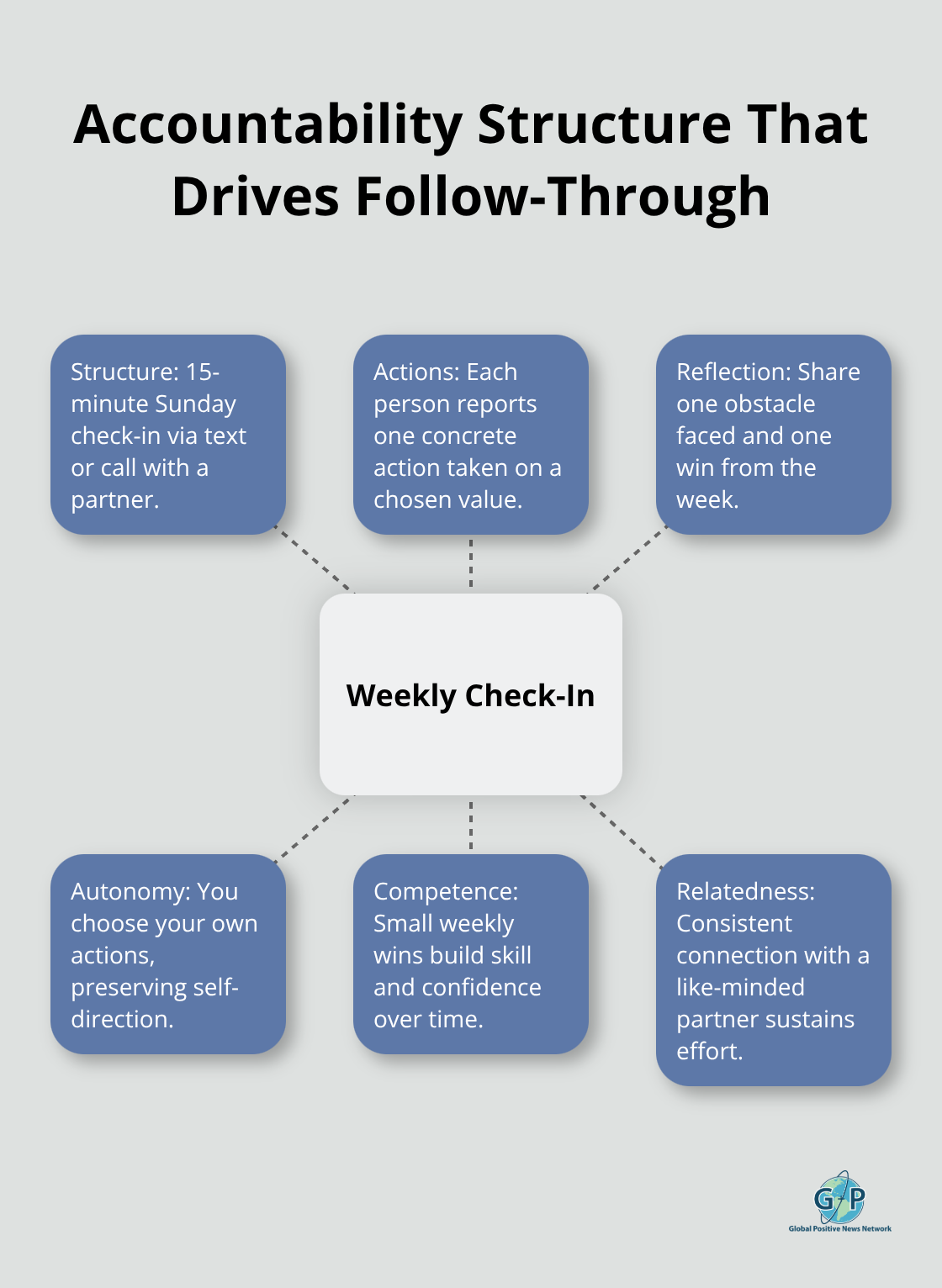
Research from Self-Determination Theory shows that autonomy, competence, and relatedness drive sustainable motivation, and this structure addresses all three. You maintain autonomy by choosing your own actions, you build competence through repeated small wins, and you create relatedness through consistent connection with someone who gets it. One accountability partner is enough. Two is better. Three becomes complicated. Start with one and expand only if the first partnership thrives.
Your partner doesn’t need to share your exact purpose-they just need to take their own purpose seriously. When you know someone else is counting on you to show up, your follow-through rate jumps dramatically. This isn’t willpower. It’s structure. Structure beats motivation every single time because structure doesn’t depend on how you feel on a given Sunday.
Map Your Strengths to Real Opportunities
Use the VIA Character Strengths Survey to identify your top five strengths, then search for volunteer opportunities that explicitly value those strengths. If you score high in creativity and social intelligence, volunteer with organizations that need program design or community outreach, not data entry. This alignment matters because mismatched work drains energy even when the cause is noble. You’ve experienced this-working on something you believe in but using skills you hate eventually kills your motivation.
Now you’re going to reverse that pattern. After you complete the VIA survey, search VolunteerMatch or local nonprofit websites for three opportunities that use your top strengths. Apply to all three. Interview with them like you’re evaluating them, not the other way around. Ask: Does this work energize me? Do I respect how this organization operates? Will I build relationships with people I want to know?
After your first month in any volunteer role, you’ll know whether it’s your testing ground or a dead end. If it energizes you, expand your hours and deepen your involvement. If it drains you, leave without guilt and try the next opportunity. The goal isn’t loyalty to an organization-it’s finding the intersection where your strengths, your values, and real-world impact align.
Final Thoughts
Purpose transforms from abstract concept into real influence the moment you act on it. Test your values through concrete behavior, build accountability with someone who shares your conviction, and align your strengths with meaningful work-this is how your voice and agency shift from potential into tangible impact. Individual commitment compounds into community movement, small weekly actions reshape industries, and one person’s consistency inspires others to clarify their own purpose.
You now possess the tools that separate intention from action: the VIA Character Strengths Survey maps what you genuinely excel at, the Valued Living Questionnaire cuts through noble-sounding values to reveal what actually drives you, and a straightforward accountability structure demands just 15 minutes per week. Start this week by picking one value, taking one concrete action, and telling one person what you’re doing. After four weeks of testing different values through behavior, you will have more clarity about your purpose than most people achieve in years of reflection alone.
For ongoing inspiration and stories of people living purposeful lives, visit Global Positive News Network to discover how others transform their values into real-world impact. Your purpose journey begins now.
Having a hard day?
The 2 Minute Hope Reset is a short free guide with three small practices for the days that feel heavy. Two minutes each, nothing to keep up with.
Get the free guideExplore more positive news:
Enjoying stories like this?
Global Positive News Network is reader-supported. If you’d like to support the mission, you can visit the Official GPNN store.