
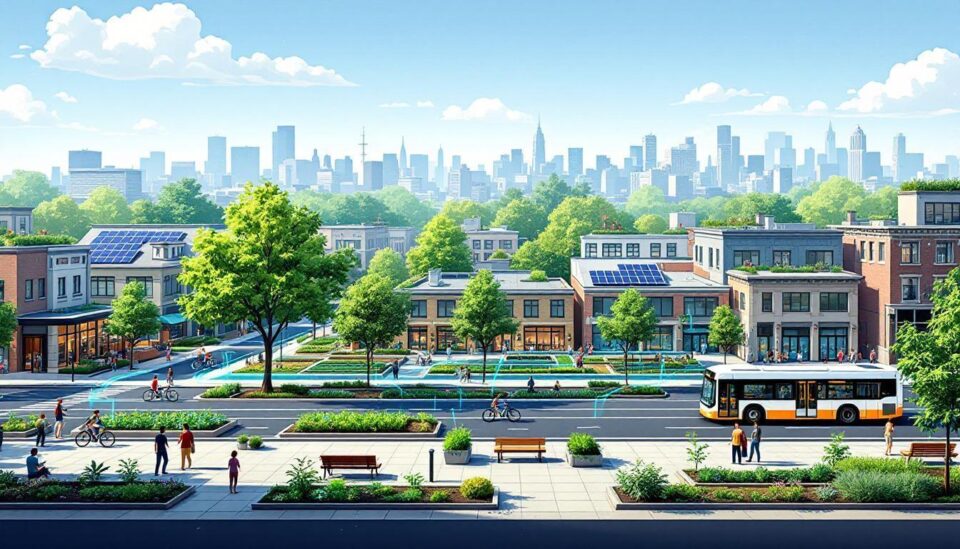
Cities face real challenges: pollution, flooding, housing shortages, and disconnected communities. Yet hopeful innovations are already reshaping urban spaces across the globe.
We at Global Positive News Network have identified three powerful forces driving this change: green infrastructure that cleans our air and manages water, community-led projects that strengthen neighborhoods, and technology that connects people to solutions. These aren’t distant possibilities-they’re happening now, creating tangible improvements in how people live.
How Cities Capture Energy and Clean Water at Scale
Renewable Energy Systems Power Urban Infrastructure
Renewable energy systems have moved beyond rooftop installations into the backbone of city operations. Copenhagen targets carbon neutrality by 2025, backed by wind energy and district heating networks that serve thousands of buildings simultaneously. The city already sources over 80% of its electricity from wind and biomass-this isn’t theoretical ambition. Barcelona’s superblocks redesign pairs solar installations on buildings with smart grids that balance demand across neighborhoods, reducing peak energy consumption and cutting costs for residents. Amsterdam embeds circular economy principles into its infrastructure, combining rooftop gardens with advanced water management systems that capture and recycle greywater at the district level.
These cities prove that renewable energy works best when integrated into broader urban systems rather than deployed in isolation. Cities that link renewable generation to smart distribution networks and energy-efficient buildings see measurable reductions in both emissions and operational costs. The practical lesson is clear: integration matters more than individual installations.
Water Systems Stop Flooding Before It Starts
Water management has shifted from reactive damage control to predictive prevention. Singapore integrates stringent building standards with advanced water recycling systems that supply 40% of the city’s water needs, reducing dependence on imports and vulnerability to droughts. Barcelona’s green corridors combine permeable surfaces with underground storage that captures stormwater, preventing overflow during heavy rains while recharging groundwater reserves.
Traditional concrete-heavy urban design channels water away rapidly, overwhelming drainage systems and causing flash floods. Green infrastructure-including rain gardens, permeable pavements, and restored wetlands-absorbs water on-site, filters pollutants naturally, and reduces strain on aging pipes. Stockholm and Freiburg have embedded these approaches into neighborhood design standards, making green water management mandatory rather than optional. Preventing a single major flood saves cities millions in emergency response and infrastructure repair, making upfront investment in water systems economically rational.
Air Quality Improves Through Green Roofs and Urban Forests
Urban gardens and green roofs deliver measurable air quality improvements because plants actively remove particulates and absorb carbon dioxide. Amsterdam’s rooftop gardens and expanded green corridors have contributed to measurable air quality improvements across the city. Freiburg, Germany reduced carbon emissions significantly through integrated approaches that included extensive green spaces alongside renewable energy adoption.
A single mature tree removes up to 48 pounds of carbon dioxide annually while filtering airborne pollutants. Cities implementing widespread green roof programs report reductions in summer surface temperatures, which decreases air conditioning demand and cuts energy consumption by 5-15%. Portland, Oregon prioritizes green infrastructure alongside expanded public transit and cycling facilities, creating compounding benefits where reduced car traffic combines with increased vegetation to improve air quality faster than either approach alone.
The practical barrier isn’t cost but perception. Cities that shifted budget allocation toward green infrastructure found that reduced maintenance on traditional landscaping offset new planting expenses within three to five years. These financial gains open the door to the next wave of urban transformation: community-led projects that strengthen neighborhoods from the ground up.
Communities Building Housing and Food Systems That Work
Local Food Networks Strengthen Neighborhoods and Economies
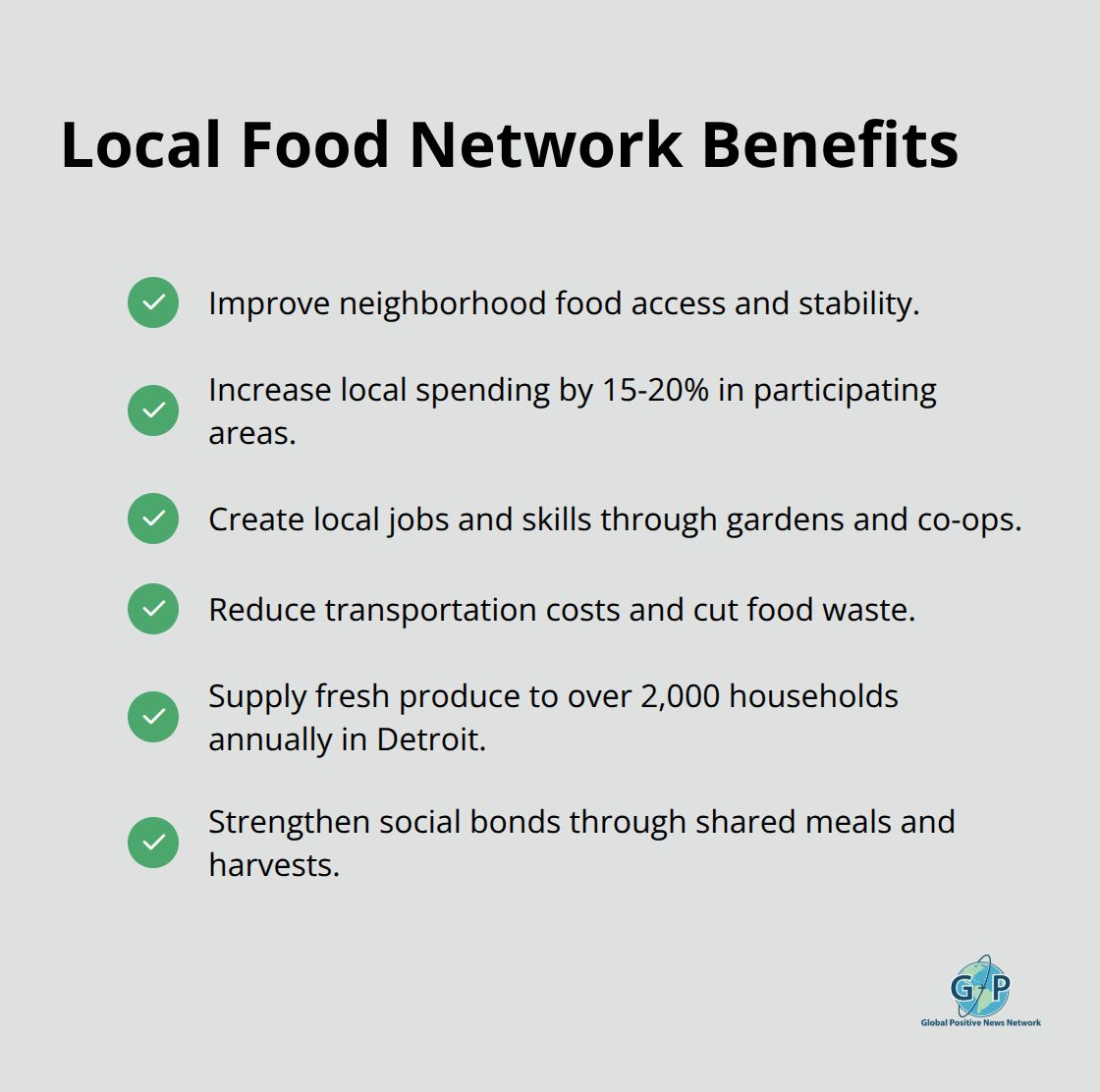
Local food networks have moved from farmers market curiosities into neighborhood infrastructure that measurably improves food access and economic stability. Cities implementing hyperlocal food systems report that residents in participating neighborhoods spend 15-20% more money within their communities compared to those relying on distant supply chains. These networks-combining community gardens, food co-ops, and direct farmer partnerships-create employment while reducing transportation costs and food waste. Detroit’s urban agriculture initiative transformed vacant lots into productive gardens that now supply fresh produce to over 2,000 households annually, while simultaneously training residents in sustainable farming practices. Communities that grow food locally reduce their dependence on industrial agriculture, stabilize prices during supply disruptions, and build skills that generate income. Food networks also strengthen social bonds because participants interact regularly around shared meals and harvest activities, creating informal support systems that matter during economic hardship.
Affordable Housing Prevents Homelessness and Community Fragmentation
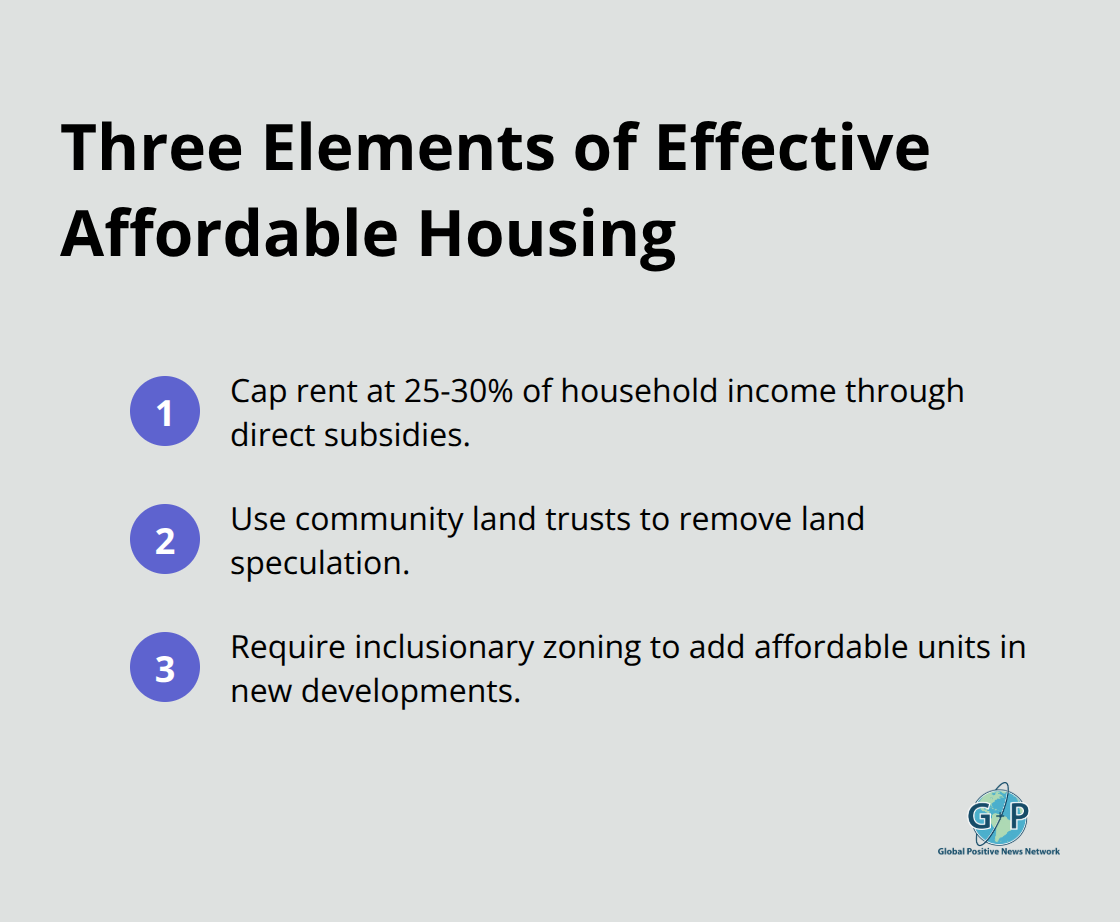
Affordable housing directly prevents homelessness and community fragmentation, yet most cities treat it as a charity problem rather than infrastructure investment. By 2030, UN-Habitat estimates that 3 billion people, about 40 per cent of the global population, could lack adequate housing without intervention. Cities that embed affordable housing into mixed-income developments-rather than segregating low-income residents-see better economic outcomes and lower crime rates. Vienna’s social housing model demonstrates this principle: 60% of residents live in publicly subsidized apartments across all neighborhoods, creating economic diversity that strengthens local economies and prevents poverty concentration. Affordable housing initiatives must combine three elements: direct subsidy programs that cap rent at 25-30% of household income, community land trusts that remove land speculation, and mandatory inclusionary zoning requiring developers to include affordable units in new projects.
Community Centers Anchor Neighborhoods and Provide Essential Services
Community centers function as essential infrastructure, not luxuries. Centers that offer job training, childcare, healthcare access, and recreational activities serve as anchors that prevent neighborhood decline. Singapore’s community centers operate as government-supported facilities offering programs across education, healthcare, and social services, reaching over 500,000 residents monthly. These centers work most effectively when staffed by residents who understand local needs and when operations remain open during evenings and weekends when working families can access them. Cities that invest in these three elements-local food systems, affordable housing, and community centers-build resilience that protects residents during economic downturns while creating pathways out of poverty. Technology now amplifies these community efforts, connecting residents to opportunities and solutions at scale.
Technology That Connects People and Reduces Energy Consumption
Smart Building Systems Cut Energy and Water Use Measurably
Smart city technology works best when deployed to solve specific problems rather than as a blanket digital overlay. Barcelona’s superblocks pair real-time energy monitoring with automated systems that shift electricity consumption away from peak hours, reducing strain on the grid and lowering costs for participating buildings by 10-15%. These systems don’t require residents to change behavior; the technology handles optimization automatically. Singapore’s building standards mandate IoT sensors in new construction that track energy and water use in real time, enabling facility managers to identify leaks within hours rather than weeks and catch equipment failures before they escalate into expensive repairs.
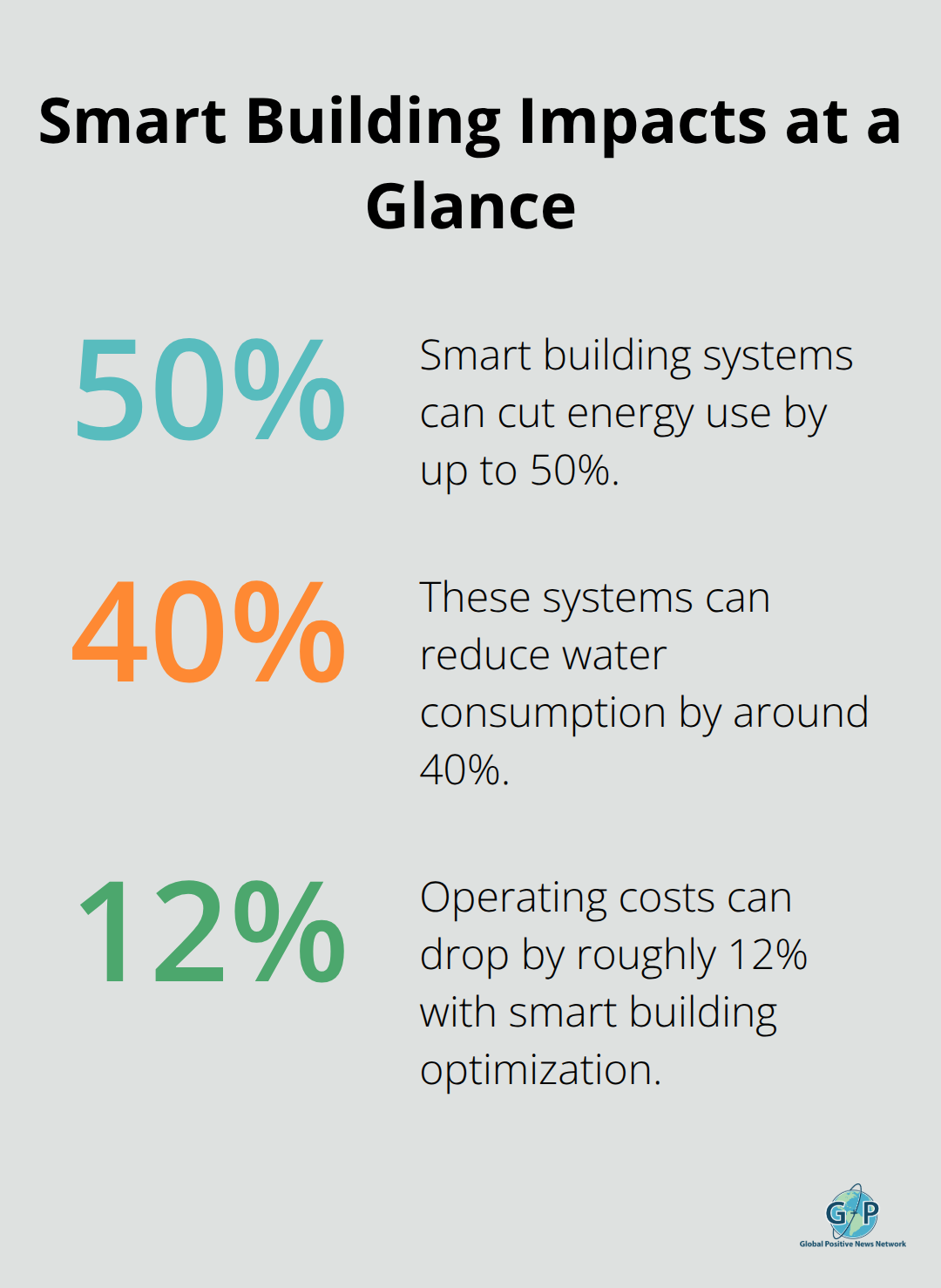
Smart building systems cut energy use by up to 50% and water consumption by around 40%, while reducing operating costs by roughly 12%. This matters because buildings account for 36% of global energy consumption and 39% of CO2 emissions. Cities that implement these systems report measurable payback within 5-7 years, making the initial investment rational for municipal budgets.
Data Platforms Enable Coordinated City Operations
The practical barrier to smart systems isn’t technology availability but coordination across fragmented city departments that operate separate systems and don’t share data. Data platforms enable coordinated city operations where transportation, water, energy, and waste management feed real-time information, enabling decisions that individual departments cannot achieve alone. This integration transforms how cities respond to problems-a water main break triggers automatic rerouting of traffic, energy systems adjust to accommodate temporary demand spikes, and waste collection routes optimize around the disruption.
Mobile Apps Remove Friction From Community Participation
Mobile apps and digital platforms work when they remove friction from existing activities rather than creating new requirements. Volunteer management platforms that let residents claim neighborhood tasks-from park cleanup to mentoring-increase participation because they eliminate the traditional gatekeeping of community organizations. Helsinki’s open data platforms make city information accessible to residents and entrepreneurs, enabling people to build services that solve local problems without waiting for government approval.
Transparency Platforms Build Trust and Civic Engagement
Digital platforms amplify local voices most effectively when they connect residents directly to decision makers rather than simply collecting feedback into a database that nobody reads. Cities that publish budget data in accessible formats and allow residents to track how decisions affect their neighborhoods build trust and increase civic engagement. The technology itself is secondary; the commitment to transparency and response is what drives impact.
Final Thoughts
The innovations reshaping cities and communities across the globe share a common thread: they work because they solve real problems with measurable results. Renewable energy systems reduce emissions while lowering operational costs and creating jobs. Water management infrastructure prevents flooding while supplying drinking water. Green roofs improve air quality while cutting cooling expenses. Local food networks strengthen economies while improving nutrition. Affordable housing prevents homelessness while stabilizing neighborhoods. Smart building systems cut energy consumption by up to 50% while reducing maintenance costs. These innovations for cities aren’t theoretical improvements or distant possibilities-they’re happening now in Copenhagen, Singapore, and Amsterdam, delivering tangible benefits that residents experience directly.
Hopeful innovations emerge when three conditions align: practical solutions that address specific problems, integration across systems rather than isolated projects, and genuine community participation in decision-making. Cities that treat green infrastructure as essential rather than optional, that embed affordable housing into mixed-income neighborhoods, and that deploy technology to remove friction from community participation see compounding benefits that accelerate over time. One successful project attracts investment and attention to the next, and residents who experience improvement become advocates for further change.
The path forward requires cities to shift from reactive problem-solving to preventive infrastructure investment. This means funding green water systems before floods occur, installing smart building sensors before energy crises hit, and supporting local food networks before supply disruptions create food insecurity. We at Global Positive News Network believe these innovations matter because they demonstrate that cities can work better for everyone, and the cities leading this transformation aren’t waiting for perfect conditions-they’re starting with one project, measuring results, and scaling what works.
Having a hard day?
The 2 Minute Hope Reset is a short free guide with three small practices for the days that feel heavy. Two minutes each, nothing to keep up with.
Get the free guideExplore more positive news:
Enjoying stories like this?
Global Positive News Network is reader-supported. If you’d like to support the mission, you can visit the Official GPNN store.