
Communities worldwide are discovering that economic growth doesn’t require waiting for outside help. Real change happens when local leaders embrace innovation in business models, technology, and investment strategies.
We at Global Positive News Network have compiled this economic hopeful innovations report to show you exactly how this transformation works. From social enterprises creating jobs to renewable energy lowering costs, these strategies are already delivering results in neighborhoods everywhere.
How Communities Build Wealth Through Local Enterprise
Social Enterprises Drive Job Growth in Overlooked Regions
Social enterprises have become the fastest-growing job creators in left-behind counties across America. Between 2020 and 2023, left-behind counties added jobs at more than four times the pace of the prior three years, with much of this growth coming from locally-owned businesses and community-focused ventures rather than large corporate relocations. When communities invest in their own people through social enterprises, the returns compound quickly. A social enterprise that prioritizes local hiring creates more than one job-it strengthens the entire community’s purchasing power because wages stay local. This matters enormously in regions where median household income sits around $55,200, roughly $20,000 below the national average of $75,200. Every dollar a social enterprise pays in local wages circulates through the community multiple times, funding schools, small shops, and local services that corporate chains would extract from the region.
Circular Economy Models Cut Costs While Creating Opportunity
Circular economy models prove especially effective in communities serious about cutting operational costs while creating jobs. Businesses that reduce waste through maintenance, reuse, refurbishment, remanufacture, and recycling lower input costs immediately-a concrete benefit that improves margins and allows for competitive pricing or higher wages. This approach transforms how enterprises think about resources and profitability.
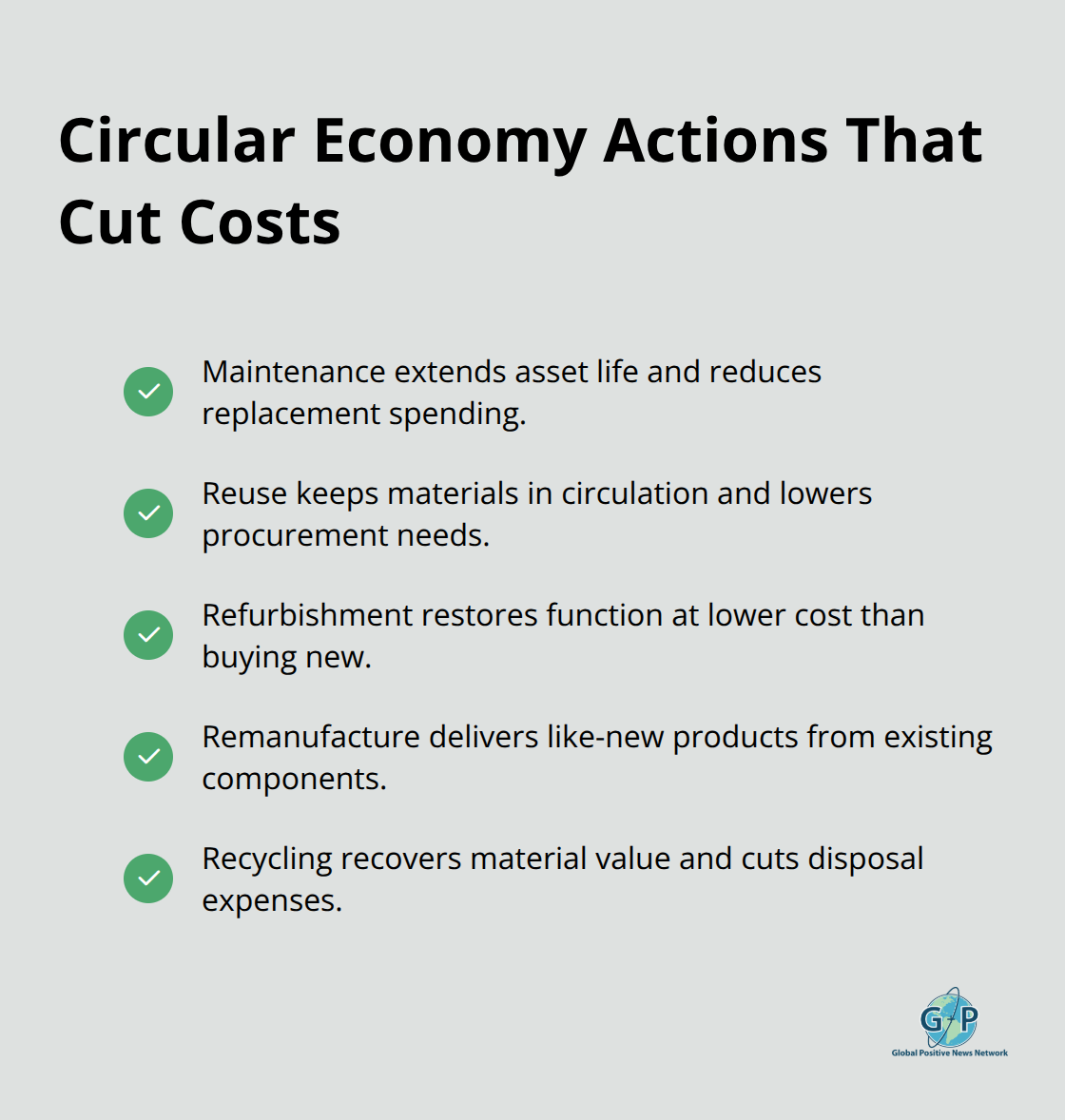
Instead of treating materials as disposable, circular models treat them as assets that generate value multiple times over.
Flexible Financing Unlocks Local Business Expansion
Microfinance institutions and community investment programs have become the backbone supporting these innovations. The Inland Empire revolving loan fund model demonstrates exactly how this works: cities and counties blend flexible loan capital with manageable terms, allowing nonprofits and small enterprises to expand without the crushing debt loads that traditional banks impose. Communities adopting this approach report faster business growth and stronger workforce retention because entrepreneurs invest in staff training rather than servicing debt. The key difference between success and failure in these initiatives comes down to flexibility. Funders willing to accept longer repayment timelines and adapt terms to seasonal or cyclical revenue patterns see dramatically higher repayment rates and stronger community outcomes (rigid lending structures fail in communities where income patterns differ from metro areas; flexible capital structures succeed because they acknowledge local economic realities). This shift toward adaptable financing opens doors for the next wave of innovation-one where technology amplifies what local enterprises can accomplish.
How Technology Amplifies Local Economic Power
Digital Tools Level the Playing Field for Small Businesses
Digital tools are not luxuries for small businesses in left-behind counties-they are survival mechanisms that level competitive ground against larger enterprises. Small business adoption of cloud-based accounting software, point-of-sale systems, and inventory management platforms accelerated dramatically since 2020, with rural adoption rates now approaching parity with urban areas. These tools cut administrative overhead by 15-30 percent, freeing owners to focus on growth rather than paperwork. Payment processing platforms designed for small merchants now charge 1.5-2 percent per transaction instead of the 3-4 percent traditional banks demanded a decade ago. The difference compounds: a small enterprise processing $500,000 annually saves $7,500-$12,500 yearly-capital that flows directly into payroll or equipment. Communities that prioritize digital infrastructure investment see measurable business formation increases within 18 months.
Rural broadband expansion remains uneven across America, yet communities with connectivity build competitive advantages their predecessors never imagined. E-commerce platforms allow a rural craftsperson to reach national markets instantly. Digital marketing tools cost under $50 monthly and deliver customer acquisition that would have required expensive traditional advertising just five years ago.
Renewable Energy Creates Revenue Streams and Job Opportunities
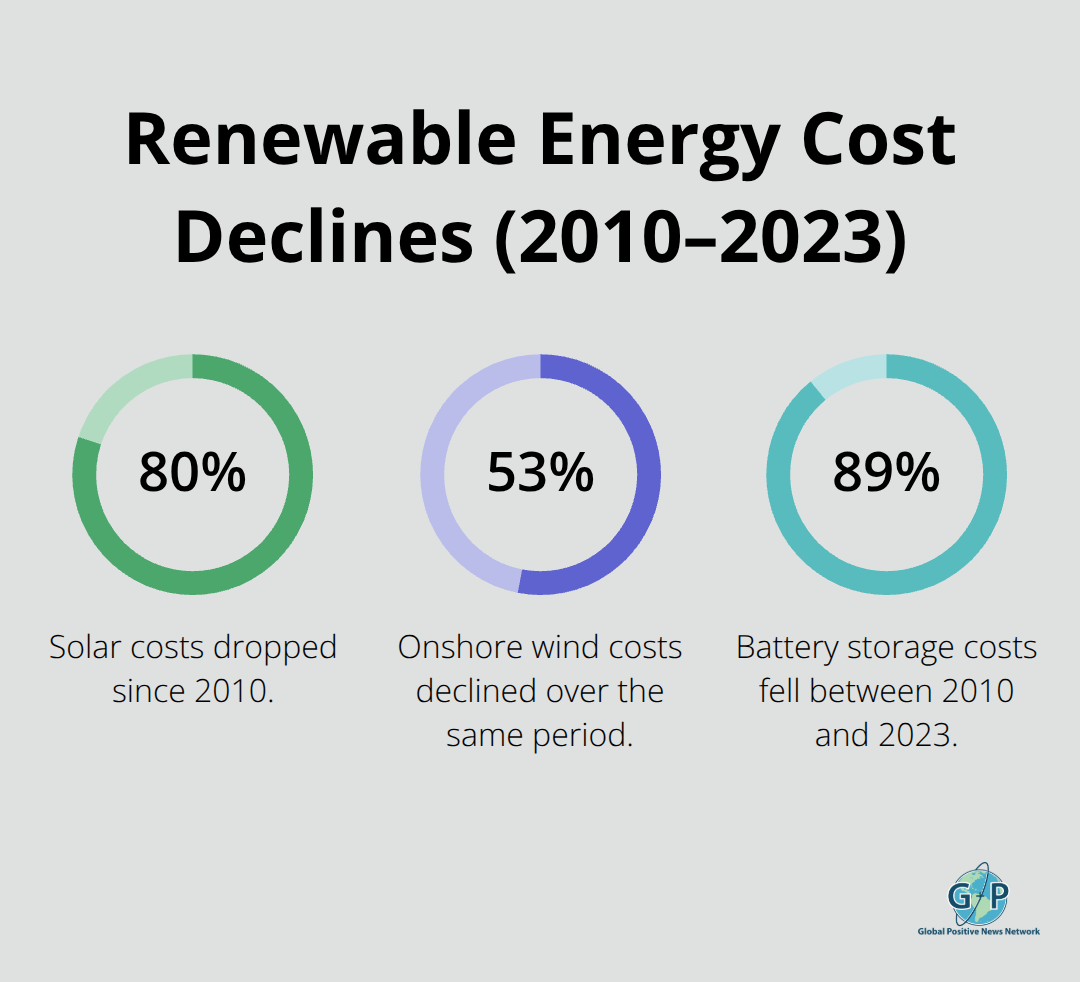
Renewable energy economics have fundamentally shifted the cost calculus for communities. Solar costs dropped 80 percent since 2010 and onshore wind declined 53 percent over the same period, with battery storage falling 89 percent between 2010 and 2023 according to IRENA and WEF data. Communities now host renewable energy projects that generate ongoing revenue streams for municipal budgets and nonprofit organizations.
The Inland Empire model that succeeded with flexible lending applies equally to energy infrastructure: communities that capture renewable energy benefits locally-through community solar programs, cooperative ownership structures, or municipal power purchase agreements-retain capital that would otherwise flow to distant utility corporations.
A 500-kilowatt solar installation serving a small town generates $40,000-$60,000 annually in avoided electricity costs while creating 2-4 permanent maintenance jobs. Energy independence also insulates communities from price volatility; when regional grid operators raise rates 8-12 percent annually, communities with local renewable capacity absorb those shocks more easily.
Blockchain Rebuilds Trust in Local Supply Chains
Blockchain applications for transparent trade remain nascent compared to digital tools and renewable energy, yet they address a specific pain point that matters enormously in communities rebuilding supply chains. Supply chain transparency through distributed ledger technology allows small producers to verify product origins and quality without intermediaries extracting fees. A cooperative of agricultural producers using blockchain-verified trade commands 5-15 percent price premiums because buyers confirm sustainability claims directly. This matters in regions where trust in local products has eroded; transparent, verifiable systems rebuild confidence in community resources.
The technology itself costs less than most assume-open-source blockchain platforms charge minimal fees compared to traditional verification systems, and training community members requires weeks rather than years. These three technological shifts (digital tools, renewable energy, and blockchain transparency) converge to create something more powerful than any single innovation: they enable communities to control their own economic narratives and capture value that previously flowed elsewhere. The next chapter explores how communities transform these technological capabilities into tangible, sustained prosperity through cooperative structures and skills development.
How Cooperatives and Skills Programs Transform Left-Behind Economies
Cooperatives Distribute Wealth Directly to Community Members
Cooperatives have become the most effective structure for communities serious about retaining economic value locally. Unlike traditional businesses where profits flow to distant shareholders, cooperatives distribute earnings directly to members, creating compounding wealth within the community. Agricultural cooperatives in the Midwest now handle 30 percent of farm output, with member households earning 12-18 percent higher annual income than non-member farmers operating independently. Manufacturing cooperatives operate similarly: worker-owned enterprises report 23 percent higher productivity than comparable conventional firms, because ownership stakes align incentives around quality and efficiency rather than cost-cutting.
A packaging cooperative in rural Pennsylvania expanded from 8 to 42 members over five years through reinvestment of profits into equipment and training rather than capital extraction. Cooperative members stay longer in their roles, reducing turnover costs that plague rural employers facing constant recruitment expenses. The supply chain resilience these structures create matters enormously when external shocks occur. During pandemic supply disruptions, cooperatives with diversified member bases adapted faster than single-supplier arrangements.
Housing and Ownership Models Reduce Living Costs
Housing cooperatives now operate in 47 states, offering members 20-35 percent below-market rent through shared ownership models. These structures address a fundamental constraint in left-behind counties: housing costs that consume disproportionate shares of household income. The barrier to launching cooperatives has dropped significantly, with legal formation costs under $2,000 in most states. Online platforms now connect prospective members with technical assistance from established cooperative networks, making formation accessible to communities without extensive legal resources.
Employer-Connected Training Programs Deliver Real Job Placement
Skills training programs succeed when they connect directly to actual job openings rather than generic credential programs. Communities reporting the highest employment gains pair training with employer commitments before enrollment begins. Manufacturing apprenticeships in Wisconsin connect high school students to employers offering competitive wages upon completion, with strong job placement outcomes.
The critical difference between effective and ineffective training programs comes down to employer involvement from day one. Programs where employers help design curriculum and guarantee interviews see completion rates above 85 percent, while programs designed in isolation see completion rates below 45 percent.
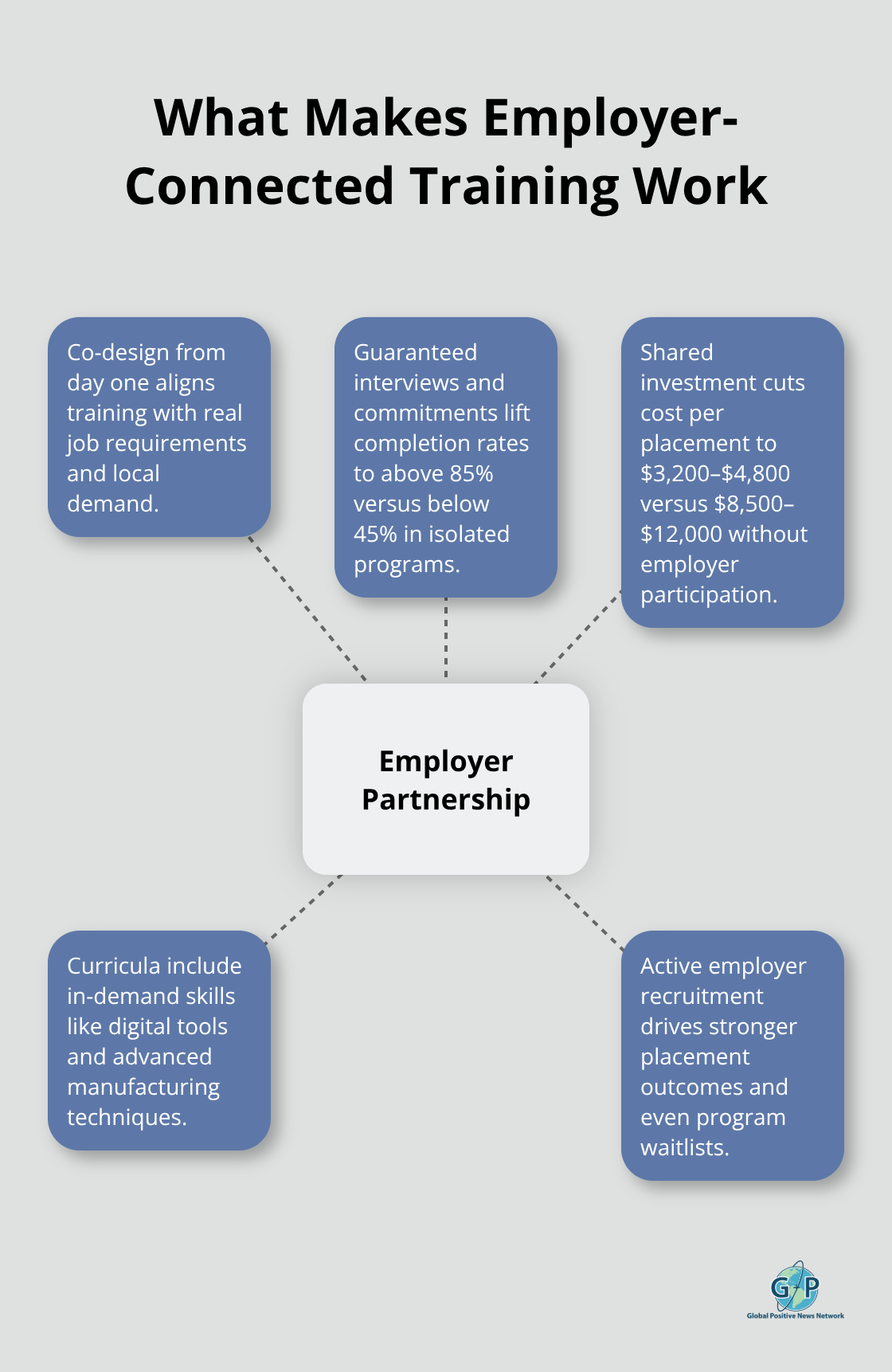
Advanced manufacturing training in the Inland Empire now includes digital tool proficiency because employers specifically demand those skills. Construction trades programs in rural North Carolina report waiting lists because local contractors actively recruit graduates before graduation ceremonies conclude.
Community colleges partnering with local economic development organizations outperform standalone institutions by 40 percent in job placement metrics. The cost per student placement averages $3,200-$4,800 when employers participate versus $8,500-$12,000 when training operates independently. These numbers reveal a stark truth: employer engagement cuts training costs in half while doubling placement success.
Integrated Regeneration Projects Combine Ownership with Skills
Regeneration projects that succeed combine cooperative structures with skills training into integrated ecosystems. A commercial corridor revitalization in a left-behind county paired storefront cooperative ownership with retail management training, creating 47 permanent jobs and attracting $2.3 million in secondary investment within 18 months. These projects work because they address the actual constraint limiting growth: communities lack not just capital or technology, but local ownership of assets and workforce capability that stays invested in place rather than flowing toward opportunities elsewhere.
Final Thoughts
The economic hopeful innovations report reveals a consistent truth: communities that build prosperity do so through deliberate coordination, not isolated efforts. Social enterprises, flexible financing, digital tools, renewable energy, and cooperative structures work together to create ecosystems where wealth compounds locally rather than flowing elsewhere. Left-behind counties added jobs at four times their prior pace between 2020 and 2023, rural establishments now sit 9 percent above 2019 levels, and worker-owned enterprises report 23 percent higher productivity than conventional firms-these transformations happen when multiple sectors align around shared goals.
Economic hope emerges when local leaders control their own assets, develop their own talent, and retain the value they create. This requires prioritizing flexible capital over rigid lending structures, treating nonprofits as operating partners with fair wages, and investing in community ownership models that compound wealth locally. The Inland Empire revolving loan fund succeeds because cities and counties committed to adaptable terms. Manufacturing cooperatives thrive because members prioritize collective success. Skills programs hit 85 percent completion rates when employers guarantee interviews before training starts.
We at Global Positive News Network believe communities deserve stories that reflect their actual capacity to shape their futures. Explore uplifting news that inspires positive change and discover more stories of communities building economic hope through innovation and collaboration.

Having a hard day?
The 2 Minute Hope Reset is a short free guide with three small practices for the days that feel heavy. Two minutes each, nothing to keep up with.
Get the free guideExplore more positive news:
Enjoying stories like this?
Global Positive News Network is reader-supported. If you’d like to support the mission, you can visit the Official GPNN store.