
Technology is reshaping how we address humanity’s biggest challenges. From renewable energy systems cutting carbon emissions to AI diagnosing diseases faster, innovation is creating tangible pathways to hopeful futures.
At Global Positive News Network, we’ve identified three areas where technology is making real differences in people’s lives today. This post explores the breakthroughs that matter most.
Renewable Energy Technologies Transforming Our World
Solar and Wind Power Lead the Charge
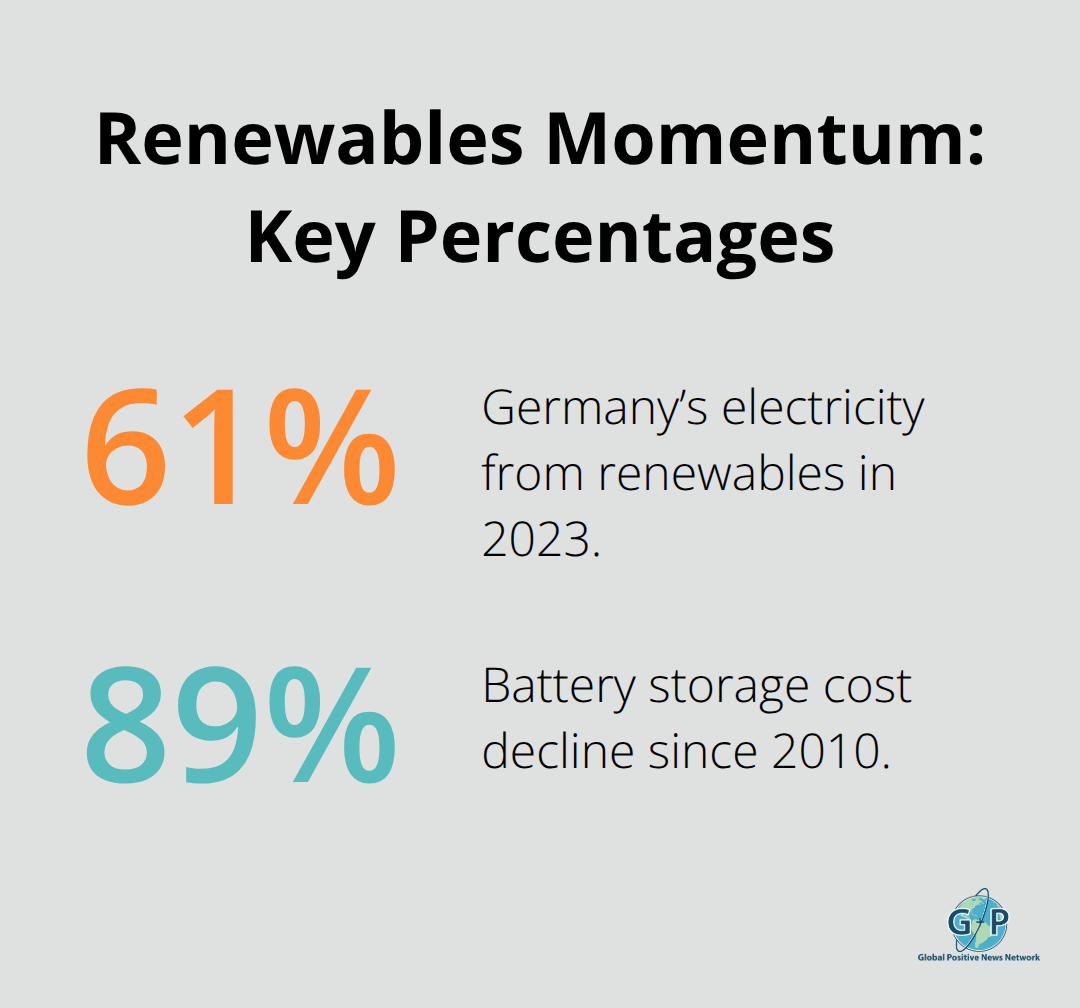
Solar and wind installations have moved far beyond niche investments-they now rank as the fastest-growing energy sources globally. In 2024, solar capacity additions reached approximately 239 gigawatts worldwide, while wind power added 75 gigawatts, according to the International Energy Agency. This explosive growth directly reduces fossil fuel dependence. Germany generated 61% of its electricity from renewables in 2023, proving that high renewable penetration works in developed economies. The real challenge no longer involves generating clean energy; it involves storing and distributing it efficiently.
Storage Solutions Make Grids Reliable
Battery storage costs have dropped 89% since 2010, making grid-scale solutions economically viable. Tesla’s Megapack and similar systems now store energy at scale, allowing grids to balance demand fluctuations without fossil fuel backup. Energy-storing bricks developed at Washington University in St. Louis coat red bricks with conducting polymers to create brick-based supercapacitors that store heat and electricity while remaining rechargeable-a practical solution for retrofitting existing buildings without major infrastructure changes. Hydrogen fuel produced from water in the air using sunlight-powered processes offers another route to clean fuel without traditional electrolysis energy costs, according to research from EPFL. These technologies work together to create resilient systems that don’t depend on a single solution.
Innovation Extends Beyond Traditional Power
SpinLaunch’s kinetic-energy payload launcher could cut rocket fuel use by around 70% and is undergoing testing with NASA, demonstrating how innovation extends beyond traditional power generation. Grid operators worldwide invest heavily in smart systems that use AI to predict energy demand and optimize distribution in real time, reducing waste significantly. The transition happens now with imperfect but effective solutions deployed at scale across continents.
Emissions Drop as Economics Align
Renewable energy prevented approximately 2.1 gigatons of CO2 emissions globally in 2022, according to the International Energy Agency. Every percentage point increase in renewable generation directly reduces emissions from electricity production. What makes this transition genuinely hopeful is that renewable technologies now cost less than fossil fuels in most markets. New solar installations cost less than operating existing coal plants, creating economic incentives that align profit with sustainability.
This momentum in renewable energy sets the stage for how artificial intelligence amplifies these gains even further.
Artificial Intelligence Solving Global Challenges
AI Diagnoses Disease Faster Than Specialists
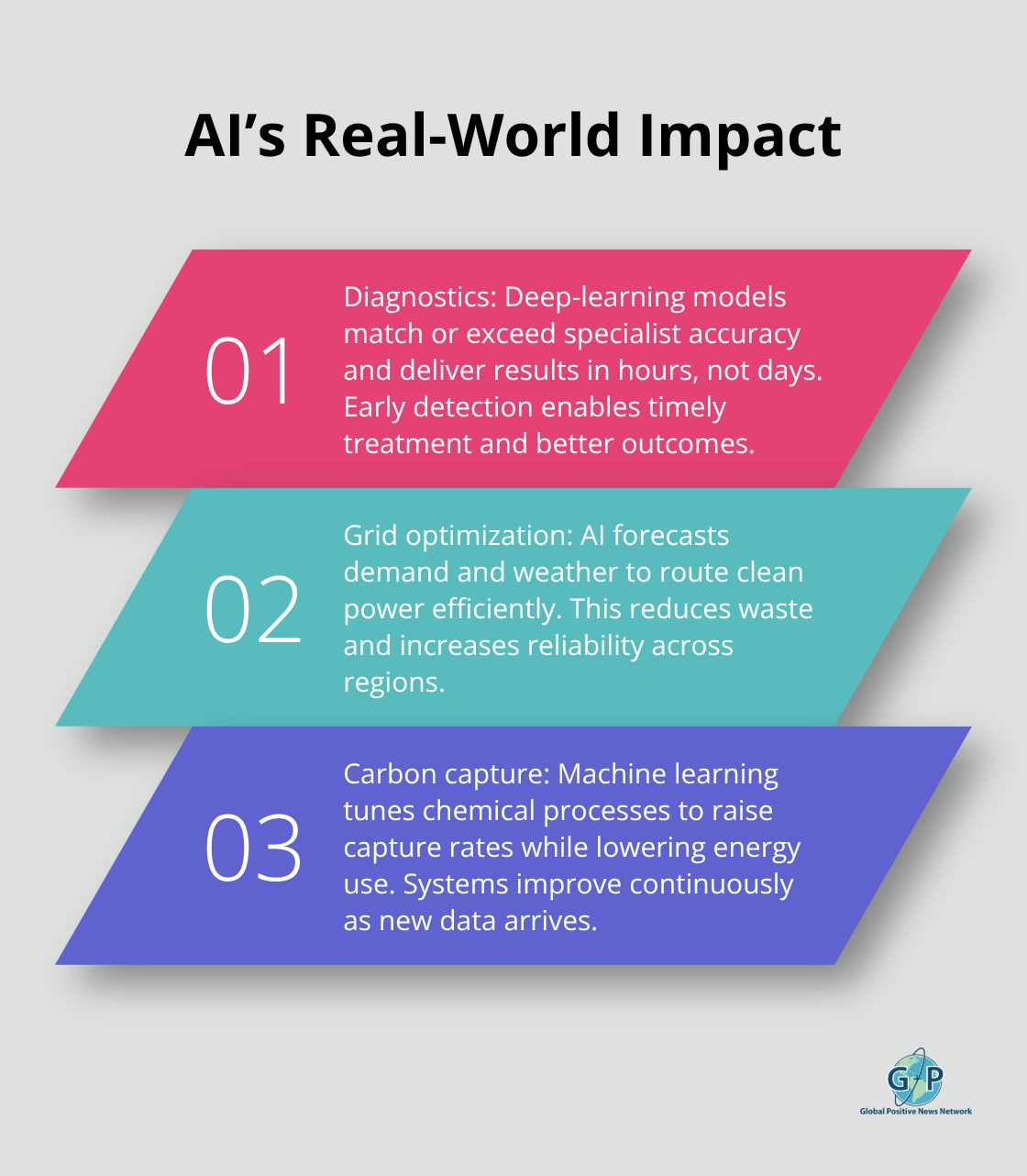
Artificial intelligence moves beyond theoretical promise into practical deployment across healthcare and environmental sectors. In healthcare, AI systems now diagnose diseases faster and more accurately than many specialists working alone. Deep learning models trained on millions of medical images detect breast cancer with 94.5% accuracy, matching or exceeding radiologist performance while reducing diagnostic time from days to hours. Machine learning identifies disease patterns in patient data that humans miss, enabling earlier intervention when treatments prove most effective. Hospitals implementing AI-powered diagnostic tools report reduced patient wait times and improved treatment outcomes, making the technology immediately valuable rather than aspirational.
Machine Learning Optimizes Energy Systems
Climate solutions powered by machine learning tackle problems that pure human analysis cannot solve at scale. AI systems optimize renewable energy grids by predicting demand patterns 48 hours in advance, reducing waste and improves efficiency across entire regions. These algorithms analyze weather data, historical consumption patterns, and grid conditions simultaneously to direct power flow precisely where needed. Companies deploying machine learning for climate monitoring use AI to track deforestation in real time, identifying illegal logging operations within hours rather than months, enabling rapid enforcement responses.
Carbon Capture Gets Smarter
Carbon capture facilities use AI to optimize chemical processes that remove CO2 from the atmosphere, increasing capture rates while reducing energy requirements. Machine learning algorithms continuously refine these processes, making them more efficient with each iteration. The practical impact matters most: AI-driven solutions deployed today prevent measurable tons of emissions and save lives through earlier disease detection.
Real-World Impact Drives Expansion
These technologies work because they solve immediate problems rather than promise future benefits. Hospitals see patients recover faster. Energy grids operate more reliably. Forests remain standing longer. Investment flows toward solutions that produce measurable results today, accelerating deployment and refinement across industries and regions.
Digital connectivity now extends these benefits far beyond urban centers and wealthy nations, reaching communities that technology has historically left behind.
Digital Connectivity Bridging Communities
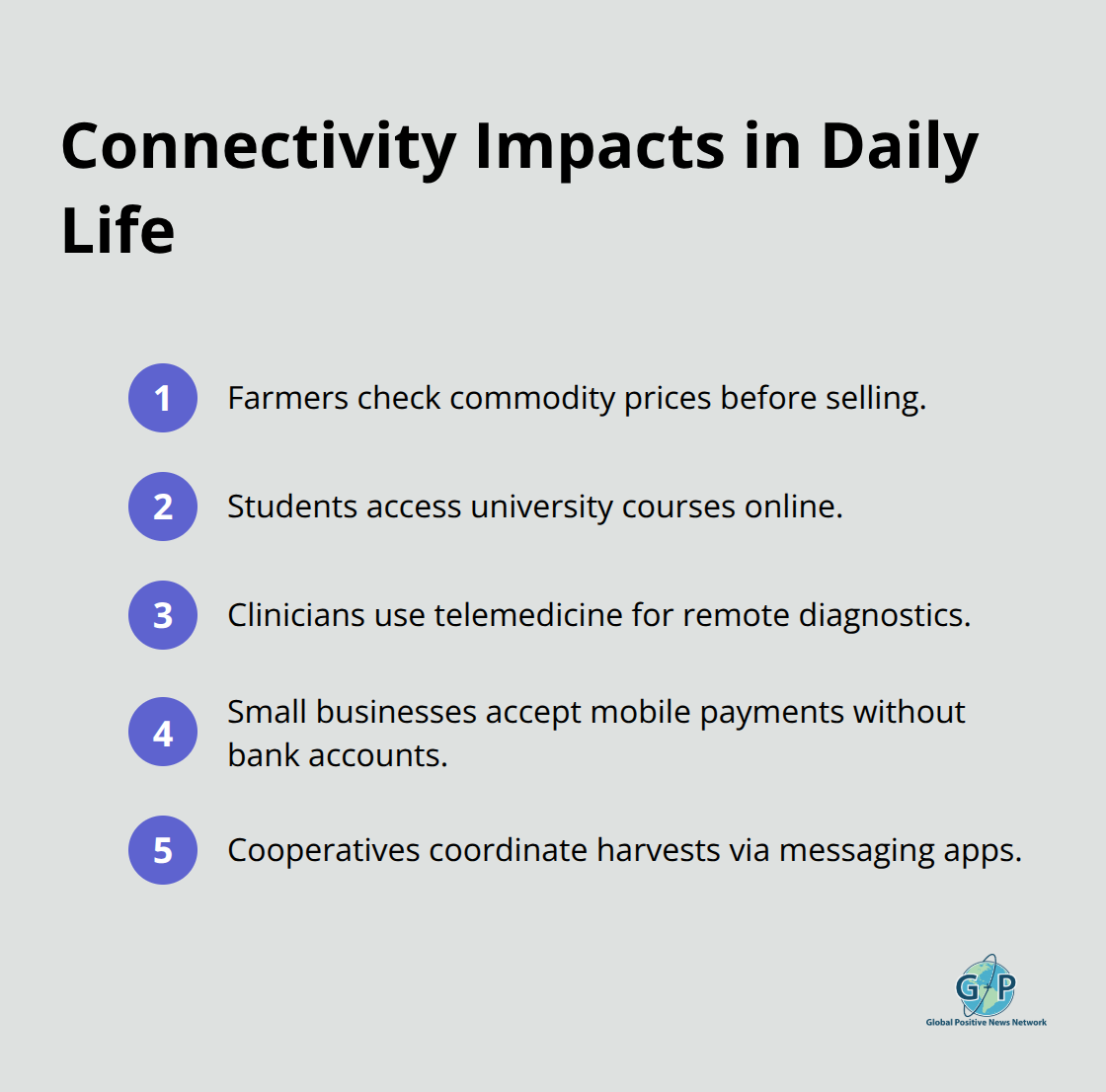
Internet access through microsatellites now reaches regions where traditional infrastructure remains economically unfeasible. This capability transforms how communities access education, healthcare information, and economic opportunities. A farmer in rural Kenya can now check commodity prices in real time before selling crops, eliminating the middleman markup that previously cost them 30-40% of potential earnings. Students in remote villages access online courses from universities worldwide, breaking geographic barriers that once locked entire populations out of skill development. Healthcare workers in isolated clinics receive diagnostic support through telemedicine, consulting specialists thousands of kilometers away for cases that would previously require dangerous, expensive travel.
Mobile Technology Bypasses Infrastructure Gaps
Mobile phones have become the primary technology for underserved populations because they require minimal infrastructure compared to traditional broadband systems. Sub-Saharan Africa added over 200 million mobile subscribers between 2015 and 2024, according to GSMA Intelligence, creating economic activity where none existed before. Small business owners use mobile payment systems to accept transactions without bank accounts, removing friction that previously prevented them from selling beyond their immediate community. Agricultural cooperatives coordinate harvests and negotiate bulk sales through messaging apps, increasing their negotiating power significantly. The technology works because it meets people where they are rather than requiring them to build expensive infrastructure first.
Collaboration Shifts From Theory to Measurable Outcome
When connectivity reaches underserved populations, collaboration produces tangible results. Health workers in different regions share patient data across borders, identifying disease patterns that single clinics would never notice. Agricultural communities exchange knowledge about drought-resistant crop varieties through WhatsApp groups, spreading innovations faster than government extension services ever could. Disaster response improves dramatically when remote communities can communicate directly with emergency services instead of relying on intermediaries. The practical effect matters most: connectivity expands who participates in solving problems, bringing perspectives and knowledge that centralized systems consistently miss. Communities stop waiting for external solutions and start building their own.
Final Thoughts
The innovations we’ve explored across renewable energy, artificial intelligence, and digital connectivity work today. Solar installations generate electricity at lower cost than fossil fuels. AI systems diagnose diseases faster than specialists. Microsatellites bring internet to communities that traditional infrastructure abandoned. These aren’t theoretical promises or distant possibilities-they’re deployed, measurable, and producing results that improve lives right now.
What makes technology for hopeful futures genuinely hopeful is that it doesn’t require waiting for perfect solutions. Renewable grids operate with imperfect but effective battery storage. AI systems improve continuously through real-world deployment rather than laboratory refinement. Mobile networks reach underserved populations without requiring complete infrastructure overhauls. Progress happens through iteration and practical application, not through breakthrough moments that solve everything at once. Communities with renewable energy systems withstand fuel price shocks and supply disruptions. Healthcare systems using AI diagnostics catch diseases earlier when treatment costs less and outcomes improve. Populations connected through digital networks access information and economic opportunities that were previously locked behind geographic barriers.
This convergence of solutions addresses the core challenge facing humanity: how to meet growing needs without destroying the systems that sustain us. Technology paired with human determination, investment, and collaboration creates pathways forward that seemed impossible just years ago. We at Global Positive News Network believe these stories matter because they show what becomes possible when innovation aligns with human needs.

Having a hard day?
The 2 Minute Hope Reset is a short free guide with three small practices for the days that feel heavy. Two minutes each, nothing to keep up with.
Get the free guideExplore more positive news:
Enjoying stories like this?
Global Positive News Network is reader-supported. If you’d like to support the mission, you can visit the Official GPNN store.