

Teams that move in the same direction outperform those pulling in different ways. At Global Positive News Network, we’ve seen firsthand how collaborative hope emerges when people understand where they’re headed and why it matters.
A shared vision isn’t just motivational talk-it’s the foundation that turns individual effort into collective momentum. This post shows you exactly how to build it.
How to Build a Vision Your Team Actually Believes In
Start with what matters most to your organization, then work backward. Most teams fail at vision alignment because they skip the hardest part: defining what core values actually mean in daily work. Vague statements like “we value integrity” don’t move people. Instead, specify exactly what integrity looks like when your team makes decisions. Research shows that more than 70 percent of transformation efforts fail due to lack of engagement and unclear vision. The difference between those that succeed and those that collapse comes down to one thing: people understand precisely what the vision demands of them and how their individual contributions connect to it.
Define Your Core Values and Long-Term Goals
Start by gathering your team and asking what outcomes matter most over the next three to five years. What problems do you want to solve? What impact do you want to have? Write these down without editing. Then identify the three to four non-negotiable values that must guide every choice your team makes. If you’re building a customer service organization, does speed matter more than perfection, or vice versa? Make this call explicitly. Once you have your core values and long-term goals written down, test them against reality. Does your budget reflect these priorities?
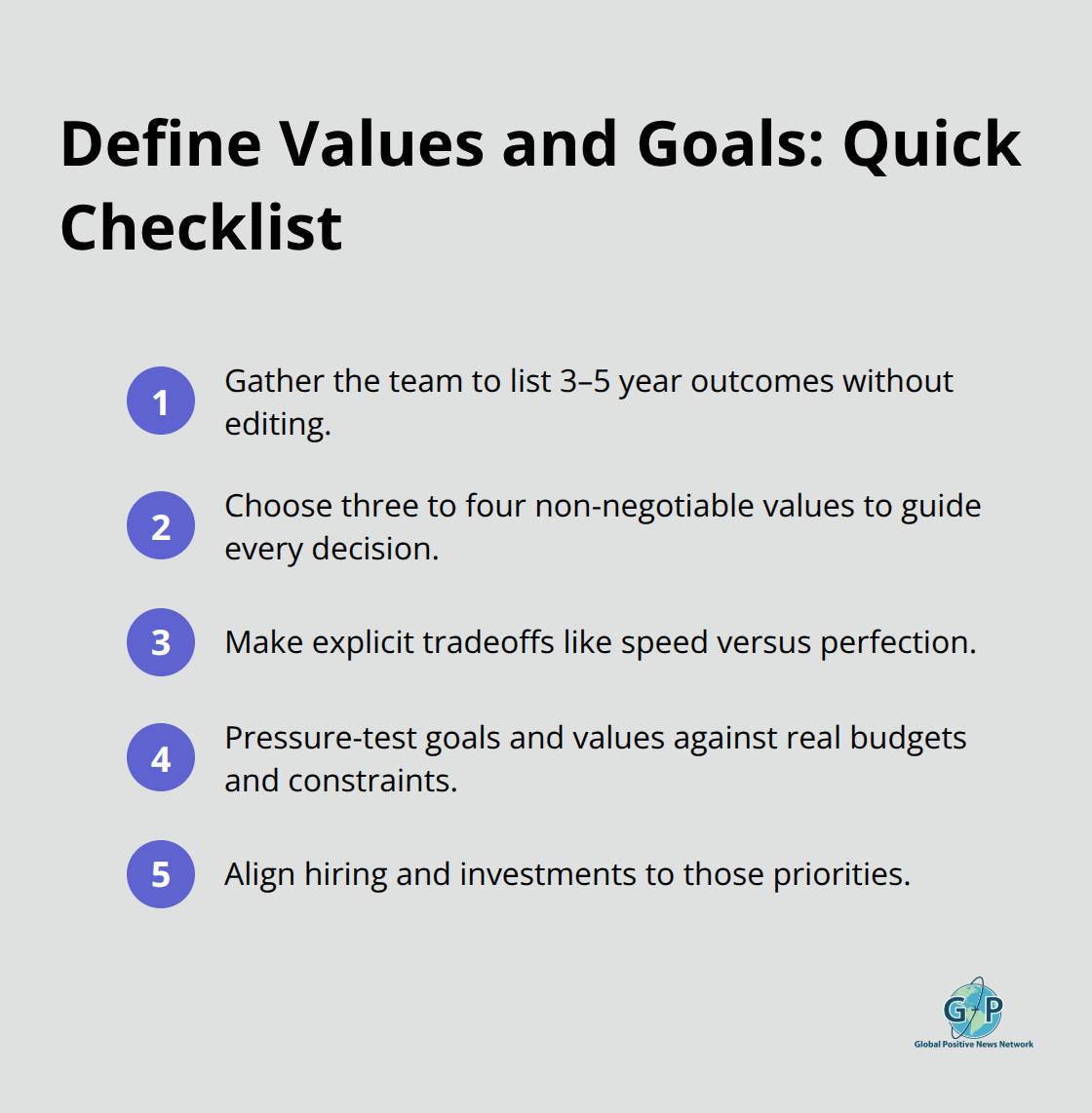
Do your hiring decisions match them? If not, your vision is just decoration on a wall.
Weave Vision Into Weekly Work
Communication happens through repetition, not announcements. After you define your vision, stop treating it as a one-time message and start weaving it into every meeting, email, and decision. Research shows that leaders who consistently connect daily tasks to the larger vision see measurable improvements in team commitment and performance. Reference the vision in one-on-one conversations when discussing career development. Mention it during project kickoffs. When conflicts arise between teams, use the vision as the tiebreaker. This consistency signals that the vision isn’t aspirational fluff but the actual operating system of your organization.
Your team members should hear how their specific work ladders up to the vision at least twice per week. Make this explicit during team huddles. Say things like: our goal is to reduce customer onboarding time by 40% over eighteen months because our vision demands we remove friction from the user experience. Now your team sees exactly how their sprint work connects to something larger.
Align Individual Goals With Organizational Objectives
Individual goals and organizational objectives must overlap, or people become frustrated and disengaged. Use the OKR framework that Google developed and popularized to create this alignment. OKRs consist of objectives (aspirational statements about what you want to achieve) and key results (measurable outcomes that prove you achieved them). Set company-level OKRs first, then involve your teams in creating their own OKRs that connect to those company goals. Transparency matters here. Make all OKRs visible across the organization so each person understands how their team’s goals reinforce the company direction.
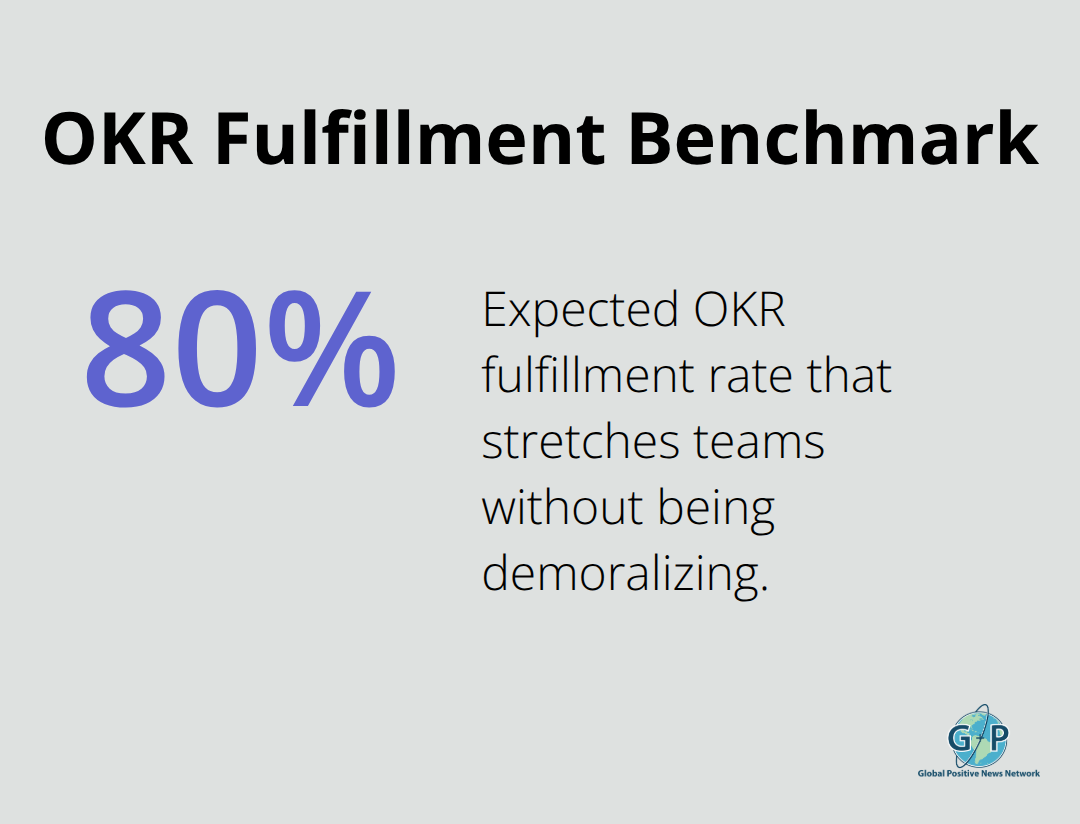
The expected fulfillment rate for OKRs is around 80%, meaning they should stretch your team without becoming demoralizing. Review progress weekly with confidence ratings so people see momentum building toward the vision.
When someone’s personal growth aligns with what the organization needs, they stop viewing their job as something imposed on them and start viewing it as something they’re building together. This shift in perspective transforms how teams respond to obstacles and setbacks, which brings us to the practical strategies that keep alignment strong even when conditions shift.
How to Make Your Vision Stick Through Action
Vision alignment fails when teams treat it as a poster campaign instead of an operating rhythm. The most effective organizations build regular touchpoints that force the vision into actual decisions. Schedule quarterly vision workshops where your entire team examines whether current projects still ladder up to the stated direction. These workshops aren’t cheerleading sessions-they’re working sessions where people challenge whether the vision still makes sense given market shifts or new information.
Run Quarterly Vision Workshops
During these sessions, ask each team member to identify one project or initiative that contradicts the vision and propose how to fix it. This practice surfaces misalignment before it becomes expensive. Most organizations run these workshops with people and allocate time, using a large board to map current work against vision goals. The discipline of doing this quarterly prevents drift that typically accumulates over time.
Between quarterly sessions, hold brief weekly check-ins where you reference the vision explicitly when discussing priorities. One manager at a mid-sized tech company spent the first two minutes of every Monday standup connecting that week’s work to one specific vision goal. After three months, her team’s ability to make independent decisions aligned with organizational direction improved dramatically because they internalized the connection.
Track Progress With Visual Dashboards
Visual tracking systems eliminate the ambiguity that kills alignment. Create a simple dashboard showing progress toward the key results you defined earlier, updated weekly and visible to everyone. This isn’t about surveillance-it’s about removing the guesswork from whether you’re moving toward the vision or away from it. Many teams use tools like Lattice or 15Five for this, though a shared spreadsheet works if your organization is under 50 people.
The dashboard should show current status, confidence level (whether you’re on track to hit the target), and what changed since last week. When people see this data consistently, they stop asking whether their work matters and start asking how they can improve the numbers.
Celebrate Milestones That Reinforce Vision
Celebrate specific milestones tied directly to vision goals, not just revenue targets. If your vision includes becoming more customer-centric, celebrate when you reduce support response time or when customer satisfaction scores hit a new high. These celebrations matter because they reinforce which outcomes actually reflect the vision. One nonprofit celebrates quarterly when they hit measurable impact targets outlined in their vision, inviting the entire team to share stories about how their specific contributions created those results. This practice transforms metrics from abstract numbers into evidence that the vision is real and worth the effort.
When teams see their work produce tangible results that align with the vision, they develop the confidence to make bolder decisions independently. This confidence becomes your competitive advantage when obstacles emerge-which they always do. The next section shows you how to navigate the resistance and conflicting priorities that test every shared vision.
When Your Team Resists the Vision
Resistance emerges the moment you announce a shared vision. Some team members view it as extra work layered on top of their existing responsibilities. Others see it as a threat to how they’ve always operated. This resistance isn’t a sign that your vision is wrong-it’s a sign that you haven’t yet connected it to what people actually care about. The real problem surfaces when competing priorities pull teams in opposite directions. A sales team optimized for quarterly revenue targets may clash with a product team focused on long-term user experience improvements. Both serve the organization, but without explicit alignment to a shared vision, they become adversaries. You must address this head-on by naming the conflict directly in team meetings rather than hoping it resolves itself. One manufacturing company discovered that their maintenance team and production team operated with completely different timelines. Production wanted machines running constantly, while maintenance wanted scheduled downtime to prevent failures. The conflict only stopped when leadership explicitly tied both activities to a single vision statement: minimize total production cost over five years, not maximize output this quarter. Suddenly both teams understood why their seemingly opposing priorities actually served the same goal.
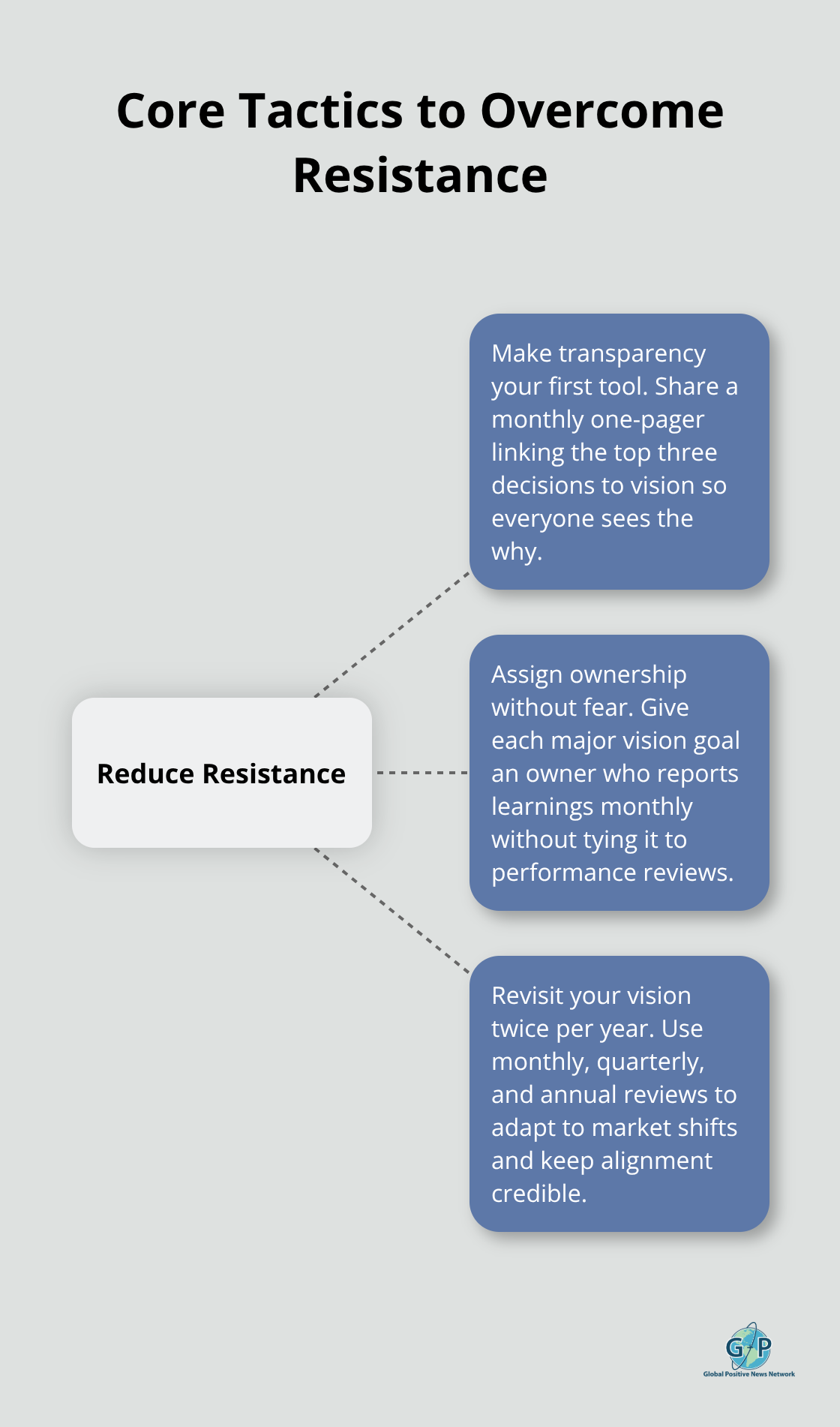
Make Transparency Your First Tool Against Resistance
Transparency about how decisions get made eliminates the space where resistance grows. When teams don’t understand why a priority changed or why resources shifted, they assume leadership is either incompetent or playing politics. Create a simple one-page document each month that explains which vision goals drove your three biggest decisions that month. Share it with everyone. One healthcare organization started this practice and watched resistance drop dramatically because staff stopped wondering whether leadership actually believed in the stated vision. They could see it operating in real decisions.
Assign Ownership Without Fear
Accountability works differently than most leaders think. Stop tying vision alignment to performance reviews-this kills honest feedback about whether the vision still makes sense. Instead, assign specific owners for each major vision goal and have them report monthly on what they learned about whether that goal remains realistic. This creates accountability for progress without creating fear that admitting obstacles will harm someone’s career.
Revisit Your Vision Twice Per Year
When market conditions shift, your vision might need adjustment. Set a rule that you revisit the vision with a tiered cadence of monthly, quarterly, and annual reviews working together. If you wait too long between reviews, you’ve already drifted too far to course-correct smoothly. During these reviews, ask teams directly: what part of our vision stopped making sense? What market change makes this goal unrealistic? What should we change? Teams that see their feedback actually change the vision develop genuine commitment because they recognize the vision as a living document, not a static monument. This creates the adaptability that separates high-performing teams from those stuck defending outdated directions.
Final Thoughts
A shared vision transforms how teams operate because people stop waiting for permission and start making decisions that move the organization forward. Research confirms this: studies show a strong link between clear corporate vision and measurable outcomes like profitability, productivity, job satisfaction, and employee loyalty. Teams with aligned vision don’t just perform better-they stay together longer and develop the collaborative hope that sustains effort through obstacles.
Start with one action this week by picking the practice that feels most urgent for your team. Whether you run your first quarterly vision workshop, create a simple dashboard to track progress, or spend two minutes in your next meeting connecting this week’s work to a specific vision goal, consistent repetition builds shared vision far more effectively than grand gestures. The teams that outperform their competitors aren’t smarter or better resourced-they move together because everyone understands what they’re building and why it matters.
At Global Positive News Network, we believe that stories of teams working toward meaningful shared goals inspire others to build the same alignment in their own organizations. Explore uplifting stories of community impact and human connection that remind you why this work matters, and discover how your team’s shared vision has the power to create real change.
Having a hard day?
The 2 Minute Hope Reset is a short free guide with three small practices for the days that feel heavy. Two minutes each, nothing to keep up with.
Get the free guideExplore more positive news:
Enjoying stories like this?
Global Positive News Network is reader-supported. If you’d like to support the mission, you can visit the Official GPNN store.