

Optimism isn’t something you’re born with-it’s something you build. At Global Positive News Network, we’ve found that habits for daily optimism work best when they’re woven into your existing routine, not added as extra tasks.
The good news is that small, consistent practices create measurable shifts in how you experience each day. This post walks you through morning rituals, midday habits, and evening routines that compound into lasting positive change.
How to Start Your Morning Without Reaching for Your Phone
The Phone-Free Window That Changes Everything
The first thing most people do when they wake up is check their phone. This habit hijacks your morning before you’ve even had coffee. Research shows that avoiding social media scrolling in the early hours significantly improves your mood and motivation throughout the day. Instead, spend your first five to ten minutes on three specific practices that build optimism from the moment you open your eyes.
Practice One: Write Down Three Specific Things You Appreciated
Start with gratitude before anything else touches your attention. Write down three things you appreciated yesterday, no matter how small. This isn’t about finding profound moments; it’s about noticing what actually worked. One person might list a good coffee, a friend’s text message, and finishing a task.
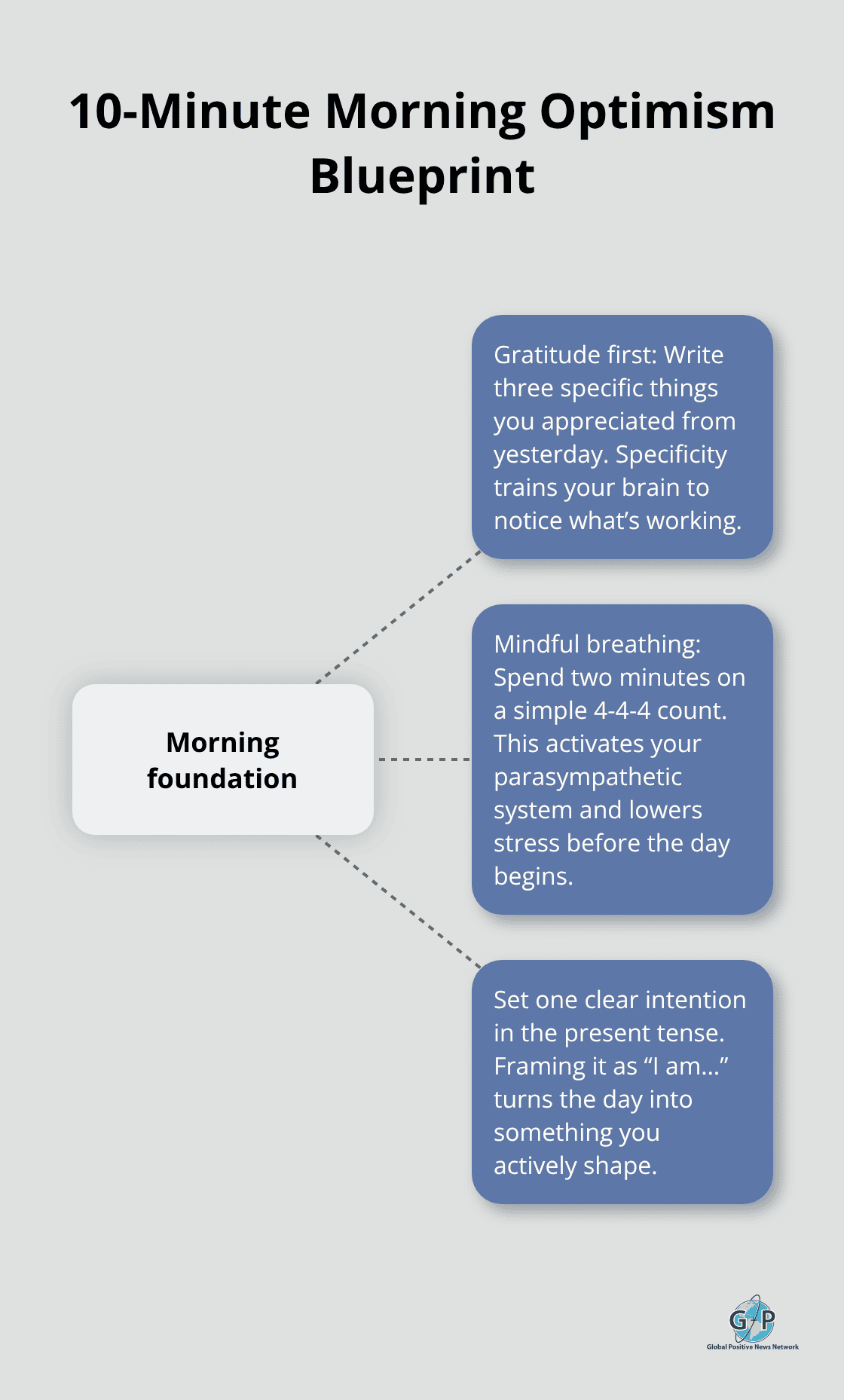
Another might note a sunny window, a song they heard, or a meal they enjoyed. The specificity matters because vague gratitude doesn’t stick. Your brain needs concrete details to shift its focus toward what’s working in your life.
Practice Two: Calm Your Nervous System With Mindful Breathing
After you’ve written these three things, spend two minutes on mindful breathing. Breathe in for a count of four, hold for four, and exhale for four. Do this five times. This simple practice activates your parasympathetic nervous system, which calms stress before your day even starts. You don’t need an app or guided meditation; just counting your breath for two minutes creates a measurable shift in your physiology.
Practice Three: Set One Clear Intention in Present Tense
Finally, set one intention for today. Not a to-do list or goals for the week, but one thing you want to focus on or accomplish today. This could be finishing a project, having a difficult conversation, or simply staying present with your family. Write it down in present tense: I am finishing this report, I am having an honest conversation, I am present today. This reframes your day as something you’re actively shaping rather than something happening to you.
Why Ten Minutes Matters More Than You Think
These three practices take roughly ten minutes total and cost nothing. They work because they happen before your phone pulls your attention in a hundred directions. The compound effect becomes obvious within about two months when you notice your overall mood shifts and your stress response feels less reactive. Once you establish this foundation, your midday habits will feel far more natural to maintain.
Midday Habits to Maintain Optimistic Momentum
The News and Social Media Trap
Your morning foundation crumbles fast if you spend your midday hours scrolling through catastrophe and outrage. The problem isn’t that negative news exists-it’s that consuming it in fragmented doses throughout your day trains your brain to expect disaster. Studies show that consuming distressing news media has demonstrable negative effects on mental health. Between 10 AM and 3 PM, your dopamine levels naturally dip, making you vulnerable to the pull of your phone and the false urgency of notifications. This is exactly when your optimism gets tested.
Replace the Habit, Don’t Fight It
The solution isn’t willpower; it’s replacing the habit with something equally convenient but actually beneficial. Set a specific time-say 2 PM-when you check news or social media for exactly ten minutes. Outside that window, your phone stays in another room or in grayscale mode to kill the visual reward your brain craves. When the urge hits, drink a glass of water first.
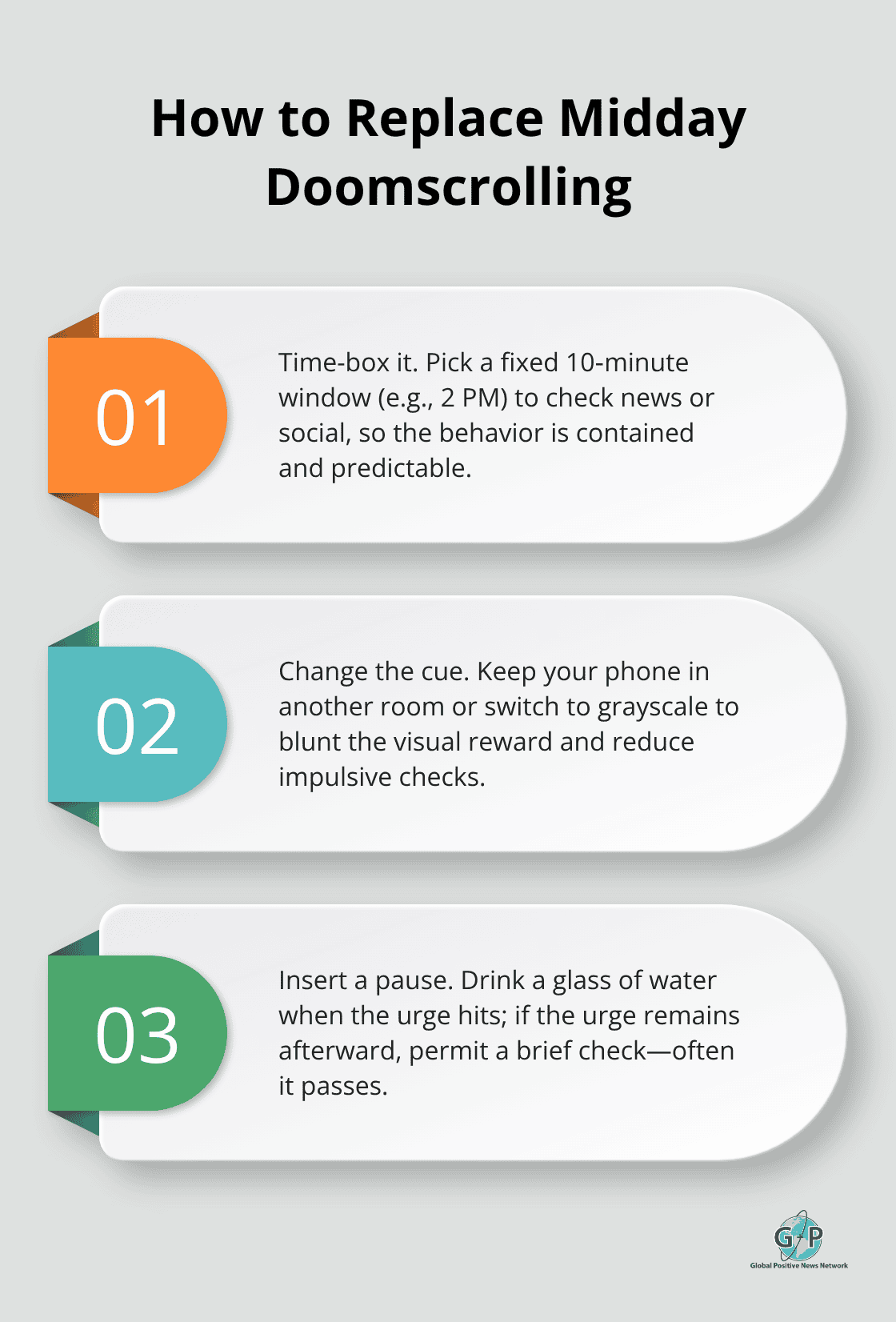
Dehydration masquerades as boredom and triggers phone-checking behavior. If you still want to check your phone after drinking, give yourself permission-but you’ll find the urge often passes. This single change compounds faster than you’d expect because you’re not fighting your brain; you’re redirecting it.
Acts of Kindness Interrupt Self-Focused Spirals
Midday is also when you have the most power to shift someone else’s day through a small act of kindness. Research from the Journal of Social Psychology found that people who perform one intentional act of kindness daily report significantly higher life satisfaction and lower depression symptoms. The key word is intentional-it can’t be automatic politeness. Send a specific message to someone who helped you recently, not a generic thank you. Tell them exactly what they did and how it mattered. Compliment a colleague on something you genuinely noticed about their work, not their appearance. Offer to help with a specific task rather than asking if they need anything.
Why Consistency Beats Grand Gestures
These concrete actions take three to five minutes and create measurable shifts in both your mood and theirs. Acts of kindness work because they interrupt the self-focused thought patterns that fuel pessimism. When your brain focuses on noticing what someone else did right, it can’t simultaneously spiral into catastrophizing about your own problems. Consistency matters more than scale. One small, deliberate kindness daily outperforms sporadic grand gestures because your brain rewires through repetition. After two weeks of this practice, you’ll notice your default lens shifts toward noticing what’s working in your environment instead of what’s broken. This shift in perception sets the stage for how you’ll reflect on your entire day when evening arrives.
Evening Routines That Protect Tomorrow’s Optimism
Your evening routine determines whether tomorrow’s optimism sticks or crumbles. Most people build positive momentum all day, then destroy it by scrolling catastrophe on their phone until midnight. The solution requires you to be intentional about three specific practices that happen after dinner.
Journal About Three Good Things Within Thirty Minutes
Write down three concrete good things from your day within thirty minutes of finishing work or dinner. Not what you accomplished or what you’re proud of, but what actually felt good in the moment. This could be a conversation that made you laugh, a task that went smoothly, or even just noticing the light at a certain time. Research shows that reviewing positive moments before bed supports emotional regulation and problem solving because your brain consolidates these memories during sleep.
Write these down in a physical notebook, not on your phone, because screens emit blue light that suppresses melatonin production and signals your brain to stay alert. The act of writing by hand also creates stronger memory encoding than typing, which means these good moments stick harder in your mind.
Disconnect From Screens Sixty Minutes Before Bed
Disconnect from screens at least sixty minutes before bed. This isn’t a gentle suggestion; it’s a physiological requirement if you want optimism to compound. Your phone, tablet, and laptop all emit light wavelengths that trick your brain into thinking it’s midday, which delays your circadian rhythm and reduces deep sleep. When the urge to check your phone hits in those final hours, replace it with something tactile and low-stimulation. Read a physical book, do light stretching, or sit quietly.
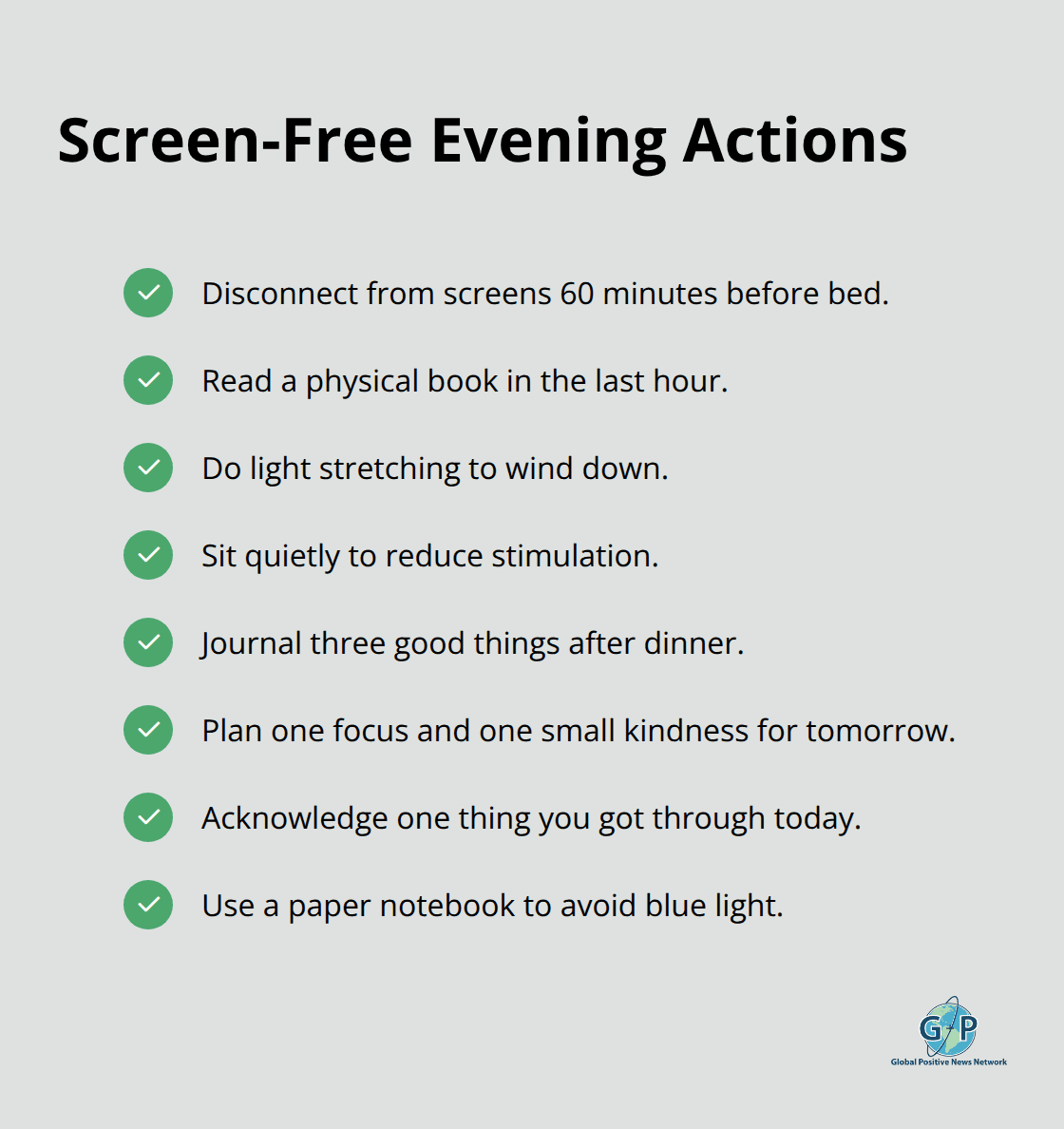
This transition period signals to your nervous system that the day is ending and tomorrow is a fresh start.
Plan Tomorrow With Intention, Not Anxiety
Spend five minutes planning your day with intention rather than anxiety. Write down one thing you want to focus on and one small act of kindness you’ll perform. This primes your brain to wake up with direction instead of dread. People who plan their day the night before report higher task completion rates and significantly lower morning stress.
End this reflection by acknowledging one thing you got through today, even if nothing felt particularly good. This simple act reinforces resilience and signals to your brain that you’re capable. Your evening routine isn’t about perfection; it’s about closing your day in a way that lets tomorrow begin strong.
Final Thoughts
The morning rituals, midday habits, and evening routines you’ve read about aren’t theoretical-they work because they’re small enough to actually stick and frequent enough to rewire how your brain responds to daily life. Two months of consistent practice creates measurable shifts in your mood, stress response, and how you perceive challenges. Your brain adapts to what you repeat, and these habits for daily optimism train your nervous system to default toward resilience instead of reactivity.
Starting your optimism journey doesn’t require a perfect morning or flawless execution. Pick one practice from this post and commit to it for two weeks before adding another (most people fail because they try everything at once). This sequential approach compounds faster than attempting all nine practices simultaneously, and you’ll notice real shifts in how you experience each day.
Optimism spreads through proximity, and when you practice gratitude, set intentions, and perform acts of kindness, the people around you notice and begin adopting similar practices. This is how individual habits become community shifts. Visit Global Positive News Network for curated content designed to support your journey toward lasting positive change.
Having a hard day?
The 2 Minute Hope Reset is a short free guide with three small practices for the days that feel heavy. Two minutes each, nothing to keep up with.
Get the free guideExplore more positive news:
Enjoying stories like this?
Global Positive News Network is reader-supported. If you’d like to support the mission, you can visit the Official GPNN store.