

Your team’s mood directly shapes how much work gets done and whether people stick around. At Global Positive News Network, we’ve seen firsthand how positivity tips for coworkers transform workplace dynamics.
Low morale costs organizations real money through turnover and lost productivity. The good news is that small, intentional actions create measurable shifts in team performance and engagement.
Why Team Morale Actually Moves the Needle
The Direct Link Between Morale and Profitability
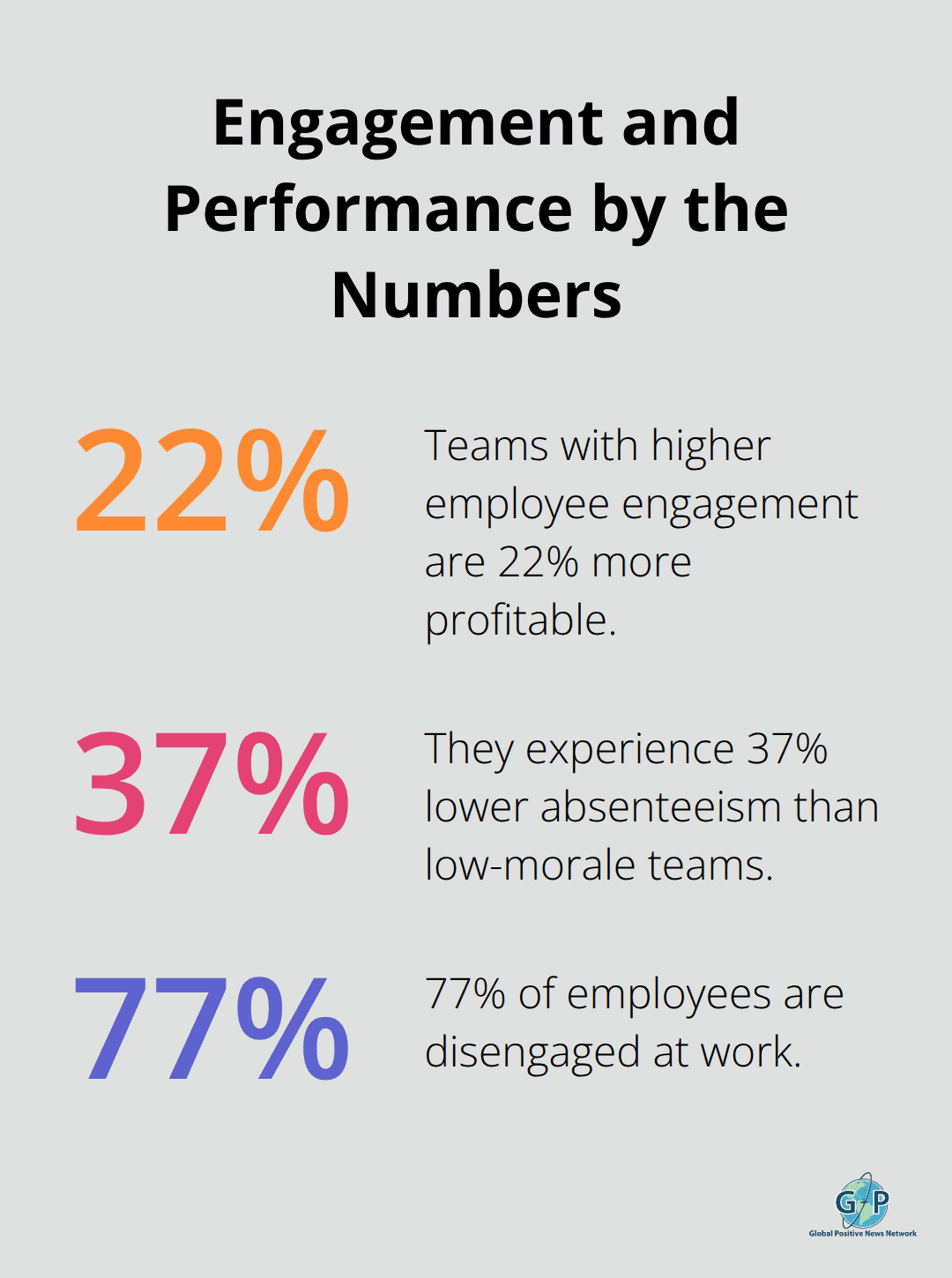
Morale isn’t just about employee happiness-it’s about hard business outcomes. Teams with high morale outperform low-morale teams by a measurable margin. According to Gallup, organizations with high engagement report 25 to 65 percent lower turnover than those with low engagement, which directly saves money on recruitment and training costs. The median cost of replacing an employee sits at 21 percent of their annual salary, so a single turnover represents significant financial loss. Beyond retention, teams with higher employee engagement are 22 percent more profitable according to Gallup, and they experience 37 percent lower absenteeism than teams with low morale. The productivity gap is equally stark: 77 percent of employees are disengaged at work, and this disengagement links to 18 percent lower productivity and costs equal to about 20 percent of annual salary.
Safety and Wellbeing as Morale Indicators
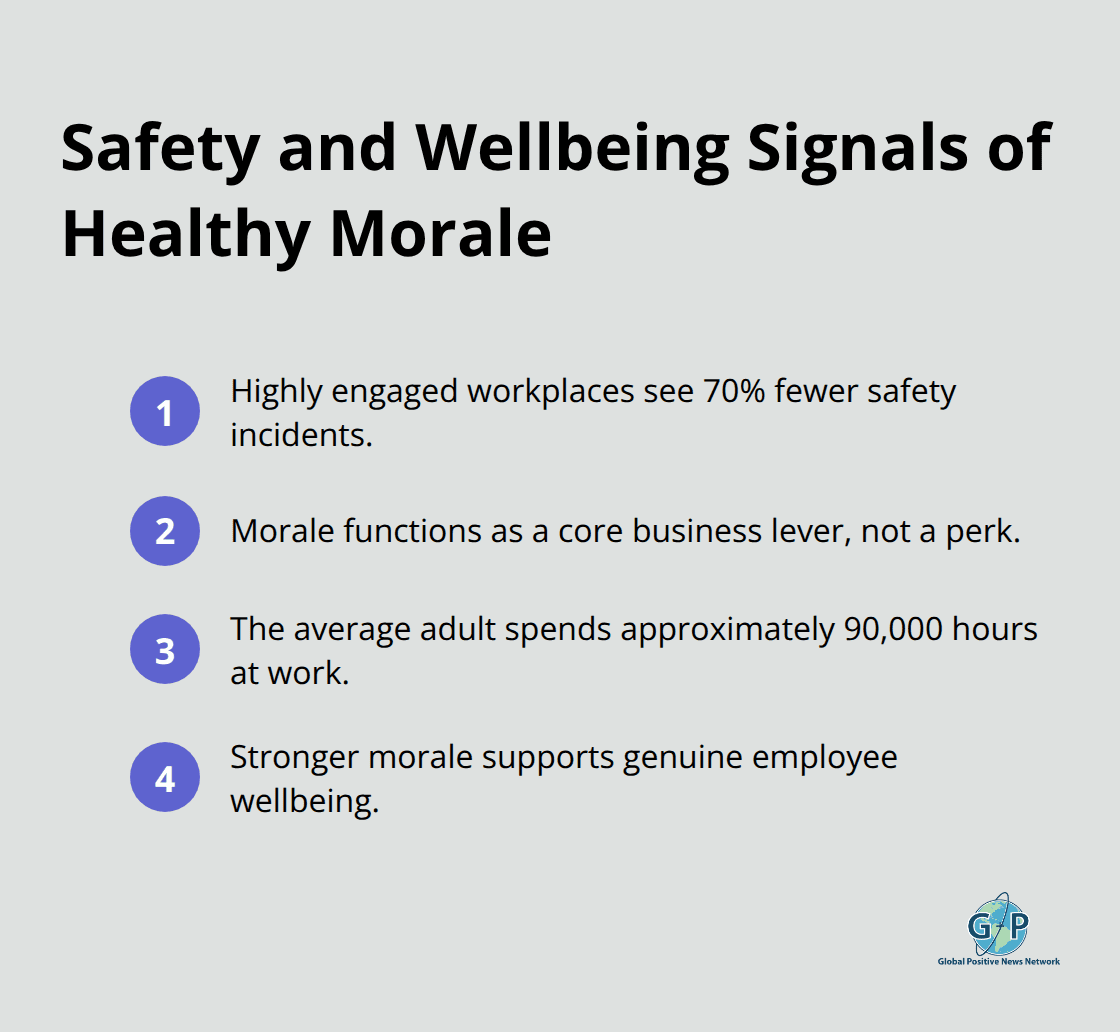
Highly engaged workplaces see 70 percent fewer safety incidents than workplaces with low engagement, a benefit that extends beyond numbers into genuine employee wellbeing. When you add these factors together, morale becomes a business lever as important as revenue strategy or operational efficiency. The workplace consumes approximately 90,000 hours of the average adult’s life, making team culture a primary driver of long-term job satisfaction and retention.
How Culture Shapes Customer Outcomes
Seventy-six percent of employees say workplace culture affects their productivity, and 74 percent believe it affects their ability to serve customers effectively. This means morale isn’t confined to internal metrics-it directly influences how your team delivers for clients and stakeholders. Organizations that prioritize morale see employees who stay longer, contribute more ideas, and take ownership of their work. Low morale, by contrast, corrodes these behaviors and creates a downward spiral of disengagement and turnover.
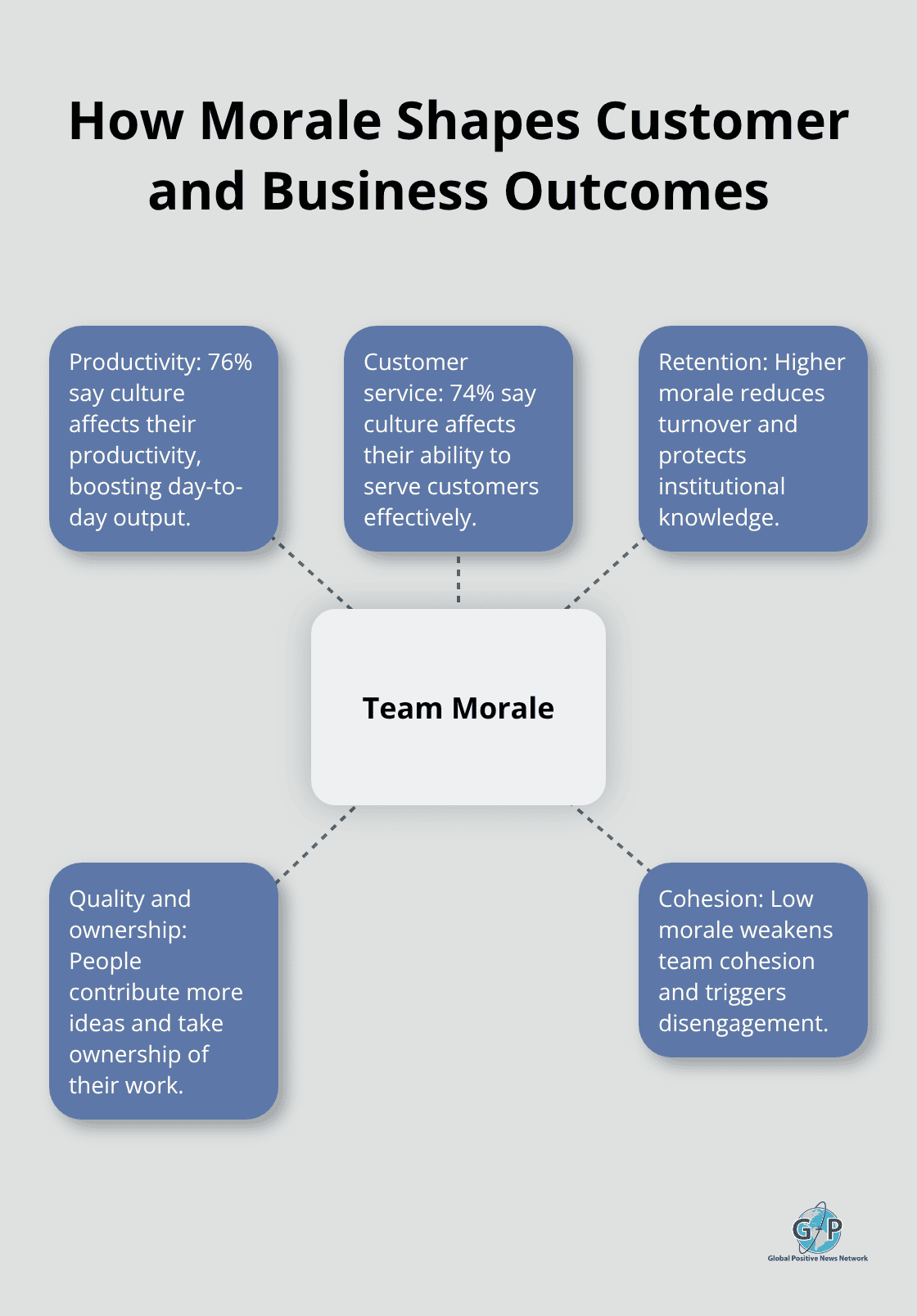
The financial impact compounds: low morale drives safety concerns that cause employees to leave, reduces the quality of work, and weakens team cohesion. This is why positivity strategies aren’t nice-to-have perks-they’re operational necessities that protect profitability and organizational stability. Understanding these connections sets the stage for the practical strategies that actually shift team dynamics.
How to Build Positivity Into Your Daily Work Interactions
Positivity at work doesn’t start with company-wide initiatives from leadership. It starts in the moments between coworkers-in how you show up in meetings, how you respond to emails, and how you acknowledge what others accomplish. The most effective teams weave positivity into the fabric of daily communication rather than waiting for formal recognition programs to celebrate wins or show appreciation.
Start Meetings with Specific Recognition
Open your next meeting by calling out something concrete someone accomplished since you last met. Not generic praise, but specific recognition: Sarah’s analysis caught the client error before it became costly, or Marcus stayed late to unblock the design team. This takes 30 seconds and shifts the entire energy of the meeting from problem-focused to contribution-focused. FranklinCovey research emphasizes that recognition makes teams more personable and aligned toward goals, and when you make it specific and timely, people internalize it rather than dismiss it as empty flattery.
Celebrate Progress Throughout the Week
Small wins aren’t minor-they’re the daily momentum that keeps teams engaged. Acknowledge progress instead of waiting for project completion to celebrate. A client responded to the proposal, the code deployed without errors, the draft received stakeholder approval. These moments matter because they break up the grind and remind people their work has forward motion. Research shows that recognition significantly boosts employee engagement, and much of that difference comes from sustained motivation rather than occasional big celebrations. Small, consistent recognition does more for morale than an annual awards dinner.
Frame Written Communication Around Solutions
Positive language in written communication sets tone and prevents misinterpretation that happens when text lacks voice. Instead of flagging what went wrong in an email, frame it as what you’re learning and how to move forward together. Rather than stating the report missed the deadline, explain that the deadline taught you the team needs more time for this type of analysis and outline how you’ll adjust. This isn’t about ignoring problems-it’s about pairing accountability with forward momentum. Solution-focused feedback generates more positive emotions, which research shows can improve creativity, resilience, and overall performance.
Model the Culture You Want to See
Your written words model the culture you want. When coworkers see you acknowledging mistakes openly, celebrating others, and keeping language solution-oriented, they mirror that behavior. This consistency across your communications-whether in emails, Slack messages, or meeting comments-creates a ripple effect that influences how the entire team interacts. The foundation you build through these daily interactions determines whether your team has the psychological safety and trust needed to collaborate effectively, which brings us to the broader systems that support a culture of genuine teamwork and mutual support.
How Feedback and Connection Build Stronger Teams
Transform Feedback Into Growth Conversations
Feedback loops determine whether collaboration thrives or stalls, yet most teams treat them as awkward formalities rather than opportunities to strengthen relationships. Position feedback as a tool for growth rather than criticism, and the entire dynamic shifts. Create space where people feel safe raising concerns without fear of retaliation, and where critical input pairs with genuine interest in helping someone succeed.
When someone raises a problem in a meeting, respond with curiosity instead of defensiveness. Ask what support they need, what they’ve already tried, and what outcome they’re aiming for. This approach, drawn from FranklinCovey’s framework for leading teams, transforms conflict into collaboration because the person offering feedback feels heard and the person receiving it understands the intent is mutual progress.
Listen With Full Attention
Active listening during these moments matters more than perfect responses. Put your phone away, maintain eye contact, and resist the urge to plan your reply while someone speaks. Research shows that genuine interest and active listening build trust, which directly increases psychological safety on teams. Psychological safety lets people speak up, share diverse ideas, raise concerns, and admit mistakes without fear of consequences. Teams with this foundation outperform those built on hierarchy and caution because people contribute their full thinking instead of filtering for politics.
Build Connection Through Meaningful Activities
Team bonding activities work best when they connect to actual work rather than feel forced or separate from daily responsibilities. A monthly achievement newsletter highlighting completed projects, client wins, and individual contributions costs almost nothing but reminds people their work matters and creates visibility across departments. Peer-to-peer recognition programs where coworkers nominate each other for monthly spotlights build stronger connections than top-down awards because people see their peers through the lens of what others genuinely appreciate about them.
Virtual coffee breaks for remote teams reduce isolation that affects around 33 percent of at-home workers and keep relationships alive between formal meetings.
Model Optimism Through Your Actions
When you lead these efforts with visible enthusiasm and participation, you signal that connection matters as much as output. Your optimism about team potential becomes contagious because people mirror what leaders demonstrate through behavior, not just words. This means showing up to team events, acknowledging effort publicly, and maintaining solution-focused language even when problems emerge.
Teams watch how their leaders handle setbacks more closely than how they celebrate wins, because that’s where character shows and trust either deepens or erodes. Consistent behavior across all situations-whether in victories or challenges-establishes the credibility that makes your positivity authentic rather than performative.
Final Thoughts
Positivity tips for coworkers work because they address how teams actually function, not how organizational charts suggest they should. Recognition shifts energy from problems to progress. Solution-focused language builds trust. Active listening creates psychological safety. These practices measurably improve retention, productivity, and profitability-organizations that prioritize morale see 25 to 65 percent lower turnover, 22 percent higher profitability, and 37 percent fewer absences.
Teams that experience genuine positivity develop stronger problem-solving capacity because people contribute their full thinking instead of filtering for politics. They retain institutional knowledge because people stay longer. They attract better talent because word spreads about what it actually feels like to work there. Over time, a positive culture becomes self-reinforcing as new hires arrive expecting collaboration and mutual support, which reinforces those behaviors across the organization.
Starting this shift doesn’t require waiting for leadership approval or budget allocation-it begins with how you show up in your next meeting, how you frame your next email, and how you listen in your next conversation. One person modeling these behaviors influences their immediate team, and that team influences adjacent teams (the ripple effect compounds). If you’re looking for inspiration and stories about how positivity transforms communities and workplaces, Global Positive News Network curates uplifting content that reinforces an optimistic outlook.
Having a hard day?
The 2 Minute Hope Reset is a short free guide with three small practices for the days that feel heavy. Two minutes each, nothing to keep up with.
Get the free guideExplore more positive news:
Enjoying stories like this?
Global Positive News Network is reader-supported. If you’d like to support the mission, you can visit the Official GPNN store.