
Most people underestimate how much gratitude shapes their mental health. When you build a daily gratitude practice, you’re not just listing things you appreciate-you’re rewiring how your brain processes stress, happiness, and resilience.
At Global Positive News Network, we’ve seen firsthand how this simple habit transforms lives. The science backs it up, and the methods are straightforward enough for anyone to start today.
How Gratitude Rewires Your Brain for Better Mental Health
Activating Your Brain’s Stress-Relief System
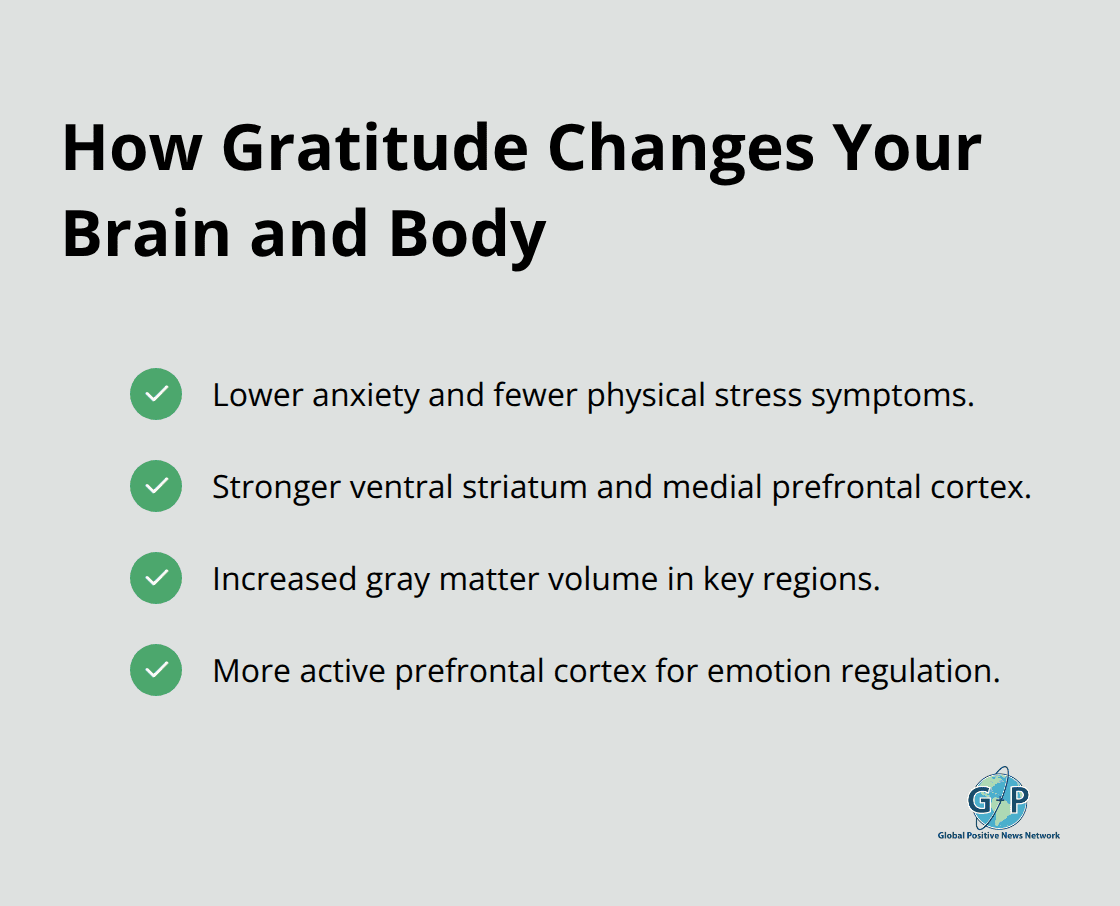
Your brain has specific regions that activate when you practice gratitude, and this activation directly reduces stress and anxiety. Regular gratitude practice activates the parasympathetic nervous system, which is your body’s natural brake on stress responses. This activation lowers cortisol levels, the primary stress hormone, while simultaneously boosting serotonin and dopamine production. When you consistently acknowledge what you’re grateful for, your amygdala becomes less reactive to perceived threats, meaning everyday frustrations trigger smaller emotional responses.
Studies demonstrate that people who maintain a daily gratitude practice report measurably lower anxiety levels and fewer physical stress symptoms like headaches and digestive issues. The ventral striatum and medial prefrontal cortex, brain regions linked to motivation and higher-order thinking, strengthen through repeated gratitude routines. Neuroscientists have documented increased gray matter volume in these regions after consistent gratitude practice. Your prefrontal cortex also becomes more active, which helps you regulate negative emotions and resist rumination about resentment or envy.
Shifting Your Emotional Baseline Toward Happiness
Gratitude fundamentally shifts your emotional baseline toward happiness and resilience. The dopamine release triggered by gratitude enhances concentration and vitality, making your overall outlook more positive throughout the day. People who track their gratitude practice consistently report better sleep quality, improved daytime functioning, and stronger relationships because gratitude naturally increases empathy and self-esteem.
When facing difficult circumstances, gratitude doesn’t eliminate the challenge-it provides your brain with evidence of what’s still working in your life. This reframing isn’t wishful thinking; it’s a cognitive strategy that dampens fear responses in your amygdala while simultaneously engaging your brain’s problem-solving capacity. Someone dealing with job stress can acknowledge job stability as something to be grateful for, which shifts their perspective from catastrophizing to recognizing what they’re protecting. The heart rate variability improvements documented in gratitude practitioners indicate a genuinely balanced nervous system, not just a mental shift.
Ready to Transform Your Practice
These neurological changes happen not through willpower alone, but through consistent, simple actions you can start immediately. The methods to activate these brain regions are straightforward and adaptable to any lifestyle.
How to Start Your Gratitude Practice Today
Write Three Specific Things Each Morning
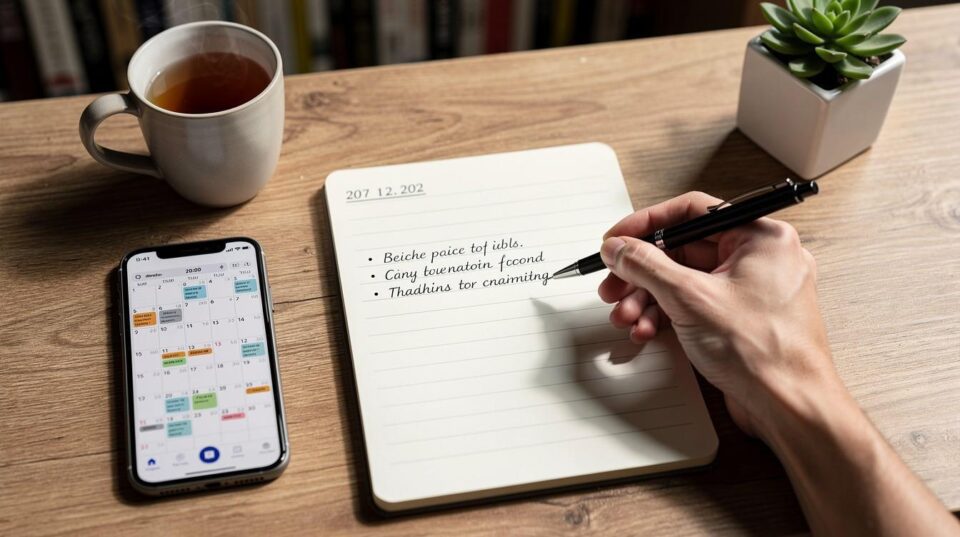
The most effective gratitude practice requires no fancy journals or complicated frameworks. Start with three specific things you appreciate each morning, and write them down with concrete details rather than vague statements. Instead of writing “grateful for family,” write “grateful that my daughter called me during her lunch break” or “grateful my partner made coffee before I woke up.” This specificity matters because your brain responds more strongly to tangible moments than abstract concepts.
Research shows that people who keep detailed gratitude journal entries experience stronger mood improvements than those who write generic lists. Spend five minutes maximum on this morning practice, then move forward with your day. The brevity keeps it sustainable; most people abandon practices that demand thirty minutes of daily commitment. If mornings feel chaotic, complete this during your commute or while having breakfast.
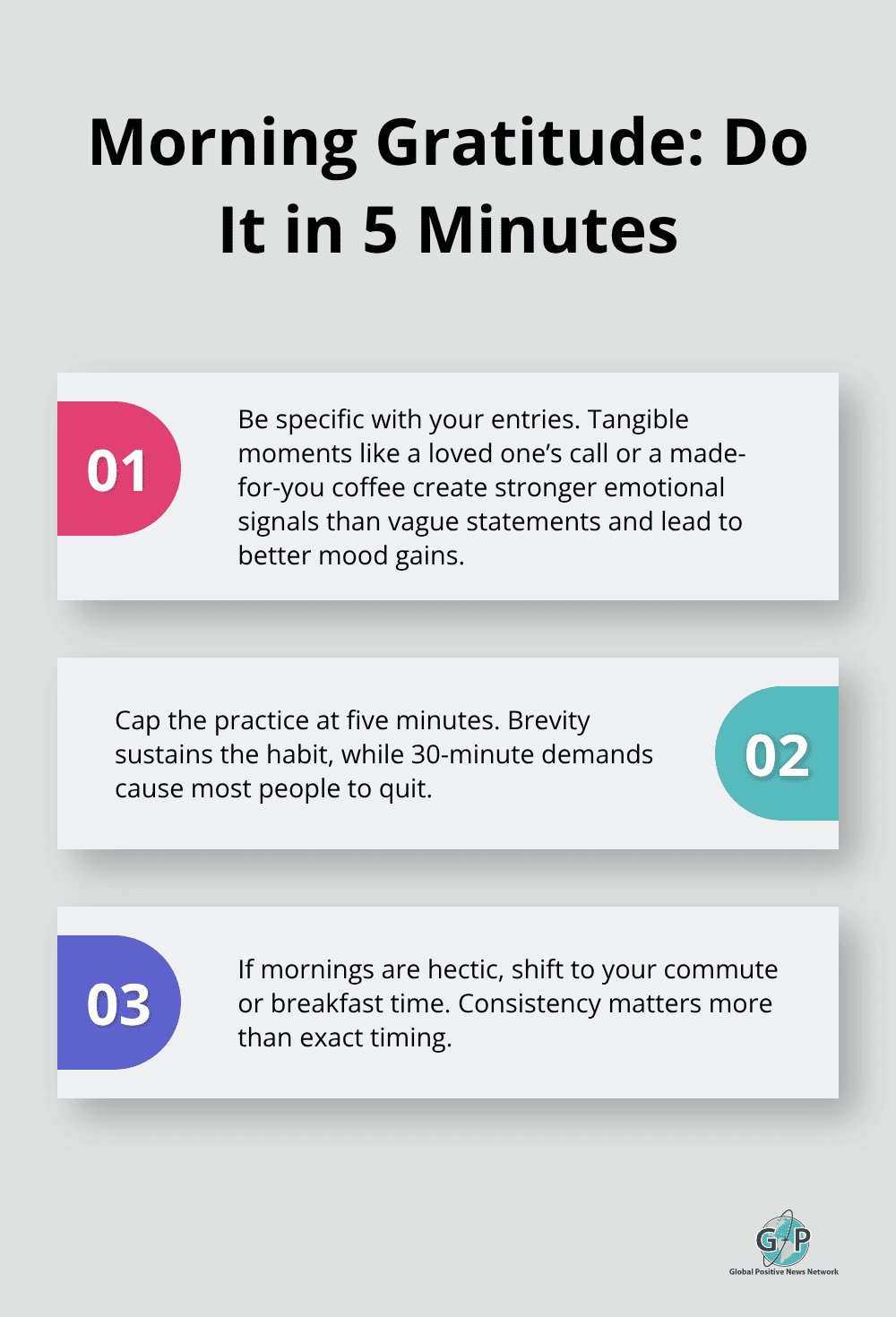
Consistency matters far more than timing.
Integrate Gratitude Into Existing Moments
Weave gratitude into moments you already experience rather than adding entirely new routines to your schedule. Before meals, pause for ten seconds and acknowledge one thing about that food or moment. Before sleep, mentally note one thing that went well during your day-research indicates this improves sleep quality and next-day functioning. These small pauses require no special materials, no app downloads, and no complicated memory systems.
Throughout your day, express appreciation to someone specific by explaining exactly how they helped you. A text saying “thank you for listening when I was stressed about the project” works better than a generic thanks. Gratitude interventions lead to better mental health and improved wellbeing. Start with one person weekly, then increase as the habit becomes automatic.
Build Momentum Through Small, Consistent Actions
These three methods integrate into existing moments in your life, which makes them the most likely practices to survive beyond the first month. Your brain responds to consistency far more than intensity. Most people who abandon gratitude habits quit because they set unrealistic expectations, not because the practice itself fails. The transition from sporadic appreciation to a genuine daily habit happens through repetition, not motivation.
As your morning reflections, meal pauses, and appreciation messages become automatic, you’ll notice shifts in how you respond to stress and setbacks. Your nervous system begins to recognize these moments as signals that good things exist alongside challenges. This foundation prepares you to maintain your practice even when life becomes demanding.
How Long Gratitude Takes to Stick
Track your progress with concrete metrics
Most people quit their gratitude practice within three weeks because they lack a system to measure whether it’s actually working. Without visible progress, the habit feels pointless and motivation evaporates. Start measuring concrete changes instead of relying on willpower alone. Track one specific metric that matters to you: sleep quality on a scale of one to ten, anxiety levels during stressful moments, or the number of times you caught yourself ruminating versus redirecting your thoughts.
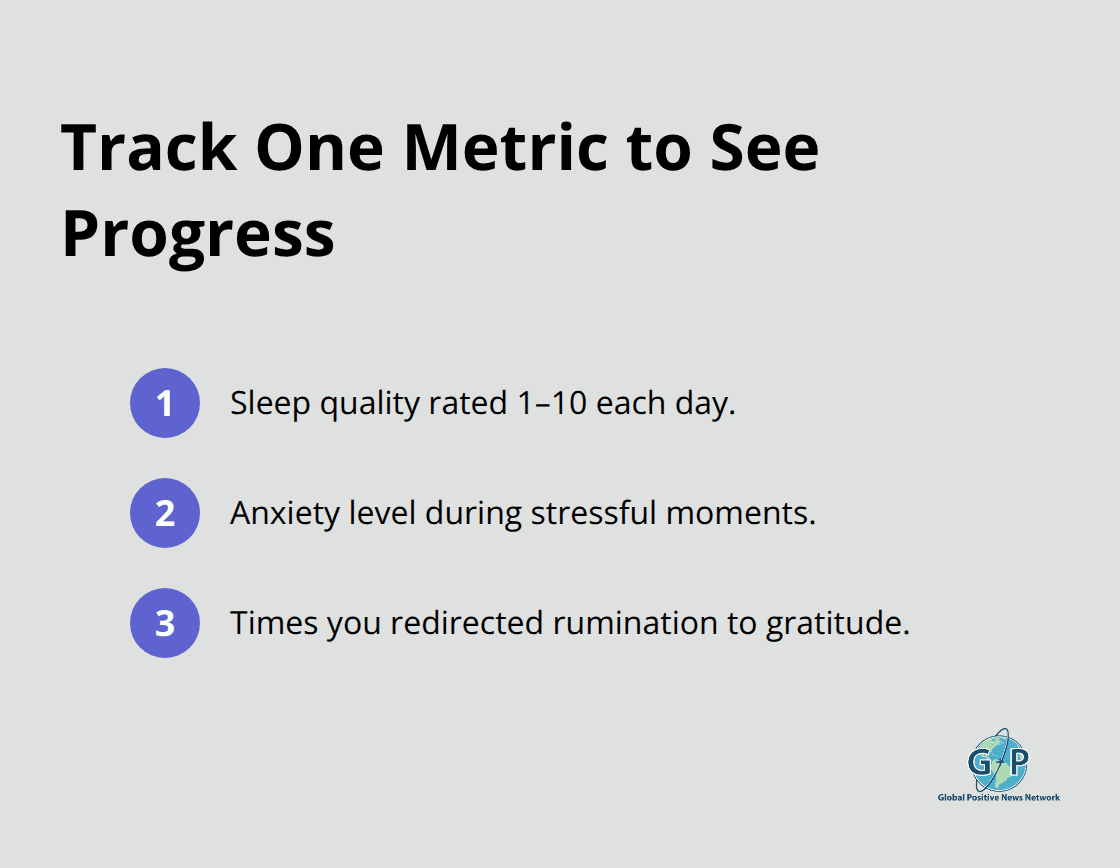
Keep this tracking separate from your gratitude journal. A simple note in your phone works fine. After two weeks of consistent practice, you’ll have real data showing whether your emotional baseline has shifted.
Build Accountability Through Connection
The second reason gratitude habits fail is isolation. Practicing alone in your home feels optional, but practicing with accountability transforms it into something you won’t skip. Find one person willing to share a five-minute daily text exchange about what you’re each grateful for, or join a community that practices together.
The consistency of showing up for someone else makes you far more likely to maintain your practice through the inevitable weeks when motivation dips. Gratitude practices boost well-being and reduce anxiety, and the effects persist for nearly two weeks after a single session.
Adapt Your Practice When Life Gets Demanding
When life becomes chaotic, your gratitude practice will contract, and that’s completely normal. Instead of abandoning the habit entirely, scale down from three written items to one mental acknowledgment before bed. This adaptation keeps the neural pathway active without demanding energy you don’t have.
People who view their practice as flexible rather than rigid maintain their habits through major life changes. The practice itself never stops mattering; your delivery method simply adjusts to fit your actual circumstances.
Final Thoughts
The neurological changes from gratitude aren’t temporary mood boosts-they represent lasting rewiring of how your brain processes stress, relationships, and resilience. When you build daily gratitude practice, you strengthen neural pathways that make positive thinking your default response rather than an occasional effort. The parasympathetic nervous system activation, reduced amygdala reactivity, and increased dopamine production create compounding benefits that extend far beyond the five minutes you spend each morning.
Your relationships transform alongside your mental health as you consistently practice gratitude and report stronger connections, greater empathy, and more meaningful interactions with others. When you express specific appreciation to someone and explain exactly how they helped you, you reinforce your own brain’s ability to recognize goodness in your life. This outward expression strengthens bonds in ways that internal reflection alone cannot achieve.
The lasting impact shows up in measurable ways: better sleep quality, fewer stress-related physical symptoms, improved focus, and genuine resilience when difficulties arise. You train your brain to hold both difficulty and gratitude simultaneously, which fundamentally changes how you navigate life. Visit Global Positive News Network for more stories and resources that support your journey toward a more grateful perspective.
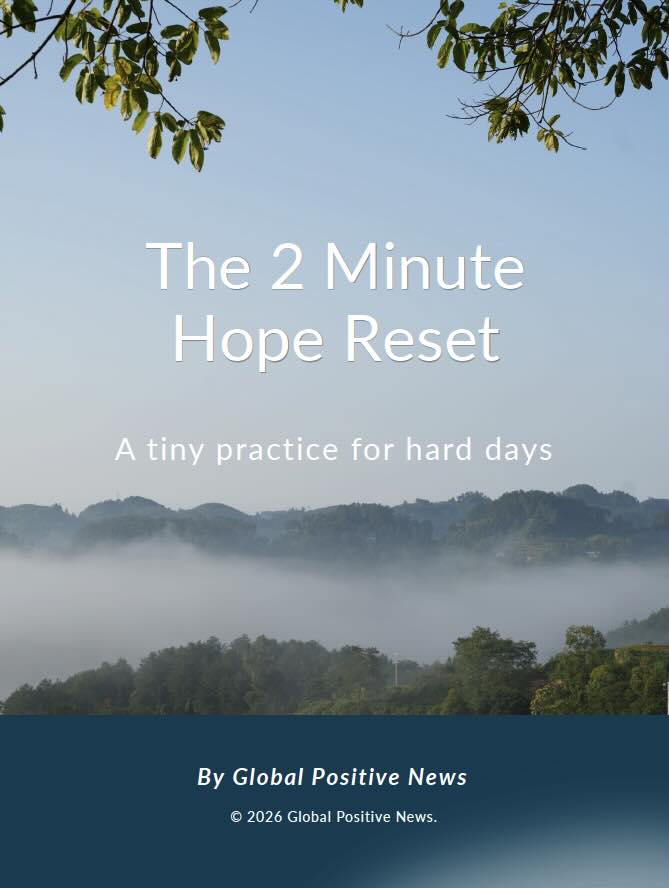
Having a hard day?
The 2 Minute Hope Reset is a short free guide with three small practices for the days that feel heavy. Two minutes each, nothing to keep up with.
Get the free guideExplore more positive news:
Enjoying stories like this?
Global Positive News Network is reader-supported. If you’d like to support the mission, you can visit the Official GPNN store.