
Most news feeds are designed to upset you. Algorithms push conflict, tragedy, and outrage because negativity drives engagement-and profits.
At Global Positive News Network, we believe empowering positive news is the antidote. This blog post shows you how optimistic stories reshape your mental health, why mainstream outlets ignore good news, and how to build a daily habit that actually makes you feel better.
How Positive News Reshapes Your Brain and Body
Optimistic stories trigger measurable changes in how your brain functions. When you read about acts of kindness or community progress, your brain releases dopamine, the neurotransmitter tied to motivation and reward. This isn’t theoretical-it’s neurochemistry. Meanwhile, chronic exposure to negative news elevates cortisol, your body’s stress hormone, which damages sleep quality, weakens immunity, and accelerates aging.
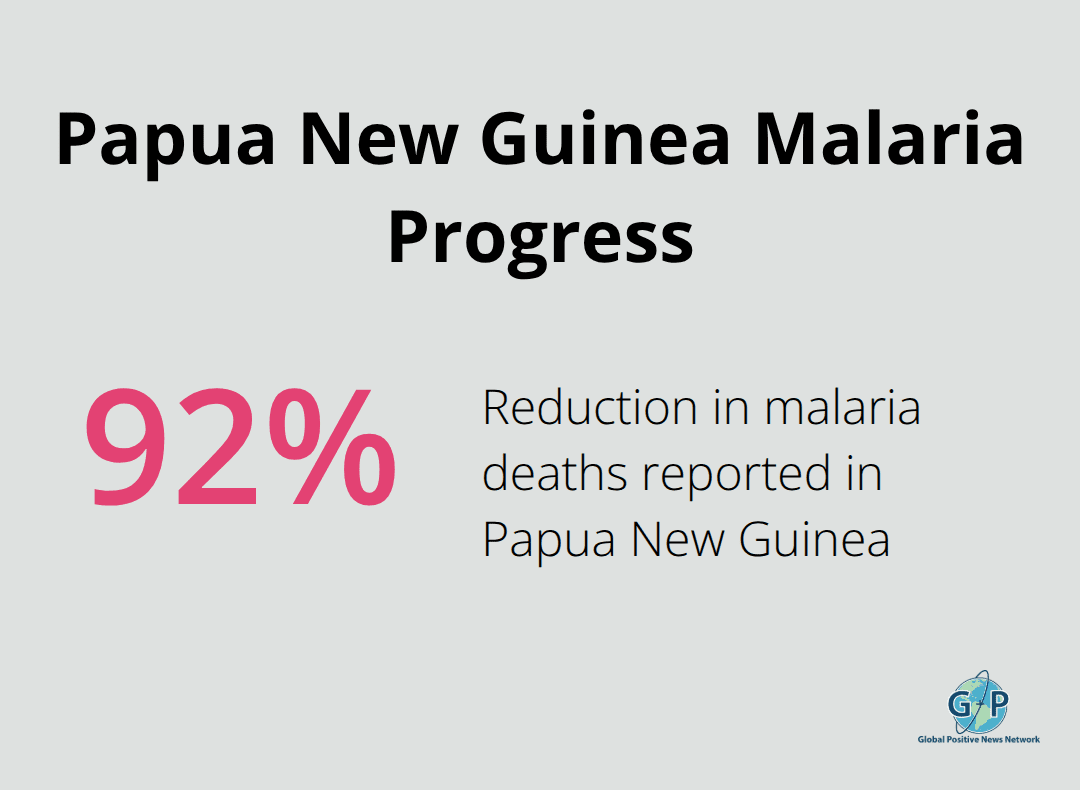
One study examined 62 healthy young adults and found that while positive news alone didn’t prevent cortisol spikes during stressful situations, consuming uplifting content at least doesn’t add to your physiological burden the way negative news does. The real power lies in what happens when you intentionally balance your media diet. A person who reads about Papua New Guinea’s 92% reduction in malaria deaths or three teens winning the Global Earth Prize for inventing tamarind powder that removes microplastics isn’t just feeling better-they’re rewiring their expectations about what’s possible.
Why Your Brain Resists Positive Stories
Your brain’s threat-detection system evolved to prioritize danger, which explains why negative stories feel stickier and more memorable. Positive news won’t override this ancient wiring in a single reading, but consistent exposure gradually shifts your baseline mood and reduces anxiety. The key is frequency and integration into daily routines rather than occasional consumption.
Set a Specific Time for Positive News
Try a specific time each day for positive news consumption, ideally in the morning before checking traditional outlets. This protects your mental health by establishing a buffer of optimism before negativity enters your awareness. Limit traditional news to 15–20 minutes daily if anxiety or stress spikes when you consume it; research shows this boundary prevents the cumulative cortisol elevation that comes from endless scrolling.
Share Stories to Amplify Their Impact
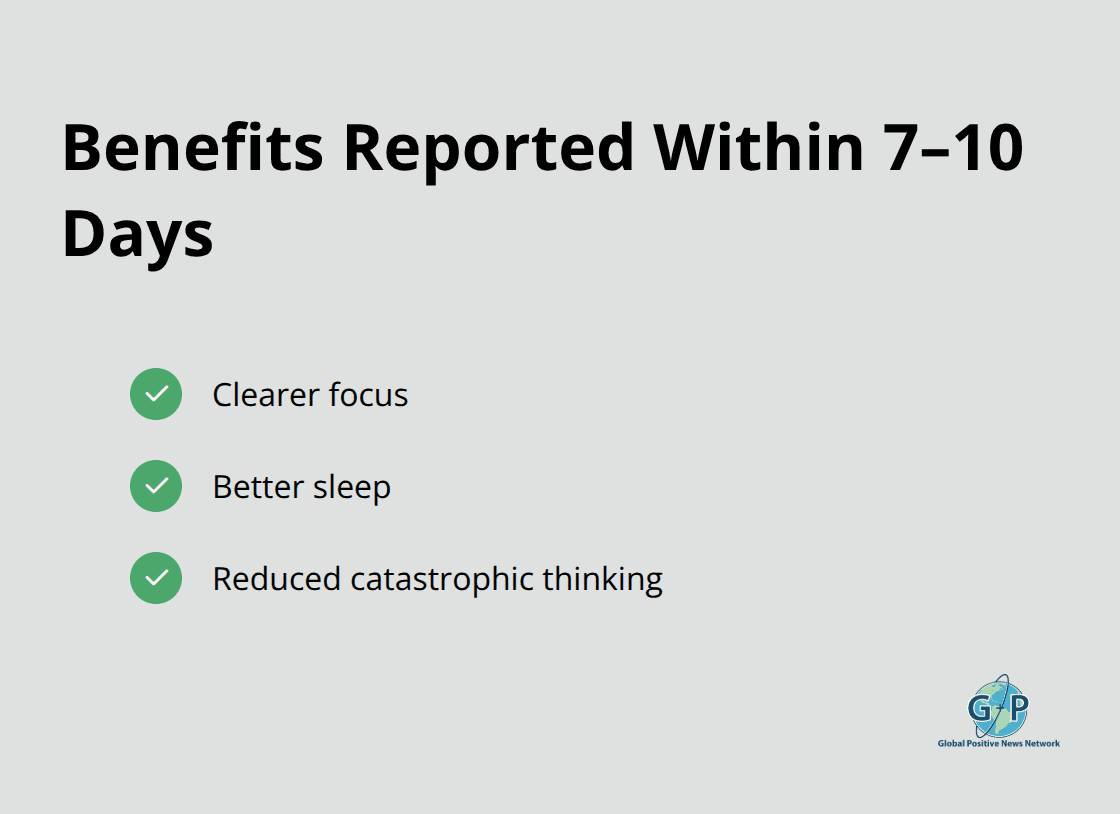
Share uplifting stories with friends and family immediately after reading them-this reinforces the positive emotion and creates what researchers call a ripple effect of positivity, where one story inspires similar acts in your social circle. Track your own mood before and after a week of intentional positive news consumption; most people report clearer focus, better sleep, and reduced catastrophic thinking within 7–10 days.
Choose Sources That Match Your Values
The goal isn’t to ignore real problems but to counterbalance mainstream outlets that profit from your fear. Platforms dedicated to uplifting content (like Global Positive News Network, which curates stories specifically designed for this purpose) cover breakthroughs in medicine, conservation wins, and human resilience, so you’re not wasting time sorting through noise. This foundation of intentional consumption sets the stage for understanding why mainstream media systematically fails to tell these stories in the first place.
Why Mainstream Media Ignores Good News
The Business Model That Profits From Fear
Mainstream news outlets operate under a business model that treats your attention as a commodity to be sold to advertisers. The more you click, watch, or stay engaged, the higher the advertising rates they command. A study by the Media Research Center found that negative stories receive substantially more airtime and online traffic than positive ones, not because bad news matters more, but because fear and outrage trigger immediate emotional responses that keep you scrolling. When Papua New Guinea reduced malaria deaths by 92% or three teens invented tamarind powder to remove microplastics from oceans, these stories barely register in mainstream feeds. Meanwhile, a single traffic accident or political conflict dominates headlines for hours. The economics are brutal: outlets that prioritize solutions-focused reporting lose advertisers to sensationalist competitors because engagement metrics drop.
How Your Brain Enables the System
Your brain’s threat-detection system makes this worse. Journalists know that negative stories activate your amygdala, so editorial teams consciously choose conflict over progress. This neurological reality shapes every editorial decision. The gap between what actually happens in the world and what gets reported is staggering. For every story about conservation wins or medical breakthroughs, thousands of positive developments go unmentioned simply because they don’t trigger the physiological arousal that drives clicks and shares.
The Structural Barrier to Change
Traditional news outlets have built their entire infrastructure around this pattern, making it nearly impossible for individual journalists to change course without corporate pressure. The profit model depends on keeping you in a state of managed anxiety (one that advertisers can exploit). Individual reporters often want to tell stories about progress and solutions, but the system itself resists this shift. Outlets that attempt to balance negative and positive coverage find their engagement metrics decline, which signals to advertisers that the platform no longer commands attention the way sensationalism does.
What This Means for Your Information Diet
The solution isn’t to blame individual reporters; it’s to stop funding outlets that profit from your fear and actively choose platforms designed to inform without exploiting your psychology. Platforms dedicated to uplifting content cover breakthroughs in medicine, conservation wins, and human resilience, so you’re not wasting time sorting through noise. This foundation of intentional consumption sets the stage for understanding how to build a daily positive news habit that actually protects your mental health while keeping you informed about what matters.
Building Your Daily Positive News Habit
Install Positive News as Your Default
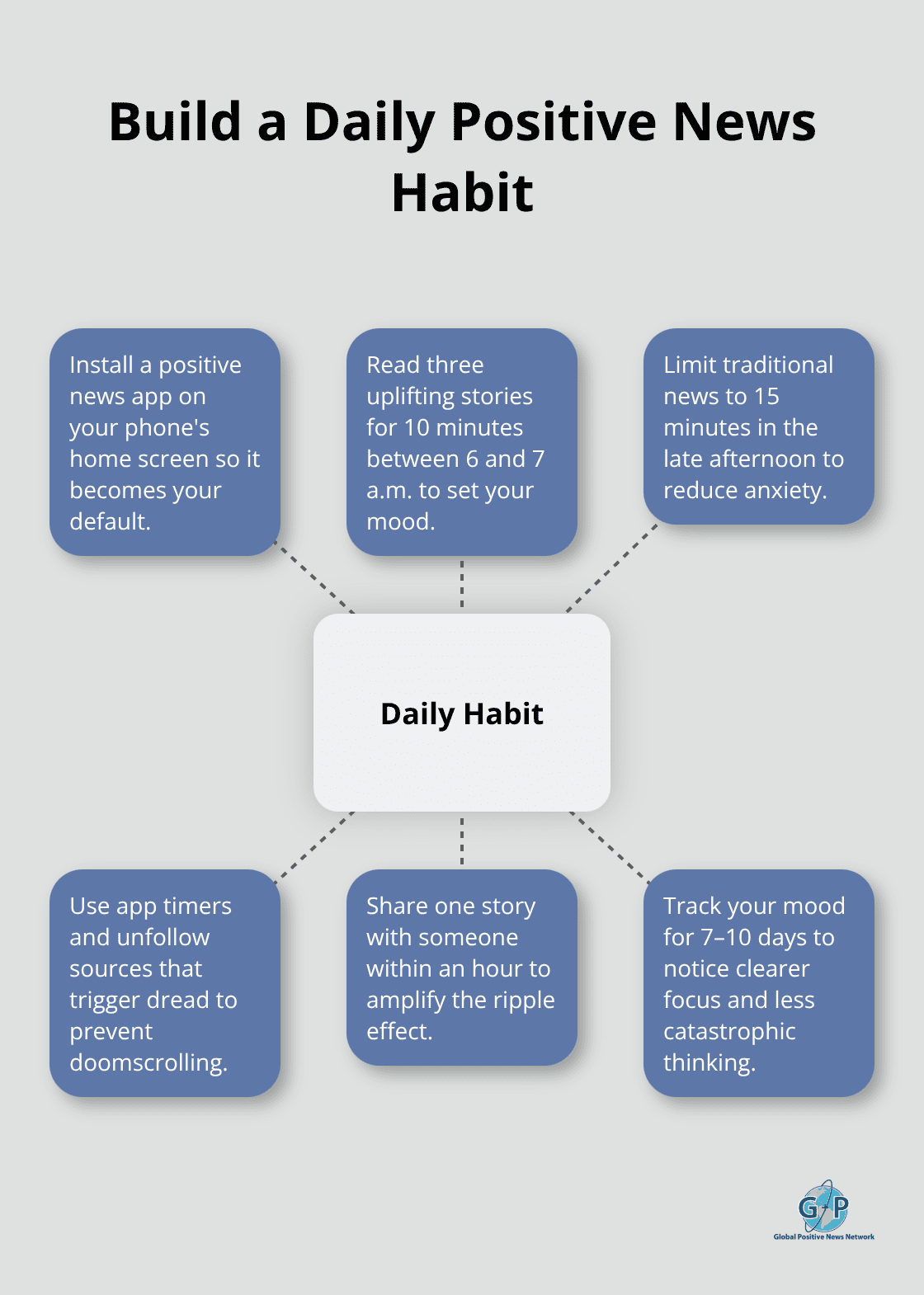
The difference between feeling overwhelmed and feeling grounded comes down to one decision: what you actively choose to read each morning. Start by replacing one traditional news app with a platform designed specifically for uplifting content. Install it on your phone’s home screen, not buried in a folder, so it becomes your default when you reach for news. This simple placement shift matters because friction determines behavior.
Research emphasises the importance of establishing healthful habits, ingraining behaviours into habitual patterns to support sustained behavior change.
Set a Morning Window Before Stress Hormones Spike
Try a non-negotiable time between 6 and 7 a.m., before checking email or social media, and spend exactly 10 minutes reading three stories. This consistency matters more than duration. The morning window is critical because your brain is most receptive to mood-setting content before cortisol levels peak in the early morning and gradually decline throughout the day. Within three days, you’ll notice your first thought isn’t about what went wrong in the world but about what’s working. Track this shift for one week using a simple notation in your phone: mark each day as either clear-headed or anxious. Most people report clearer focus and reduced catastrophic thinking within 7–10 days.
Cut Traditional News to 15 Minutes Maximum
The second layer is boundary-setting with traditional outlets. If you currently spend 45 minutes scrolling news feeds, cut this to 15 minutes maximum and schedule it for late afternoon when you’re less vulnerable to emotional manipulation. Most anxiety from news consumption comes from algorithm-driven repetition, not from being informed. Reading the same story five times across platforms doesn’t make you more knowledgeable; it trains your nervous system to stay in threat mode. Unfollow or mute accounts that trigger dread. Use app timers that force you off platforms after your allotted time expires.
Send Stories to One Person Within the Hour
The final piece is amplification through sharing. When you read about positive developments in your community or globally, send that story to one person within the hour. This serves two purposes: it reinforces the positive emotion in your own brain and creates what researchers call a ripple effect, where shared optimism prompts similar actions in your social circle. Text a friend the link with one sentence about why it matters to you. This takes 30 seconds and transforms solitary consumption into community building.
Final Thoughts
Balanced information consumption isn’t about ignoring reality-it’s about refusing to let algorithms decide what reality means to you. The world contains both problems and progress, tragedy and triumph, and mainstream outlets have trained you to see only the first half. Empowering positive news restores what sensationalism removes: your ability to recognize solutions alongside problems and to feel motivated rather than paralyzed by what you read.
This shift takes three weeks to feel automatic. After 21 days of morning positive news, afternoon news boundaries, and sharing stories with others, your baseline mood stabilizes and you stop catastrophizing about things outside your control. You notice solutions instead of just problems, and you feel grounded in what’s actually working in the world right now. This isn’t optimism divorced from reality-it’s optimism grounded in concrete progress happening every day.
The final step is supporting platforms that do this work intentionally. When you spend time on Global Positive News Network, you vote with your attention for a different media model-one that respects your psychology instead of exploiting it. Start tomorrow morning with one positive story before checking anything else, set your boundary with traditional news, and share what you read with someone who matters to you.
Having a hard day?
The 2 Minute Hope Reset is a short free guide with three small practices for the days that feel heavy. Two minutes each, nothing to keep up with.
Get the free guideExplore more positive news:
Enjoying stories like this?
Global Positive News Network is reader-supported. If you’d like to support the mission, you can visit the Official GPNN store.