

Leaders who genuinely care about their teams see measurable results. At Global Positive News Network, we’ve found that compassionate leadership tips aren’t soft management-they’re business strategy.
This guide shows you how to build trust, support wellbeing, and create environments where people actually want to stay and contribute their best work.
What Compassionate Leadership Actually Looks Like
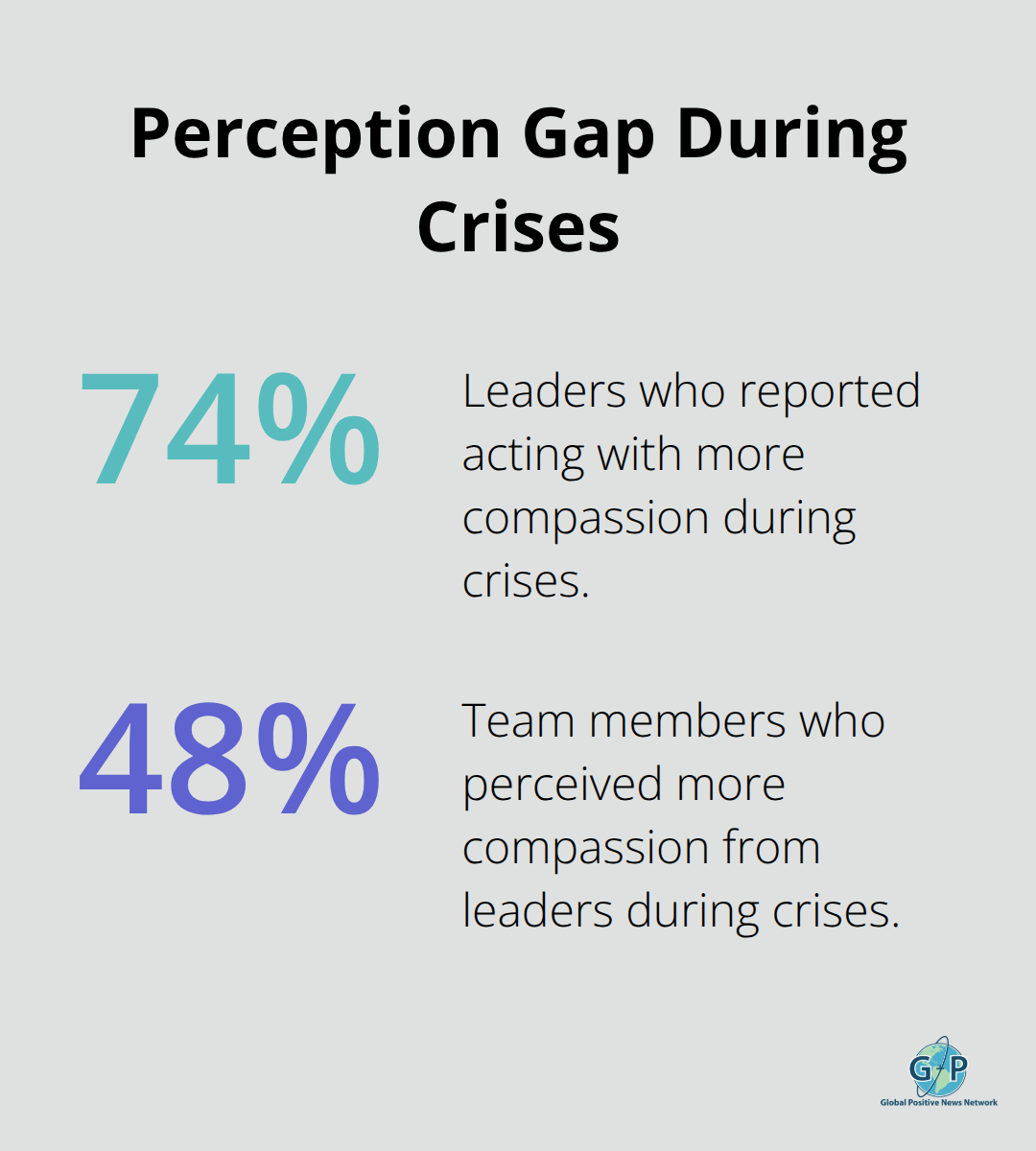
Compassionate leaders strengthen trust, increase collaboration, and reduce turnover-outcomes that directly impact your bottom line. The gap between what leaders think they’re doing and what employees actually experience is significant. In a global survey by the Center for Compassionate Leadership, 74% of leaders reported acting with more compassion during crises, yet only 48% of team members perceived that same increase. This 26-point gap reveals that good intentions without visible action create skepticism.
Compassionate leadership demands that you translate awareness into specific behaviors your team can see and feel.
Empathy that moves beyond feelings
Empathy alone creates burnout for leaders. The neural process behind compassion is different-it activates positive feelings and resilience while driving you toward action. This matters because it means you’re not just absorbing your team’s stress; you’re channeling it into solutions. Active listening forms the foundation here, but it’s not passive. Listen to facts, feelings, and values simultaneously. When someone tells you they’re overwhelmed, don’t immediately jump to fixing the problem. Ask how you can help. Acknowledge what you heard. This shift from problem-solving to understanding transforms how people experience your leadership. One concrete practice: during one-on-one meetings, spend the first ten minutes asking open-ended questions about what matters to your team member that week, then listen without planning your response.
Trust built through consistency and vulnerability
Trust grows when leaders model the behavior they expect. Share your own failures and lessons learned. This isn’t oversharing your personal trauma-it’s showing your team that mistakes are part of growth, not career-ending events. When you acknowledge uncertainty transparently, especially during crises, you maintain psychological safety. You build it by encouraging safe speaking up, establishing inclusive norms, and welcoming constructive disagreement. Practically, this means responding to mistakes with curiosity rather than blame. Ask what someone learned, not why they failed. Celebrate wins alongside analyzing failures. One actionable step: implement a weekly practice where team members share something they tried that didn’t work and what they learned. This normalizes experimentation and reduces fear of failure.
Psychological safety as operational necessity
Psychological safety isn’t a perk-it’s the condition under which your team actually performs. When people feel safe, they bring their whole selves to work, speak up about problems early, and share ideas without filtering. You build this by modeling self-compassion first. Leaders who prioritize their own wellness signal to teams that wellbeing matters. Flexible work arrangements, mental health days, and accessible support services aren’t nice-to-haves; they’re operational investments. A practical step is conducting regular check-ins focused on workload management and reasonable deadlines. If someone carries too much, adjust expectations. Protect recovery time. These aren’t soft gestures-they’re how you sustain performance over time. Instead, share relevant struggles that show you understand the challenges your team faces.
Moving from awareness to action
What separates compassionate leaders from well-intentioned ones is what happens next. You’ve listened. You’ve acknowledged the challenge. Now you remove obstacles. This might mean reallocating work, providing resources, or simply clearing space for someone to recover. One practical approach: after a difficult conversation, follow up with concrete next steps. Don’t leave someone wondering if you actually heard them. Document what you discussed and what you’ll do differently. This transforms empathy into trust. Your team members will notice when your actions match your words, and that consistency builds the foundation for everything that follows in your organization.
How to Turn Listening Into Real Change
Transform feedback into action
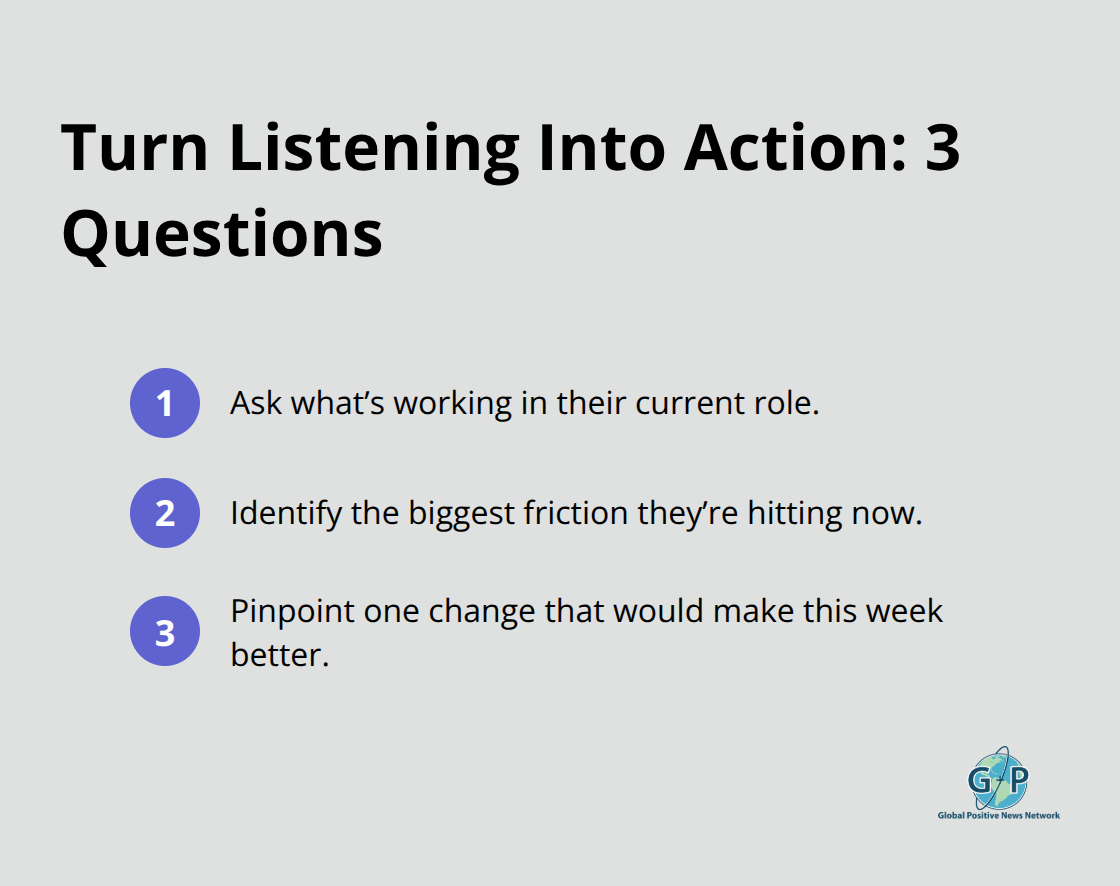
Compassionate leadership fails when leaders listen but never act. The gap between perception and reality we discussed earlier isn’t just about good intentions-it’s about visible, concrete follow-through. You need systems that convert what you hear into decisions your team experiences. Start with structured listening sessions. Not casual coffee chats, but dedicated time where you ask team members three specific questions: What’s working in your current role? What friction are you hitting? What would make your work life better this week?
Document their answers. Then act on that information. When someone mentions unrealistic deadlines, adjust them. When someone identifies a process bottleneck, remove it. When someone needs flexibility, provide it. This isn’t complicated management theory-it’s basic respect made visible.
One organization reduced turnover by 23% simply by implementing monthly listening sessions where leaders committed to addressing at least one obstacle per person. The key difference: they closed the loop. After each session, leaders sent a follow-up email summarizing what they heard and what would change. This single practice eliminated the feeling that feedback disappeared into a void.
Recognize specific strengths, not generic effort
Recognition works differently than most leaders think. You’re not supposed to praise effort or participation-that actually reduces motivation. Instead, recognize specific results and the strengths that produced them. When someone solves a complex problem, name exactly what they did well. Did they show persistence? Creativity? Strategic thinking? Say it directly. Research shows that recognition significantly boosts employee engagement. But generic praise like “you did great work” backfires. Specificity matters enormously.
Create a regular practice-weekly team recognition where members highlight a specific contribution from a peer. This shifts recognition from top-down to peer-driven, which builds stronger relationships and spreads the culture faster.
Treat wellbeing as a performance requirement
Stop treating work-life balance as a perk and start treating it as a performance requirement. Your team’s sustainable output depends on recovery time. Implement protected boundaries: no meetings after 5 p.m., no Slack messages on weekends, actual vacation days where people disconnect. Track workload explicitly. If someone is consistently overloaded, that’s a data point showing your system is broken, not that they need to work harder.
Conduct quarterly workload audits where you map actual hours against assigned hours. When reality diverges from expectations, rebalance immediately. Mental health resources matter too, but only if they’re genuinely accessible. An employee assistance program nobody knows about doesn’t help anyone. Instead, normalize conversations about stress. When you notice someone struggling, ask directly how you can help. Offer specific support-temporary deadline extensions, temporary task reassignment, or simply protecting their calendar for recovery. These actions prove that wellbeing isn’t rhetoric.
Close the loop with visible follow-through
What separates compassionate leaders from well-intentioned ones is what happens next. You’ve listened. You’ve acknowledged the challenge. Now you remove obstacles. This might mean reallocating work, providing resources, or simply clearing space for someone to recover. After a difficult conversation, follow up with concrete next steps. Don’t leave someone wondering if you actually heard them. Document what you discussed and what you’ll do differently. This transforms empathy into trust.
Your team members will notice when your actions match your words, and that consistency builds the foundation for everything that follows. The real test of compassionate leadership isn’t what you say in meetings-it’s whether people experience measurable change in their daily work. When that happens, you’re ready to explore how these practices ripple outward and strengthen your entire organization.
What Compassionate Leadership Actually Delivers
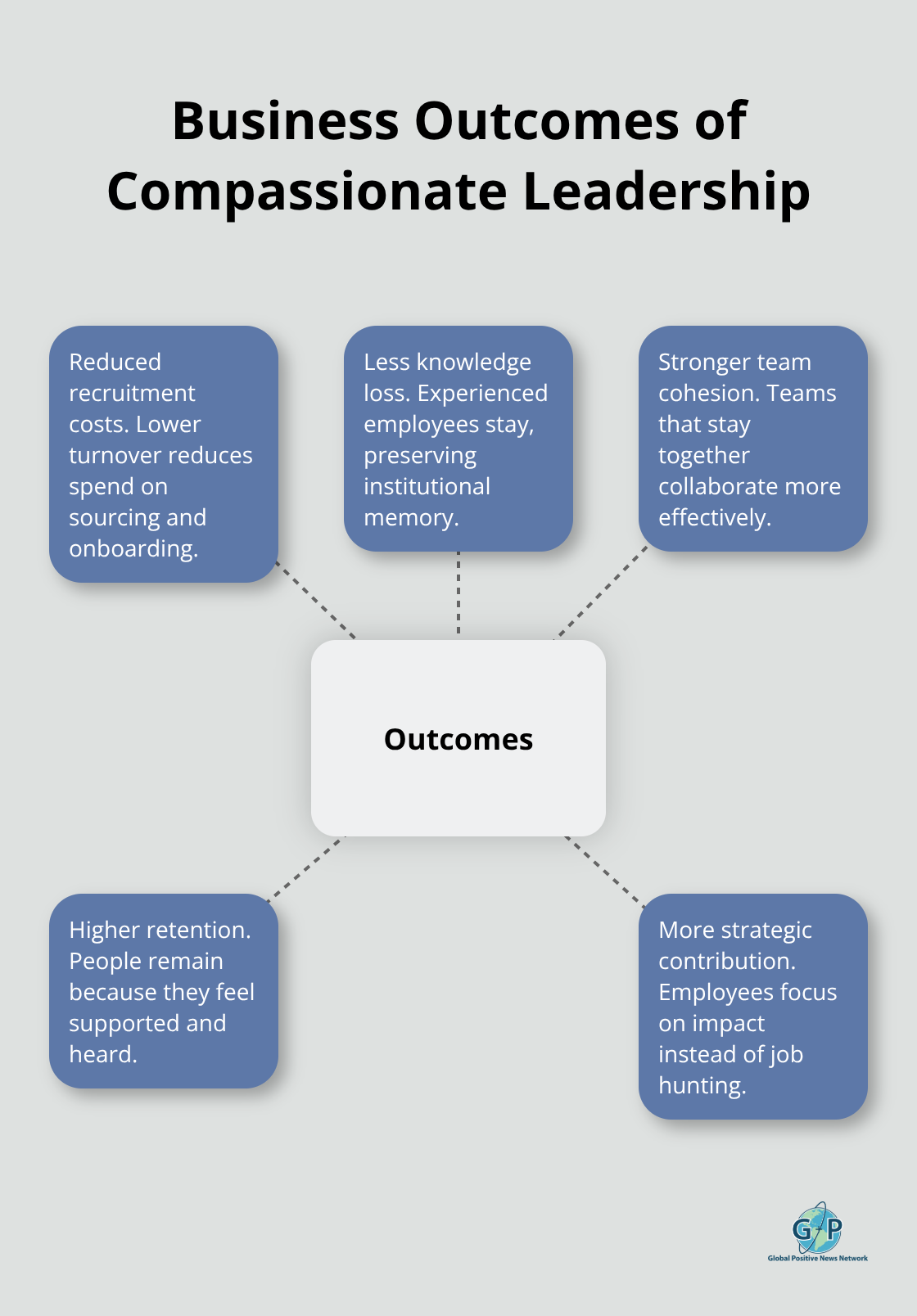
Compassionate leadership produces measurable business outcomes, not just feel-good workplace culture. When leaders act on what they hear and remove obstacles for their teams, retention improves dramatically. Companies that implement structured listening and follow-through see turnover drop by 15-23% within the first year. That translates directly to reduced recruitment costs, less knowledge loss, and teams that actually know how to work together. Employees who experience genuine support from leadership stay longer and contribute more strategically because they’re not constantly job hunting or rebuilding trust.
How Engagement Transforms Performance
Teams working under compassionate leaders report higher engagement scores, stronger relationships with colleagues, and genuine commitment to organizational goals. This isn’t sentiment; it’s operational efficiency. When people feel their manager actually listens and acts on feedback, they solve problems faster, share ideas more openly, and handle setbacks without spiraling into disengagement. Satisfaction directly correlates with how much people contribute strategically to their roles.
Psychological Safety Accelerates Innovation
Collaboration accelerates when psychological safety exists because people stop filtering themselves. Teams with strong psychological safety innovate 3.5 times faster than teams operating under fear or blame cultures. The reason is straightforward: innovation requires experimentation, and experimentation requires permission to fail. Compassionate leaders create that permission explicitly through their actions-responding to mistakes with curiosity, celebrating what was learned, and immediately moving forward.
Community Impact Extends Beyond the Office
This ripples outward into communities and broader organizational networks. When your team functions with genuine trust and mutual support, members volunteer for cross-functional projects, mentor newer employees, and represent your organization positively in their communities. They become advocates rather than just workers. Compassionate leadership practices extend beyond office walls because people carry these behaviors home, into volunteer work, and into their social circles. Teams led with genuine care contribute more to community initiatives, participate in service projects, and build stronger local relationships. The impact compounds because people who experience compassion at work become more compassionate in their personal and community lives, creating positive cultural shift at scale.
Final Thoughts
Compassionate leadership tips work because they translate awareness into visible action that teams experience every day. The practices we’ve covered-listening deeply, acting on feedback, recognizing specific strengths, and protecting wellbeing-directly reduce turnover, accelerate innovation, and build teams that actually want to contribute. When leaders close the gap between intention and perception, trust sustains performance over years, not months.
Employees who experience genuine support from leadership carry those behaviors into their families, volunteer work, and communities. They become advocates for compassionate practices in every environment they enter, creating cultural momentum where compassion becomes normalized rather than exceptional. Your organization attracts talent that shares those values and strengthens your competitive position through reputation alone.
Start with one practice this week by choosing the area where your team experiences the most friction and addressing it directly. Document what you hear and what changes as a result, then share those results with your team so they see that their feedback matters. For more stories about positive leadership and community impact, visit Global Positive News Network to explore how organizations worldwide build cultures centered on genuine care and human connection.
Having a hard day?
The 2 Minute Hope Reset is a short free guide with three small practices for the days that feel heavy. Two minutes each, nothing to keep up with.
Get the free guideExplore more positive news:
Enjoying stories like this?
Global Positive News Network is reader-supported. If you’d like to support the mission, you can visit the Official GPNN store.