
Green spaces offer more than just a pleasant view-they’re a proven source of hope in nature that can transform how you feel mentally and physically.
At Global Positive News Network, we’ve seen firsthand how access to parks, gardens, and natural environments reduces stress and sharpens focus. This guide shows you exactly how to weave these spaces into your life, whether through local parks or a single potted plant on your windowsill.
How Green Spaces Transform Your Mental State
Your Nervous System Responds Within Minutes
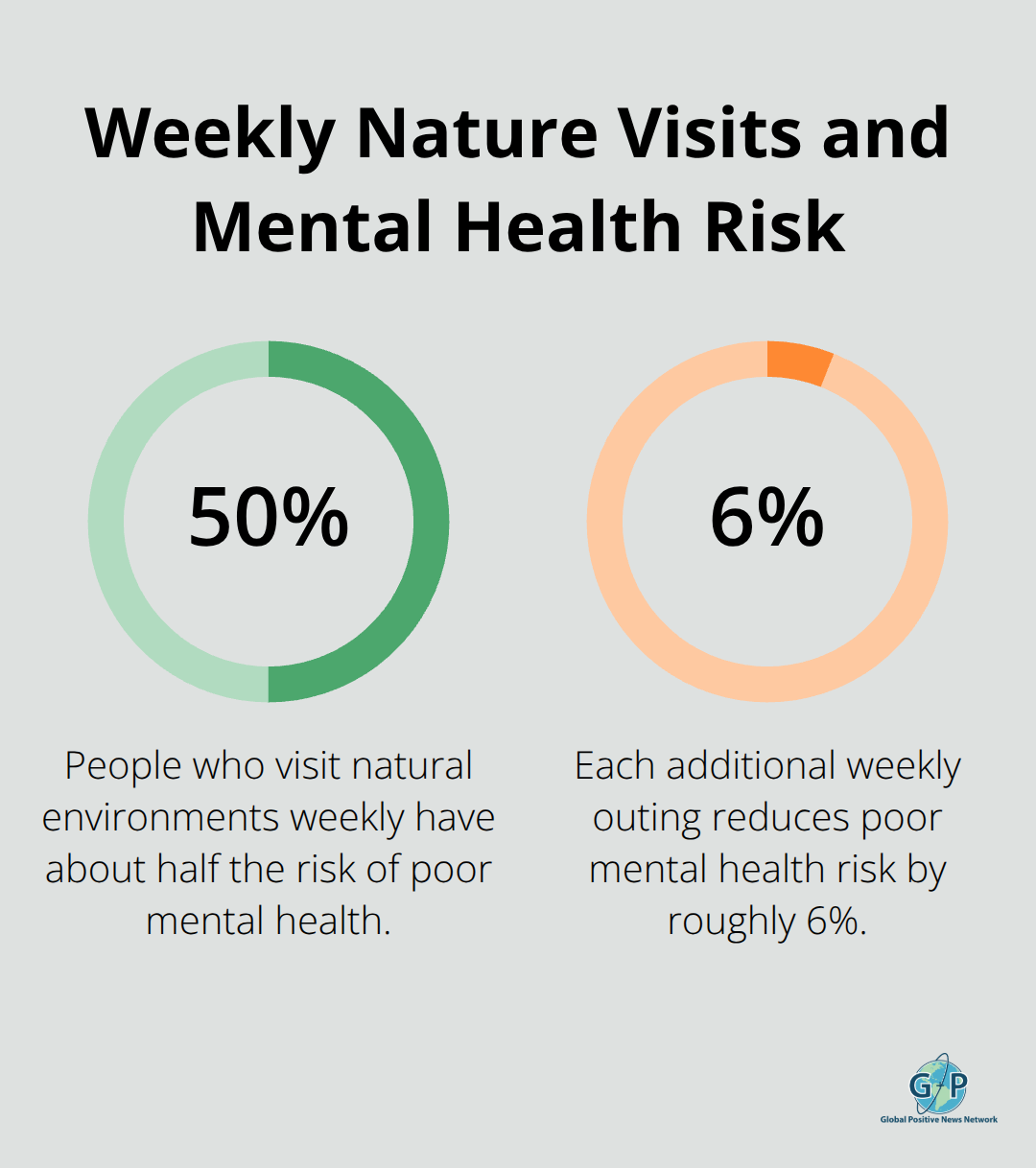
Time in green spaces produces measurable changes in your nervous system within minutes. Research from the Mental Health Foundation shows that people who visit natural environments weekly have approximately half the risk of poor mental health compared to those who don’t. Each additional weekly outing reduces that risk by roughly 6%, meaning consistency matters more than duration. Urban dwellers with access to nearby greenspace experience less mental distress, lower anxiety and depression, and healthier cortisol profiles according to research by Maas and colleagues. The data is clear: green spaces physically alter your stress response.
When you’re surrounded by trees and plants, your body shifts out of fight-or-flight mode. A study tracking people who moved from less green to more green neighborhoods found significantly better mental health outcomes within three years, suggesting the benefits accumulate over time rather than appearing instantly.
Emotional Resilience and Creative Output Improve Rapidly
The mental health gains extend beyond stress relief into emotional resilience and cognitive sharpness. Psychologist Michael Alcée found that outdoor time improves working memory and attention, while Florence Williams’ research in The Nature Fix demonstrates that nature calms your autonomic nervous system through sunlight exposure and fresh air that alleviate depression and anxiety. When you exercise outdoors in green settings, the mood improvement intensifies-viewing nature during physical activity amplifies positive effects compared to indoor exercise.
For cognitive function specifically, green spaces improve both attention and mood during mental tasks. People with high negative moods naturally gravitate toward natural areas as their favorite places, which means green spaces function as accessible mental health support for those struggling most.
Building a Consistent Green Space Routine
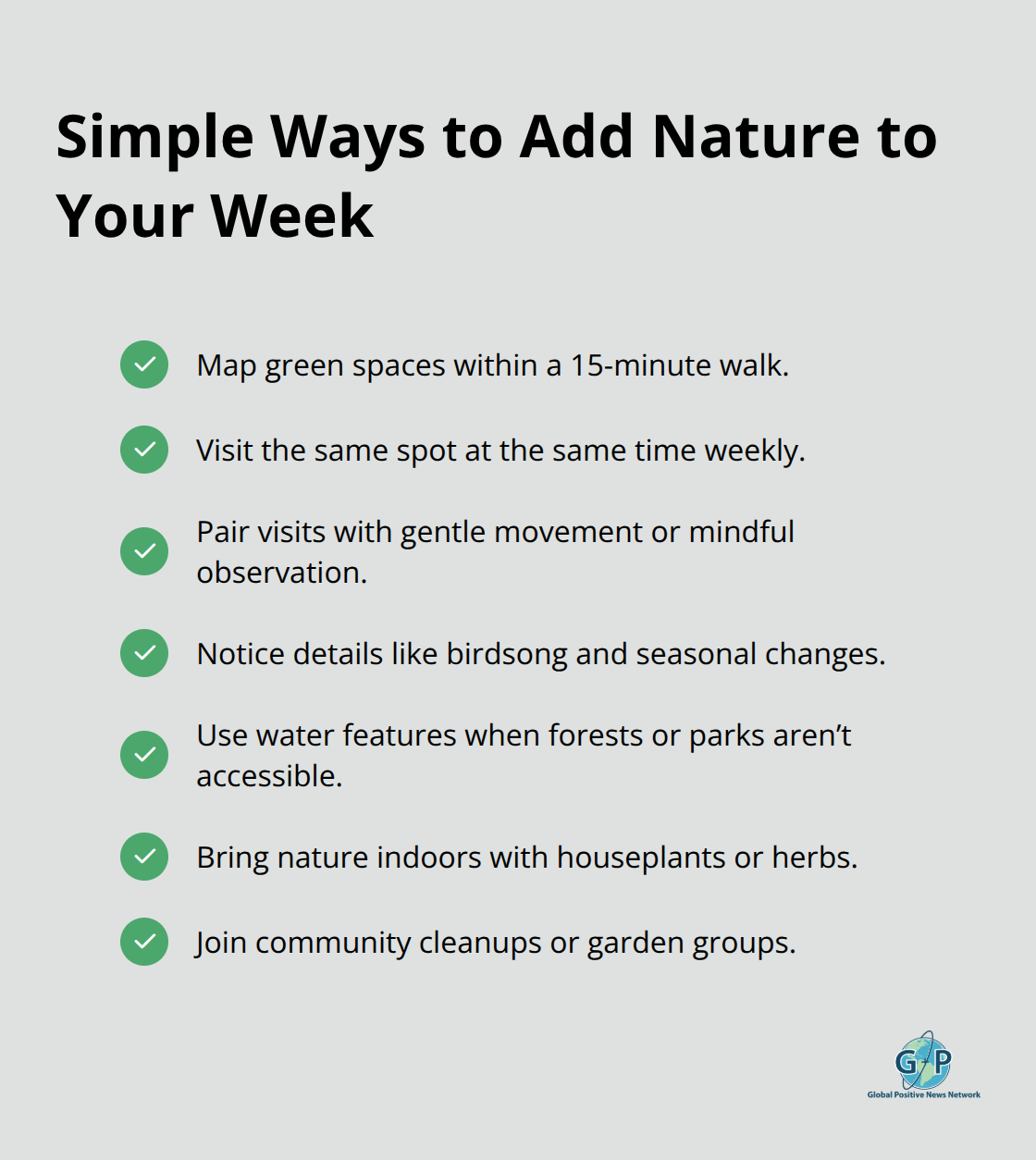
The Mental Health Foundation emphasizes that you don’t need mountain hikes or remote wilderness; urban parks, community gardens, and even small patches of greenery deliver measurable psychological restoration. Establish a consistent routine that visits green spaces at the same time weekly. Pair that time with gentle movement or mindful observation, and notice specific details like birdsong or seasonal changes to anchor your attention in the present moment rather than rumination about stressors.
The next section explores exactly where to find these spaces and how to integrate them into your daily life, regardless of your location or schedule.
Getting Green Into Your Life Without Overcomplicating It
Start With What’s Already Around You
You don’t need a sprawling backyard or weekend hiking expeditions to access green space benefits. Research shows that people who are more connected with nature are usually happier in life and more likely to report feeling their lives are worthwhile. Map the green spaces within a 15-minute walk from your home-most urban areas have at least one accessible park, even if it’s small. Visit the same location at the same time each week to build a predictable routine that your nervous system learns to anticipate. This consistency matters far more than distance or grandeur.
If walking feels daunting, go with a friend or pick somewhere familiar where you’ve felt safe before. Once you establish this weekly anchor, pair it with gentle movement like a slow walk or outdoor stretching. The Mental Health Foundation research shows that people exercising outdoors experience amplified mood benefits compared to indoor workouts, and each additional weekly outing reduces poor mental health risk.
Water Works Just as Well as Trees
If weather or mobility limits outdoor access, water features work equally well. Rivers, lakes, and coastal environments deliver the same psychological restoration as forests because the benefit comes from engaging with nature itself, not the specific landscape type. This flexibility means you can adapt your routine to what’s actually available rather than waiting for ideal conditions.
Bring Nature Indoors When Outdoor Access Is Limited
For those without nearby parks or limited mobility, bring nature indoors through houseplants or herbs starting with simple supermarket pots. If you have outdoor space-a garden, balcony, or even a windowsill-grow flowers, plants, or vegetables and consider adding a bird feeder to attract wildlife. The act of caring for living things creates a tangible connection to natural cycles without requiring horticultural expertise.
If planting doesn’t appeal to you, connect through stories, art, nature-themed films, or sound recordings of birdsong and flowing water. The Mental Health Foundation emphasizes that nature connection takes many forms, so you can choose the approach that fits your life.
Multiply Benefits Through Community Action
Seek out community involvement through park cleanups, local garden groups, or conservation initiatives. This approach multiplies benefits by combining nature exposure with social connection and purposeful action, which research shows amplifies both mood and creative output compared to solitary nature time. These community spaces also reveal the specific types of green environments that work best for different needs and goals-information that shapes how you’ll approach the next phase of your nature practice.
Which Green Spaces Deliver the Fastest Results
Urban Parks Work Best for Weekly Routines
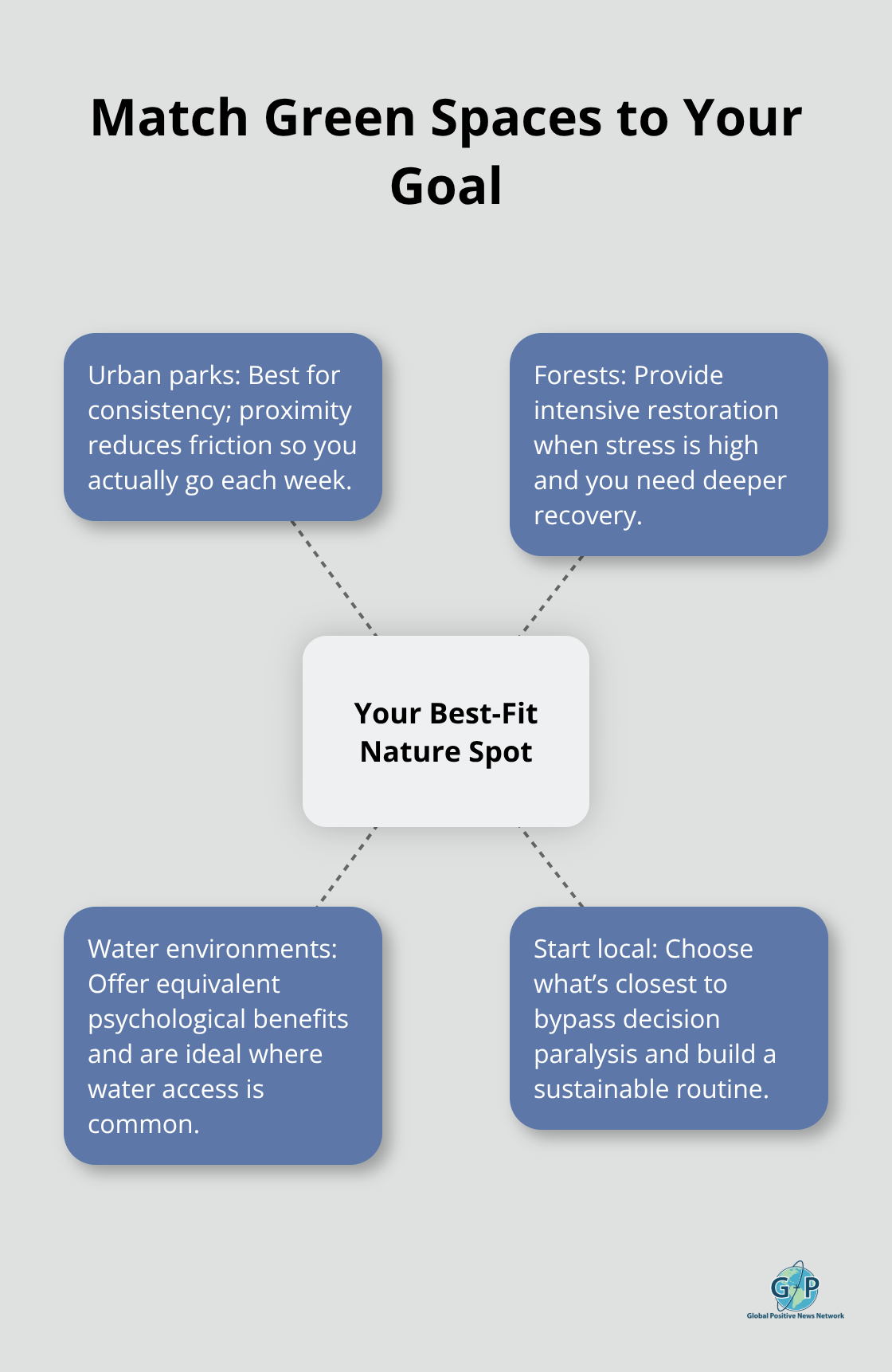
Urban parks demand less planning than wilderness trips, which makes them your most reliable mental health tool if you live in a city. Research by Maas and colleagues found that people in neighborhoods with abundant nearby greenspace show significantly lower disease prevalence than those in less green areas, even after accounting for income differences. The accessibility matters because you’ll actually visit consistently rather than waiting for weekend opportunities. Most cities have at least one park within a 15-minute walk, and visiting the same location weekly conditions your nervous system to expect and anticipate that calm state.
Forests Provide Intensive Restoration
Forests and woodlands offer something different: they provide deeper immersion that accelerates stress reduction when you can access them. A study tracking people who moved from low-green to high-green neighborhoods showed measurable mental health improvements within three years, suggesting that even occasional forest time compounds benefits over months. The key distinction is that urban parks work for weekly routine maintenance while forests work for intensive restoration when you need rapid mood recovery.
Water Features Deliver Equivalent Benefits
Water features-whether rivers, lakes, or coastal environments-deliver equivalent psychological benefits to forests because engagement with nature itself produces the effect, not the specific landscape type. This flexibility lets you choose based on what’s genuinely available rather than chasing an idealized natural setting.
Matching Green Spaces to Your Needs
The Mental Health Foundation research shows that people exercising outdoors in green spaces reduce their poor mental health risk compared to sedentary indoor time. Urban parks win for consistency because proximity removes friction from your routine. Forests win for intensity when you need acute psychological restoration during high-stress periods. Water environments win for accessibility in coastal regions or areas with significant water infrastructure.
Start With What Surrounds You
Identify which category exists closest to your home, then commit to weekly visits at the same time. This approach bypasses the paralysis of choosing the perfect location and instead leverages whatever green space actually surrounds you into a sustainable mental health practice.
Final Thoughts
Green spaces work as a measurable mental health intervention within minutes of stepping outside. People who visit natural environments weekly cut their poor mental health risk in half, and each additional outing reduces that risk further. Whether you walk through an urban park, tend houseplants indoors, or stand near water, you activate the same nervous system response that reduces anxiety, sharpens focus, and builds emotional resilience over time.
A 15-minute walk to a local park beats a monthly trip to a remote trail because consistency matters more than intensity. Start this week by identifying one accessible green space near your home, then visit it at the same time each week. Pair that time with gentle movement or mindful observation of specific details like birdsong, seasonal changes, or textures.
Hope in nature stems from how your body responds to sunlight, fresh air, and living things. You don’t need special equipment, hiking experience, or perfect weather-a potted plant on your windowsill, a community garden plot, or a neighborhood park delivers real psychological restoration. Explore uplifting news and resources that support your journey toward greater well-being.
Having a hard day?
The 2 Minute Hope Reset is a short free guide with three small practices for the days that feel heavy. Two minutes each, nothing to keep up with.
Get the free guideExplore more positive news:
Enjoying stories like this?
Global Positive News Network is reader-supported. If you’d like to support the mission, you can visit the Official GPNN store.