
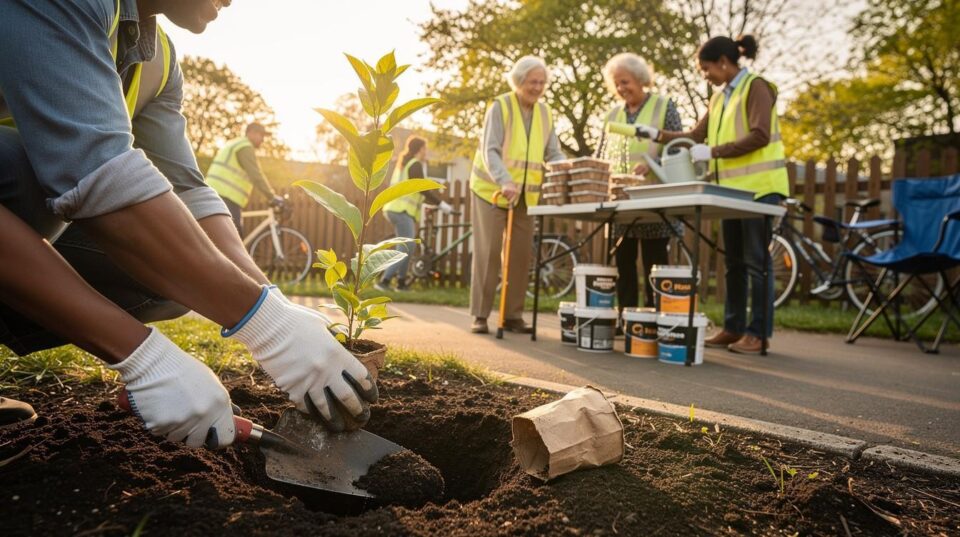
A single person volunteering at a local food bank, tutoring a struggling student, or cleaning up a neighborhood park might seem small. Yet these volunteer opportunities for hope create ripples that strengthen entire communities.
At Global Positive News Network, we’ve seen firsthand how consistent volunteer work transforms both the people serving and the places they serve. This blog post shares real stories and practical guidance for anyone ready to make a tangible difference.
Why Volunteering Transforms Communities
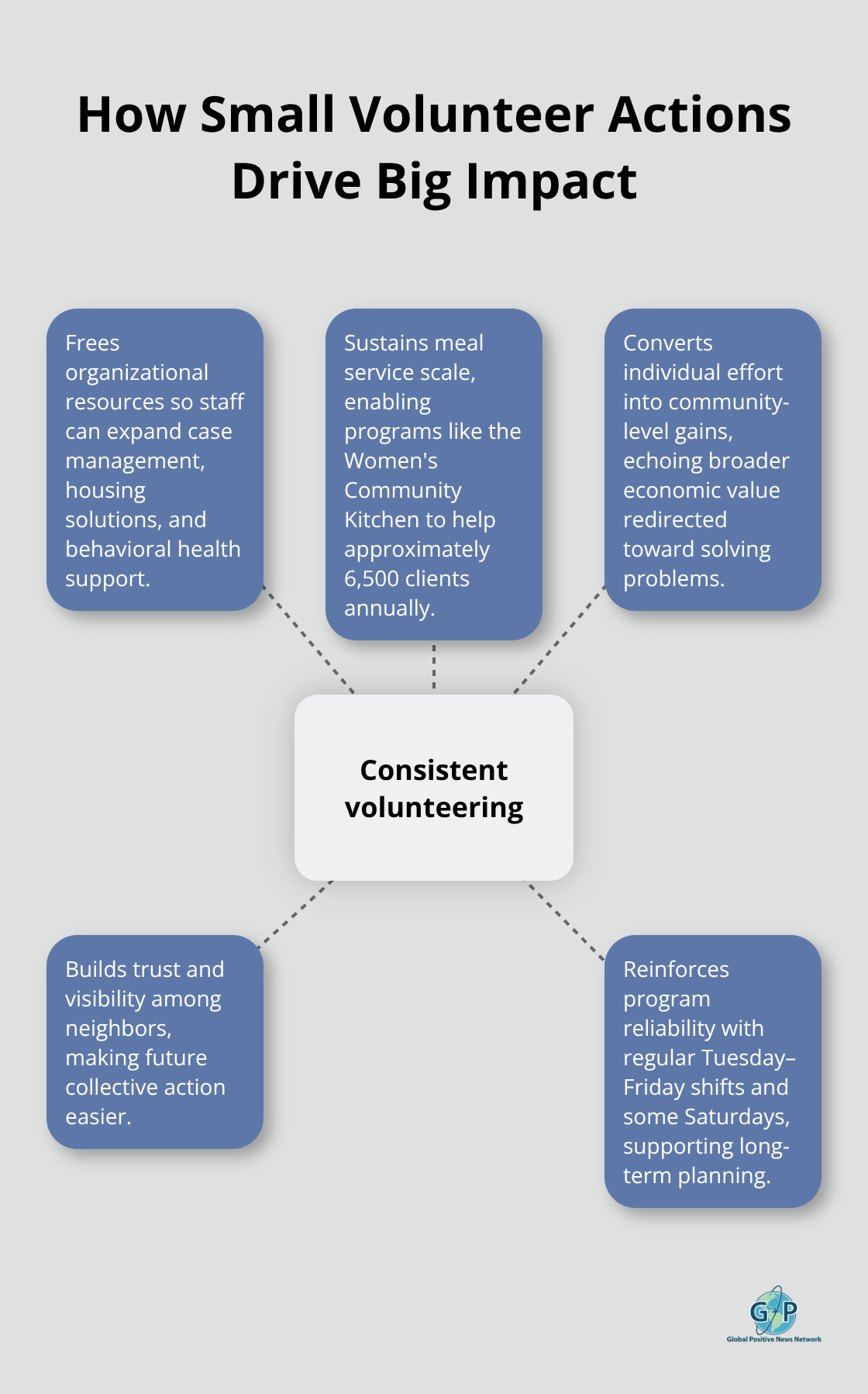
Individual volunteer work generates measurable economic and social returns that ripple far beyond the person holding the shovel or serving the meal. In 2021, more than 60.7 million Americans volunteered, creating an estimated $122.9 billion in economic value. That’s not symbolic impact-that’s real purchasing power redirected toward solving community problems. When one person volunteers at Hope Atlanta, they’re not just helping serve a meal to someone facing food insecurity. They free up organizational resources that can expand case management services, housing solutions, or behavioral health support. The Women’s Community Kitchen volunteer role at Hope Atlanta illustrates this perfectly. Each volunteer who helps prepare and serve meals enables the organization to maintain its annual service to approximately 6,500 clients without stretching staff budgets to the breaking point. Small actions compound into systemic change when enough people show up consistently.
Social Cohesion Strengthens When Neighbors Work Together
Volunteering breaks down the isolation that weakens neighborhoods. People who volunteer regularly report stronger social networks and deeper connections to their communities than those who don’t. This matters because social cohesion directly influences how neighborhoods respond to crises and support vulnerable members. When volunteers organize donation drives, stock community pantries, or help homebound neighbors with groceries, they establish trust and visibility that makes future collective action easier. Hope Atlanta’s community service projects and kit drives mobilize groups to assemble essential items with handwritten encouragement notes-a deliberate practice that transforms transactional aid into relational support. The organization verifies volunteer hours for school and college credit, making it accessible for young people aged 14 and up (with parental presence for those under 18) to build civic habits early. Neighborhoods with active volunteer cultures show measurably higher resident satisfaction and better outcomes for vulnerable populations.
Concrete Outcomes Come from Consistent Engagement
Organizations that depend on volunteers produce documented results. Hope Atlanta has maintained a 125-year history since 1900 through programs built around volunteer involvement-from Street Outreach to Housing Solutions to Case Management. The organization operates Tuesday through Friday during regular hours with some Saturday availability, allowing volunteers to build sustainable habits rather than one-off service days. Volunteers who commit to regular shifts-whether in Operations Support managing inventory or in Administrative roles organizing resources-see the direct outcomes of their work. This visibility matters. Volunteers report higher satisfaction and longer tenure when they witness tangible progress in the lives of people they serve. The organization’s mission to prevent and end homelessness through empowerment toward stability and self-sufficiency requires consistent volunteer presence because sustainable change takes time. Organizations across sectors report that volunteers who understand the specific metrics of their impact-how many people housed, how many meals served, how many skill-building sessions completed-become advocates who recruit additional volunteers and donors to the mission.
What separates one-time helpers from committed community builders is understanding where your skills fit within an organization’s actual needs. The next chapter explores how to match your abilities to the right opportunity and take your first meaningful steps.
Where Your Skills Meet Community Need
Volunteer work isn’t one-size-fits-all, and the organizations that thrive are those that match people to roles where their actual abilities create measurable impact. Hope Atlanta operates five distinct volunteer categories because they understand that someone skilled in data management shouldn’t be assigned to kitchen prep, and someone energized by face-to-face interaction shouldn’t spend hours filing paperwork.
Match Your Strengths to Real Organizational Needs
Operations Support volunteers manage inventory and food storage-work that requires precision and organizational thinking. Administrative volunteers handle resource research and data organization behind the scenes. Donations Volunteers sort and stock items in the donation area. Community Outreach volunteers help prepare and serve meals in the Women’s Community Kitchen.
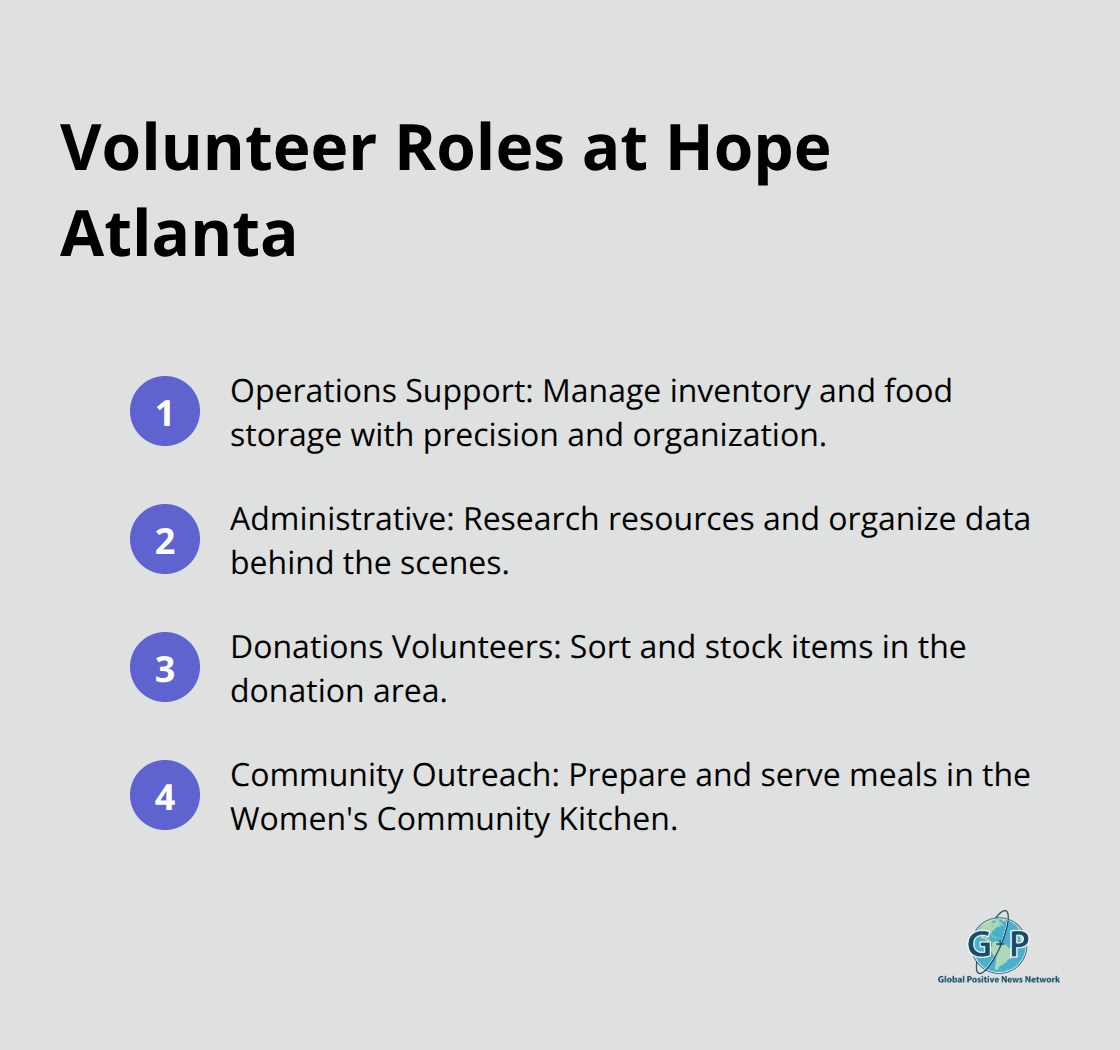
Each role solves a real operational constraint rather than creating busywork.
When you evaluate opportunities in your area, ask organizations directly: What specific problem does this volunteer role solve for your operations? If they can’t articulate a clear answer, the role probably won’t provide the satisfaction that keeps people engaged long-term. Organizations like Hope Atlanta make this straightforward by listing availability Tuesday through Friday during business hours plus some Saturday options, allowing you to build consistency into your schedule rather than treating volunteering as occasional charity. The minimum age is 14 with parental accompaniment for younger teens, and the organization verifies hours for school and college credit-practical details that remove friction from getting started.
Find Opportunities That Fit Your Schedule and Circumstances
Your first step is matching your actual circumstances to real opportunities. If you work a traditional job and have limited weekday availability, look for organizations offering weekend shifts or remote roles. Virtual volunteering supports nonprofits with digital skills and remote help through short, task-based projects. Points of Light Engage lists thousands of remote opportunities searchable by interest and skill level.
If you have technical skills, organizations like Crisis Commons and DemocracyLab specifically recruit tech professionals for problem-solving projects. If you’re retired or have flexible time, organizations like Hope Atlanta value consistent weekly presence because it allows them to build you into their operational planning.
Take Action: Register and Start Your Volunteer Journey
The practical next step: visit volunteer.hopeatlanta.org to register as an individual, or if you’re organizing a group, email volunteer@hopeatlanta.org with your preferred opportunity, timeframe, and group size. The Community Engagement Team coordinates availability and next steps within 48 hours typically. Dress code is comfortable, breathable clothing with closed-toe shoes; kitchen roles require hair tied back. Parking is free at their Midtown location. These operational details matter because they remove the guesswork that stops people from showing up.
Once you’ve matched your skills to an opportunity and completed registration, you’ll discover that the real transformation happens when you step into your first volunteer shift and witness the direct impact of your work on real people and real community problems.
What Happens When Volunteers Show Up Consistently
Hope Atlanta’s operational structure reveals something critical that theory misses: volunteers who commit to regular shifts become the organizational backbone that allows mission-driven work to scale. The organization serves approximately 6,500 clients annually across Street Outreach, Housing Solutions, Case Management, and Behavioral Health Wraparound Services. None of this happens without people showing up Tuesday through Friday, week after week, in specific roles that solve real constraints.
Consistency Transforms Organizational Capacity
An Administrative volunteer organizes data that transforms complex reports into structured information, enabling trend analysis and better resource allocation. When that same person returns the following week and the week after, case managers spend less time hunting for client information and more time addressing actual housing barriers or mental health needs. This consistency compounds. Hope Atlanta’s 125-year history since 1900 exists because volunteers understood that community transformation requires presence, not heroics.
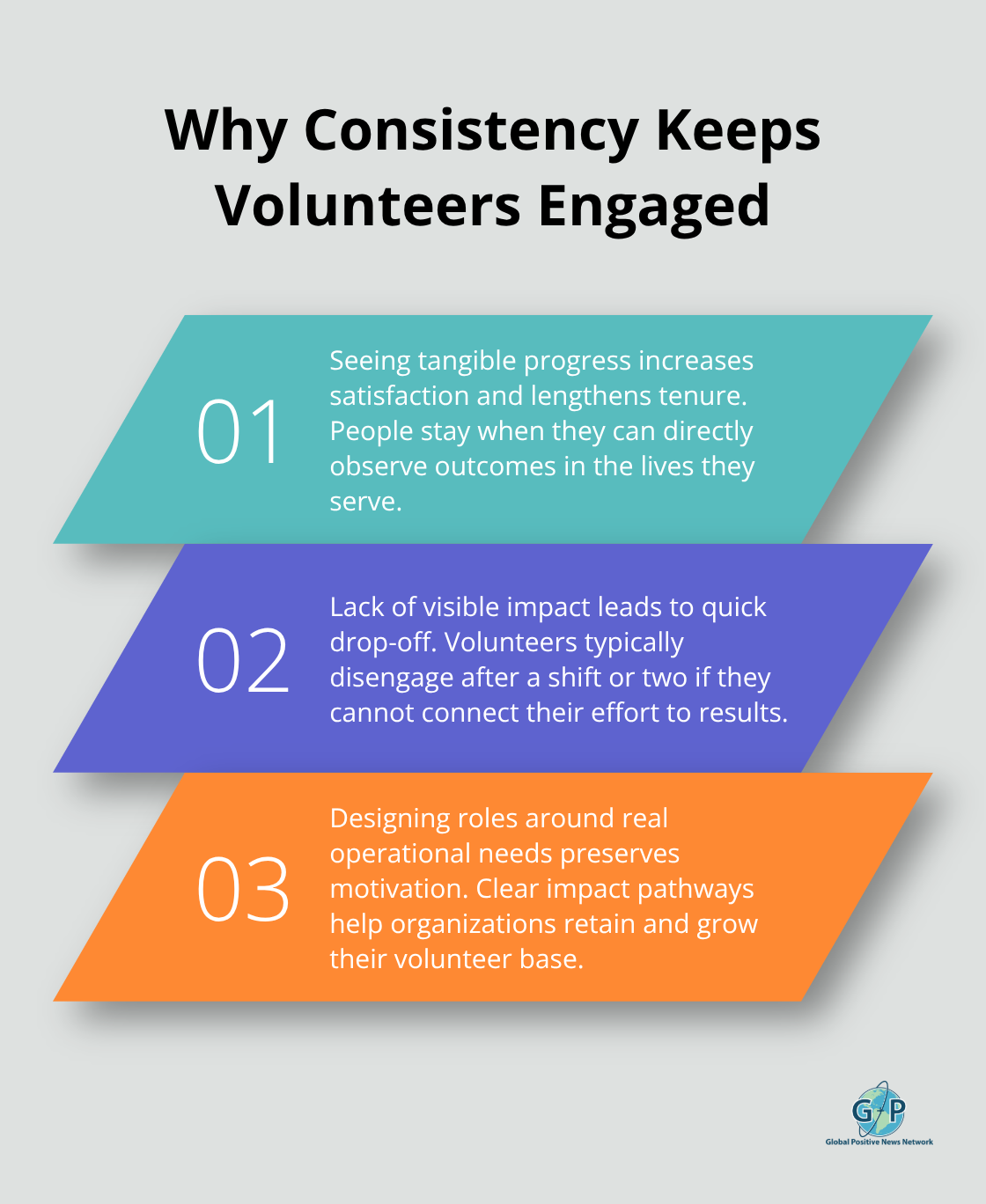
Organizations report that volunteers who witness tangible progress in the lives of people they serve develop deeper commitment and recruit additional volunteers to the mission. The inverse is also true: volunteers placed in roles where they cannot see direct impact typically disappear after one or two shifts. This is why Hope Atlanta structures opportunities around specific operational needs rather than generic service categories.
Direct Exposure Fuels Sustained Commitment
Personal transformation through volunteer work happens faster than most people expect, but only when the work connects to something larger than the volunteer’s own satisfaction. Someone volunteering in the Women’s Community Kitchen at Hope Atlanta isn’t just preparing meals; they’re witnessing human resilience as they interact with women and children rebuilding their lives. Volunteers report that this direct exposure to determination and growth becomes motivational fuel that sustains their commitment far longer than guilt or obligation ever could.
A volunteer aged 14 with a parent present gains verifiable hours for school or college credit while developing leadership and problem-solving skills in real-world settings. That teenager returns because they’ve seen the actual impact of their work on someone’s pathway toward independence.
Relational Support Replaces Transactional Aid
Hope Atlanta’s community service projects and kit drives-where volunteers assemble essential items with handwritten encouragement notes-deliberately transform transactional aid into relational support. This practice matters because it shifts the volunteer’s mindset from checking a box to recognizing their role in someone’s recovery. The organization coordinates group scheduling by working with community teams to match timeframe and group size to actual operational capacity, ensuring volunteers experience meaningful contribution rather than performative charity.
Organizations across sectors that measure and share specific outcomes-housing placements, meals served, skill-building sessions completed-see volunteers who become advocates recruiting their networks into service. The economic value generated by 60.7 million American volunteers in 2021 translates to $122.9 billion according to AmeriCorps and the US Census Bureau, but the more compelling metric is that volunteers who understand their specific impact report significantly higher life satisfaction and longer tenure.
Final Thoughts
Your volunteer efforts matter far more than you might realize. When you show up consistently at an organization like Hope Atlanta, you enable case managers to spend more time addressing housing barriers and allow meal programs to serve 6,500 clients annually. The 60.7 million Americans who volunteered in 2021 generated $122.9 billion in economic value, but the real measure of impact is personal-you witness determination and growth firsthand as your work translates into someone’s pathway out of homelessness or food insecurity.
Volunteer opportunities for hope exist in your community right now, and organizations like Hope Atlanta operate Tuesday through Friday with some Saturday availability, making it possible to build volunteering into your regular schedule. Start by identifying where your skills fit: do you think in systems and data, or does direct interaction energize you? Visit volunteer.hopeatlanta.org to register, or email volunteer@hopeatlanta.org if you organize a group, and the Community Engagement Team will respond quickly to remove the friction that stops people from starting.
Building a culture of community service requires people willing to show up consistently and witness the actual impact of their work. When you do, you become an advocate who recruits others into service and develop deeper connections to your neighborhood. Your next step is simple: find an organization, register, and show up.
Having a hard day?
The 2 Minute Hope Reset is a short free guide with three small practices for the days that feel heavy. Two minutes each, nothing to keep up with.
Get the free guideExplore more positive news:
Enjoying stories like this?
Global Positive News Network is reader-supported. If you’d like to support the mission, you can visit the Official GPNN store.