
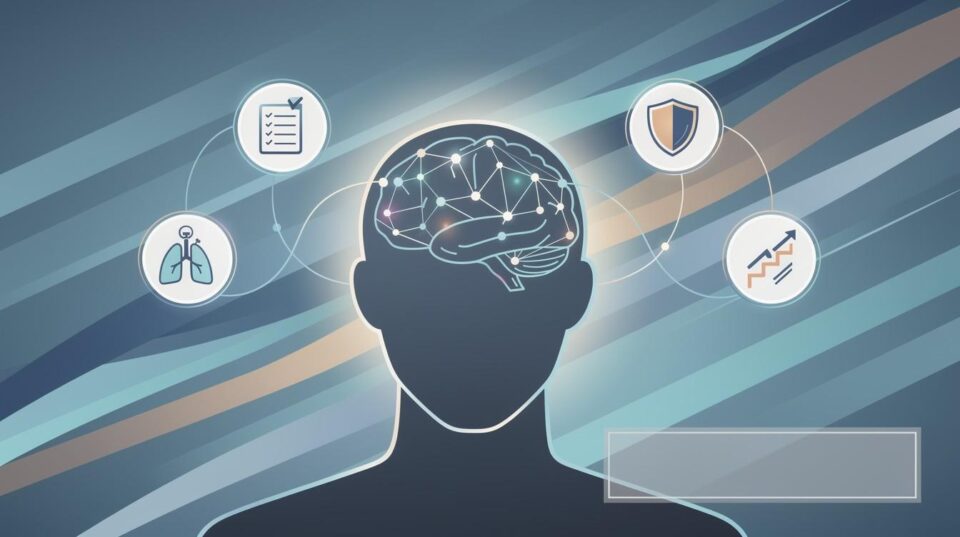
Pressure doesn’t have to break you. At Global Positive News Network, we believe mental resilience strategies are skills you can develop, not traits you’re born with.
This guide walks you through proven techniques that work in real life, from mindfulness to sleep optimization to building stronger relationships. You’ll find practical tools you can start using today to handle stress better and protect your long-term well-being.
What Happens to Your Mind and Body Under Pressure
The Physical and Mental Cascade of Stress
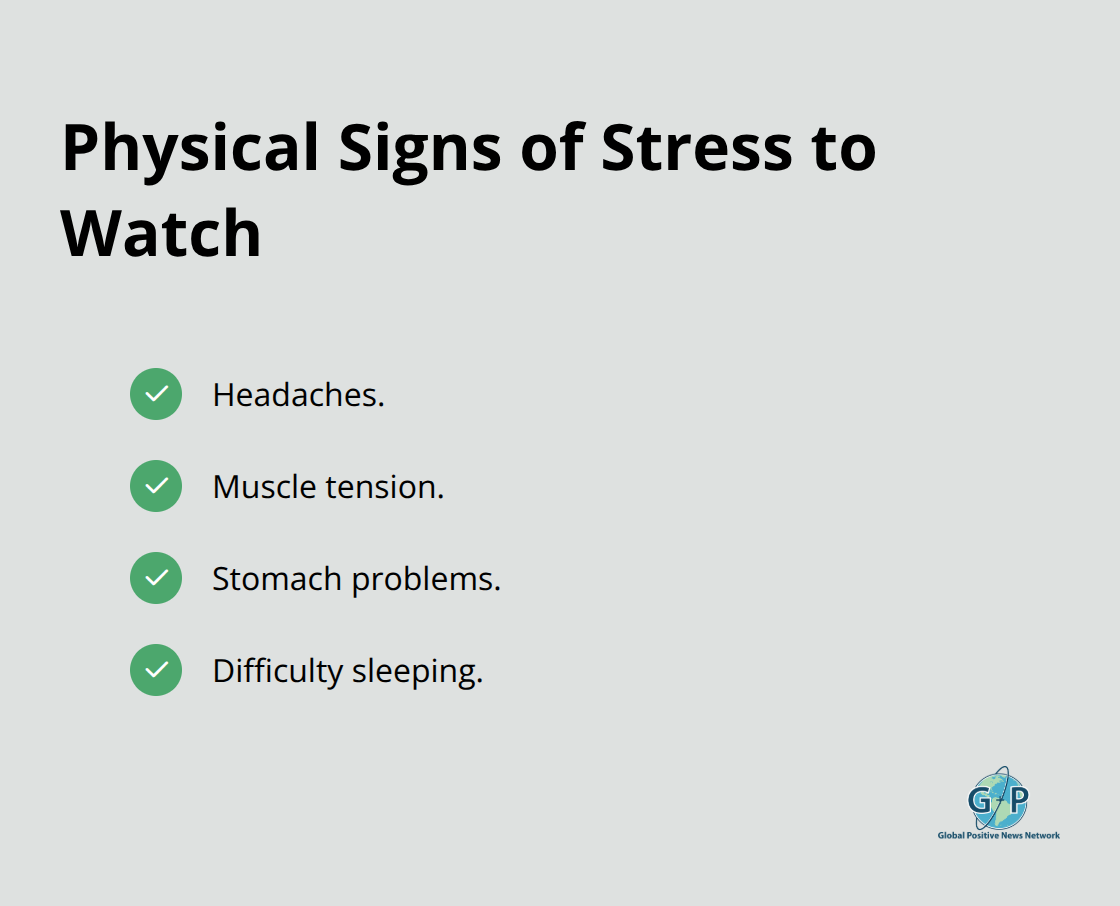
Pressure triggers a cascade of physical and mental changes that directly impact how you perform and feel. When stress hits, your body releases cortisol and adrenaline, which can sharpen focus in the short term but damage your health if sustained. Your brain chemistry shifts under pressure, affecting concentration, decision-making, and mood. Common physical signs include headaches, muscle tension, stomach problems, and difficulty sleeping.
The stakes are high because untreated chronic stress compounds over time, making recovery harder the longer you wait. The National Institutes of Health links prolonged stress to heart disease, high blood pressure, diabetes, depression, and anxiety. Your body stays on high alert, and this constant activation exhausts your physical and mental resources.
Understanding Resilience as a Learnable Skill
Mental resilience is a learnable skill that changes how you respond to pressure rather than eliminating stress itself. The World Health Organization defines mental resilience as your capacity to cope with life stresses while maintaining well-being and functioning effectively. This isn’t about feeling calm all the time-it’s about bouncing back faster and handling challenges without your performance or health falling apart.
Research from the National Center for Complementary and Integrative Health shows that people who actively practice resilience techniques report significantly lower perceived stress and better emotional control. The American Psychological Association recommends cognitive reappraisal, where you reinterpret stressful situations as controllable challenges rather than threats. Studies on stress inoculation show that gradually exposing yourself to manageable pressure builds your tolerance over time, much like physical training strengthens muscles.
Sleep and Internal Resources Shape Your Response
The National Sleep Foundation reports that people sleeping 7-9 hours nightly show significantly better cognitive function and emotional stability, directly supporting your ability to handle stress. The World Health Organization emphasizes that resilience depends on both your internal resources-like optimism and problem-solving ability-and external supports like relationships and community.
Building resilience now protects your long-term health because people with strong resilience experience fewer depressive episodes, better relationships, and stronger job performance. The National Institutes of Health funds research showing that small, consistent actions (deep breathing, journaling, exercise, social connection) compound into measurable improvements in stress management. Your mental resilience directly determines whether pressure strengthens you or depletes you.
These physical and mental realities set the stage for why the specific techniques in the next section work so effectively-they target both your body’s stress response and your mind’s interpretation of pressure.
What Actually Works to Build Resilience Fast
Mindfulness and Breathing Techniques Deliver Fast Results
Mindfulness and meditation practices produce measurable results when you practice them consistently. The National Center for Complementary and Integrative Health reports that regular mindfulness practice reduces perceived stress and improves emotional regulation in weeks, not months. Start with five minutes daily of focused breathing or body scanning rather than aiming for thirty-minute sessions that rarely stick. Research shows paced breathing at four to six breaths per minute activates your parasympathetic nervous system, the biological brake on stress.
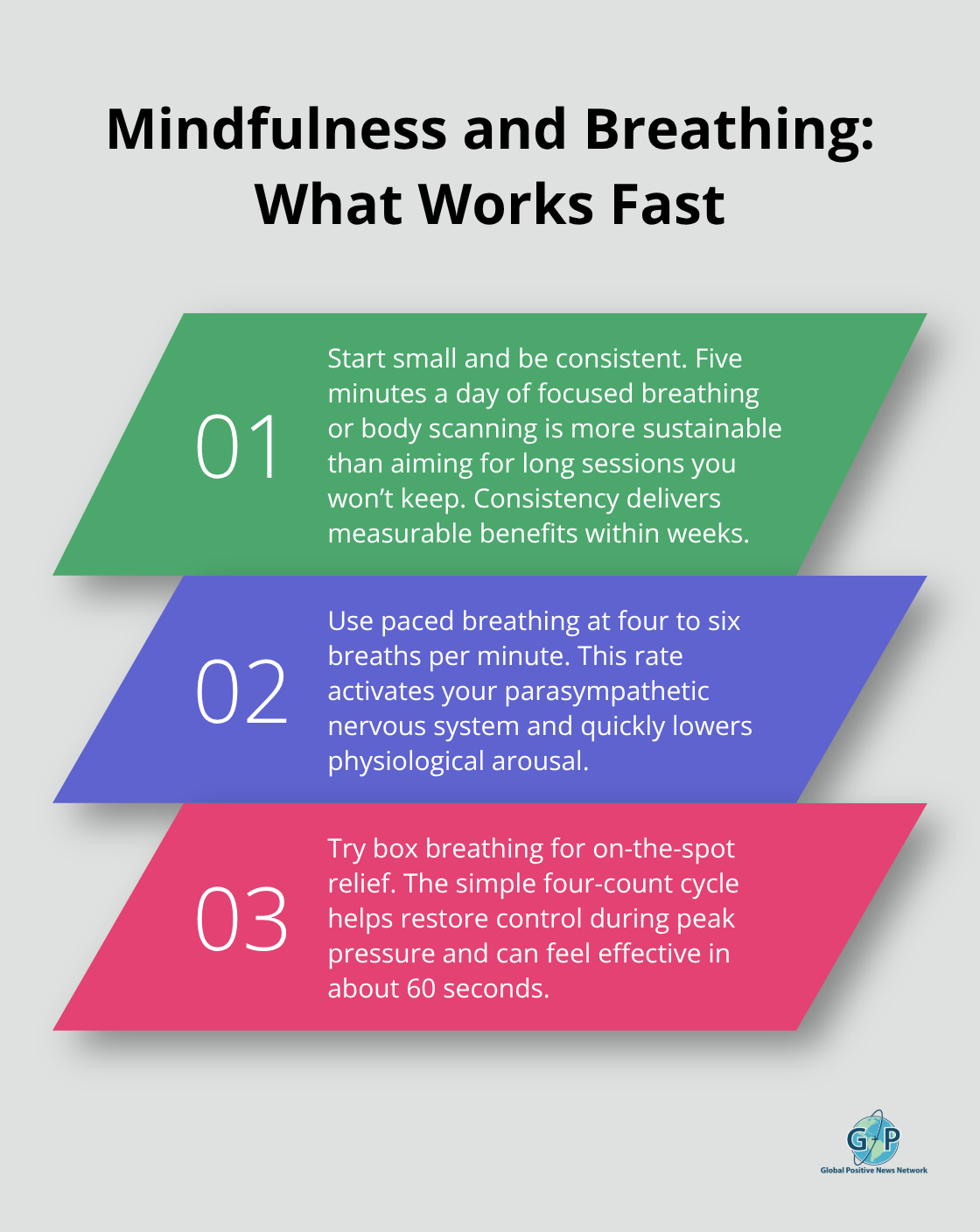
Box breathing-four counts in, hold for four, out for four, hold for four-works in sixty seconds during peak pressure and costs nothing.
The American Psychological Association supports cognitive reappraisal as a core technique. When pressure hits, consciously reframe the situation as a challenge you can manage rather than a threat that will overwhelm you. This mental shift directly lowers your emotional response and keeps your prefrontal cortex engaged instead of letting your amygdala hijack your thinking.
Physical Exercise and Sleep Form Your Resilience Foundation
Physical exercise and sleep optimization form the non-negotiable foundation of resilience. The World Health Organization recommends at least 150 minutes of moderate-intensity activity weekly, and research shows this directly strengthens your stress response system and lifts mood. Walking, cycling, or strength training before work primes your body to handle pressure more effectively than caffeine alone.
Sleep quality matters more than motivation or willpower. The National Sleep Foundation confirms that seven to nine hours nightly supports cognitive function and emotional stability, yet most people under pressure cut sleep first, which backfires spectacularly. Optimize sleep by maintaining a consistent bedtime, keeping your bedroom dark and cool, and stopping screens ninety minutes before sleep.
Social Support Acts as Resilience Infrastructure
Social support and strong relationships are not optional luxuries-they function as resilience infrastructure. The American Psychological Association documents that people with robust social networks recover faster from stress, experience fewer depressive symptoms, and perform better under pressure. Face-to-face interactions matter more than texts or calls; spending time with trusted people who listen without judgment buffers the damage of chronic stress.
Identify three people you can reach out to during difficult periods and contact them before crisis hits, not after. These relationships become your safety net when pressure intensifies, and they strengthen your ability to bounce back from setbacks.
Why These Three Elements Work Together
Building resilience requires action on all three fronts simultaneously because each one reinforces the others. Your sleep improves when you exercise and have social support. Your mindfulness practice deepens when you’re well-rested. Your relationships strengthen when you show up as your best self, which happens when stress management techniques keep you grounded. The next section shows you how to turn these broad strategies into daily habits that stick, transforming knowledge into the consistent action that actually changes how you handle pressure.
How to Turn Resilience Strategies Into Daily Habits
The Execution Problem: Why Knowledge Fails Under Pressure
The gap between knowing resilience techniques and actually using them under pressure is where most people fail. Knowing that mindfulness helps doesn’t matter if you never sit down to practice it. The same applies to every technique in this guide: execution determines results.
Building Concrete Habits That Stick
Start with one specific action tied to a concrete time and location. Instead of telling yourself you’ll meditate more, commit to five minutes of box breathing every morning at 6:15 AM before coffee. Instead of vague plans to manage stress, write down three specific situations that trigger your anxiety, then identify exactly what you’ll do differently the next time each one occurs. Implementation intentions and if-then planning improve goal attainment under pressure because your brain doesn’t have to decide what to do when stress arrives. Your nervous system is already wired to execute the predetermined response.
Track what actually works for you by writing down one thing each evening that helped you stay grounded that day. After two weeks, you’ll see patterns emerge. Maybe deep breathing works better than meditation for you. Maybe a thirty-minute walk before work matters more than the gym. Maybe texting a friend instantly calms you down in ways nothing else does. Build your resilience toolkit around what genuinely works for your brain and body, not what sounds impressive or what works for someone else.
Creating a Fifteen-Minute Daily Routine
Protecting your mental health long-term requires treating resilience like a non-negotiable appointment, not something you fit in when life feels manageable. Consistent daily practice compounds measurable improvements in mental health, which means a five-minute daily practice beats occasional heroic efforts. Create a simple routine that takes fifteen minutes total: three minutes of paced breathing when you wake up, ten minutes of writing about what you’re worried about and what you can control, and two minutes reviewing one past success to remind yourself of your capability.
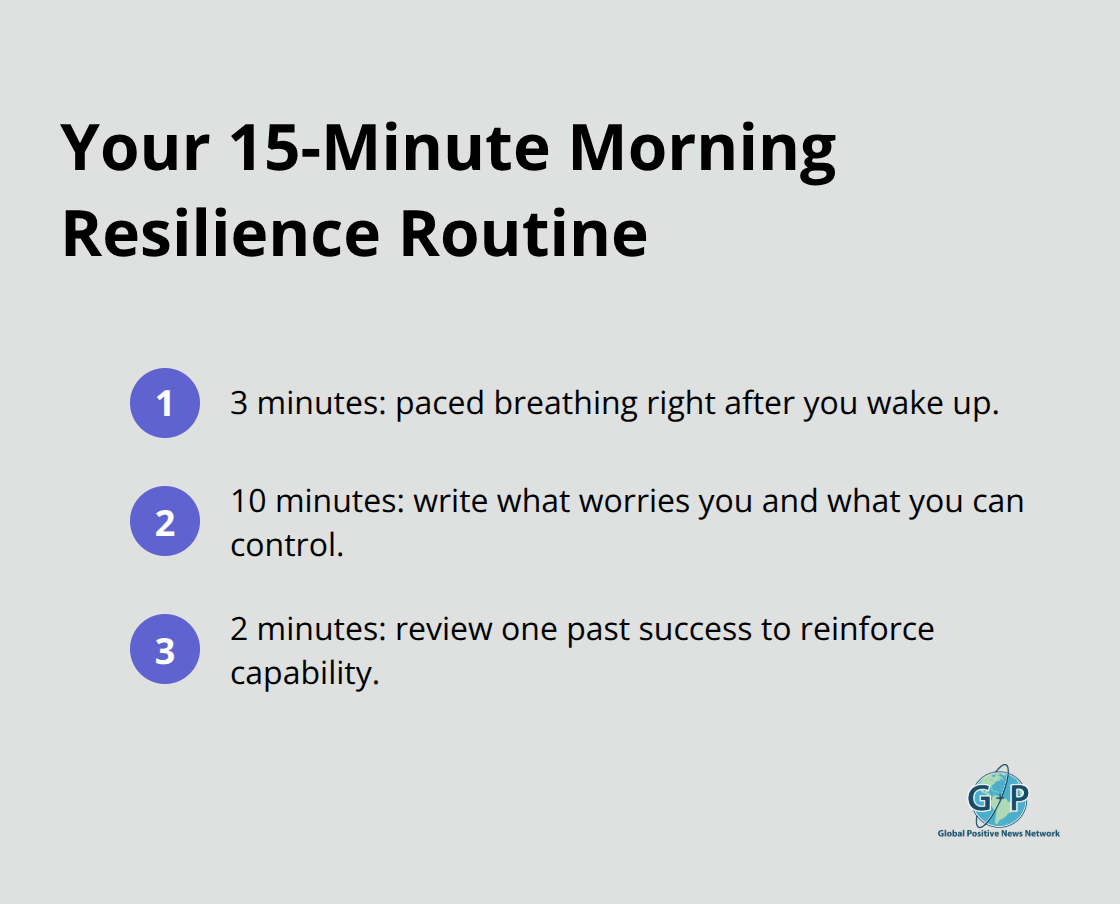
Do this at the same time every morning before anything else demands your attention. This routine costs nothing, requires no equipment, and directly addresses the physical stress response and the mental patterns that undermine resilience.
Consistency Over Intensity Builds Real Resilience
When pressure intensifies during your day, you’ve already primed your nervous system to recover faster because you’ve practiced the techniques when stakes were low. The real protection comes from consistency, not intensity. One week of daily practice beats one month of sporadic effort because your brain and body need repeated exposure to build new neural pathways and stress response patterns. Start this week with one specific technique at one specific time. Add a second technique only after the first becomes automatic, usually after two to three weeks. This gradual approach actually works because it doesn’t rely on motivation or willpower, which collapse under sustained pressure. Habits work because they operate on autopilot.
Final Thoughts
Mental resilience strategies work because they target both your nervous system and your thinking patterns simultaneously. The techniques in this guide aren’t theoretical-they’re grounded in research from the National Institutes of Health, the American Psychological Association, and the World Health Organization. Mindfulness reduces perceived stress in weeks, exercise strengthens your stress response, sleep stabilizes your mood, and social connection buffers adversity.
The real shift happens when you stop treating resilience as something you pursue during calm periods and start treating it as infrastructure you build daily. One person practices box breathing for five minutes every morning and handles pressure differently within two weeks. Another commits to a thirty-minute walk before work and notices their emotional control improves measurably. A third reaches out to a trusted friend weekly and finds that social connection becomes their fastest stress relief.
Start this week with one specific action at one specific time-not someday, not when life feels less chaotic. Pick one technique from this guide (box breathing, journaling, a morning walk, or reaching out to someone) and do it daily for two weeks. Track your progress with our mental resilience strategies guide to see what works for you, and that evidence becomes your motivation to keep going when pressure intensifies.
Explore more positive news:
Enjoying stories like this?
Global Positive News Network is reader-supported. If you’d like to support the mission, you can visit the Official GPNN store.