

Most people chase happiness through external achievements, yet the simplest path to joy sits right in front of us. At Global Positive News Network, we’ve seen how building a daily gratitude practice transforms lives by rewiring how people experience their days.
This isn’t about forcing positivity or ignoring real problems. It’s about training your mind to notice what’s already working, which research shows reduces stress and strengthens emotional resilience.
How Gratitude Rewires Your Brain for Better Mental Health
The Neuroscience Behind Gratitude
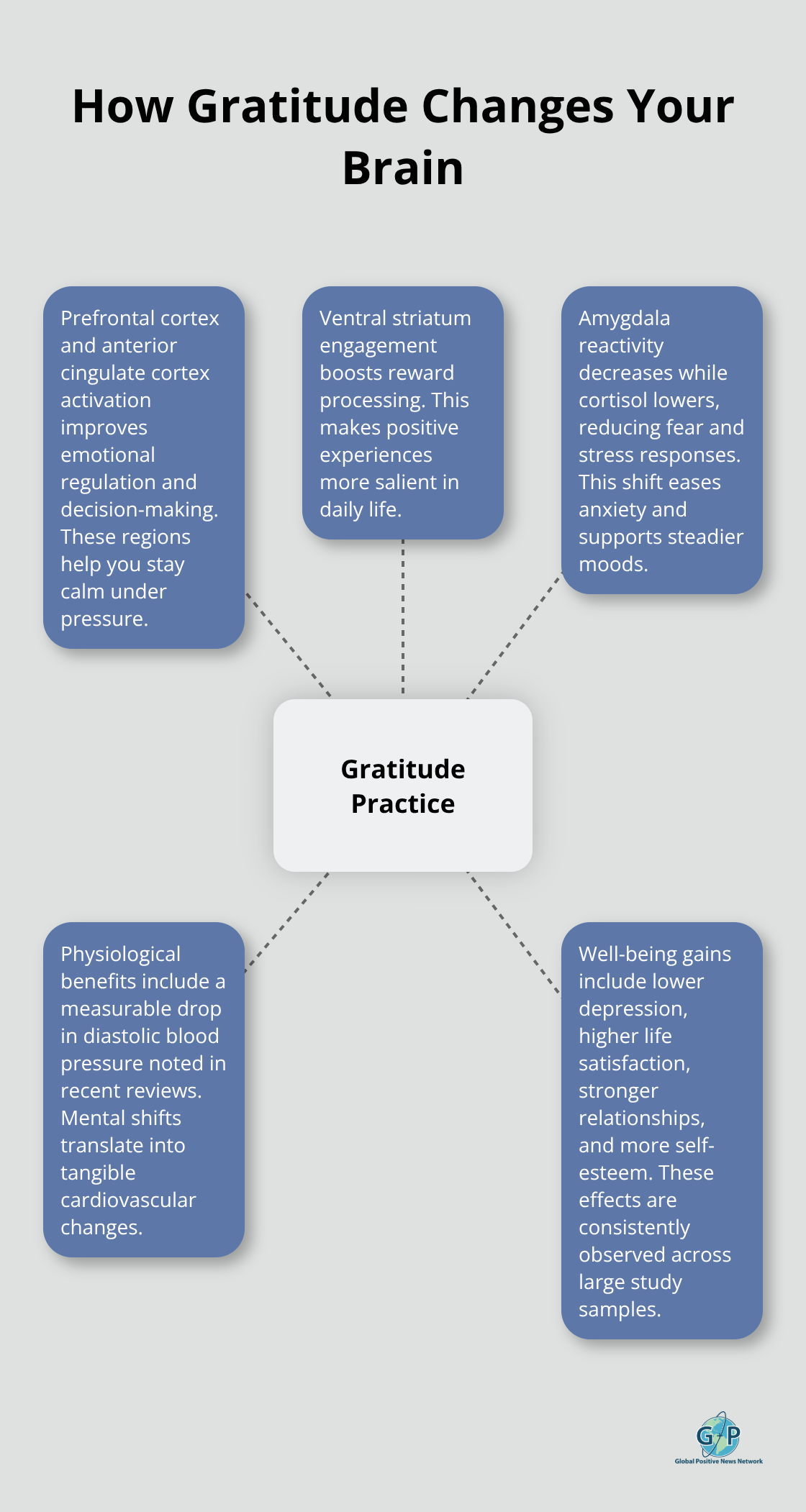
Gratitude doesn’t just feel good-it physically changes how your brain processes stress and emotion. Research from Fox and colleagues in 2015 showed that regular gratitude practice activates your prefrontal cortex, anterior cingulate cortex, and ventral striatum, the regions responsible for reward processing and emotional regulation. This means consistent practice strengthens the neural pathways that help you stay calm under pressure. A 2021 review found that keeping a gratitude journal caused a significant drop in diastolic blood pressure, proving that this mental shift has measurable physical effects.
Studies across 70 research projects involving more than 26,000 participants showed that higher levels of gratitude link to lower depression, higher life satisfaction, stronger social relationships, and more self-esteem. The mechanism works because gratitude dampens amygdala activity-the part of your brain that triggers fear and anxiety-while simultaneously reducing cortisol, your body’s primary stress hormone. When you write down three things that went well today (even mundane ones like a fixed dryer or a good coffee), you actively redirect your brain away from threat detection mode and toward opportunity recognition.
How Consistency Beats Intensity
Gratitude about 15 minutes a day, five days a week, for at least six weeks can enhance mental wellness and shift your perspective measurably. Consistency matters far more than depth. A simple three-item gratitude list done regularly yields noticeable benefits, while deep gratitude two to three times per week fosters faster personal growth than shallow daily entries. You don’t need to spend an hour journaling; you need to show up repeatedly with intention.
The anxiety reduction happens because gratitude limits negative thinking and keeps your focus on the present moment, breaking the rumination cycle that fuels worry. When negative thoughts rise, redirect your attention toward a positive aspect of the situation-this single habit rewires how you respond to difficulty. People with a gratitude mindset also sleep better because they’re less stressed and anxious, and they engage in healthier behaviors overall.
The Immediate and Long-Term Impact
The practical payoff shows up quickly. Research demonstrates that gratitude activates brain reward and emotion-regulation regions, creating immediate shifts in how you experience your day. The evidence is unambiguous: gratitude works through brain chemistry, not willpower, making it a low-cost, high-impact tool that anyone can access.
These neurological changes form the foundation for sustainable mental health improvements. Understanding how your brain responds to gratitude practice sets you up to choose methods that actually stick. The next chapter explores the specific practices you can start today to activate these brain changes and begin your transformation.
Three Practices That Actually Work
The gap between knowing gratitude helps and actually doing it daily is where most people fail. The solution isn’t finding the perfect method-it’s picking one that fits your life and committing to it for four weeks.
Start With the Three-Good-Things Method
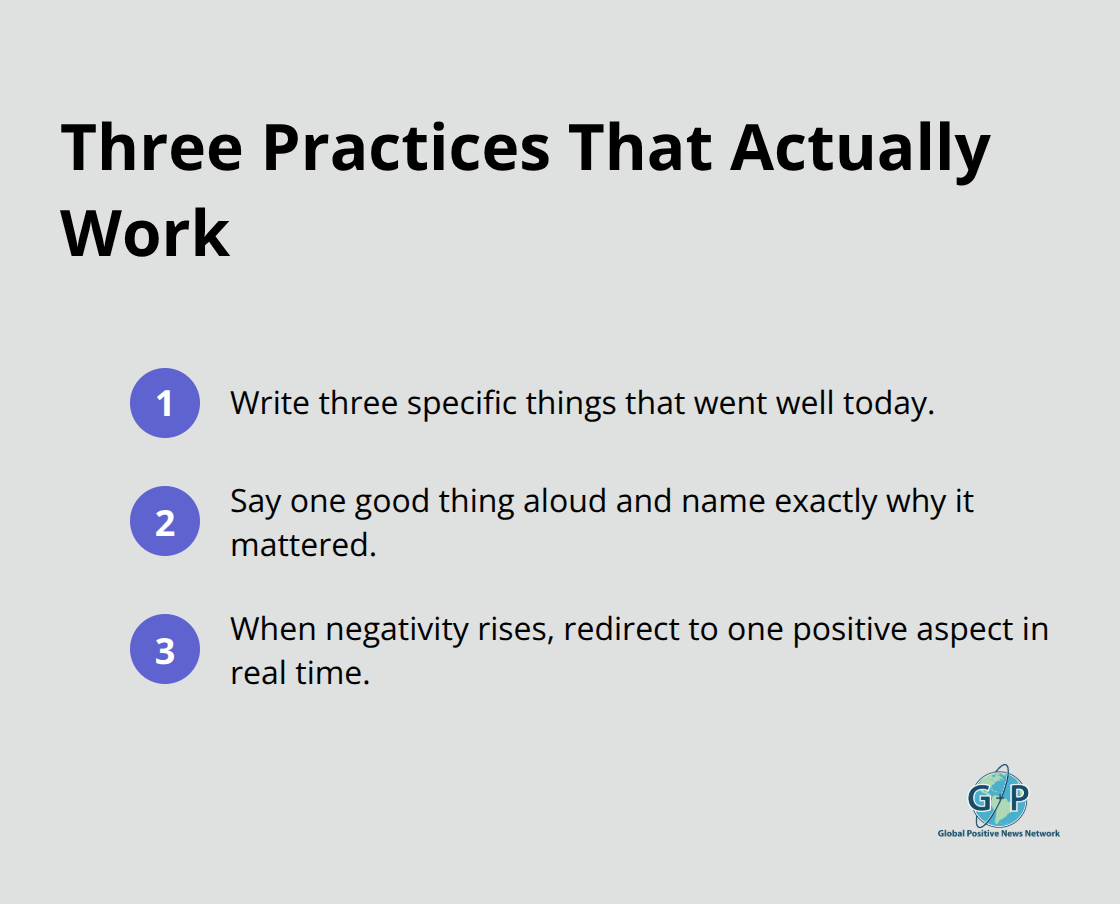
A simple three-item gratitude journal done regularly yields noticeable benefits, so start small and specific. Write down three things that went well today, ranging from mundane (your coffee stayed hot, the dryer finally got fixed) to meaningful (a conversation with someone you care about, progress on a goal). The specificity matters more than the magnitude. Don’t write vague statements like “I’m grateful for my family”; instead, write what your family member did that made you smile today. This precision activates the brain regions responsible for reward processing and emotional regulation far more effectively than generic entries.
Keeping a gratitude journal leads to better mental health and greater feelings of gratitude. Consistency beats intensity, so five minutes three times weekly outperforms sporadic hour-long sessions.
Choose Your Timing and Format
Timing varies by person-some people find morning entries set a positive tone for the day, while others prefer evening reflection to process what actually happened. Research supports weekly gratitude practice as most reliable for boosting happiness, though you should tailor the frequency to your schedule.
If writing feels like friction, try the spoken version instead. Identify one good thing that happened and say it aloud-to yourself, a partner, or a friend-then pause and pinpoint exactly what you’re grateful for in that moment. This verbal practice activates the same neural pathways as journaling without requiring pen and paper. The three-item approach works across contexts: at the dinner table with family, in a text to an accountability partner, or in a voice memo on your phone.
Redirect Negative Thoughts in Real Time
When negative thoughts rise (and they will), redirect your attention toward one positive aspect of the situation rather than fighting the negativity head-on. This single habit rewires how you respond to difficulty and breaks the rumination cycle that fuels anxiety. People with a gratitude mindset experience greater satisfaction with life, so evening practice often delivers dual benefits.
Set Up Your Practice for Success
Start with a dedicated journal or a simple notes app, place it somewhere visible as a visual trigger, and date each entry so you can track changes over time. The goal isn’t perfection-it’s showing up repeatedly with intention for the next four weeks and observing what shifts in your mood and stress levels. Once you establish this foundation, the real power emerges when you move beyond solo practice and share your gratitude with others.
Keep Your Gratitude Practice Alive When Motivation Fades
The hardest part of gratitude practice isn’t starting-it’s staying consistent when the initial excitement wears off. Most people abandon their practice within three weeks because they hit one of two walls: the practice feels boring, or life gets chaotic and they skip a few days, then convince themselves they’ve failed. Neither is true. Research shows that people who practice gratitude two to three times per week experience faster personal growth than those doing shallow daily entries, which means you don’t need perfection to see results.
Permission to Skip Days Without Guilt
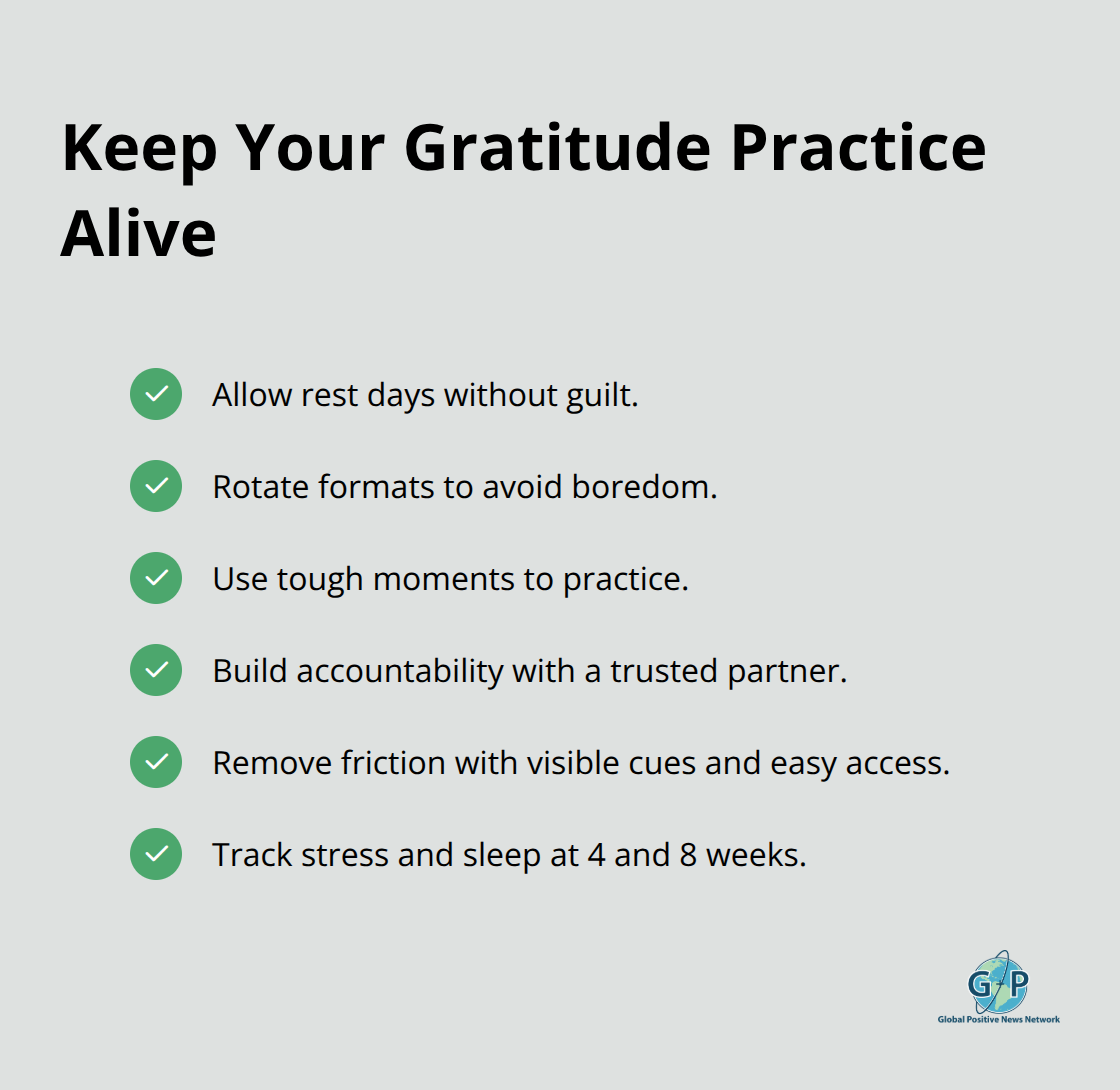
The first obstacle you face is the myth that consistency means doing it every single day. A gratitude practice measurably enhances mental wellness, according to research on gratitude interventions. This gives you permission to build rest days into your routine without guilt. When you miss a day, treat it like a missed workout-you don’t quit the gym, you simply show up the next scheduled time.
Rotate Formats to Beat Boredom
The second obstacle is boredom, which happens when you repeat the same format endlessly. If journaling stops feeling meaningful, switch to speaking your gratitudes aloud, create a visual gratitude jar where you collect notes to review weekly, or take a gratitude walk where you identify one good thing in each location you pass. Rotating between formats keeps the practice fresh without requiring more time.
Leverage Difficulty as Your Strongest Moment
When negative thoughts spike or stress increases, that’s actually the moment gratitude has the most power, not when everything feels easy. During difficult periods, redirect your attention toward one positive aspect of the situation rather than fighting the negativity head-on. This rewires how you respond to hardship and breaks the rumination cycle that fuels anxiety. Track this by noting your stress level and sleep quality before you start, then again after four weeks and eight weeks of practice. Gratitude journal practice improves cardiovascular outcomes, meaning physical changes show up on measurable markers, not just in how you feel.
Build Accountability Through Real Connections
The accountability piece matters far more than most people realize. Research supporting gratitude visits-where you write a letter of thanks and deliver it in person-shows lasting happiness improvements that extend well beyond the initial session. You don’t need a formal accountability group; sharing your gratitudes with one trusted person creates mutual motivation and strengthens your social connections simultaneously. Partner with a friend or family member and text each other three things you’re grateful for each week, or read your journal entries aloud to someone you trust. This transforms a solo habit into a shared experience and triggers the brain’s reward pathways even more powerfully.
When you identify a person who appears repeatedly in your gratitude entries, reach out and thank them directly. This closes the loop between noticing good things and acknowledging the people who create them, which deepens relationships and reinforces why gratitude matters. Set a specific day each week to review your past entries-weekly reviews reinforce the habit and let you see patterns in what brings you genuine satisfaction versus surface-level positivity. Dating each entry from the start makes this tracking effortless.
Remove Friction From Your Practice
The goal is sustainable practice, not perfection, which means removing friction wherever possible. Keep your journal on your nightstand or your phone’s home screen so visibility becomes your reminder rather than relying on willpower. After consistent practice, most people report noticeably better sleep, lower stress, and improved mood-these concrete shifts prove the practice works and fuel motivation for continued growth.
Final Thoughts
Consistency matters far more than intensity when you build daily gratitude practice, and even a few minutes of genuine reflection creates measurable shifts in your brain chemistry, stress levels, and sleep quality. Three good things written down or spoken aloud activate the neural pathways responsible for emotional regulation, while rotating your format prevents boredom and keeps the practice alive. The real transformation happens when you move beyond solo journaling and share your gratitude with someone you trust, turning a personal habit into a shared experience that strengthens relationships and deepens your sense of connection.
Pick one method and commit to it for four weeks, then track your stress level and sleep quality before you start and again after a month. When you notice a person appearing repeatedly in your gratitude entries, reach out and thank them directly-this closes the loop between noticing good things and acknowledging the people who create them. The physical changes will show up first, often in how rested you feel and how quickly you recover from difficulty.
Your gratitude practice extends far beyond your own mental health and models resilience and optimism for the people around you. Visit Global Positive News Network to explore uplifting content that reinforces your practice and discover stories of personal triumphs that inspire gratitude. Your four-week commitment transforms not just how you feel, but who you become-someone who sees possibility and strengthens the people around you.
Having a hard day?
The 2 Minute Hope Reset is a short free guide with three small practices for the days that feel heavy. Two minutes each, nothing to keep up with.
Get the free guideExplore more positive news:
Enjoying stories like this?
Global Positive News Network is reader-supported. If you’d like to support the mission, you can visit the Official GPNN store.