
Gratitude isn’t a luxury reserved for people with perfect lives. It’s a practical tool that works, and we at Global Positive News Network have seen how everyday gratitude practices transform the way people experience their days.
The science backs this up. Research shows that gratitude reduces stress, improves sleep, and genuinely increases happiness. The best part? You don’t need hours of meditation or complicated rituals to benefit.
Three Practices That Actually Stick
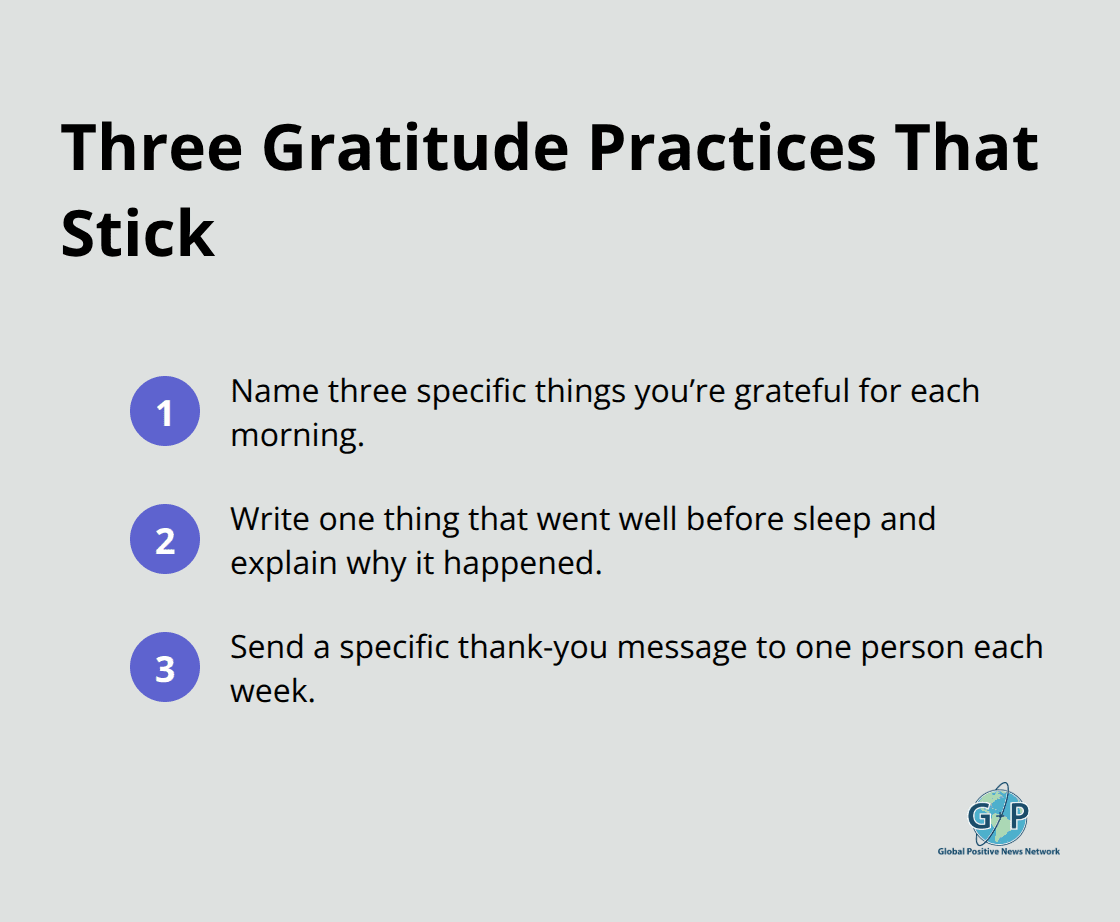
Start Your Morning with Specific Gratitude
Name three specific things you’re grateful for before checking your phone each morning. Not vague gratitude-concrete details matter. Instead of saying you’re grateful for your family, identify that you’re grateful your partner made coffee this morning, or your kid laughed at breakfast. Research from UCLA Health shows that this specificity deepens the effect.
Spend two to three minutes on this practice. A 2024 study found that listing as few as three items yields measurable benefits. The timing matters too-morning gratitude sets your mental baseline for the entire day, making you more likely to notice positive moments as they unfold. You don’t need a journal for this step; most people do it mentally while showering or during their commute.
Write Down What Went Well Before Sleep
At night, write down one thing that went well that day and why it happened. This isn’t about ignoring difficulties-it’s about training your brain to notice what actually worked. The Gratitude Questionnaire research shows that written gratitude produces stronger effects than mental reflection alone.
Keep it brief: two to three sentences maximum. A meta-analysis across 64 randomized trials found that gratitude interventions increased life satisfaction and reduced depression symptoms. Writing before bed is particularly effective because it shifts your final thoughts toward the positive, which improves sleep quality. Gratitude reduces anxiety by interrupting the worry cycle that often intensifies at night.
If journaling feels like another chore, use a gratitude jar instead. Write slips daily and read them weekly to reinforce positivity without the daily writing burden.
Express Appreciation Directly to Others
The most underrated practice is expressing appreciation directly to someone. Send a specific thank-you message to one person weekly. Not a generic thanks, but something like: “I appreciated how you listened without interrupting when I was stressed yesterday. This took five minutes and genuinely helped me feel heard.”
Research shows that expressing gratitude to others produces stronger mood improvements than any solo practice. Gratitude visits produced the largest immediate happiness boost in studies, with effects lasting at least a month. You don’t need to deliver the letter for benefits to occur; writing it alone yields meaningful improvements.
This practice strengthens your relationships while elevating your own well-being simultaneously. It becomes the highest-return gratitude habit you can adopt. Once you establish these three core practices, the real challenge emerges: maintaining them when life pulls you in different directions.
Why Gratitude Works on Your Brain and Body
Gratitude doesn’t just feel good-it physically changes how your nervous system operates. When you practice gratitude, your brain shifts from threat detection mode into a state of safety and calm.
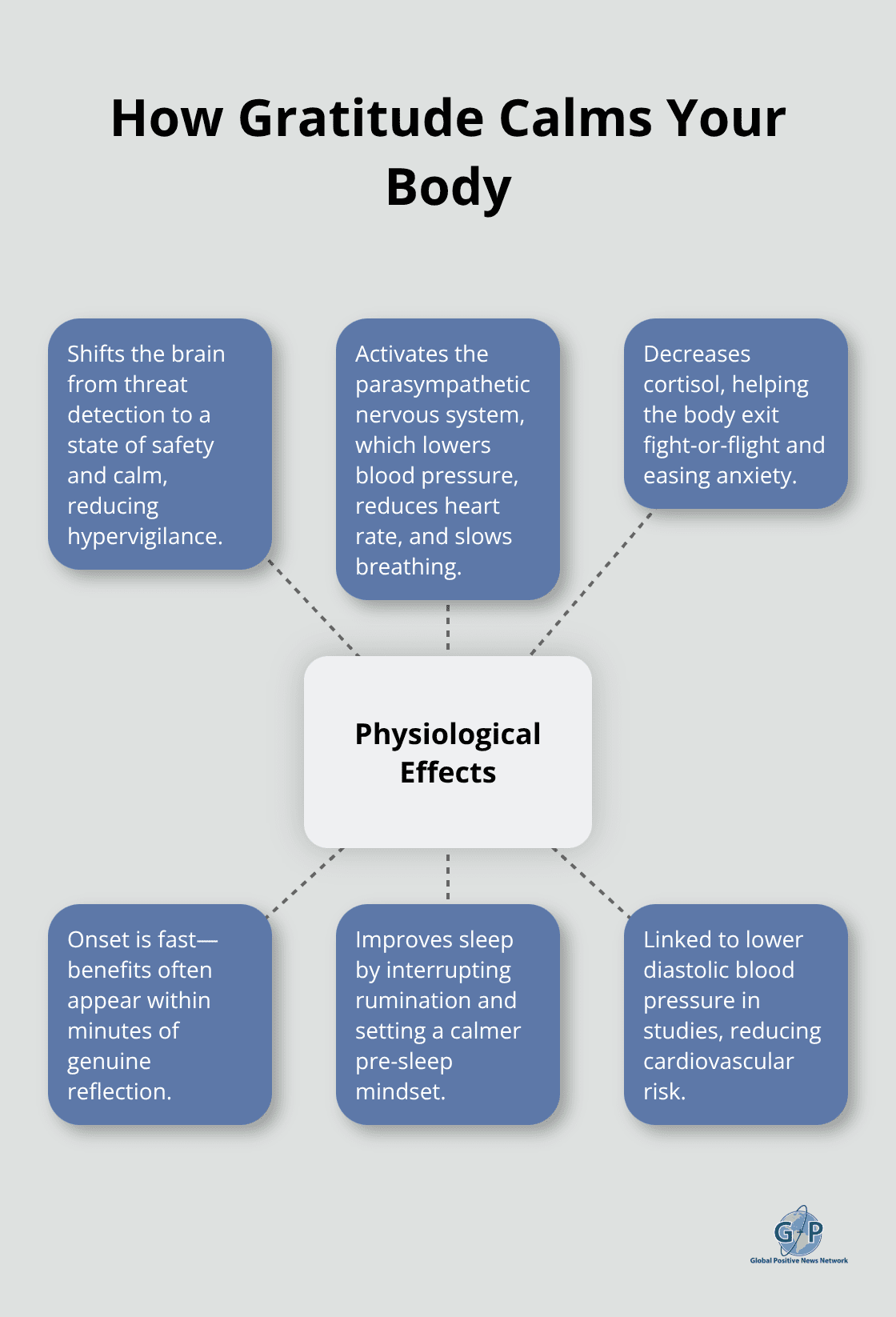
This activation of the parasympathetic nervous system lowers blood pressure, reduces heart rate, and slows breathing. Research demonstrates that this physiological shift happens quickly, often within minutes of genuine gratitude reflection. The stress hormone cortisol decreases measurably, which means your body literally exits the fight-or-flight state that chronic anxiety maintains. This explains why people report feeling calmer after morning gratitude or evening journaling-it’s not placebo. A 2021 review found that keeping a gratitude journal significantly lowers diastolic blood pressure, which directly reduces cardiovascular disease risk. Anxiety specifically responds to gratitude because the practice interrupts the worry cycle and anchors your attention to the present moment. When your mind fixates on past regrets or future threats, gratitude acts as a circuit breaker, forcing your brain to acknowledge what’s actually working right now.
How Gratitude Rewires Your Brain for Better Sleep
Sleep quality improves because gratitude reduces the anxious and depressive thoughts that typically intensify at night. A meta-analysis of 64 randomized trials across more than 26,000 participants found that gratitude interventions reduced depression symptoms by approximately 12 points and anxiety symptoms by approximately 9 points after 6 months of enrollment. These represent clinically meaningful reductions. Grateful reflection before sleep replaces rumination with positive thoughts about relationships, support systems, and meaningful moments. Mental health scores on the MHC-SF improved by 0.29 points across studies, indicating broader emotional well-being gains.
Consistency Matters More Than Perfection
Even modest consistency produces tremendous results. Practicing gratitude for just 15 minutes daily, five days weekly, for six weeks produces measurable mental wellness improvements and lasting perspective shifts. Research across 70 studies shows that higher dispositional gratitude correlates with lower depression rates, stronger social relationships, greater self-esteem, and higher life satisfaction. What makes this actionable is that you don’t need daily practice to see results-a meta-analysis found that listing as few as three specific gratitude items yields benefits. Some people benefit from daily practice while others see equal gains from three times weekly or twice monthly. The key is matching frequency to your actual lifestyle rather than forcing yourself into a rigid routine that becomes another source of stress.
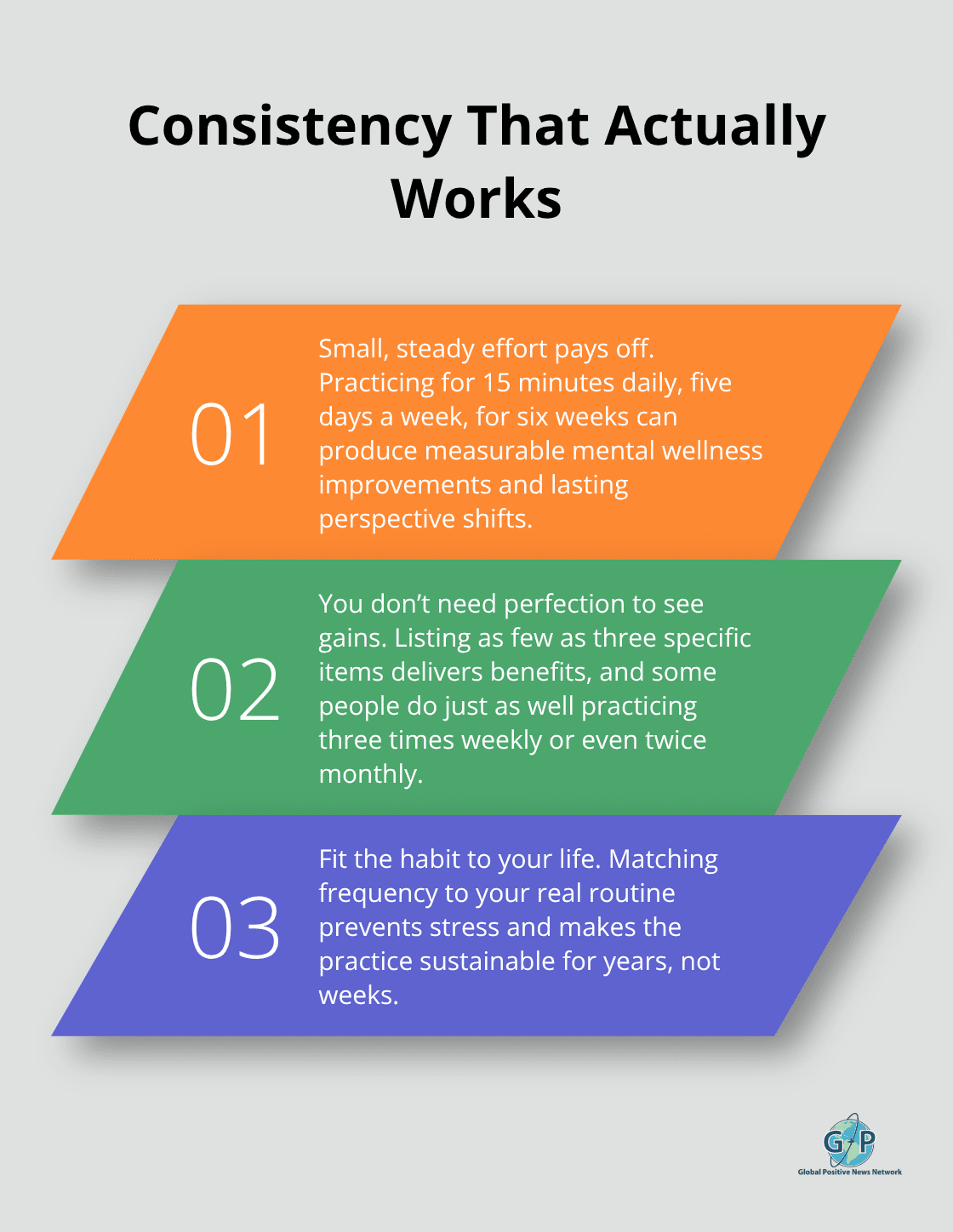
This flexibility means your gratitude habit can adapt as your circumstances change, making it sustainable for years rather than weeks.
What Actually Stops People From Practicing Gratitude
Cynicism masquerades as realism, but it’s actually a barrier disguised as wisdom. When someone claims gratitude won’t work because their life is genuinely difficult, they conflate the severity of their circumstances with the effectiveness of the practice. The research contradicts this objection. A meta-analysis across 64 randomized trials found that gratitude interventions reduced depression symptoms by approximately 12 points and anxiety symptoms by approximately 9 points. These reductions occurred across diverse populations, including people managing serious illness and genuine hardship. The mechanism works precisely because gratitude doesn’t deny problems-it trains your attention toward what functions alongside the dysfunction. Someone dealing with chronic pain can feel grateful their medication reduces symptoms from unbearable to manageable. Someone experiencing job loss can acknowledge the specific people providing support. Skeptics often expect gratitude to feel fake or forced initially, and it does. That sensation isn’t a sign the practice won’t work-it’s the normal resistance that accompanies any new mental habit. Research on habit formation shows that consistency matters more than initial enthusiasm. Practicing gratitude for just 15 minutes daily, five days weekly, for six weeks produces measurable mental wellness improvements. The initial awkwardness dissolves within two to three weeks for most people.
When Life Disrupts Your Routine
Consistency fractures when external chaos erupts, and most people abandon practices during exactly the moments when these practices would help most. The solution isn’t willpower-it’s adaptation. Rather than maintaining rigid daily journaling during a crisis period, shift to a gratitude jar where you write one slip weekly. Rather than morning reflections when you’re managing a sick family member, practice gratitude during your drive or shower, which requires no additional time. Research shows that some people benefit from daily practice while others achieve identical results from three times weekly or twice monthly. Matching frequency to your actual capacity prevents the guilt spiral that kills habits. One practical approach involves implementation intentions, which means you link your gratitude practice to an existing daily behavior. If you shower every morning, practice gratitude during that shower. If you drink coffee at 9 AM, reflect on three specific things during those minutes. This removes the need to create new time blocks and anchors the practice to something you already do automatically. When life gets difficult, your brain defaults to threat-detection mode, which makes noticing problems automatic. Gratitude requires deliberate attention precisely when your mind resists it most. The solution is acknowledging this resistance rather than fighting it. A difficult week doesn’t mean you’ve failed gratitude practice-it means your practice needs to be smaller, not abandoned.
Customizing Practice to Match Your Reality
The research on gratitude interventions reveals something critical: the specific method matters far less than consistency and personal fit. Some people thrive with written journals while others find writing tedious and benefit equally from mental reflection or voice recordings of gratitude lists. Some people practice best in the morning while others find evening practice more sustainable. Starting too ambitious is the biggest mistake people make with gratitude-you don’t need elaborate systems to see results. If traditional gratitude journaling feels like another obligation, try the gratitude rock method-carry a small stone and pause to reflect whenever you touch it. If group accountability helps you stay consistent, find an accountability partner who shares a gratitude list weekly and responds with encouragement. If you’re naturally skeptical of solo reflection, express appreciation to others instead, which produces stronger mood improvements than any solo practice. Your personality type determines which approach will stick. Highly social people often abandon solitary journaling but maintain weekly thank-you messages to friends. Detail-oriented people thrive with specific written journals while others need minimal structure. The key is running small experiments to identify which method you’ll actually maintain rather than assuming everyone benefits from identical practices. One person’s sustainable habit becomes another person’s abandoned resolution. Gratitude works because it’s flexible enough to fit any lifestyle-the challenge is treating it as a customizable practice rather than a rigid system.
Final Thoughts
Gratitude transforms how you experience your life, not by denying difficulties but by training your attention toward what actually works. The research is clear: people who practice gratitude consistently report lower depression and anxiety, better sleep, stronger relationships, and genuine increases in life satisfaction. A meta-analysis across 64 randomized trials found that gratitude interventions reduced depression symptoms by approximately 12 points and anxiety symptoms by approximately 9 points-clinically meaningful changes that ripple through every aspect of daily living.
Everyday gratitude practices work best when they fit your actual lifestyle, not your ideal one. If journaling feels like a chore, try a gratitude jar or voice recordings instead; if morning reflection works better than evening practice, commit to mornings; if expressing appreciation to others energizes you more than solo reflection, make that your primary practice. Research shows that some people benefit from daily practice while others achieve identical results from three times weekly or twice monthly, so you need to identify which approach you’ll actually maintain rather than force yourself into a system designed for someone else.
Start small and specific with one everyday gratitude practice that fits your life right now. Link it to something you already do automatically, whether that’s showering, drinking morning coffee, or your evening wind-down routine, and this removes the friction that kills most habits before they take root. We at Global Positive News Network believe that gratitude is one of the most accessible tools for building a more meaningful life, and your gratitude journey begins with a single practice chosen today.
Having a hard day?
The 2 Minute Hope Reset is a short free guide with three small practices for the days that feel heavy. Two minutes each, nothing to keep up with.
Get the free guideExplore more positive news:
Enjoying stories like this?
Global Positive News Network is reader-supported. If you’d like to support the mission, you can visit the Official GPNN store.