

Government services are stuck in the past. Outdated systems, endless paperwork, and frustrating delays plague citizens trying to access basic services.
At Global Positive News Network, we’ve seen public sector hopeful innovations changing this reality. Cloud platforms, automation, and smart city projects are proving that government can work faster and smarter for the people it serves.
How Government Services Are Shifting Faster Than Ever
Cloud Computing Replaces Outdated Infrastructure
Cloud computing has moved from a nice-to-have to a necessity in government. The U.S. General Services Administration reported that federal agencies spent over 10 billion dollars on cloud services in 2024, a significant jump from 6.5 billion in 2020. This shift matters because cloud platforms eliminate the need for expensive on-site servers and reduce the time agencies spend managing infrastructure instead of serving citizens.
Estonia’s government digitized 99 percent of public services and now processes most transactions online, cutting administrative costs by roughly 20 percent annually. Cities like Singapore moved their entire business registration system to the cloud, reducing approval times from weeks to hours. Cloud computing in federal government budgets has accelerated through initiatives like the GSA-AWS OneGov agreement, which offers up to $1 billion in incentive credits for federal civilian agencies. Cloud solutions scale instantly during high-demand periods without requiring new hardware purchases-a practical advantage that traditional systems simply cannot match.
Automation Eliminates Repetitive Administrative Tasks
Automation software has become the fastest way to reduce administrative burden in government offices. The UK’s Her Majesty’s Revenue and Customs automated routine tax processing tasks and cut processing time by 40 percent while reducing errors. Document verification, license renewals, and permit approvals follow predictable rules that automation handles efficiently.
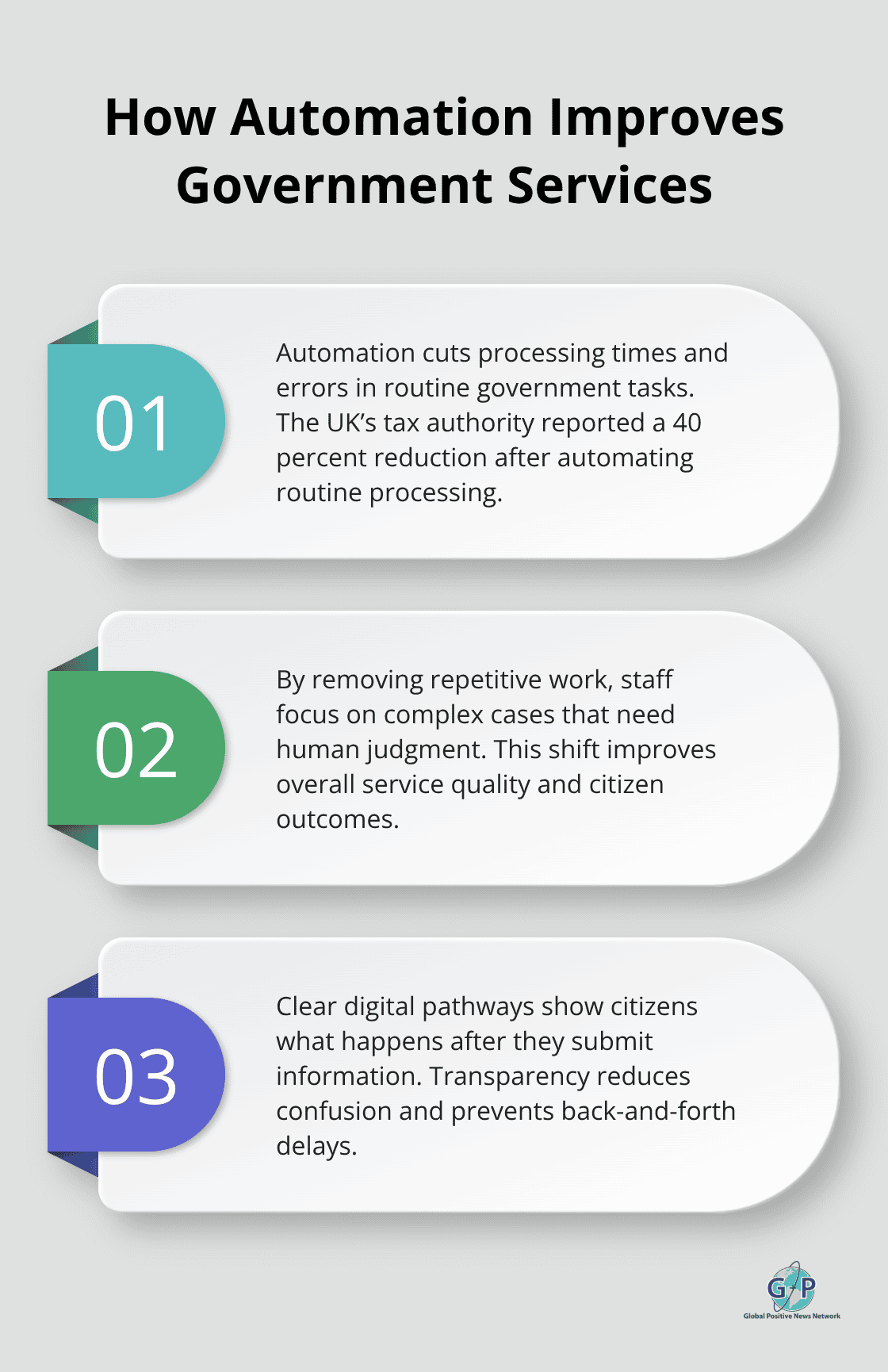
Automation in government permit processing has emerged as a key area of digital transformation. When governments automate repetitive workflows, staff members shift to handling complex cases that actually require human judgment, which improves service quality across the board. The most effective implementations combine automation with clear digital pathways, so citizens understand exactly what happens after they submit information.
Data Analytics Guides Resource Allocation Decisions
Data analytics transforms how governments make decisions about resource allocation. The Australian government uses data systems to predict demand for social services, allowing administrators to position staff and resources where they’re needed most. This prevents the common problem where some offices become overwhelmed while others sit empty.
Cities analyzing traffic patterns with real-time sensors have reduced congestion by 15 to 25 percent by adjusting signal timing and rerouting vehicles before bottlenecks form. Analytics also reveals which services have the longest wait times, giving administrators concrete targets for improvement rather than guessing where problems exist. These insights create a foundation for the real-world innovations that governments are already implementing across the globe.
Government Innovation in Action
Smart Cities Transform Urban Movement
Governments across the globe have moved beyond pilot projects and now deploy innovations at scale. Barcelona launched its smart city initiative, announcing a plan to install IoT sensors and connected devices. Sensors embedded in streets detect congestion patterns and automatically adjust signal timing, preventing the gridlock that wastes citizen time and increases emissions. Copenhagen implemented similar technology and cut average commute times by 18 minutes daily while reducing nitrogen oxide pollution by 40 percent in high-traffic zones. These improvements represent concrete outcomes that directly affect how citizens move through their cities. The investment pays itself back through reduced fuel consumption, fewer accidents, and improved air quality that lowers healthcare costs.
Digital Health Records Accelerate Patient Care
Digital health records have fundamentally changed how patients access medical information and receive care. Estonia’s e-health system digitized patient records across the entire country, allowing citizens to access their medical history instantly and granting doctors immediate visibility into past treatments, medications, and allergies. This prevented duplicate testing and reduced hospital readmission rates by 12 percent according to their healthcare ministry data. Australia’s My Health Record system lets patients control who sees their information while giving emergency responders critical data during crises. These systems eliminate friction points that previously wasted citizen time and government resources.
Online Permitting Accelerates Business Growth
Online permit systems demonstrate similar practical value across jurisdictions. Singapore’s business registration portal reduced approval times from 5 to 7 weeks down to 48 hours, directly enabling entrepreneurs to launch ventures faster. Dubai’s digital permitting system processes 95 percent of applications without human intervention, cutting costs by 30 percent while maintaining accuracy.
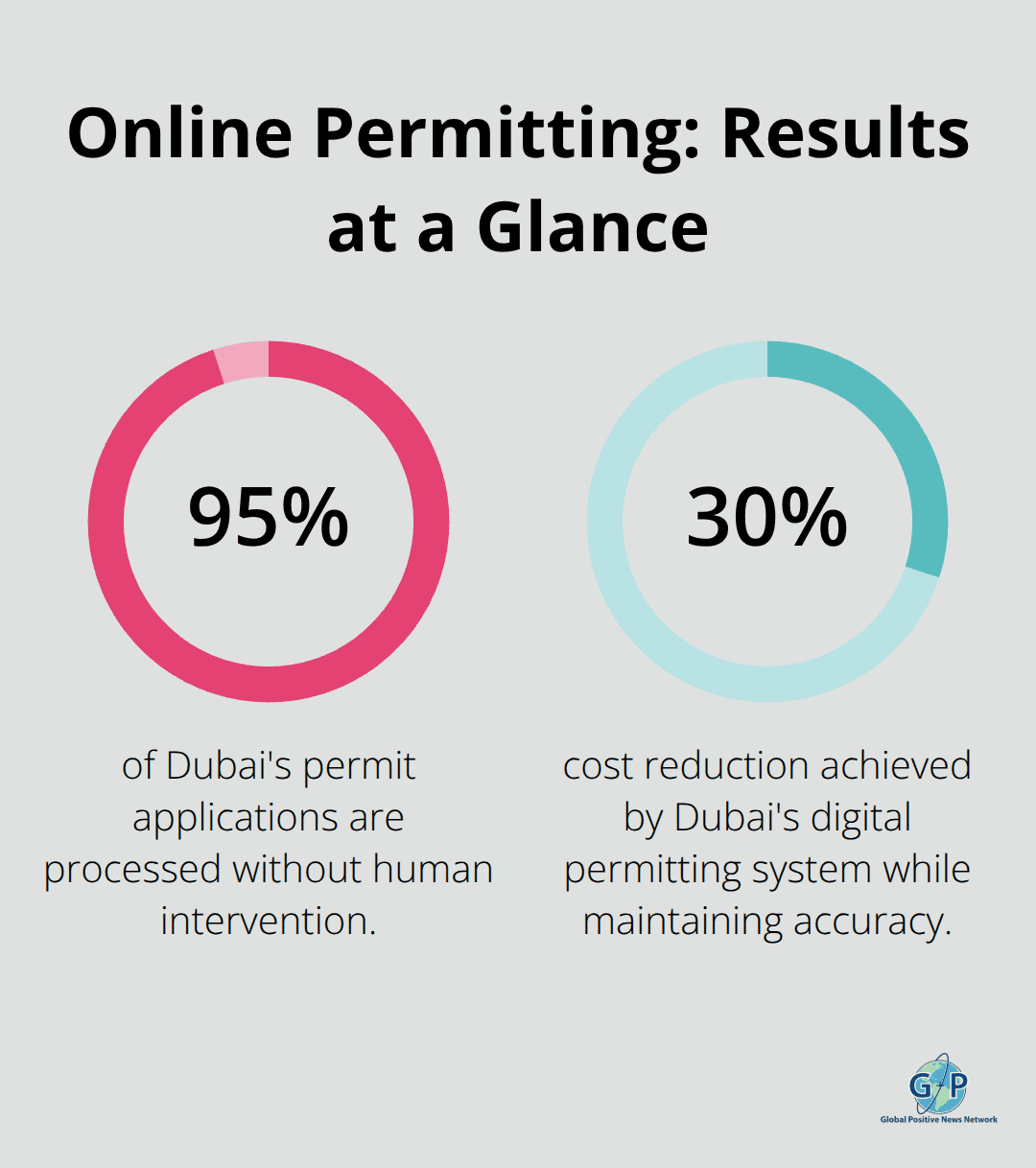
Governments that automate routine processes and digitize information see measurable improvements in speed, cost, and accuracy. Citizens benefit from faster access to services while government agencies redirect staff toward cases requiring genuine expertise and human judgment.
These real-world transformations reveal what becomes possible when governments prioritize citizen experience. Yet significant obstacles still prevent many agencies from implementing similar innovations at the pace required to meet citizen expectations.
What Stops Governments From Moving Faster
Budget Constraints Create Impossible Choices
Government agencies face real obstacles that slow innovation, and pretending these barriers don’t exist ignores why so many modernization projects stall. The first and most visible problem is money. Most government budgets operate on annual cycles with fixed allocations, making it nearly impossible to fund expensive infrastructure overhauls alongside existing operations. A 2023 survey by the Government Technology and Services Coalition found that 67 percent of state and local IT leaders cited insufficient funding as their primary barrier to digital transformation. When agencies must choose between maintaining current systems and building new ones, they almost always maintain what exists because service disruption creates immediate political consequences. Federal agencies spending over 10 billion dollars on cloud services still struggle because that investment competes with healthcare, defense, infrastructure, and countless other priorities. The math becomes brutal quickly: modernizing legacy systems costs money upfront while savings appear gradually over years, making budget justification politically difficult even when the long-term case is strong.
Legacy Systems Lock Resources Into Maintenance
Legacy infrastructure compounds the funding problem by creating technical debt that consumes resources without producing visible improvements. Government agencies often run systems built in the 1980s and 1990s that nobody fully understands anymore because original developers retired decades ago. These systems work, which paradoxically makes replacement harder because replacing something that functions, even poorly, requires proving the investment will deliver better outcomes.
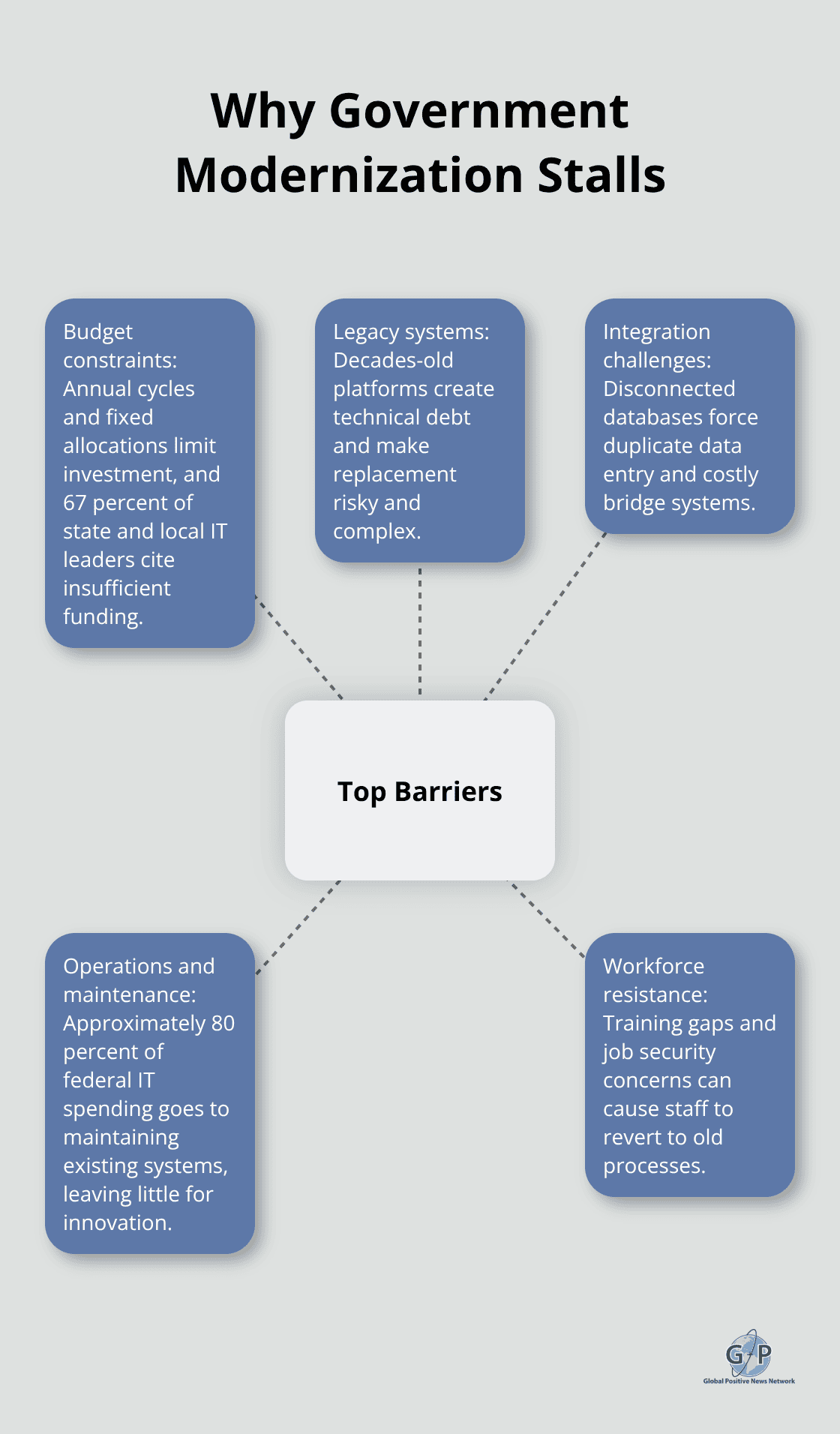
Integration challenges multiply this problem exponentially. A single government agency might operate dozens of disconnected databases that cannot communicate with each other, forcing citizens and staff to re-enter information repeatedly across different systems. Replacing one system without replacing others creates new incompatibilities, so agencies end up building expensive bridge systems just to make old and new technology talk to each other. The U.S. government estimates that approximately 80 percent of federal IT spending is spent on operating and maintaining existing systems rather than building new capabilities, leaving minimal resources for actual modernization.
Workforce Resistance Undermines Transformation Success
Workforce training and change management issues represent the third major barrier that organizations frequently underestimate. Government employees accustomed to specific workflows resist new systems not from stubbornness but from legitimate concerns about job security and the disruption that change creates. Training programs require time and money, and agencies often launch systems without adequate preparation, leading to frustrated employees reverting to old processes or working around new systems entirely. Successful transformations require sustained leadership commitment, clear communication about why change matters, and genuine investment in helping people adapt (not treating these elements as afterthoughts but as central to success).
Final Thoughts
Public sector hopeful innovations are no longer theoretical concepts discussed in government conferences. They operate as real systems that produce measurable results for citizens right now. Cloud platforms cut administrative costs by 20 percent in Estonia, automation reduced UK tax processing time by 40 percent, and smart city sensors cut Copenhagen commute times by 18 minutes daily. These outcomes happen across multiple countries and jurisdictions, not in projections or promises.
The barrier isn’t whether innovation works-it’s whether governments commit resources to make it happen at scale. That commitment requires sustained funding despite competing budget pressures, leadership that prioritizes modernization over maintaining the status quo, and genuine investment in helping employees adapt to new systems. The 67 percent of state and local IT leaders citing insufficient funding describe a real constraint that slows transformation across the sector.
Citizens benefit directly when governments modernize. Faster permit approvals mean entrepreneurs launch businesses sooner, digital health records mean emergency responders access critical medical information instantly, and online services mean people spend less time in offices and more time on what matters to them. We at Global Positive News Network believe stories of government transformation deserve attention because they show what becomes possible when institutions prioritize serving people better.

Having a hard day?
The 2 Minute Hope Reset is a short free guide with three small practices for the days that feel heavy. Two minutes each, nothing to keep up with.
Get the free guideExplore more positive news:
Enjoying stories like this?
Global Positive News Network is reader-supported. If you’d like to support the mission, you can visit the Official GPNN store.