
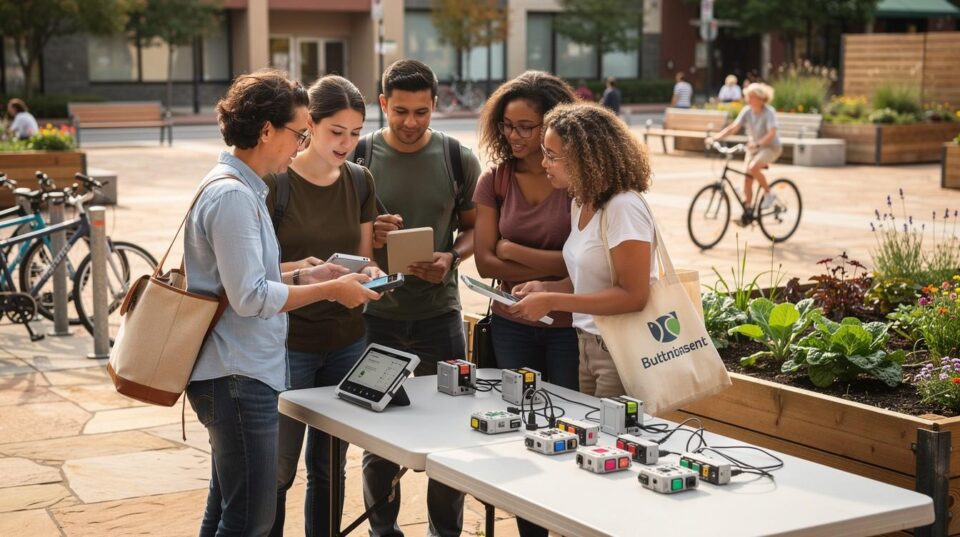
Communities worldwide are solving real problems through practical innovations. Technology, social enterprises, and grassroots organizations are creating measurable change in people’s lives.
At Global Positive News Network, we’ve documented how innovations improving communities are scaling across regions. This article shows concrete examples of what’s working.
Technology Solving Real Community Problems
Technology fixes what governments and nonprofits struggled with for decades. Mobile applications now connect residents to local food banks, job training centers, and healthcare clinics in real time. In Kenya, the M-Pesa mobile money system serves over 50 million users and enabled small businesses to operate without traditional bank accounts. The app removed friction from accessing financial services, which directly increased household incomes across rural regions.
Similar models work in India where WhatsApp Business connects farmers directly to buyers, cutting out middlemen and increasing agricultural profits by 15 to 20 percent according to research from the International Institute of Information Technology.
Citizens Control Budget Decisions
Digital platforms shift power back to residents. Participatory budgeting platforms like Decidim allow citizens to vote on how local government spending gets allocated. In Paris, residents voted on 100 million euros of city budget through this platform in 2022, funding projects they actually wanted instead of decisions made behind closed doors.
Over 300 municipalities worldwide now use participatory budgeting, representing approximately 300 million people with direct say in public spending. When residents control budget decisions, funding reaches the problems they face daily-not theoretical priorities set by distant officials.
Internet Access Changes Economic Outcomes
Rural communities lose economic opportunity when internet connectivity doesn’t exist. SpaceX’s Starlink satellite internet now reaches remote areas in Sub-Saharan Africa and South America where fiber cables never arrived. A farmer in rural Bolivia can now access global commodity prices, agricultural techniques, and financial services from a smartphone, changing what’s economically possible.
The World Bank reports that every 10 percent increase in broadband penetration correlates with GDP growth in developing countries. This isn’t marginal-it’s the difference between subsistence and actual prosperity.
Why Connectivity Compounds Advantages
Communities with broadband access see increased business formation, higher wages, and better educational outcomes. The gap between connected and unconnected regions widens precisely because technology compounds advantages. Schools in areas with internet access produce students with digital skills employers actually want.
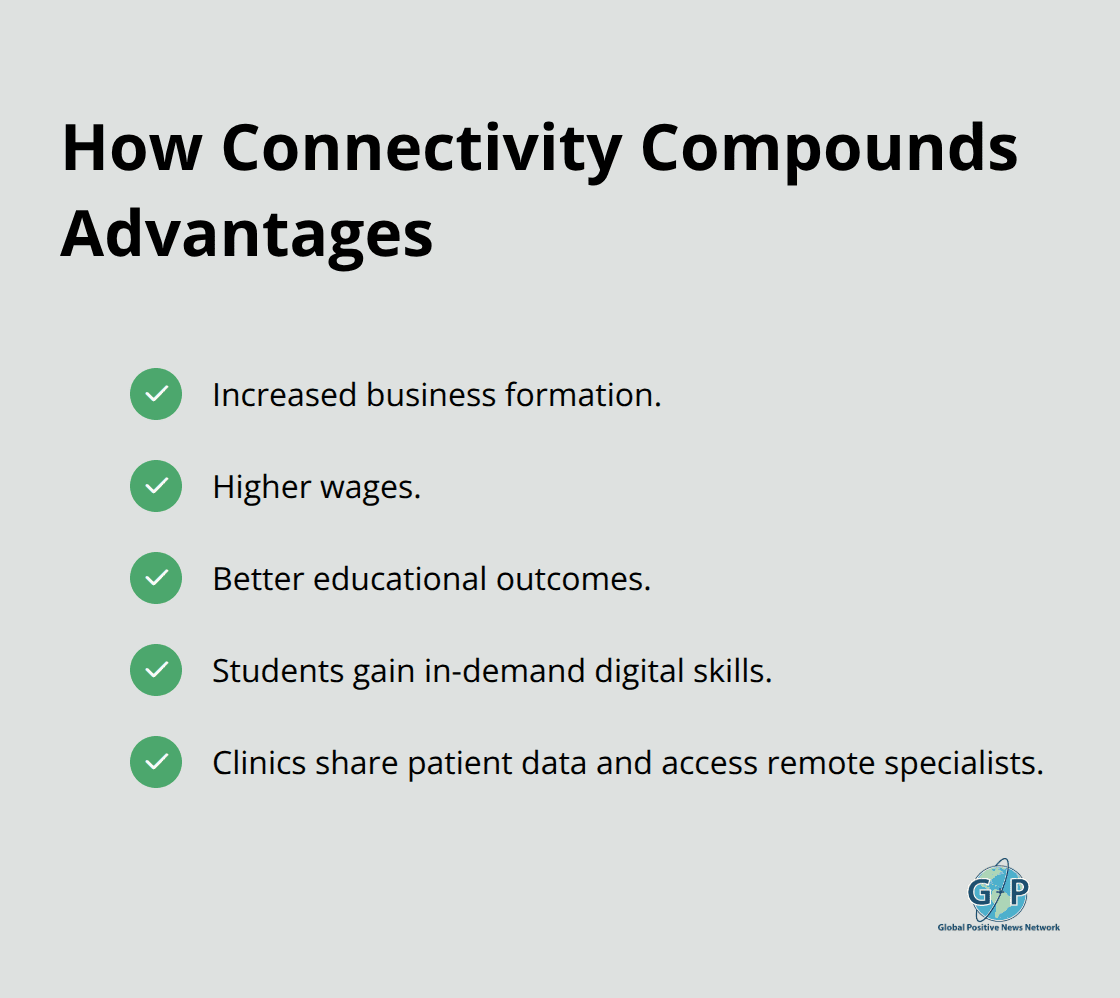
Healthcare clinics with connectivity share patient data and access specialist consultations remotely.
The practical reality is that communities without internet access face genuine disadvantage in competing for economic opportunity. Yet technology alone doesn’t guarantee results-social enterprises amplify these innovations by pairing connectivity with training, capital, and local expertise.
Social Enterprises Turning Skills Into Income
Social enterprises operate differently from traditional nonprofits and businesses. They generate revenue while solving community problems, which means they scale faster and create sustainable jobs instead of temporary aid. In Bangladesh, BRAC operates schools, health clinics, and microfinance programs across rural villages. The organization generates income through its businesses, reinvests profits into expansion, and pays workers actual salaries instead of relying on volunteer labor or donor funding. This model works because it aligns financial sustainability with community impact.
Skills Training Connects People to Real Jobs
Employment gaps exist not because jobs don’t exist, but because workers lack specific skills employers want. Andela in Africa trains software developers in Nigeria, Kenya, and Rwanda, then places them in remote roles earning between $1,000 and $4,000 monthly. For context, the average Nigerian salary sits around $300 monthly, making these positions transformative. Andela graduates have completed over 50,000 hours of technical training since 2014, and 95 percent of program completers secure employment within three months. The training focuses on what companies actually hire for, not theoretical computer science.
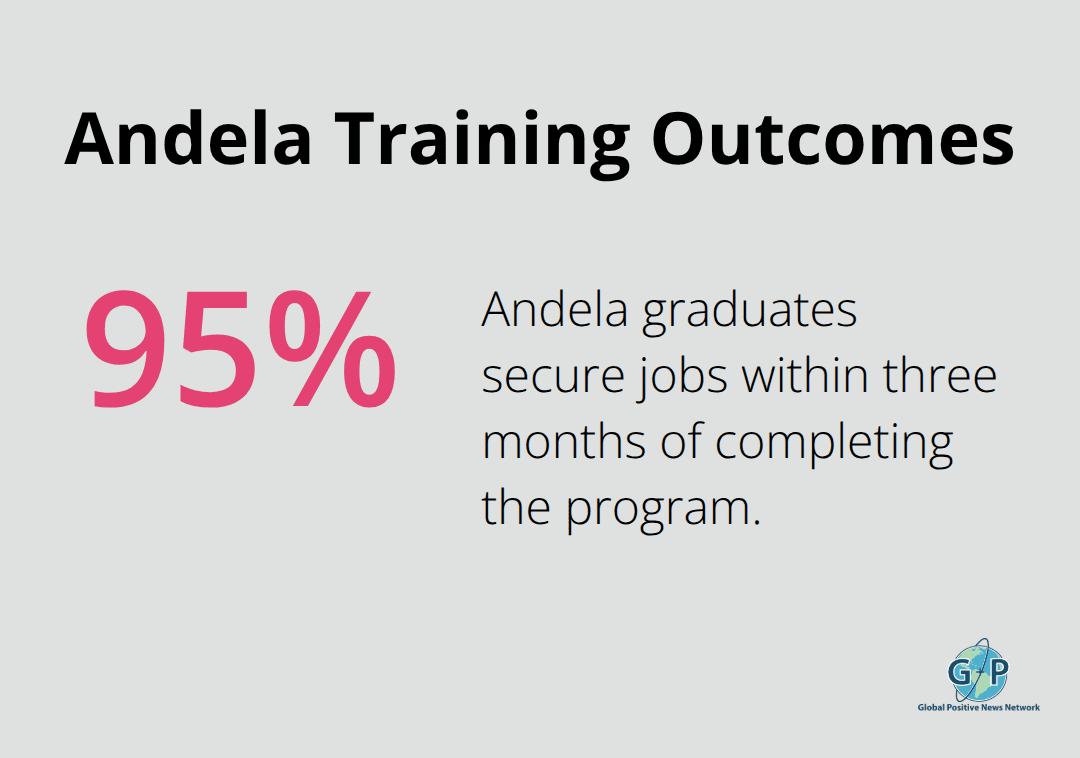
Graduates work on real projects, build portfolios employers recognize, and earn salaries that shift their families from poverty into middle-income stability.
Healthcare worker training follows the same principle. India’s Apollo Hospitals runs nursing assistant programs in rural areas where graduates immediately staff Apollo clinics and partner facilities, earning three times what agricultural work provides. The training addresses specific labor shortages instead of creating generic credentials nobody wants.
Healthcare Reaches People Who Never See Doctors
Underserved communities lack healthcare not because treatment doesn’t exist, but because clinics don’t exist nearby and people can’t afford urban hospital visits. Aravind Eye Care System in India operates a network of eye hospitals performing over 3 million cataract surgeries since 1976, with 60 percent of patients paying reduced rates or nothing. The organization achieves this through volume efficiency and cross-subsidization, where profitable surgeries fund free ones.
Rural clinics screen patients, identify cases, and transport them to surgical centers, removing the friction that kept people blind. Nairobi-based Kenyatta National Hospital’s mobile clinics reach pastoral communities in northern Kenya, providing maternal healthcare, vaccinations, and disease screening in areas where the nearest permanent facility sits 200 kilometers away.
Measuring What Actually Works
These programs generate measurable outcomes. Social enterprises succeed where traditional aid fails because they operate like businesses, measure results obsessively, and adjust when something doesn’t work instead of continuing ineffective programs for years. This accountability transforms how communities access opportunity-not through charity, but through organizations that must prove their impact to survive.
Stories of Community-Led Innovation
Grassroots Organizations Control Their Own Solutions
Grassroots organizations outperform large institutions because they operate inside communities, not above them. Nairobi’s Mathare Social Justice Centre works directly in one of Kenya’s largest informal settlements, where residents identify problems and design solutions themselves. The organization trained over 2,000 community members as paralegals who handle land disputes, police brutality cases, and housing rights issues without waiting for government courts to process claims that take years. These paralegals earn income while solving problems that affect their neighbors daily.
The model works because locals understand context that outsiders miss. They know which landlords exploit tenants, which police officers demand bribes, and which court officials actually listen. When communities control problem-solving, solutions stick because people who live with consequences design them. Top-down development projects fail precisely because external organizations parachute in, build infrastructure nobody maintains, then leave. The difference is accountability. Grassroots groups fail if they don’t deliver because they can’t relocate to another region and claim success.
Government and Private Sector Amplify Local Work
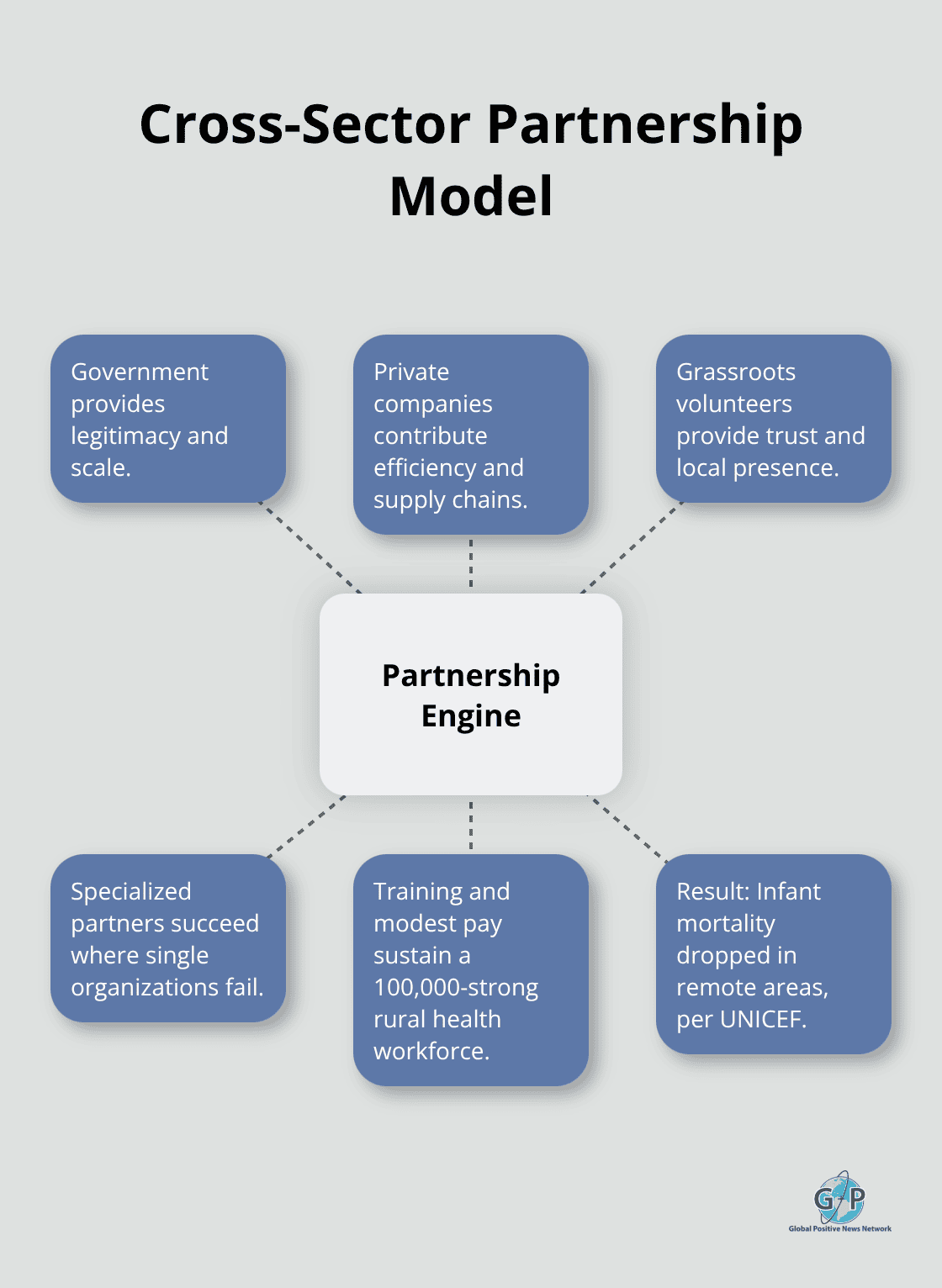
Partnerships between government and private sector amplify grassroots work when structured correctly. Vietnam’s health worker program pairs government clinics with private pharmaceutical companies and NGOs, creating a network where community health volunteers receive training and modest salaries funded through government contracts. Private sector partners supply medications and equipment at cost. Over 100,000 health workers now serve rural villages, and infant mortality dropped in remote areas according to UNICEF data.
The partnership works because each sector contributes what it does best. Government provides legitimacy and scale, private companies contribute efficiency and supply chains, and grassroots volunteers provide trust and local presence. One organization attempting everything fails where specialized partners succeed.
Volunteers Own Outcomes Through Performance Incentives
Volunteers in Rwanda’s community forest programs manage reforestation sites, monitor tree survival rates, and receive payment-for-performance bonuses when survival exceeds 85 percent. This transforms volunteering from charity into skilled work that builds careers. Volunteers who own outcomes stay committed because their income depends on results, not on external funding cycles or organizational priorities that shift annually.
These partnerships create systems that outlast individual people or organizations. When volunteers drive sustainability projects in these structures, they build institutions that persist because community members have financial stakes in success.
Final Thoughts
Communities worldwide solve problems most effectively when they control outcomes rather than accept solutions imposed from outside. Mobile money systems, participatory budgeting platforms, and grassroots organizations succeed because people affected by problems design the answers. Technology amplifies local expertise instead of replacing it, social enterprises generate sustainable income rather than temporary aid, and grassroots groups stay accountable because they cannot relocate when results disappoint. Innovations improving communities share this single pattern across every region and sector.
Scaling these solutions requires understanding what actually transfers between contexts. Participatory budgeting works in Paris, Peru, and Poland because the core principle adapts to local governance structures, while Aravind’s eye care model spreads because other organizations can replicate the efficiency systems without copying every detail. Rwanda’s payment-for-performance volunteer programs inspire similar structures in Uganda and Tanzania because the incentive logic works across contexts, even when implementation details shift. Communities worldwide face identical problems-lack of economic opportunity, healthcare gaps, and exclusion from decisions affecting their lives-yet solutions that work in one region do not automatically work elsewhere.
Supporting community improvement efforts means backing organizations that measure results, operate sustainably, and keep communities in control. We at Global Positive News Network document these stories and support initiatives creating real impact. Communities solving their own problems through practical innovations represent the most reliable path toward genuine, lasting change.
Having a hard day?
The 2 Minute Hope Reset is a short free guide with three small practices for the days that feel heavy. Two minutes each, nothing to keep up with.
Get the free guideExplore more positive news:
Enjoying stories like this?
Global Positive News Network is reader-supported. If you’d like to support the mission, you can visit the Official GPNN store.