
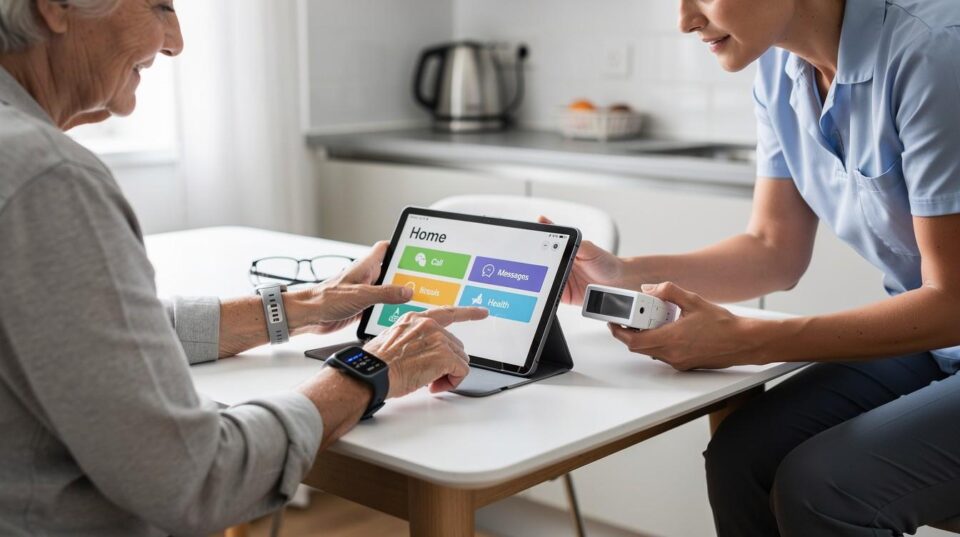
Technology designed for older adults is finally getting the attention it deserves. At Global Positive News Network, we believe innovation for elders shouldn’t mean sacrificing simplicity or dignity.
The devices and platforms transforming how seniors connect, stay healthy, and learn prove that age-friendly design benefits everyone. This blog post explores the real tools making a difference in older adults’ lives today.
What Makes Technology Actually Usable for Older Adults?
Removing Friction Through Smart Design
Accessibility isn’t about lowering expectations-it’s about removing unnecessary friction. Research from a systematic review of 83 studies by Mengxi Zhang in 2023 found that older adults adopt technology primarily when it clearly improves daily life and independence. The problem isn’t age; it’s design that ignores how people actually use devices. Large text options, voice controls, and intuitive navigation aren’t nice-to-haves. They’re non-negotiable features that determine whether someone can operate a device at all.
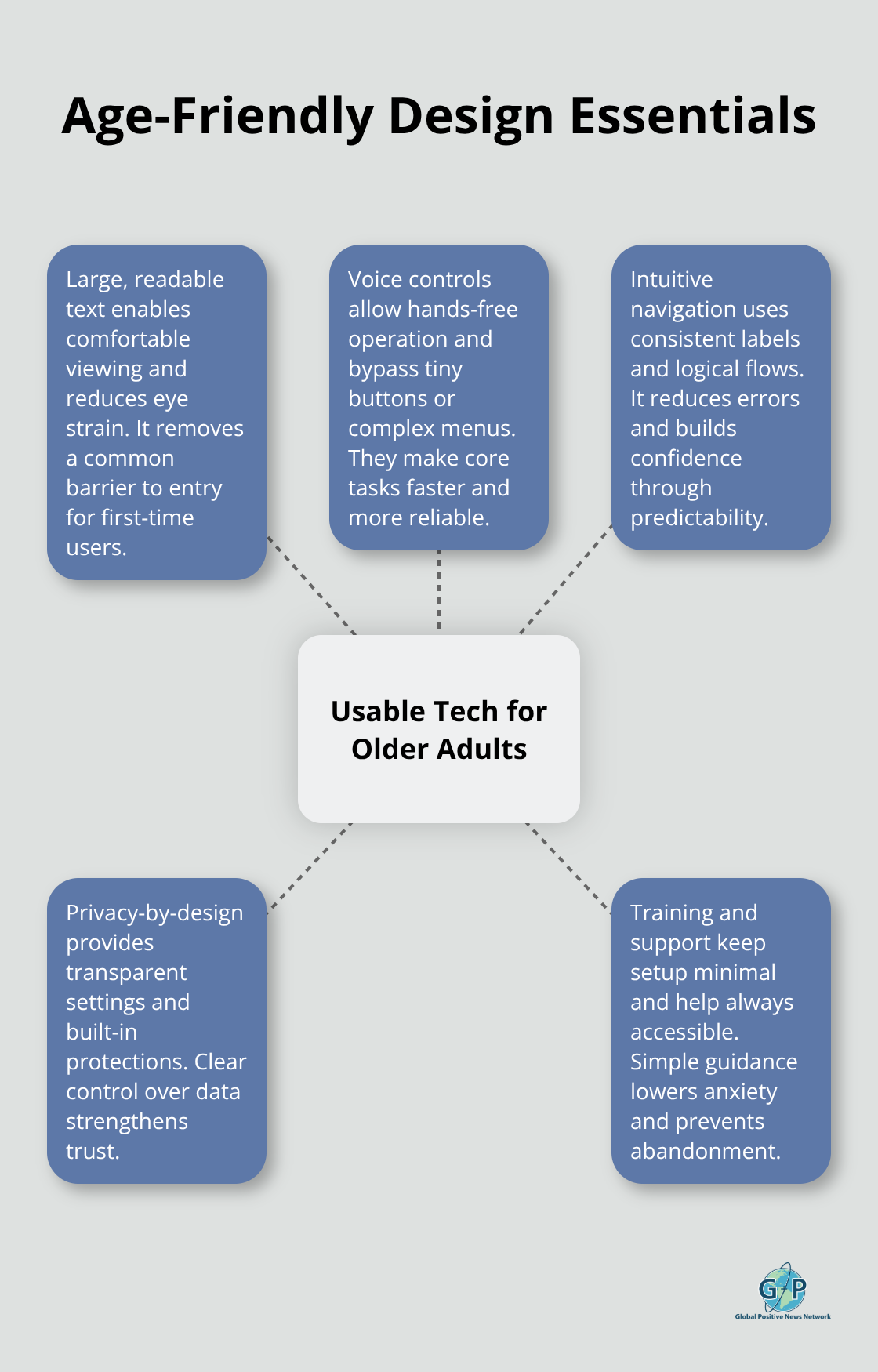
Studies show perceived ease of use directly influences adoption, especially for complex interfaces. When text is readable, buttons are large enough to tap without frustration, and navigation follows logical patterns, older adults engage with technology confidently.
Voice Commands Replace Complex Menus
Voice activation has proven particularly effective because it removes the barrier of small touchscreens and complex menus. Devices like ElliQ demonstrate this approach-older adults control medication reminders, health tracking, and entertainment entirely through voice commands without navigating layers of settings. This single feature eliminates multiple friction points that typically discourage adoption.
The same research found that compatibility matters enormously: technology should fit existing lifestyles and devices rather than forcing people to overhaul their routines. A wearable device for health monitoring means nothing if the interface requires downloading apps or managing passwords.
Privacy Controls That Build Trust
Privacy controls must be transparent and straightforward, not buried in settings pages. Older adults worry about data misuse and surveillance, yet many accept privacy trade-offs when they retain clear control over their information. Design that emphasizes privacy-by-design-where data protection is built in from the start rather than added as an afterthought-builds trust.
Training and ongoing support reduce technology anxiety, which remains a genuine barrier. A device that requires hours of instruction or technical troubleshooting will sit unused. The most effective age-friendly technology requires minimal setup, provides intuitive feedback, and offers accessible support when questions arise.
How Design Choices Shape Real Adoption
These principles transform from abstract ideals into measurable outcomes when companies prioritize older adults in their design process. The next section examines how real-world tools apply these lessons, showing which innovations actually stick in people’s daily lives and why some devices become trusted companions while others collect dust on shelves.
What Older Adults Actually Gain from Technology Today
Family Connection Without Barriers
Distance no longer isolates families when technology removes friction from communication. ElliQ, a voice-activated companion device, allows older adults to share photos and messages with family members without navigating complex apps or interfaces. The New York Times reported measurable cognitive improvements in ElliQ users, including better short-term memory, while caregivers receive non-intrusive health alerts if someone hasn’t slept well or shows concerning changes. Thousands of families now rely on such devices because they work within existing routines rather than demanding new habits.
Health Monitoring That Builds Independence
Wearable devices with large displays and simple tap controls track heart rate, sleep patterns, and activity levels without requiring constant app management. Research from Mengxi Zhang’s 2023 analysis of 83 studies found that older adults adopt health technology specifically when it visibly improves independence and daily functioning. A wearable that sends alerts to a trusted doctor or family member transforms from a gadget into a safety net. Sprinter Health exemplifies this shift with on-demand home blood draws delivered by licensed clinicians using portable technology, eliminating trips to clinics for routine monitoring.
Mental Engagement Through Intentional Design
Mental engagement through technology thrives when interfaces respect cognitive load. Platforms like Hank create communities for people aged 55 and older by organizing group activities, virtual tours, and shared interests-activities that reduce loneliness while keeping minds active. The key difference from generic social networks is intentional design for aging populations: simplified navigation, larger fonts, voice-activated features, and error-tolerant interfaces. Balanced offers personalized digital wellness communities where older adults participate in group exercise tailored to chronic conditions like arthritis or heart disease, proving that staying mentally and physically active doesn’t require complicated equipment or interfaces.
Visible Results Drive Sustained Use
Health tracking becomes motivating when results are immediately visible and understandable. A device that shows daily step counts, exercise minutes, or sleep quality in large, clear numbers encourages continued use far more than abstract health data buried in dashboards. Perceived usefulness drives sustained adoption, meaning technology that demonstrates clear, visible benefit becomes part of daily life rather than abandoned after initial curiosity. These real-world examples reveal a pattern: older adults embrace tools that solve actual problems and respect their time and dignity. The next section examines specific innovations that have earned trust through thoughtful design and measurable impact.
Innovations That Prove Age-Friendly Design Works
Smartphones Built for Actual User Needs
Smartphones marketed specifically for older adults demonstrate that simplicity sells when companies stop treating accessibility as a secondary feature. Devices like the Jitterbug Smart2 and GrandPad prioritize large icons, simplified home screens, and pre-installed apps for calling and messaging, eliminating the bloat that confuses new users. These phones cost between $150 and $300, making them affordable compared to flagship models, and they skip unnecessary features that older adults never use anyway. The real advantage lies in support: GrandPad includes 24/7 customer service staffed by humans, not chatbots, and Jitterbug offers free setup and training.
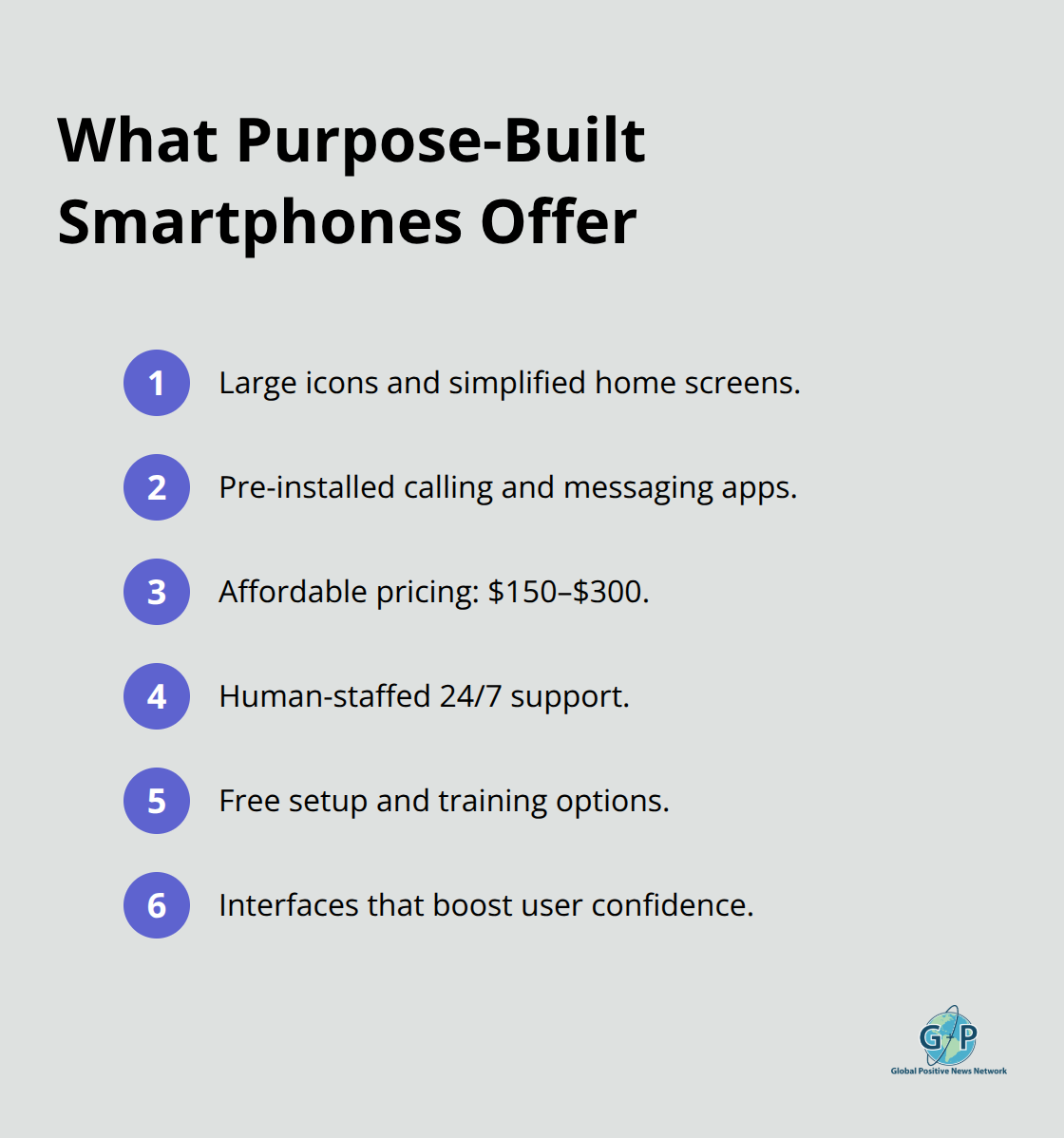
Older adults who switch to these purpose-built devices report higher confidence using smartphones because the interface respects their actual needs rather than forcing them into Apple or Android ecosystems designed for tech-savvy users.
Wearables That Doctors Actually Recommend
Wearable health devices have shifted dramatically toward older adults in the past three years, with companies abandoning the fitness-tracker approach in favor of medical-grade monitoring. Devices like Oura Ring and Withings ScanWatch track heart rate irregularities, sleep apnea indicators, and activity patterns while displaying data on large, readable screens or companion apps with simplified layouts. These wearables cost $200 to $400 and integrate with telehealth platforms, allowing doctors to monitor chronic conditions remotely without requiring patients to visit clinics monthly. A cardiologist telling a patient that their wearable detected atrial fibrillation creates urgency and trust that generic fitness tracking never achieves. Sprinter Health takes this further by sending licensed clinicians to homes for blood draws and vitals checks, eliminating the friction of clinic visits entirely. This service operates in over 300 U.S. cities and charges $20 to $50 per visit, making preventive health monitoring accessible without requiring technology literacy.
Community Platforms That Combat Loneliness
Community platforms connecting older adults across generations address loneliness through genuine social engagement. Hank operates as a membership community for people aged 55 and older, organizing virtual tours, group fitness classes, and interest-based clubs with interfaces designed specifically for older users. The platform charges $99 annually and reports that members participate in activities an average of three times weekly, compared to industry standards of once monthly for generic social networks. Balanced offers personalized digital wellness with live group exercise sessions tailored to specific conditions like arthritis or heart disease, recognizing that one-size-fits-all fitness fails older adults managing multiple chronic conditions. These platforms succeed because they acknowledge that older adults want purpose-driven connection, not endless scrolling through algorithm-generated content.
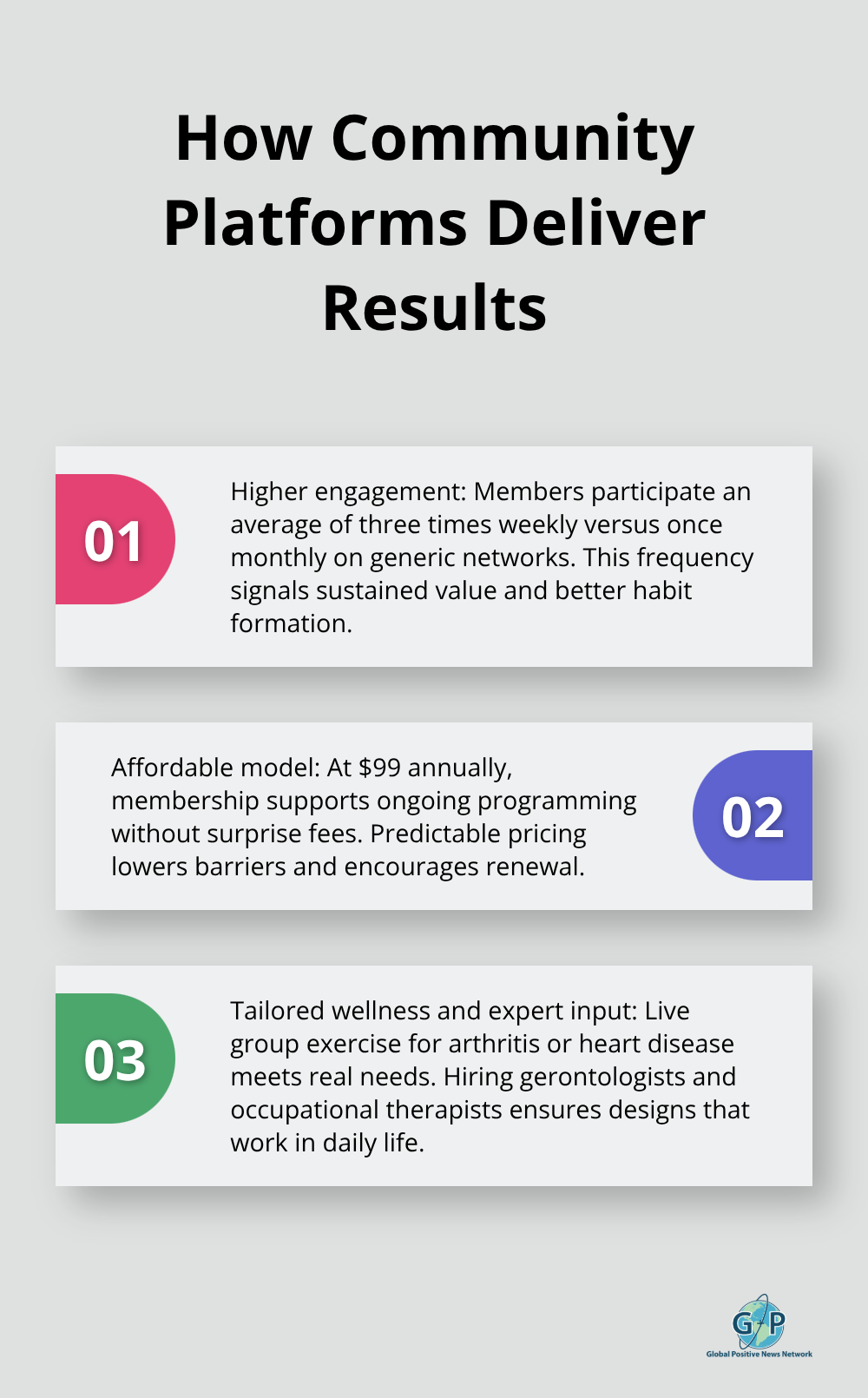
Companies building these platforms hire gerontologists and occupational therapists to inform design decisions, a practice that separates genuinely useful tools from products that look age-friendly on marketing materials but fail in actual use.
Final Thoughts
The technology transforming older adults’ lives today proves that innovation for elders works best when it centers on real human needs rather than assumptions about aging. Smartphones with simplified interfaces, wearables that doctors recommend, and community platforms designed specifically for people over 55 demonstrate that age-friendly design isn’t a niche market-it’s the future of technology itself. Younger designers who learn from older adults’ actual frustrations build better products for everyone, since large readable text benefits anyone struggling with small fonts and voice controls help parents managing devices while holding children.
Older adults themselves drive this progress forward through honest feedback about what works and what doesn’t. They refuse to accept clunky interfaces or features that complicate rather than simplify daily life, and their demands for clarity, reliability, and respect push entire industries toward better standards. The companies succeeding in senior care recognize that designing for aging populations improves products for everyone, so they hire gerontologists and occupational therapists alongside engineers and test products with actual older adults across different income levels and technical experience.
We at Global Positive News Network celebrate stories where technology honors wisdom and experience. The innovations featured here aren’t theoretical-they change lives today. As our world ages, the question isn’t whether older adults will adopt technology, but whether we’ll finally design technology worthy of their time and trust.

Having a hard day?
The 2 Minute Hope Reset is a short free guide with three small practices for the days that feel heavy. Two minutes each, nothing to keep up with.
Get the free guideExplore more positive news:
Enjoying stories like this?
Global Positive News Network is reader-supported. If you’d like to support the mission, you can visit the Official GPNN store.