
Your mindset shapes everything-how you handle stress, connect with others, and move through your day. We at Global Positive News Network believe creative positivity challenges 2026 offer a practical way to rewire how you think and feel.
This guide walks you through a structured 30-day framework designed to build lasting habits, not temporary motivation.
How Positivity Challenges Rewire Your Brain
Positivity challenges work because they interrupt your brain’s default negative bias. Your brain evolved to scan for threats, which means it naturally gravitates toward worry, criticism, and worst-case scenarios. Research shows that consistent positive practice literally changes brain structure through neuroplasticity. When you practice gratitude or kindness daily, you strengthen neural pathways associated with positive emotion and reduce activity in regions tied to rumination. Functional MRI imaging reveals measurable brain changes within weeks of deliberate positive thinking practice.
Why 30 Days Matters for Brain Change
Thirty days is the sweet spot for habit formation because it’s long enough to rewire behavior but short enough to feel achievable. Studies on goal-setting show that committing to a specific timeframe increases follow-through compared to vague intentions. Barbara Fredrickson’s broaden-and-build theory explains why this matters: positive emotions expand your thinking and help you generate more creative solutions, while negative emotions narrow your focus. Over a month of daily positivity practice, your brain defaults toward possibility instead of limitation. The cumulative effect matters more than any single day.
How Your Body Responds to Positive Practice
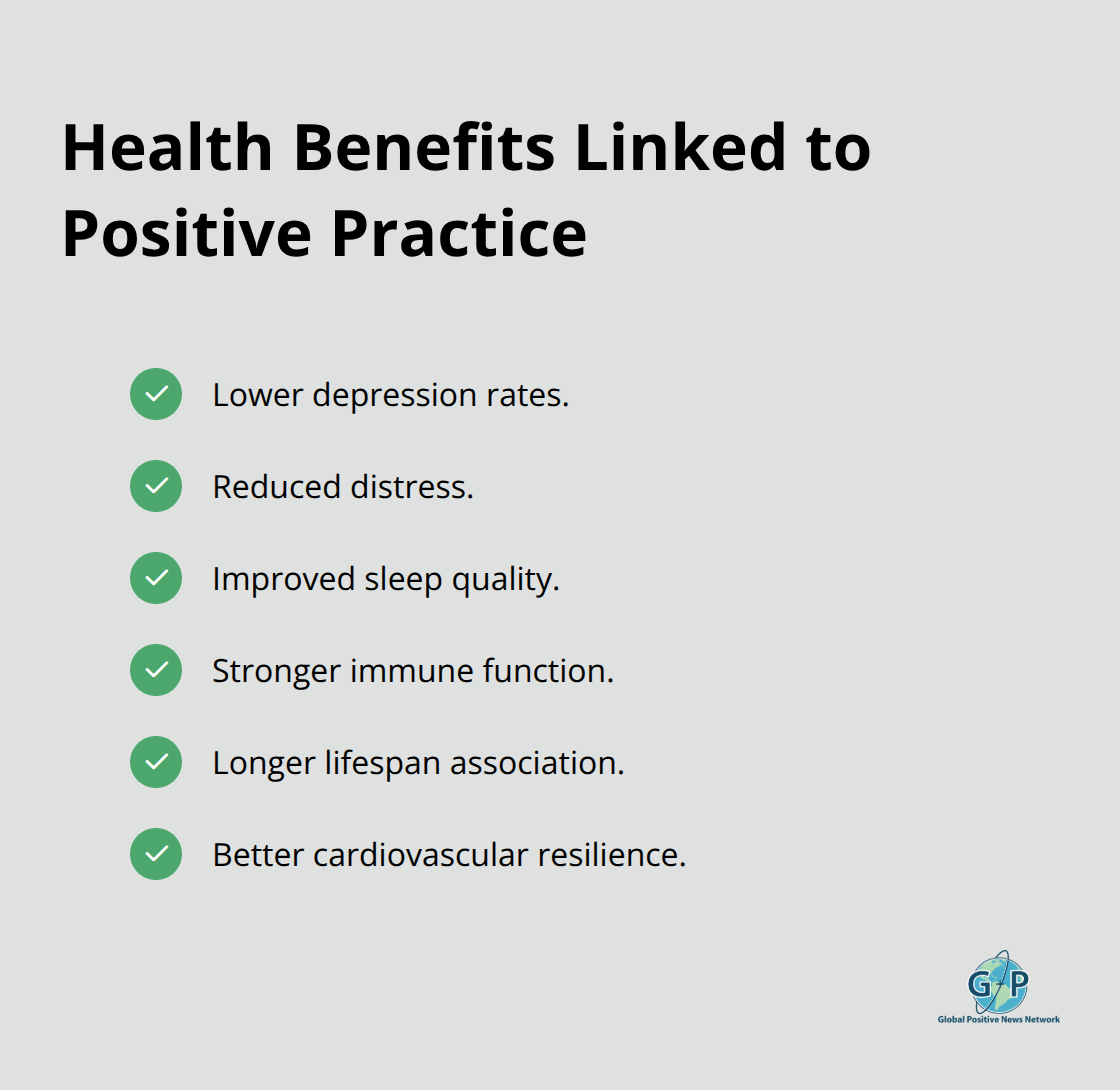
Gratitude practice shifts cortisol levels and stress hormone response. Five to eight slow, deep breaths lower your heart rate and purge cortisol buildup, but daily gratitude compounds this effect over time. Mayo Clinic research documents that people who practice positive thinking consistently report lower depression rates, reduced distress, improved sleep quality, and stronger immune function. Optimism also correlates with longer lifespan and better cardiovascular resilience (according to research by Kim ES and colleagues in the American Journal of Epidemiology). These measurable health shifts result from deliberate mental practice over 30 days.
The Creative Edge That Emerges
Positive emotions do more than improve your mood-they expand how you think. Eye-tracking studies show that people in positive states scan more of their environment, which means they notice more details and connections. This broader attention directly supports divergent thinking, the ability to generate multiple ideas for a single problem. When you remove the mental fog that stress and negativity create, your creative capacity increases. This is why the challenges ahead ask you to combine positivity practice with reflection and action.
Your 30-Day Positivity Challenge Framework
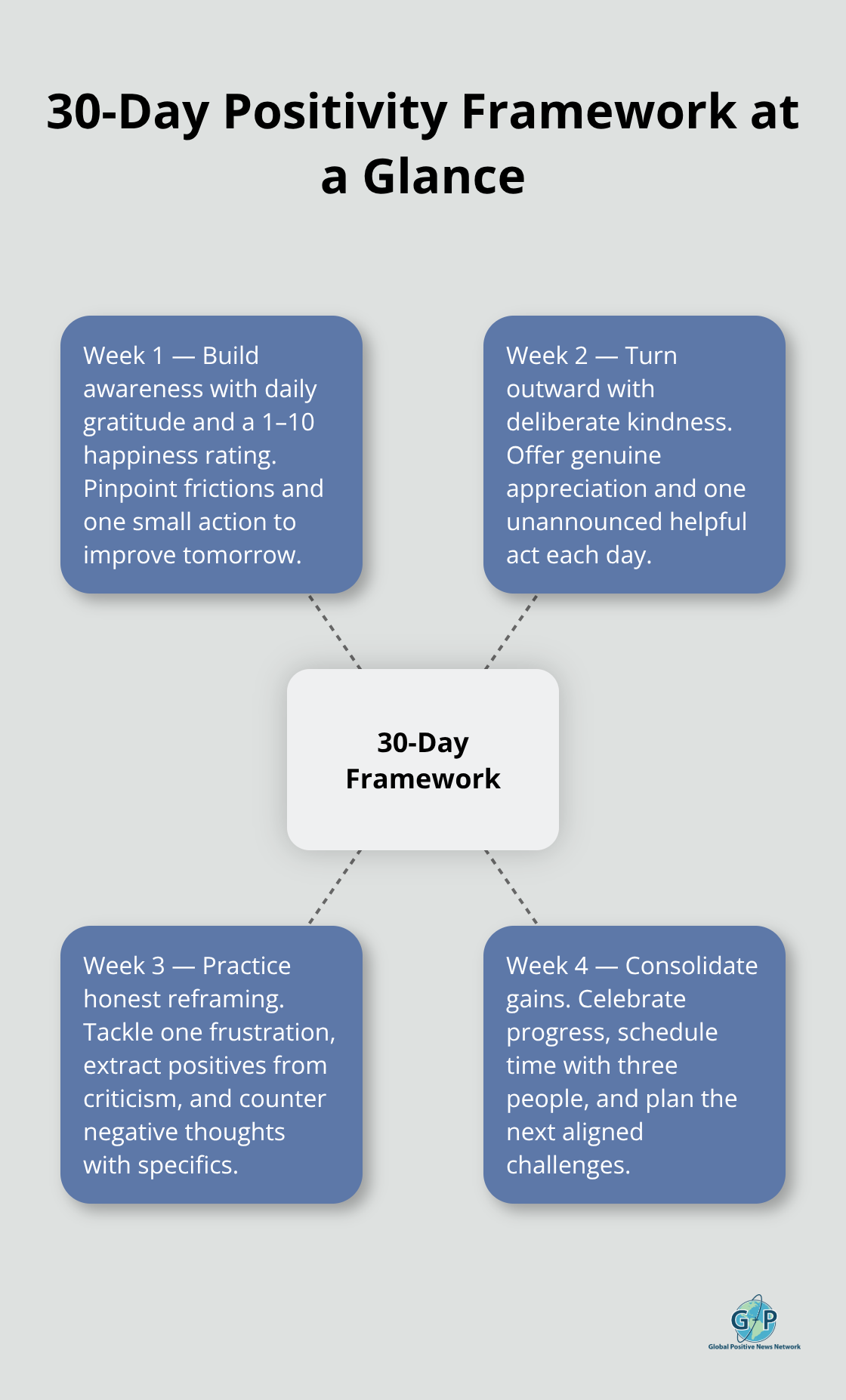
The structure matters more than motivation. A randomized 30-day experiment reveals that people who follow a specific daily framework complete challenges at twice the rate of those who wing it. This framework divides your month into four distinct phases, each building on the previous week’s neural rewiring.
Week 1: Establish Baseline Awareness Through Gratitude
Week one establishes baseline awareness through daily gratitude logging and a happiness scale rating from one to ten. Track exactly why you didn’t rate yourself a perfect ten and what single action could shift that number higher tomorrow. This isn’t vague reflection-you identify concrete friction points in your day and name one small fix for each. Research from Gabriele Oettingen shows that the WOOP framework (Wish, Outcome, Obstacle, Plan) increases goal attainment by helping you anticipate what will derail you before it happens.
Week 2: Shift to External Action Through Kindness
During week two, you shift from internal reflection to external action through deliberate kindness practices. Tell at least one person daily why you genuinely appreciate them, then perform one random act of kindness without announcing it. Studies by Sonja Lyubomirsky document that helping others increases self-esteem and well-being. This outward focus rewires your brain to notice opportunities for connection rather than reasons for isolation.
Week 3: Demand Honest Self-Assessment and Reframing
Week three demands honest self-assessment. Identify one frustration source and take a concrete step to reduce it. Reframe one piece of criticism by extracting three constructive positives from the feedback. Practice cognitive restructuring by naming three negative thoughts and writing three specific counters, not generic affirmations. Barbara Fredrickson’s research shows that savoring positive moments for thirty seconds reinforces neural pathways toward lasting positivity.
Week 4: Consolidate Progress and Build Momentum
Week four consolidates everything through celebration and planning. Share your progress with someone who matters, then identify three people you want to spend more time with and schedule actual meetups. Positive emotions broaden your thinking, but only consistent practice embeds those changes permanently into how your brain defaults. These final seven days set the stage for what comes next: choosing which specific challenges align with your personality and lifestyle.
Three Challenges That Actually Work
Gratitude Journaling: Specificity Over Generic Statements
Gratitude journaling beats vague positivity practice because you write specific details rather than generic statements. Start each morning and list five concrete things you’re thankful for, then write one sentence explaining why each one mattered to your day. The specificity matters-writing “I’m grateful for coffee” produces zero brain change, but “I’m grateful for my morning coffee because it gave me ten minutes of quiet before the chaos started” activates the neural pathways that sustain positivity.
Track your happiness score from one to ten each morning for baseline data, then again at night to see which gratitude entries shift your mood most. You’ll notice patterns within a week. Some people find that gratitude tied to relationships moves their score higher than gratitude for objects or circumstances. Use a physical journal, not an app, because handwriting activates different brain regions than typing and creates stronger memory encoding.
Random Acts of Kindness: The Power of Concentrated Effort
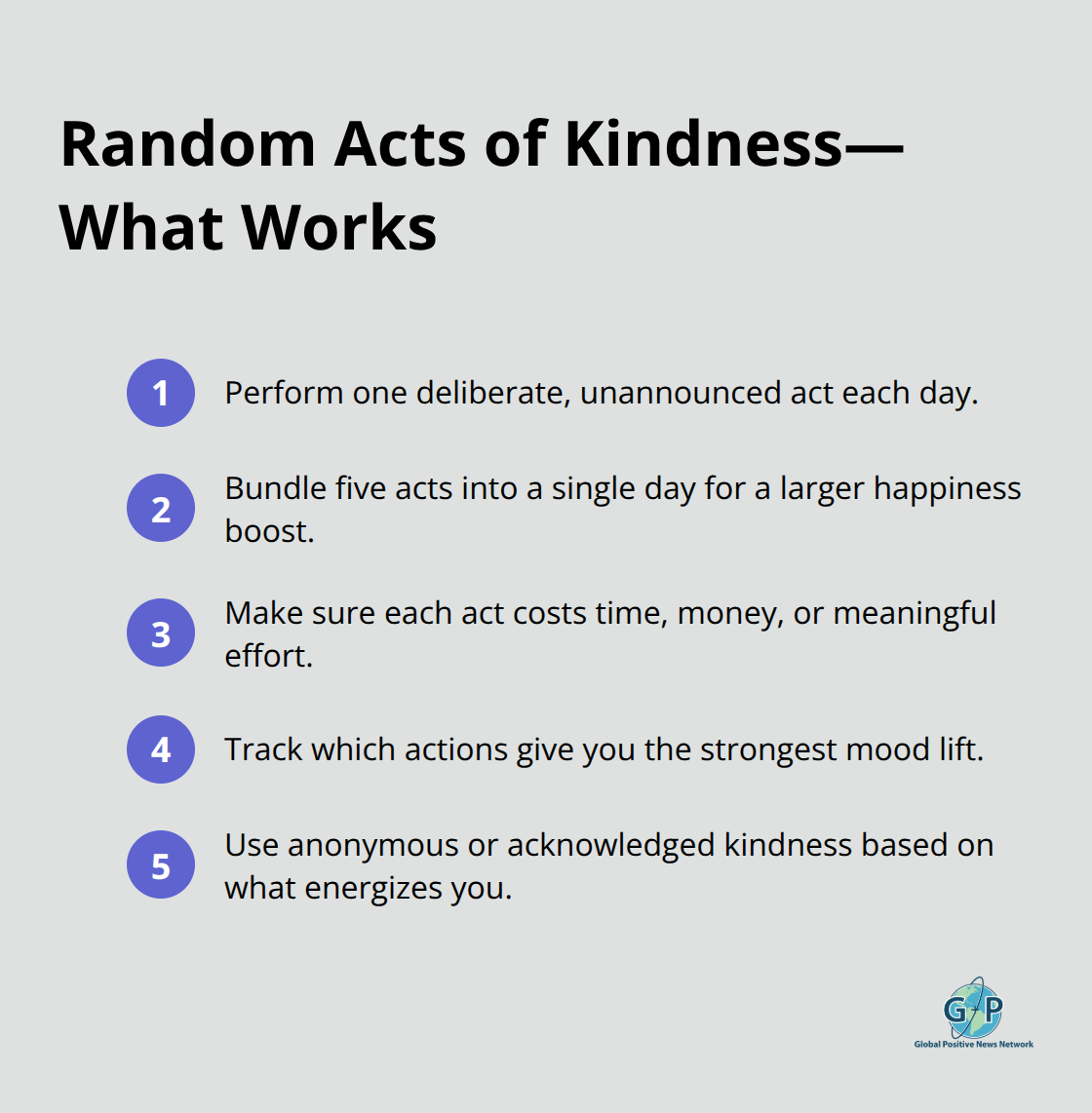
Random acts of kindness work because they force you to notice opportunities for connection that stress normally obscures. Perform one deliberate kindness daily without telling anyone. Pay for someone’s coffee behind you in line, shovel snow for an elderly neighbor, or send an encouraging text to someone you haven’t spoken to in months. Sonja Lyubomirsky’s research documents that people who perform five acts of kindness in a single day report measurable increases in happiness compared to those who spread kindness across the week.
This concentrated approach creates a psychological shift-your brain registers the pattern and starts scanning for more opportunities. The critical rule is that the act must cost you something, whether time, money, or effort. Kindness that costs nothing produces minimal brain change. Track which acts generate the strongest mood boost for you.
Some people feel most energized by anonymous kindness, while others need the connection of being thanked. Your data matters more than anyone else’s experience.
Social Media Positivity Campaigns: Authentic Appreciation at Scale
Social media positivity campaigns work when you commit to a specific daily action rather than posting generic inspirational quotes. Choose one platform where you already spend time, then post one genuine compliment or appreciation for a real person daily for thirty days. Tag them directly and explain specifically what quality or action you admire. Positivity challenges work because they interrupt automatic negative thinking patterns through deliberate repetition.
This practice builds your social circle intentionally because people you appreciate tend to reciprocate connection. The barrier most people hit is authenticity-generic praise produces zero engagement and zero brain change. Your compliments must be real observations about real people. After two weeks, you’ll notice which types of posts generate genuine conversation versus passive likes. Double down on what works. This challenge also creates accountability because your social circle witnesses your commitment, which increases follow-through compared to private challenges.
Final Thoughts
Thirty days of deliberate positivity practice produces measurable shifts in how your brain responds to stress, connects with others, and generates creative solutions. The challenges you’ve worked through rewire neural pathways toward possibility rather than limitation. Mayo Clinic research confirms that people who maintain consistent positive thinking report lower depression, reduced distress, and improved sleep quality-these structural brain changes persist long after your 30-day commitment ends.
The real work starts after day thirty because your brain requires ongoing activation to keep these pathways strong. Pick one challenge that resonated most with you and continue it indefinitely. If gratitude journaling shifted your happiness score highest, keep writing five specific entries daily; if kindness practice generated the strongest energy boost, maintain your weekly concentrated acts.
Many people hit a motivation dip around week six after their initial challenge ends, so rotate between the three challenges monthly rather than abandoning positivity practice entirely. One month focus on gratitude journaling, the next month shift to kindness campaigns, then return to social media appreciation posts. Visit Global Positive News Network to access additional resources, connect with others pursuing creative positivity challenges 2026, and discover stories of real people who’ve transformed their mindset through deliberate practice.
Explore more positive news:
Enjoying stories like this?
Global Positive News Network is reader-supported. If you’d like to support the mission, you can visit the Official GPNN store.