

Your mood at work shapes everything-how you tackle problems, how you interact with colleagues, and ultimately, how much you accomplish.
At Global Positive News Network, we’ve seen firsthand that positivity reminders for work aren’t about forcing fake smiles. They’re about practical shifts that rewire how you think and perform.
How Your Mindset Shapes What You Accomplish
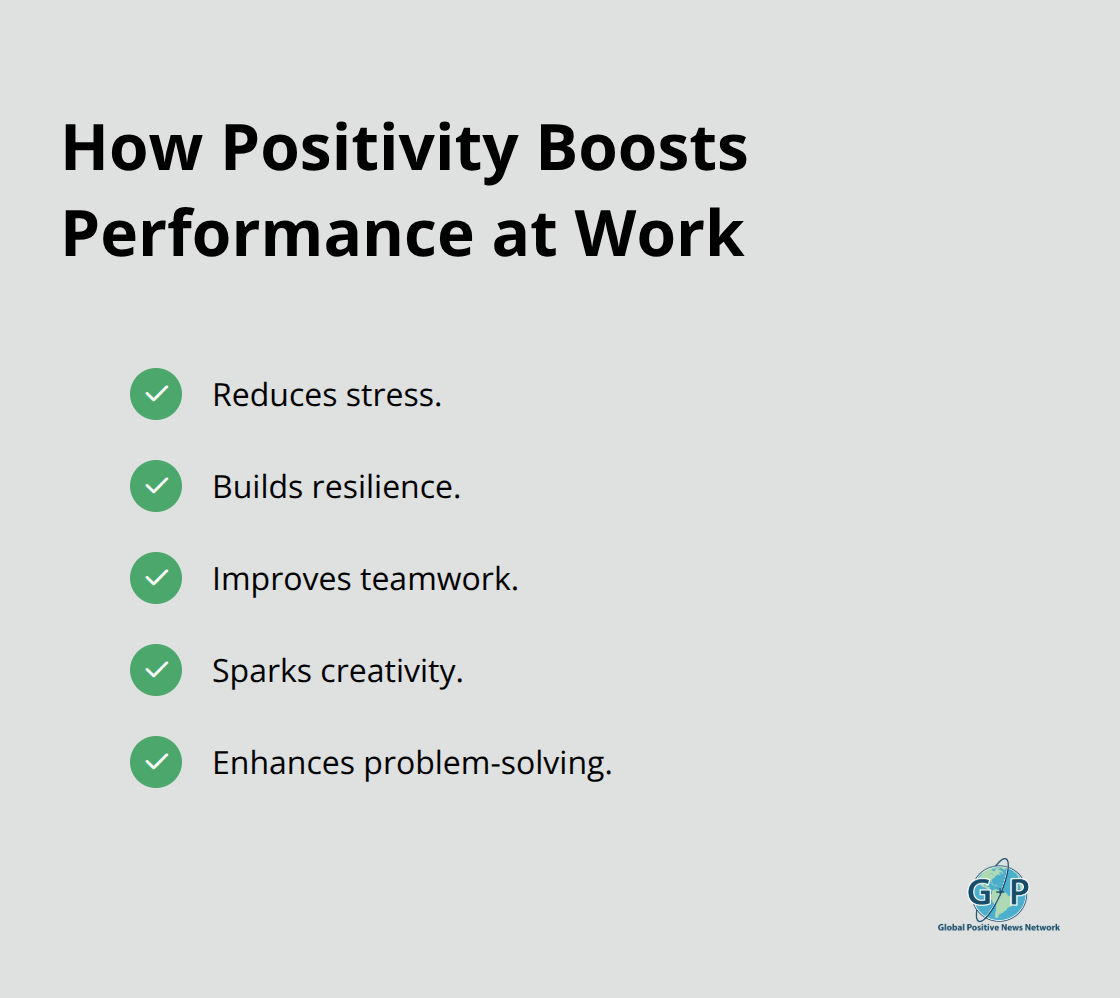
Your mood at work doesn’t just feel better-it directly impacts your output. Research from Frontiers in Psychology shows that positive emotions at work reduce stress, build greater resilience, and improve teamwork, creativity, and problem-solving. That’s not motivational fluff; that’s measurable performance. An Adobe study found that companies with highly creative employees are significantly more likely to hit business goals and stay competitive. Creativity doesn’t happen when you’re stuck in negative thinking patterns.
When your mind fixates on what went wrong or what might fail, your brain literally consumes energy managing that anxiety. This leaves less mental capacity for actual work.
How Control Affects Your Stress Response
The Harvard Study on workplace well-being found that autonomy over your work conditions reduces stress. When you feel in control and valued, your nervous system doesn’t waste resources on defensive thinking. Instead, that energy channels into focus and output. Negative thinking creates a biological tax on your productivity-your body produces cortisol, your attention fragments, and your ability to solve problems diminishes. This isn’t about toxic positivity or ignoring real problems. It’s about recognizing that how you frame challenges determines whether you tackle them or get paralyzed by them.
The Numbers Behind Positivity and Performance
The data tells a clear story. According to research cited by Harvard DCE, about 90,000 hours of an adult’s life are spent at work, which makes your mental state there genuinely significant. A ScienceDirect study found that positive traits like optimism and well-being enhance individual performance and boost overall organizational productivity. Happy employees are more confident, engaged, creative, and collaborative. The inverse is equally true: unhappy employees drag down morale and the entire team’s output.
Why Your Brain Performs Better With Positivity
Positive emotions at work activate your prefrontal cortex, the part of your brain responsible for strategic thinking and problem-solving. When you operate from negativity, your brain shifts into survival mode, which narrows focus and kills innovation. This neurological shift happens automatically-you don’t control it consciously. What you do control is whether you interrupt that pattern before it takes hold. The next section shows you exactly how to do that with practical strategies you can implement today.
How to Build Positivity Into Your Daily Routine
The difference between knowing positivity matters and actually experiencing its benefits comes down to execution. You need systems that interrupt negative thought patterns before they drain your focus.
Start Your Day With a Clear Intention
Set a single intention rather than a vague hope that things go well. Write down one specific outcome you want to achieve before checking email or messages. This isn’t about setting ambitious goals; it’s about anchoring your mind to a concrete target. Research from positive psychology shows that employees who set clear daily objectives experience higher engagement and lower stress. Your intention acts as a mental filter, helping your brain prioritize what matters and ignore distractions. Spend two minutes on this, nothing more. If your intention is to finish a specific report or have one meaningful conversation with a colleague, your brain starts filtering for opportunities to make that happen.
Take Micro-Breaks to Reset Your Focus
Most people fail at maintaining positivity because they treat breaks as optional. Schedule them like meetings you cannot skip. Every 90 minutes, step away for five minutes minimum. During this time, do not check your phone or catch up on messages. Instead, walk to get water, look out a window, or practice three minutes of deliberate breathing.
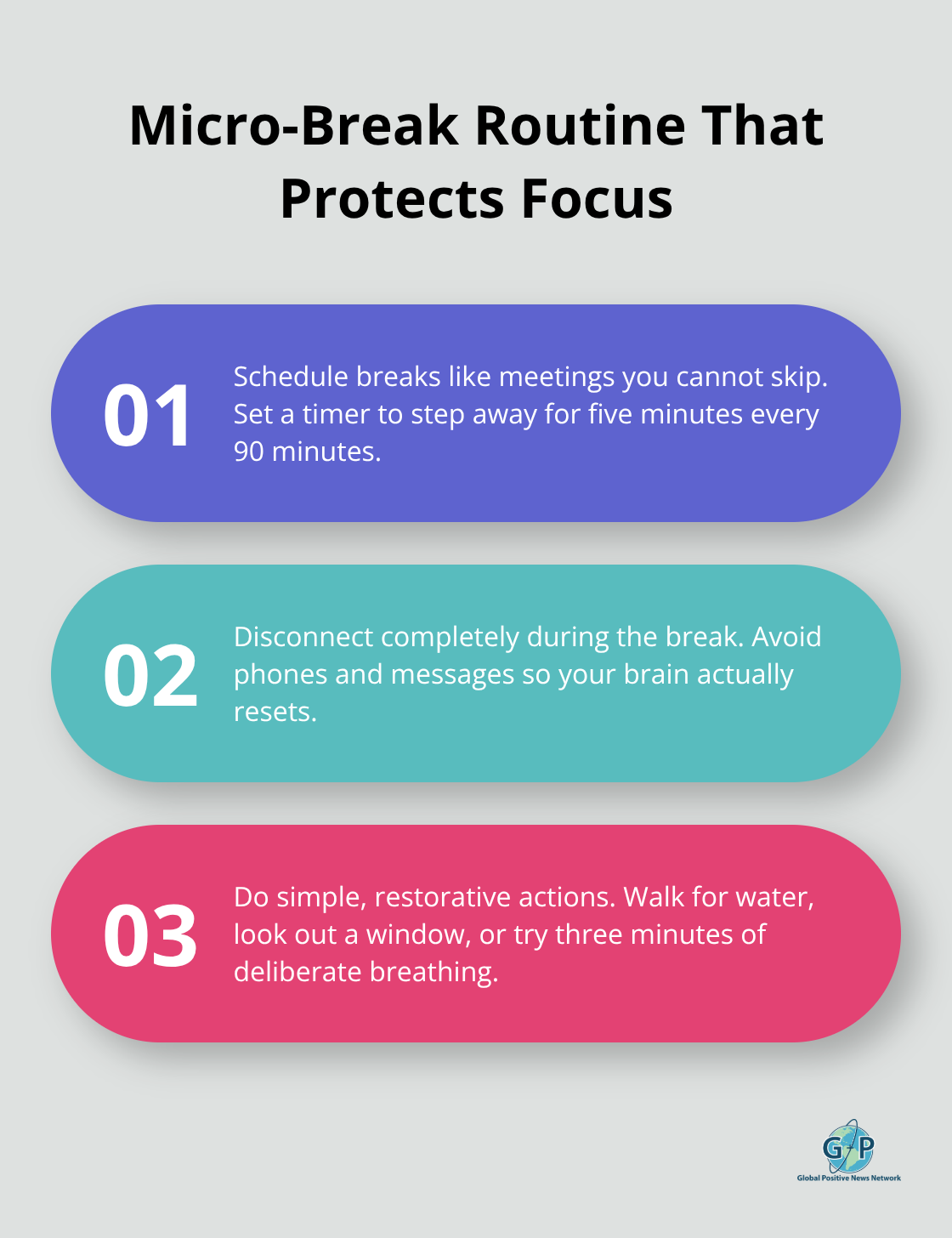
Research shows that regular short breaks enhance well-being and support sustained focus. Your nervous system needs these resets to maintain focus and emotional regulation. Without them, stress accumulates and negativity creeps in by mid-afternoon. The key is consistency: five minutes every 90 minutes beats a long break once a week.
Weave Gratitude Into Your Workflow
Integrate gratitude into your actual workflow rather than treating it as a separate practice. When a colleague helps you solve a problem, send them a quick message acknowledging their contribution within the same hour. When you complete a task, note it in a simple wins log before moving to the next one. This trains your brain to notice what’s working instead of fixating on obstacles. Research from the University of Otago found that regular appreciative engagement improves mood and reduces stress while boosting productivity. These three practices compound: intention focuses your energy, micro-breaks protect it, and gratitude sustains it.
Now that you’ve built these daily habits into your routine, the next step is creating an environment that reinforces this positive momentum. Your physical workspace and the relationships you cultivate there either support or sabotage the mental shifts you’ve just established.
Creating a Positive Work Environment
Celebrate Wins With Your Team
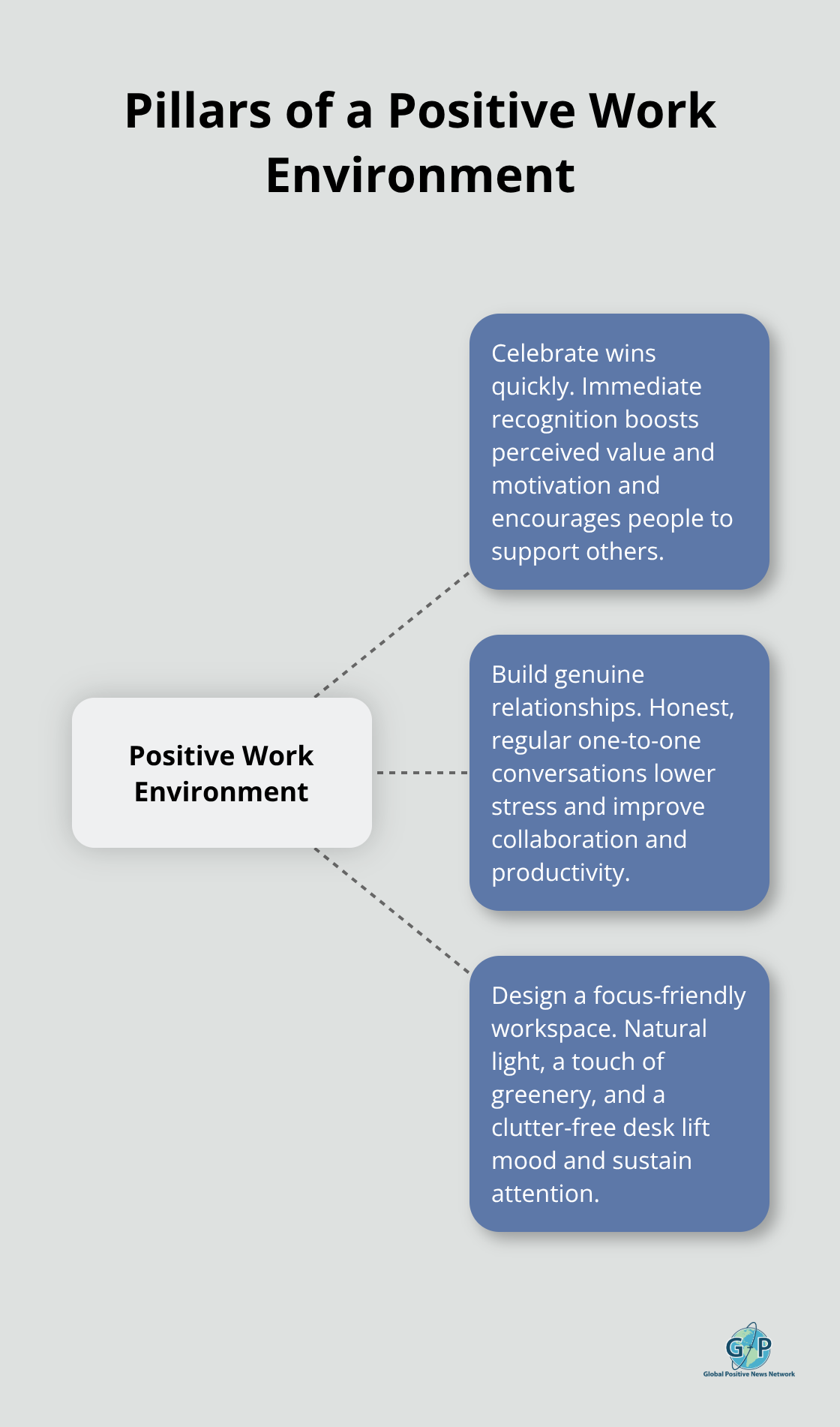
Your team’s accomplishments deserve immediate recognition. When someone completes a deliverable, mention it in the next team meeting or send a message to the group highlighting what they did. Harvard DCE research shows that calling out a colleague in a meeting or offering recognition boosts perceived value and motivation at work. The effect compounds: people who feel noticed work harder and support others more actively.
Your wins log from the previous section becomes shared currency here. If you tracked three wins yesterday, share one with your team today. This trains everyone to spot progress instead of fixating on what remains unfinished. Immediacy matters most. Recognition loses its power if it comes weeks later in a formal review.
Build Genuine Relationships With Colleagues
Strong workplace relationships lower stress and boost collaboration and productivity. This doesn’t mean you need to be friends with everyone. You need genuine interactions with at least a few colleagues where you can be honest about challenges and celebrate progress.
Schedule a 15-minute lunch or coffee with one colleague per week. Use that time to ask what they’re working on, what frustrates them, and what small win they achieved recently. These conversations build trust faster than team-building activities because they focus on real work, not forced fun. Trust and psychological safety enable employees to speak up, share diverse ideas, and discuss mistakes without fear of retribution.
Design Your Workspace to Support Focus
Your physical workspace shapes whether your positivity efforts stick or crumble by mid-week. A cluttered desk drains focus and reinforces scattered thinking. Natural light boosts mood and energy, so position your workspace near a window if possible or use daylight lamps. Add one plant or piece of greenery to your desk area.
Research shows that incorporating natural elements enhances mood and inspiration while reducing stress. Remove items that don’t serve your work or remind you of stalled projects. Create one small area with a meaningful photo or object that lifts your mood when you glance at it (these aren’t luxuries; they’re tools that protect the mental energy you’ve invested in building positivity habits). A clean, intentional workspace reinforces the mental shifts you’ve established through your daily practices.
Final Thoughts
The three practices you’ve implemented-setting daily intentions, taking micro-breaks, and building gratitude into your workflow-form a system that compounds over weeks and months. When you start your day with focus, protect that focus with breaks, and reinforce progress through recognition, your brain rewires itself to operate from a baseline of productivity rather than stress. Small shifts create measurable results that transform how you work.
The 90,000 hours you spend at work over your lifetime aren’t background noise; they’re the primary stage where your capabilities either flourish or atrophy. Positivity reminders for work function as circuit breakers that interrupt the default pattern of negative thinking before it consumes your mental resources. Each time you acknowledge a win, you train your brain to spot progress; each micro-break resets your nervous system so stress doesn’t accumulate; each intention you set channels your energy toward what matters instead of what worries you.
Start with one practice this week and build from there (if you choose the wins log, commit to noting three accomplishments daily for seven days and notice how your mood shifts by day four). Your workspace, your relationships, and your daily routines either support this momentum or undermine it. Explore Global Positive News Network for more strategies that help you sustain positive momentum at work.
Having a hard day?
The 2 Minute Hope Reset is a short free guide with three small practices for the days that feel heavy. Two minutes each, nothing to keep up with.
Get the free guideExplore more positive news:
Enjoying stories like this?
Global Positive News Network is reader-supported. If you’d like to support the mission, you can visit the Official GPNN store.