

How you start your morning shapes everything that follows. At Global Positive News Network, we’ve found that morning positivity rituals aren’t luxuries-they’re the foundation for better focus, calmer emotions, and genuine productivity gains backed by neuroscience.
The good news is that building these practices takes far less time than most people think. This guide walks you through the science, the specific techniques that work, and how to create a routine that actually fits your life.
Why Your Morning Brain Chemistry Matters
Your brain operates differently at dawn than it does later in the day, and this isn’t philosophical-it’s measurable biology. Cortisol, your primary stress hormone, naturally peaks between 30 to 45 minutes after waking, according to research from the Max Planck Institute. This surge prepares your body for action, but without intentional morning practices, that cortisol spike triggers anxiety and scattered thinking instead of focused energy.
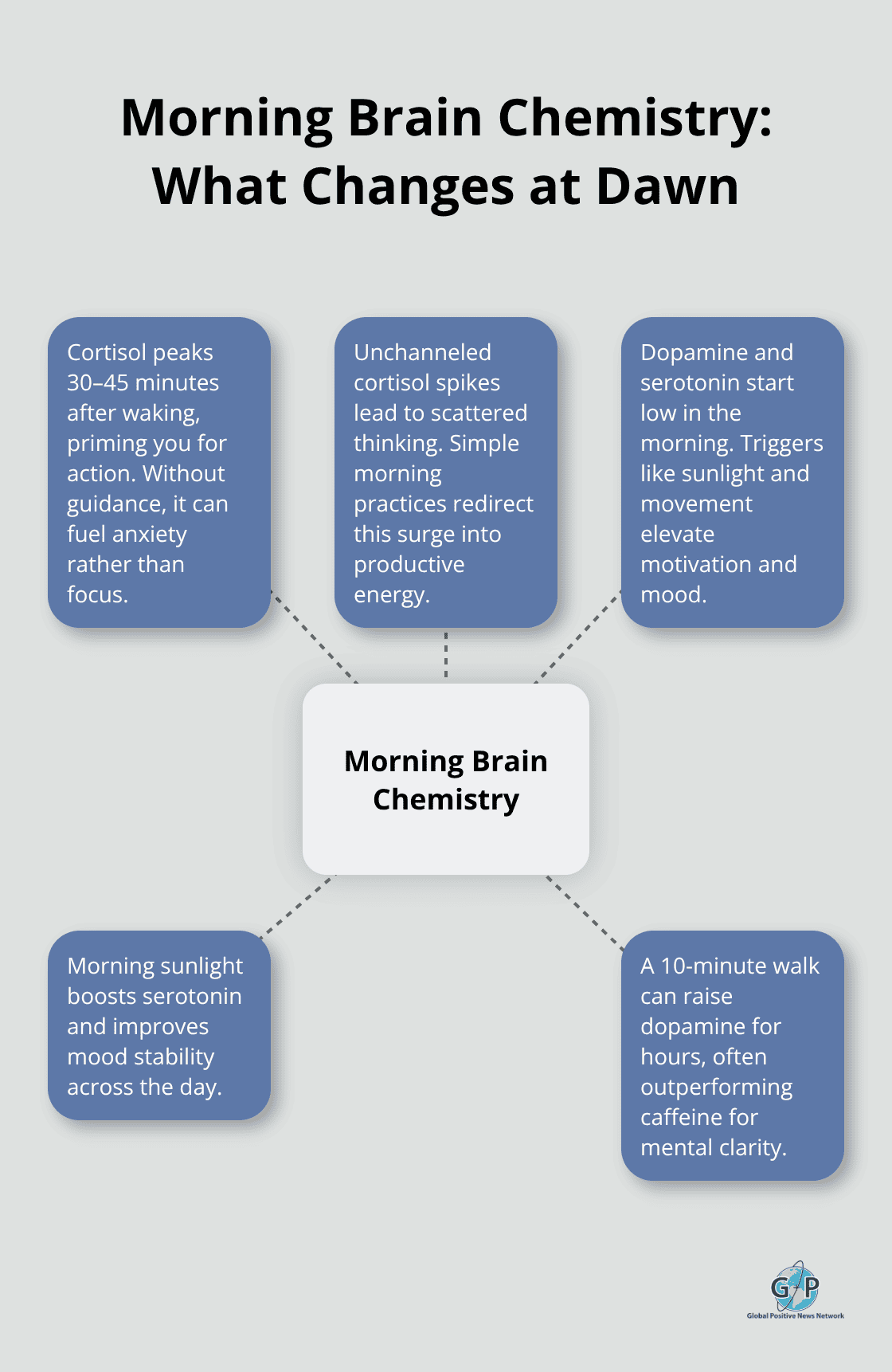
Dopamine and serotonin, the neurotransmitters that regulate motivation and mood, remain lowest in the morning and require specific triggers to increase. Sunlight exposure within the first hour of waking directly signals your brain to produce more serotonin-a mechanism so reliable that a 2017 study in the Journal of Psychiatric Research found people who received morning light had measurably better mood stability throughout their day. Physical movement amplifies this effect: a 10-minute walk in natural light produces dopamine increases that last for hours, making it far more effective than caffeine alone for mental clarity.
Morning Light Exposure Changes Everything
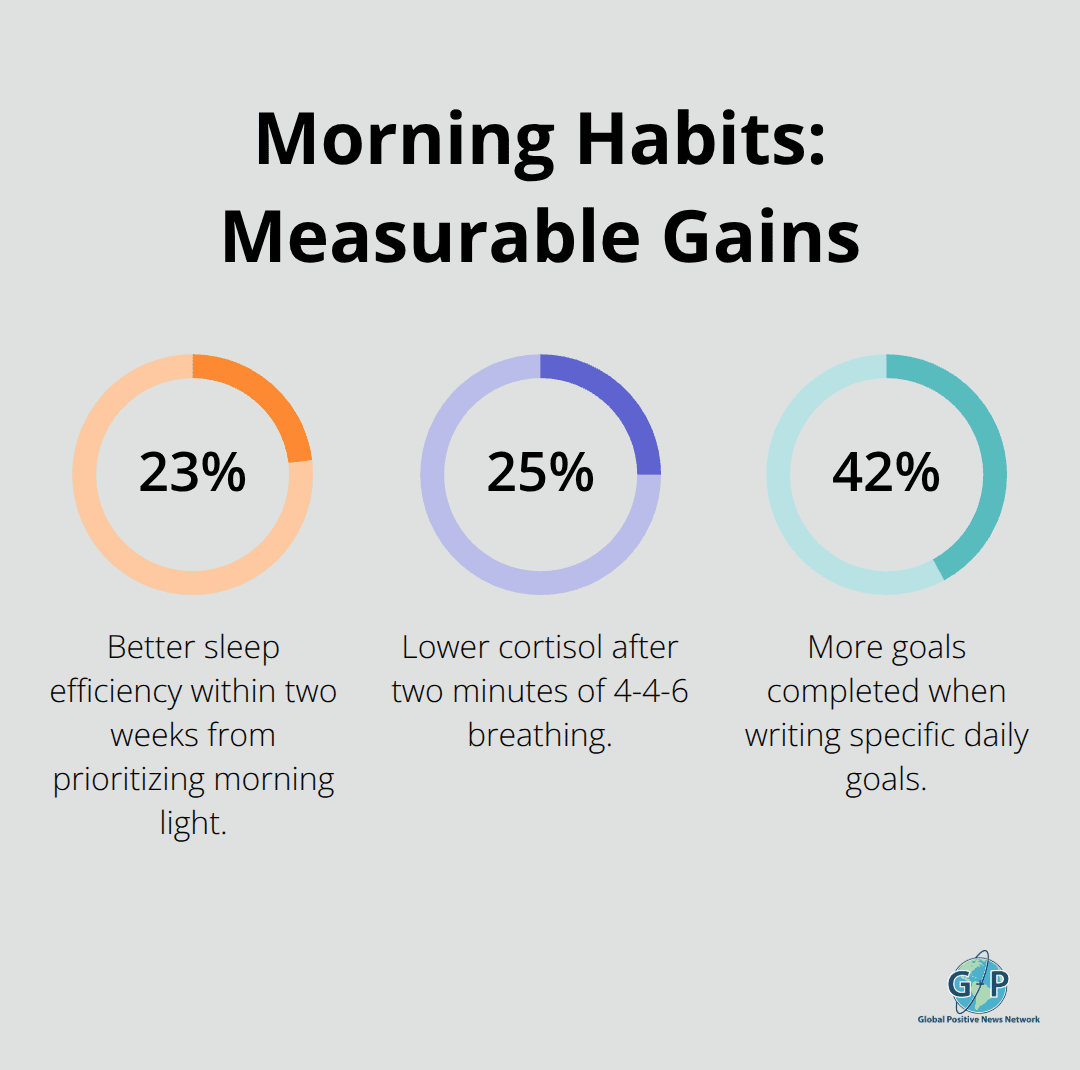
The timing of light exposure matters more than most people realize. Getting sunlight between 6 and 9 AM sets your circadian rhythm with precision, which then improves sleep quality that night-a compounding benefit that builds over weeks. A Stanford Medicine study tracking 100 participants found that those who prioritized morning light had 23% better sleep efficiency within two weeks. If natural sunlight isn’t available, a 10,000 lux light therapy lamp used for 20 to 30 minutes produces similar neurological effects. This single practice costs nothing beyond initial equipment and eliminates the need for heavy reliance on stimulants to feel alert.
Consistent Timing Rewires Your Nervous System
Waking at the same time daily-even weekends-creates neural pathways that stabilize your entire endocrine system. Consistent wake times support your circadian rhythm and endocrine stability. Your brain doesn’t distinguish between weekdays and weekends; it responds to predictability. Consistency in morning routines produces measurable improvements in focus within 14 days, according to habit formation research from University College London, because your prefrontal cortex (responsible for decision-making and impulse control) requires less energy when patterns are established.
Why These Biological Shifts Matter for Your Day
Understanding your morning brain chemistry transforms how you approach your first hours awake. Most people fight against their biology instead of working with it, which explains why willpower-based approaches fail. When you align your morning actions with your actual neurological needs, you stop struggling and start building momentum that carries through your entire day. The practices that follow in this guide work precisely because they target these biological realities rather than relying on motivation alone.
What Actually Works for Morning Positivity
Gratitude and Journaling: Specificity Activates Your Brain
Gratitude and journaling work fastest when you write specific observations rather than generic statements. Instead of writing “I’m grateful for my family,” write what your family did yesterday that mattered-your partner made your coffee without asking, your child laughed at breakfast, your parent called to check in. This specificity activates your brain’s reward system more powerfully than vague thankfulness. Research shows that people who wrote detailed gratitude entries showed measurable increases in positive emotion, while those who wrote general statements showed no significant change.
Your brain doesn’t reward abstract thinking the same way it rewards concrete observation. Spend five minutes maximum on this practice-more time doesn’t increase benefits and often turns gratitude into a chore. Write in the morning before checking your phone, because incoming notifications immediately trigger cortisol and undermine the neurochemical shift you’re building.
Journaling about what you want to accomplish that day works better than journaling about your feelings. A study from Dominican University found that people who wrote specific daily goals completed 42% more of them than those who didn’t write anything down. This simple shift transforms journaling from emotional processing into a tool that shapes your actual behavior.
Meditation: Three Minutes Beats Twenty Minutes of Struggle
Meditation doesn’t require sitting in silence for 20 minutes, and claiming it does is why most people quit. Three minutes of focused breathing-inhaling for four counts, holding for four counts, exhaling for six counts-produces measurable calming effects on your nervous system because the extended exhale activates your parasympathetic nervous system. A 2018 study in Frontiers in Human Neuroscience showed that even two minutes of this breathing pattern reduced cortisol levels by 25% in participants.
Physical movement matters more than meditation for most people. A 10-minute walk, even indoors, raises dopamine and serotonin more reliably than sitting still. This doesn’t mean meditation lacks value-it means most people see faster results from movement, which makes them more likely to stick with their routine.
Movement and Nutrition: The Timing Matters More Than You Think
If you exercise in the morning, do it within one hour of waking to maximize the neurological benefits. Morning exercise tends to decrease cortisol concentrations after awakening and improve sleep quality. This timing advantage compounds over weeks, creating a measurable difference in your overall daily performance.
Nutrition after your morning movement matters more than what you eat before it. Your body needs protein and healthy fats to stabilize blood sugar and sustain the dopamine elevation you’ve built. Eggs, Greek yogurt, nuts, or salmon all work effectively. Skip sugary cereals and processed breakfast items-they spike your blood sugar and create an energy crash within two hours that destroys your focus.
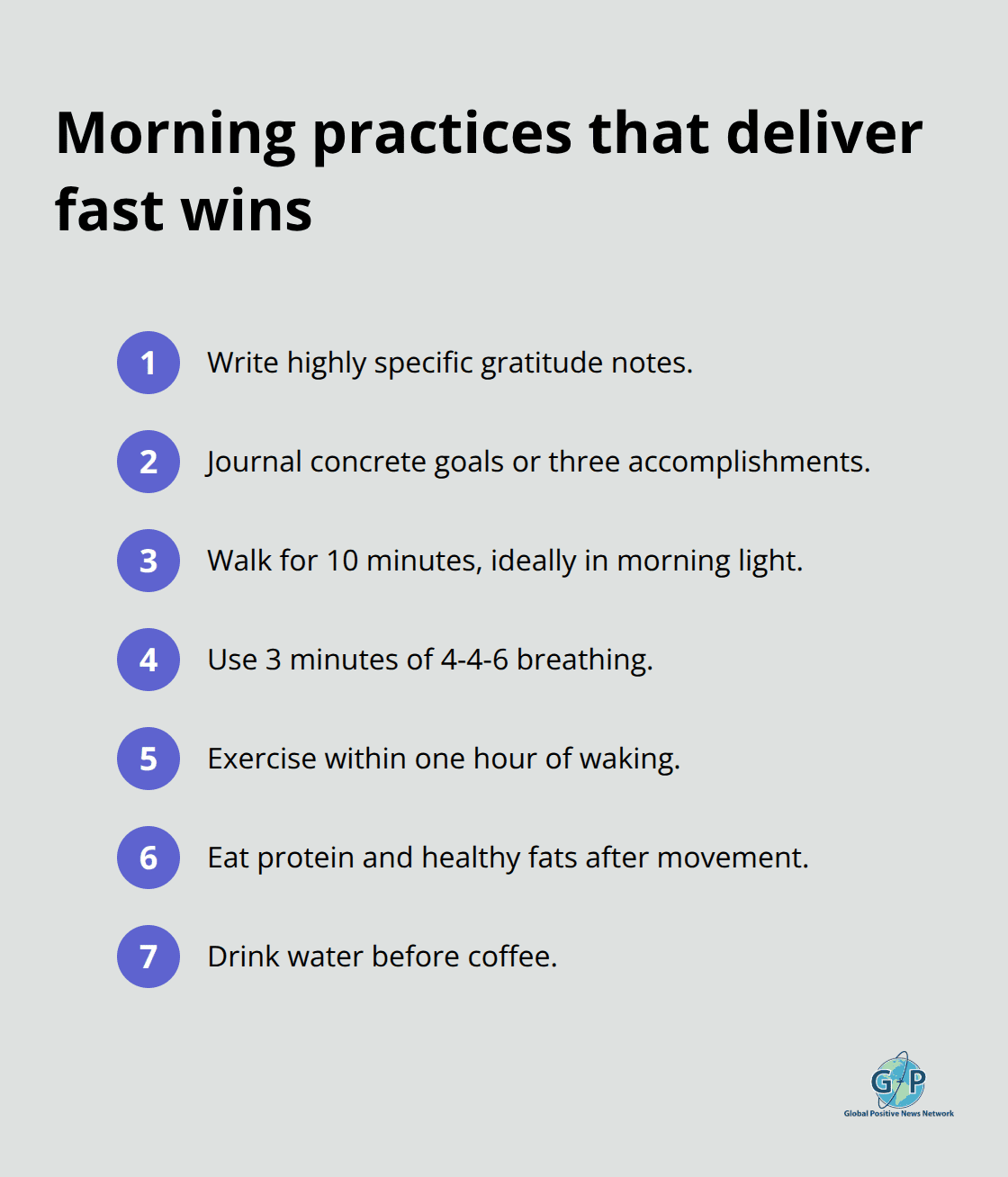
Drink water first, before coffee. Dehydration mimics anxiety symptoms and blunts your morning clarity gains. This single adjustment (placing water before caffeine) often produces noticeable improvements in mental sharpness within days.
Building Your Personal Combination
The practices that work best aren’t universal-they’re personal. Some people respond faster to movement, others to gratitude, still others to breathing work. The key is testing each practice for three days and tracking which ones produce the most noticeable shift in your energy and focus. Once you identify your most effective practices, you can build them into a routine that actually fits your schedule and personality, which we’ll explore in the next section.
Build Your Routine Without Overthinking It
Most people fail at morning routines because they design something perfect on paper, then abandon it after four days when reality doesn’t match their ideal vision. The solution isn’t a better plan-it’s testing small changes and keeping only what actually works for your life.
Track Your Current Morning Baseline
Start with one week of observation without changing anything. Write down your wake time, what you do in the first 30 minutes, how you feel at 9 AM, and your energy level at noon. This baseline matters because you need concrete data about your starting point, not assumptions. After one week, identify the single worst part of your morning-the thing that drains energy or creates friction. Maybe you scroll social media for 15 minutes, maybe you skip breakfast, maybe you rush through getting ready.
Test One Practice for 14 Days
Pick that one problem and replace it with one of the practices from the previous section that matched your personality. If you respond better to movement than meditation, swap your scrolling time for a 10-minute walk. If you’re drawn to journaling, write three specific things you accomplished yesterday instead of checking your phone. Test this single change for exactly 14 days because that’s how long habit formation research shows it takes for your brain to wire new patterns.
Track your 9 AM energy and noon focus level during these 14 days and compare them to your baseline week. If that practice produces measurable improvement-you feel sharper, less anxious, or more focused-keep it permanently. If it doesn’t work, replace it with a different practice and test for another 14 days.
Add One Practice Every Two Weeks
This sequential approach works because it removes decision fatigue and creates genuine sustainability. Most people try to overhaul their entire morning simultaneously, which overwhelms your brain’s capacity for change. Adding one practice every two weeks means that within two months you’ve built a complete routine that actually fits your schedule and personality, not someone else’s ideal morning.
Tools like Streaks or Habitica track whether you complete your practice each day, giving your brain a small dopamine hit for consistency. Neither requires complex setup-just record your single practice and watch the streak grow. Visual feedback increases adherence according to research on goal tracking.
Stack Practices in Your Natural Order
After your first practice becomes automatic, add a second one. Maybe morning light exposure for 20 minutes, then add gratitude journaling five minutes later. Stack them in order of how your body naturally flows, not in theoretical order. Your routine should feel like a sequence, not a checklist. The total time should never exceed 30 minutes because longer routines create resentment and dropout rates spike dramatically after day 10. If you’re pressed for time, prioritize the single practice that moved your energy level most during testing, rather than trying to squeeze in everything.
Final Thoughts
The practices you tested over the past weeks form the foundation for sustained mental clarity and emotional stability. When you align your morning actions with your brain’s actual biology, you stop fighting yourself and start building genuine momentum. The 23% improvement in sleep efficiency, the 25% cortisol reduction from breathing work, and the 42% increase in goal completion from writing represent measurable shifts that compound into a fundamentally different experience of your day.
What makes morning positivity rituals powerful isn’t complexity-it’s consistency. Your nervous system responds to predictability and alignment with your circadian rhythm, whether you meditate for 20 minutes or walk for 10. The routine you built over the past two months works because you tested it against your actual life, not against someone’s ideal vision. People who establish consistent morning practices report better sleep quality weeks later, improved focus during work hours, and measurably calmer responses to stress, while your prefrontal cortex strengthens through repetition and makes decision-making easier throughout your day.
Starting tomorrow means one thing: wake at your chosen time and complete your first practice. Your brain handles the rest through the biological mechanisms you now understand. If you’re looking for ongoing inspiration and stories of real people making meaningful changes in their lives, Global Positive News Network curates uplifting content that reinforces the mindset shifts you’re building.
Having a hard day?
The 2 Minute Hope Reset is a short free guide with three small practices for the days that feel heavy. Two minutes each, nothing to keep up with.
Get the free guideExplore more positive news:
Enjoying stories like this?
Global Positive News Network is reader-supported. If you’d like to support the mission, you can visit the Official GPNN store.