

Most people feel stuck when it comes to making a real difference. You have skills, values, and energy that matter-but figuring out where to start feels overwhelming.
At Global Positive News Network, we believe purpose-driven living starts with understanding your unique role in creating change. This guide walks you through identifying what matters most, finding where you fit, and overcoming the obstacles that hold you back.
Understanding Your Personal Values and Impact
What Actually Shapes Your Values
Your values aren’t abstract ideals you think about once and forget. They’re the operating system that drives every decision you make, from how you spend your money to where you volunteer your time. The first step toward meaningful change is identifying what genuinely matters to you, not what you think should matter.
Start by listing three moments when you felt genuinely proud of yourself or deeply moved by something you witnessed. These moments reveal your actual values, not your aspirational ones. If you felt proud when you defended someone treated unfairly, fairness matters to you. If you felt moved when a community garden transformed a neighborhood, environmental stewardship and community connection matter to you.
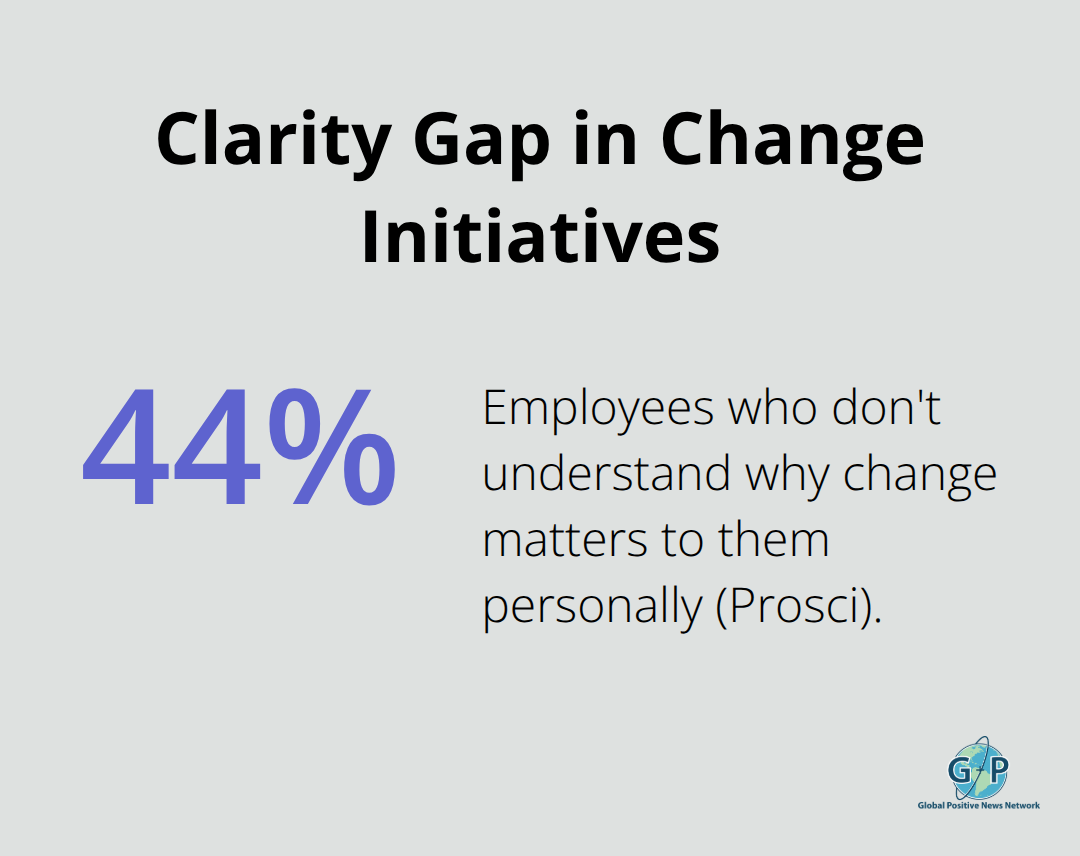
These concrete experiences are far more reliable than abstract lists. Once you’ve identified your core values, the next move is understanding how they connect to real-world problems. According to research from Prosci, 44% of employees don’t understand why change matters to them personally, which means clarity about your own connection to a cause is rare and powerful. When you articulate exactly why a particular issue aligns with your values, you become someone who sustains effort rather than burning out after initial enthusiasm.
How Your Actions Ripple Through Communities
Your actions ripple further than you realize, but only if you’re intentional about them. Someone who volunteers at a local food bank doesn’t just help individuals access meals that week. They also send a signal to their community that food security matters, they potentially inspire family members or coworkers to get involved, and they gather real data about gaps in local services that could inform advocacy.
Most people underestimate these secondary effects and assume their individual contribution doesn’t matter. This thinking is backwards. Research shows that projects with strong sponsorship and visible leadership support are more likely to meet objectives. Your visible commitment to an issue functions exactly like that sponsorship does within organizations.
When you take action aligned with your values, you become a proof point that change is possible. This doesn’t require you to be famous or wealthy. A parent who teaches their child about a cause they care about, a coworker who speaks up about an issue in meetings, or a neighbor who organizes around a local problem all multiply their impact through influence and visibility.
Map Your Secondary Effects
Stop thinking of your impact as isolated and start mapping the secondary effects of your potential actions. Who would notice your involvement? Who might you inspire? What systems or patterns might shift if you took action? These questions move you from passive observation to active participation in your community’s transformation, setting the stage for identifying exactly where your unique skills and strengths fit best.
Where Your Skills Meet Real Need
Identify What You Actually Do Well
The gap between having skills and knowing where to apply them keeps most people sidelined. You might excel at organizing, writing, problem-solving, or building relationships, but without a clear picture of where those abilities intersect with actual community problems, you stay stuck in potential rather than impact. Start with a ruthless inventory of what you’re genuinely good at-not what you wish you were good at or what looks impressive on paper, but what people actually ask you to do and what makes you lose track of time.
If people constantly ask for your help planning events, you have organizational capability. If colleagues turn to you when they need clarity on complex problems, you have analytical strength. If friends confide in you about difficult situations, you have emotional intelligence. These aren’t soft skills. They’re the exact tools communities need right now.
Match Your Abilities to Real Community Gaps
Next, locate where those abilities address real gaps in causes you care about. If you identified fairness as a core value and you’re skilled at research and writing, organizations fighting systemic inequality need people who can document problems and communicate them clearly. If environmental stewardship matters to you and you’re good with people, community gardens and local conservation groups need coordinators and outreach leads.
The mistake most people make is waiting for a perfect job description that matches their entire skill set. That rarely exists. Instead, find organizations working on issues aligned with your values and ask what they’re struggling to do. Organizations are desperate for people who can actually execute, not just volunteer. Your specific skills are valuable precisely because they’re needed right now.
Start with a Three-Month Commitment
Starting with a small, defined commitment prevents overwhelm and builds momentum. Rather than committing to a board position or a major leadership role immediately, identify one specific project or initiative you can contribute to over the next three months. This might mean helping a local organization update their website, organizing a single community event, or mentoring one person working on an issue you care about.
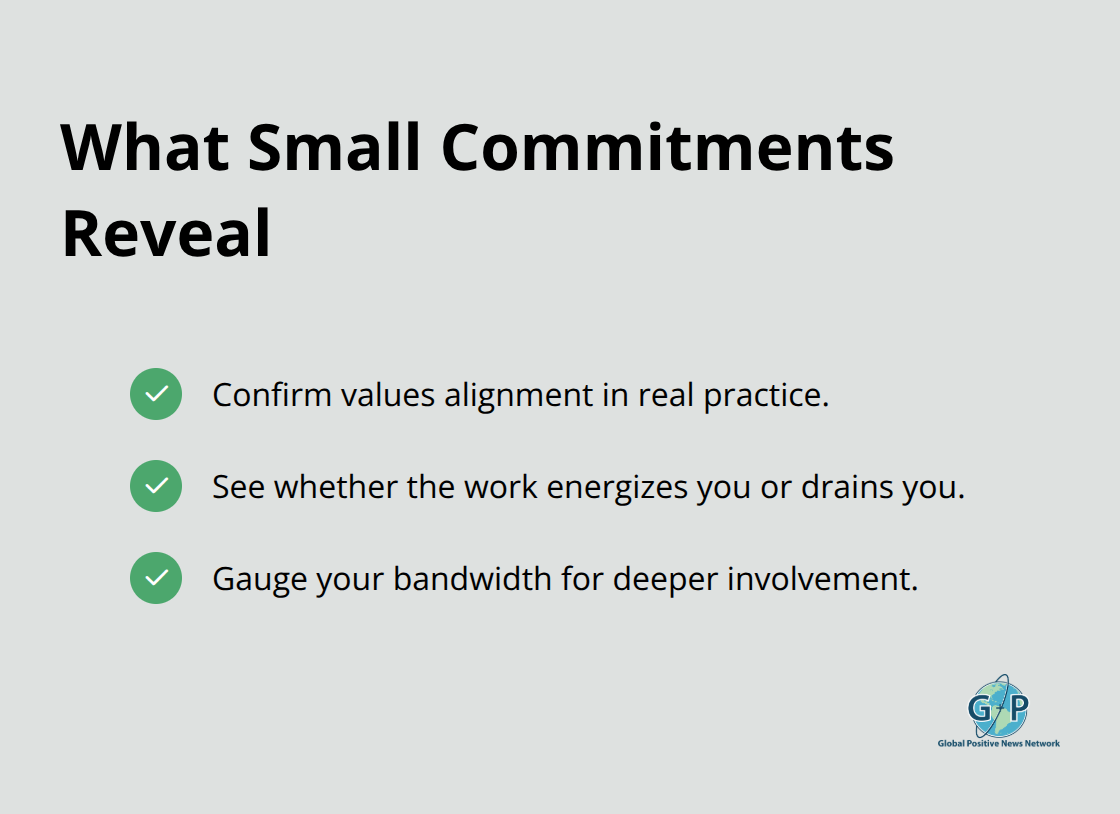
Small commitments reveal whether an organization’s values match yours in practice, whether the work energizes you or drains you, and whether you have the bandwidth for deeper involvement. Mentorship networks share one characteristic: they match people with specific skills to people with specific needs. You can join existing efforts immediately without starting from scratch.
Test Fit Before Going Deeper
This approach reduces friction and lets you test fit before investing heavily. After three months, you’ll know whether to deepen involvement, try a different organization, or shift your focus entirely. That’s not failure. That’s learning. The organizations doing the most effective work understand that people need on-ramps, not cliff jumps. Your job is to find those entry points and take them.
Once you’ve matched your skills to a real need and tested your fit with an organization, the next challenge emerges: the internal obstacles that prevent people from sustaining their commitment, even when they’ve found the right place to contribute.
What Actually Stops You From Taking Action
Self-Doubt Won’t Disappear Before You Start
Self-doubt hits hardest when you’re about to commit. You question whether you have enough experience, whether your contribution matters, or whether you’ll embarrass yourself by not knowing what you’re doing. This is normal, but it’s also a trap. Research shows that employees experiencing change often face significant stress, and a portion of that stress comes from fear of performing poorly in new situations.
The antidote isn’t confidence you don’t have yet. It’s action despite the doubt. People who start small commitments discover that organizations are far more forgiving than they imagined. They’re desperate for help, not perfect execution. A three-month project gives you permission to be a beginner-you’re not expected to know everything on day one.
Organizations that retain volunteers and activists long-term explicitly communicate that learning on the job is part of the role. When you reframe negative thoughts as information rather than a barrier, it loses its power. Your doubt tells you where you need support, not that you shouldn’t try.
Time Scarcity Often Masks Deeper Hesitation
Time scarcity is real, but it’s often an excuse that masks deeper ambivalence. The gap between intention and action exists partly because people wait for perfect conditions that never arrive.
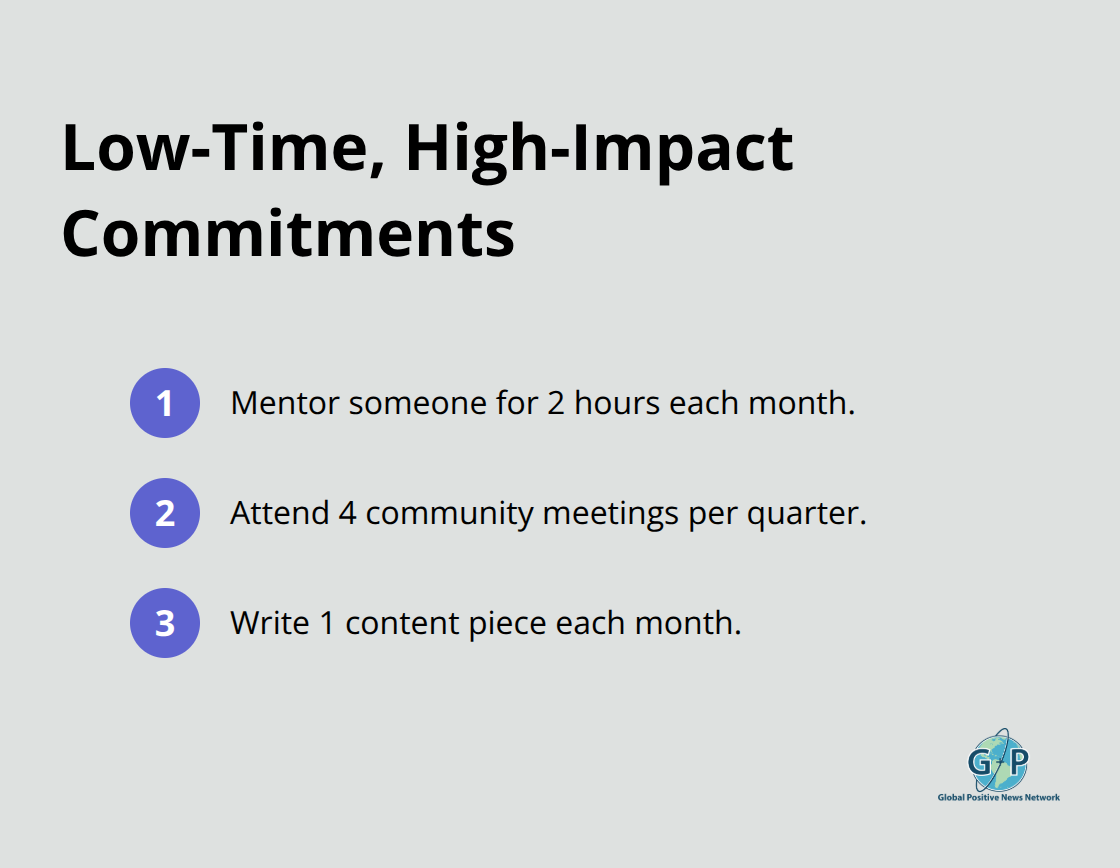
You don’t need ten hours a week to make a difference. You need clarity about what you’re willing to give and commitment to that specific amount. One person mentoring another person for two hours monthly has measurable impact. One person attending four community meetings per quarter influences decisions. One person writing one piece of content per month shapes how issues get discussed.
The key is consistency, not volume.
Set a specific, non-negotiable time commitment and protect it like any other important obligation. Then find organizations and roles that fit that commitment level. If you have two hours monthly, don’t pursue a board seat. If you have five hours weekly, a coordinating role becomes possible.
Accountability Partners Transform Intention Into Action
Accountability partners accelerate this process dramatically. When someone else expects you to show up, you’re far more likely to actually do it. Local groups meeting regularly maintain momentum and support each other’s involvement.
Find one person also interested in an issue and agree to check in monthly about your progress. That single relationship transforms intention into action. You’ll discover that the obstacles you thought were permanent actually shift once you commit to showing up consistently.
Final Thoughts
You now have a framework for identifying your values, matching your skills to real community needs, and overcoming the internal obstacles that keep most people sidelined. Purpose-driven living requires you to take small, consistent actions aligned with what actually matters to you, not to wait for perfect conditions or complete confidence. Pick one organization or initiative working on an issue you care about and reach out this week to ask what they need help with over the next three months.
The obstacles you identified-self-doubt, time constraints, isolation-shift once you commit to showing up. When you work alongside others pursuing the same values, doubt loses its grip because you see people taking action anyway. Time scarcity becomes manageable because you set a specific commitment rather than waiting for ideal circumstances. Isolation ends because you connect with others building toward something meaningful.
Visit Global Positive News Network to explore stories of people creating real change in their communities and access resources that support your journey. Your role in making change starts with one decision, one conversation, and one commitment to show up-make that decision today.
Having a hard day?
The 2 Minute Hope Reset is a short free guide with three small practices for the days that feel heavy. Two minutes each, nothing to keep up with.
Get the free guideExplore more positive news:
Enjoying stories like this?
Global Positive News Network is reader-supported. If you’d like to support the mission, you can visit the Official GPNN store.