

Staying cheerful isn’t about forcing happiness or ignoring real problems. At Global Positive News Network, we believe practical positivity tips work best when they fit into your actual life, not some idealized version of it.
This guide shows you concrete habits, strategies, and tools that genuinely help people feel better. You’ll find approaches you can start using today.
Simple Daily Habits That Boost Your Mood
Move Your Body Before You Check Your Phone
Start your day with movement before checking your phone. The Physical Activity Guidelines for Americans recommend at least 150 minutes of moderate exercise per week, and research shows that even 5- to 10-minute chunks work just as well as longer sessions. Morning exercise releases mood-boosting chemicals that carry through your entire day. Walk for ten minutes, do bodyweight exercises, or stretch deliberately. This single habit beats most other interventions because it physically changes your brain chemistry rather than relying on willpower alone.
Practice Concrete Gratitude
Follow your movement with a specific gratitude practice: write down three things you’re thankful for, but make them concrete. Instead of writing “my family,” write “my sister texted me yesterday to check in.” Research shows that gratitude interventions lead to greater feelings of gratitude, better mental health, and fewer physical complaints. The specificity matters because vague gratitude doesn’t activate the same neural pathways. Pair this with a healthy breakfast that includes all main food groups. The NHS emphasizes that a balanced diet supports mood and brain function directly.
Reframe Negative Thoughts as They Arrive
When negative thoughts arrive during your day (which they will), reframe them immediately using the Mayo Clinic method: identify the distortion, then rewrite it. If you think “I’ll never get this right,” replace it with “I’ll tackle it step by step.” This isn’t toxic positivity-it’s cognitive behavioral therapy that actually works. Schedule worry time for later if anxious thoughts spiral; tell yourself you’ll address concerns at 3 PM instead of now.
Protect Your Sleep and Reach Out
Sleep seven to eight hours nightly, and write a to-do list before bed to organize thoughts and reduce nighttime distractions. On tough days, reach out to one person in your support network. Talking releases tension and strengthens relationships, according to NHS research. Your positivity doesn’t come from ignoring problems-it comes from these small, repeated actions that gradually shift how your brain responds to stress and difficulty. These foundational habits prepare you to handle the harder moments that test your resilience.
When Tough Times Test Your Positivity
Interrupt Negative Thought Patterns Before They Spiral
Life delivers setbacks, and pretending they don’t exist won’t help you stay cheerful. The real test of positivity happens when circumstances push back hard. Negative thought patterns that trap people in downward spirals include filtering (focusing only on the bad), catastrophizing (assuming the worst outcome), and all-or-nothing thinking (viewing situations as completely good or completely bad). The moment you notice these patterns, interrupt them. If you think “I failed completely,” ask yourself what you’d tell a friend in the same situation. You’d likely say something like “You did your best with what you knew then, and now you can adjust.” Use that same language with yourself. This isn’t motivation through self-deception; it’s cognitive behavioral therapy that neuroscientists confirm actually reshapes how your brain processes difficulty.
Schedule Your Worry and Solve Problems Instead
When worry spirals threaten to consume your afternoon, schedule it instead. Tell yourself you’ll worry from 3 PM to 3:15 PM, then move on. This technique works because your brain stops fighting the feeling when you give it a designated time. Research shows that concrete problem-solving beats endless rumination. Instead of dwelling on a conflict with a colleague, spend fifteen minutes writing three specific actions you could take tomorrow to address it. This shift from rumination to action changes your neurochemistry and restores your sense of control.
Lean on Your Support Network and Creative Outlets
Your support network determines whether you bounce back or break down during hard seasons. The NHS emphasizes that talking releases tension and strengthens relationships, yet most people isolate when struggling. Reach out to one specific person today, not tomorrow. Text a friend and say what you actually feel rather than “I’m fine.” Communities matter too; consider joining a depression support group or a local hobby group where you share interests with others. These connections provide both immediate relief and long-term resilience.
Creative expression offers another powerful outlet when words fail. Write about a difficult experience for twenty minutes, paint, or sing to activate different neural pathways than talking alone. Building resilience means making something worthwhile from painful times, whether that’s starting a support group, creating art, or mentoring someone facing similar challenges. The shift from victim to contributor happens quietly through these actions, not through motivation speeches or positive affirmations alone. These tools and strategies prepare you to move forward, and the next section shows you which platforms and resources can support this work over the long term.
Positivity Tools and Resources Worth Using
Apps and Platforms That Track Your Progress
Tracking your mood and progress transforms positivity from something vague into something measurable. The Mayo Clinic research on positive thinking emphasizes that daily practice is key because change takes time, and apps provide the structure most people need to stay consistent. Every Mind Matters offers practical CBT techniques through their platform, helping you manage stress and build resilience with guided exercises you can complete in five to ten minutes.
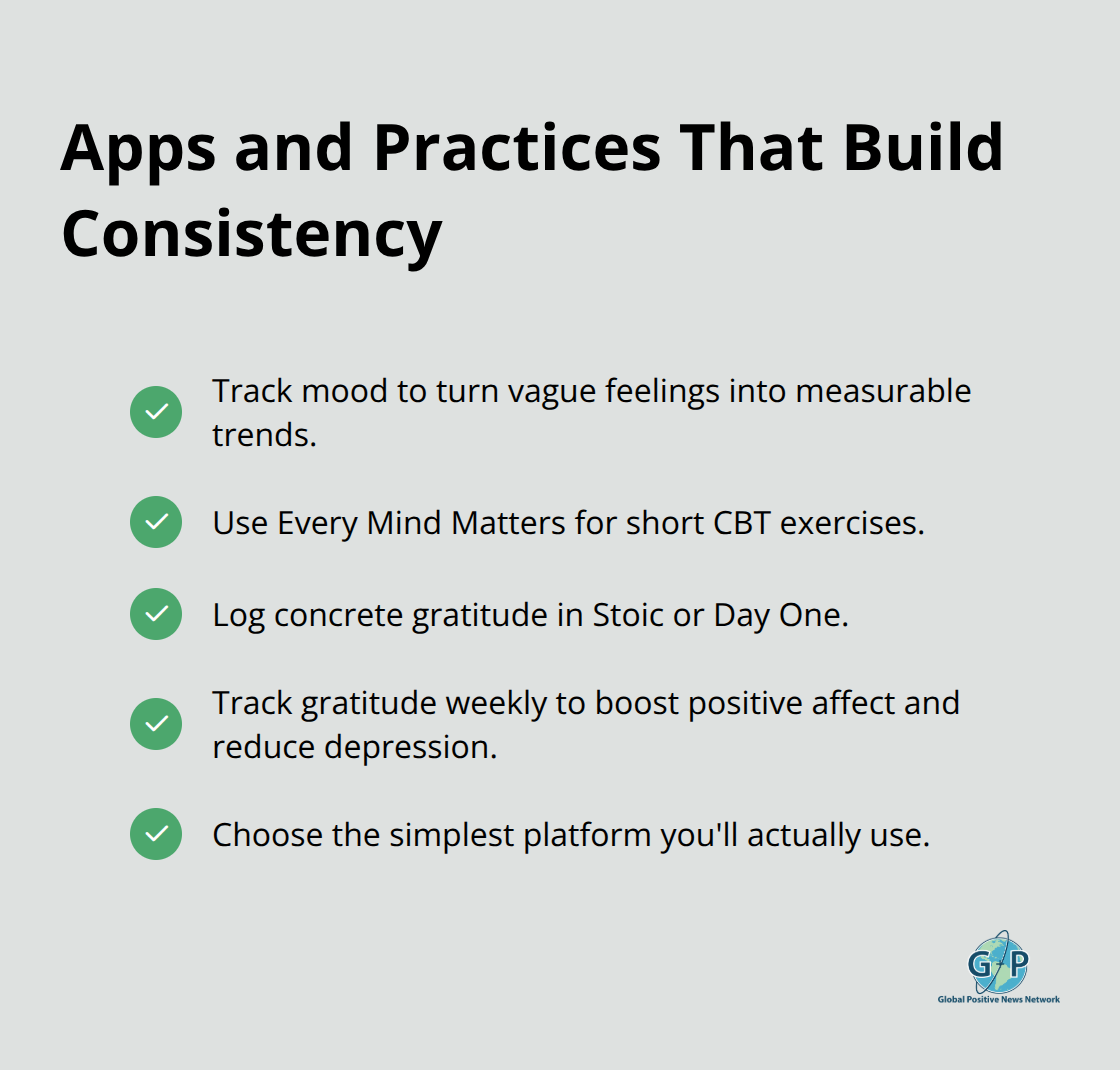
If you prefer something simpler, a basic gratitude journal app like Stoic or Day One lets you record specific moments of thankfulness and revisit them when doubt creeps in. The data matters here: tracking gratitude once a week is associated with increased positive affect and reduced depression symptoms, according to research on positive psychology interventions. Start with whichever platform feels least like another chore, because consistency beats perfection every single time.
Free Resources for Anxiety and Overwhelm
The NHS provides audio guides like How to Cope with Anxiety, which offers guided relaxation techniques you can access free whenever panic or overwhelm arrives. These resources cost nothing and work immediately when stress spikes during your day. Mindfulness resources also support happiness and coping with stress, giving you multiple pathways to calm your nervous system when circumstances feel out of control.
Communities That Connect You With Others
Communities focused on uplifting content prevent the isolation that derails most positivity efforts. Depression support groups, hobby communities, and local meetups all serve different purposes, but they share one critical function: they connect you with people who understand your struggle without judgment. Mind and Every Mind Matters both host online communities where you can access credible mental health resources and share experiences with others building resilience.
Books and Content Grounded in Science
Books worth reading include those grounded in positive psychology research rather than motivational platitudes, particularly works by Sonja Lyubomirsky that explain why certain practices actually rewire your brain. Creative visualization, practiced by high achievers across fields, involves spending twenty minutes writing about a positive future in detail-an exercise developed by Laura King that produces measurable mood improvements. The key is selecting resources that explain the science behind positivity practices rather than demanding you simply think happy thoughts. This approach respects your intelligence and gives you concrete reasons to trust the work you’re doing when circumstances test your commitment.
Final Thoughts
Practical positivity tips work because they reshape how your brain responds to stress and difficulty, not because they deny real problems. The habits you’ve read about-morning movement, specific gratitude, reframing negative thoughts, reaching out to others, and tracking progress through apps-all produce measurable changes in your mood and resilience over time. Research from the Mayo Clinic confirms that daily practice matters far more than intensity; small, repeated actions reshape your neural pathways far more effectively than occasional motivation bursts.
Start with one habit this week and choose whichever practice feels most realistic for your actual schedule, not the schedule you wish you had. If mornings are chaotic, reframe one negative thought during your lunch break instead. The specific habit matters far less than consistency and honesty about what you’ll actually do, because three months of writing specific things you’re thankful for will transform your life in ways that a single week never could.
Your positivity journey doesn’t require perfection or constant happiness-it requires showing up repeatedly with small actions that gradually shift how you respond to setback and difficulty. These practical positivity tips accumulate into genuine resilience, the kind that holds steady when circumstances push back hard. Start today with one small action, then build your resilience with Global Positive News Network and our community of people committed to this work.
Having a hard day?
The 2 Minute Hope Reset is a short free guide with three small practices for the days that feel heavy. Two minutes each, nothing to keep up with.
Get the free guideExplore more positive news:
Enjoying stories like this?
Global Positive News Network is reader-supported. If you’d like to support the mission, you can visit the Official GPNN store.