
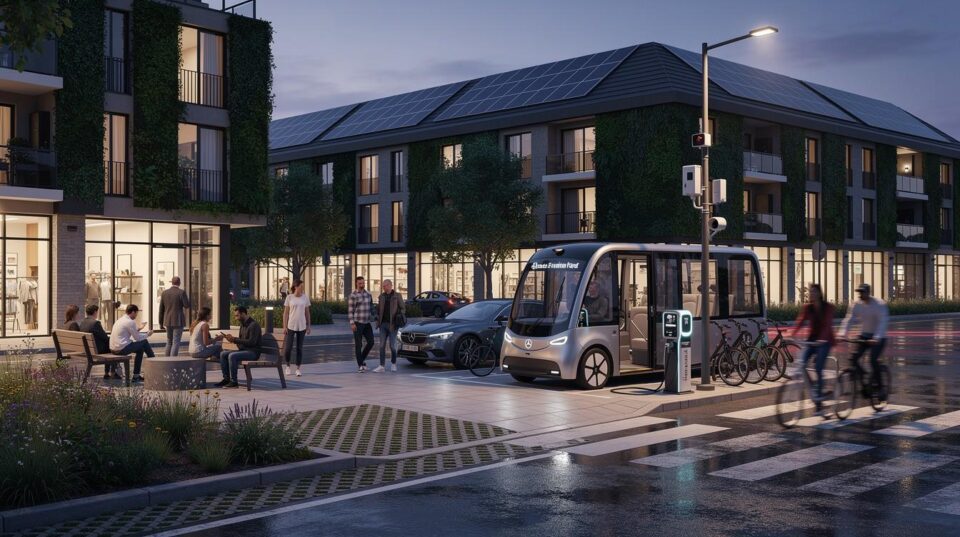
Cities worldwide are facing mounting pressure to handle climate impacts, aging infrastructure, and rapid population growth. Smart cities hopeful tech offers concrete solutions through real-time data systems, predictive maintenance, and faster emergency response.
We at Global Positive News Network have examined how leading cities like Singapore, Copenhagen, and Barcelona are already deploying these technologies with measurable results. This post explores what works, what costs money, and how your city can start building a more resilient future.
How Smart Cities Turn Data Into Faster Action
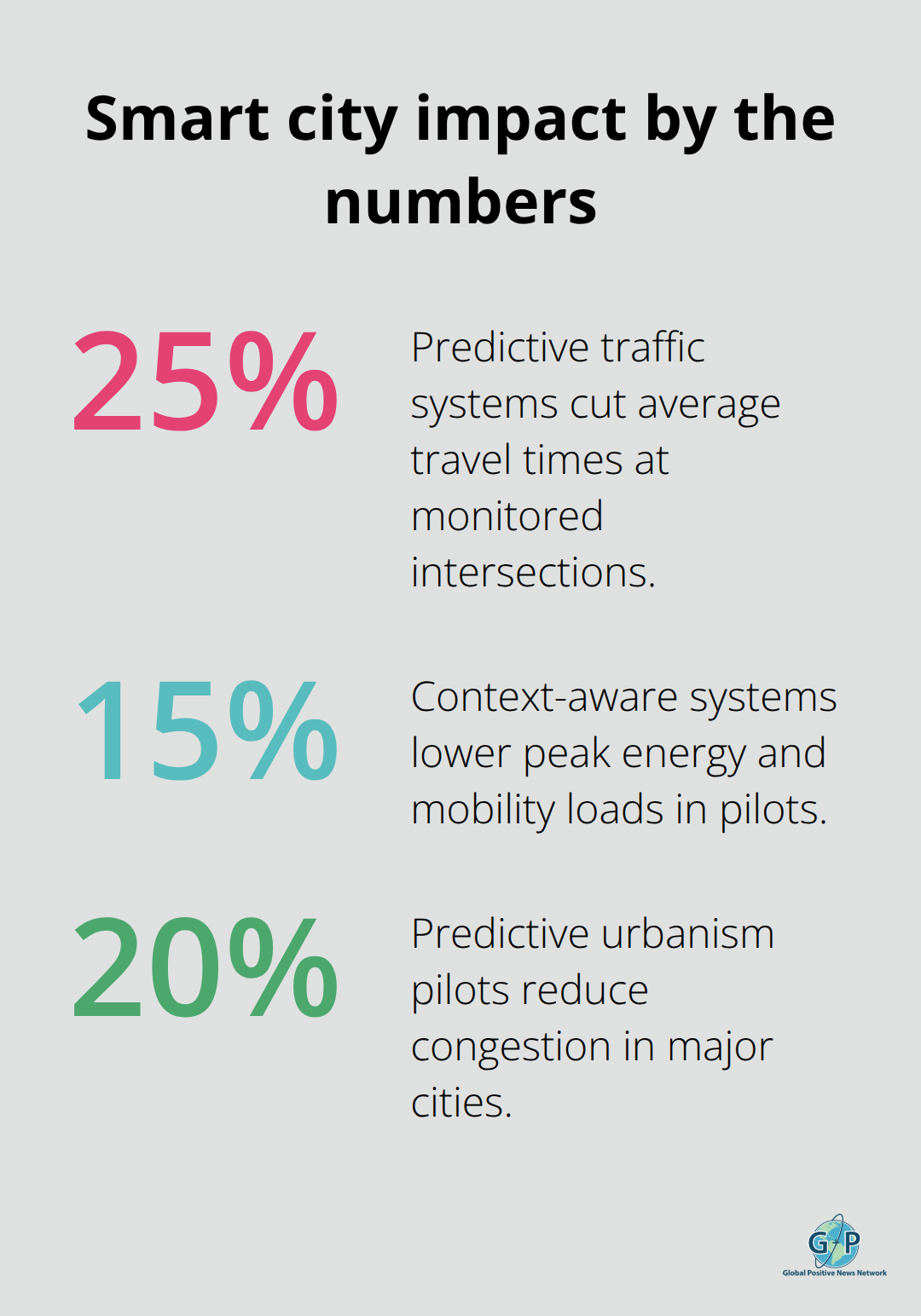
Real-time data collection forms the backbone of urban resilience, but only when cities act on it quickly. Smart cities don’t just gather information-they use it to prevent problems before they spiral. Singapore’s Integrated Urban Operations Center monitors traffic, flooding, and energy demand across the entire island in real time, allowing operators to redirect traffic within minutes of congestion and dispatch emergency crews faster during storms. The result is measurable: predictive systems reduce average travel times by roughly 25% at monitored intersections by cutting unnecessary stopping and idling. Context-aware systems that combine environmental, social, and temporal data lower peak energy and mobility loads by about 15%, according to pilots in Helsinki and Barcelona. This isn’t theoretical optimization-it’s the difference between a flooded neighborhood receiving help in 10 minutes versus 40 minutes, or a power outage affecting 50,000 people instead of 200,000.
Infrastructure That Predicts Its Own Failures
Infrastructure monitoring with predictive maintenance stops expensive emergency repairs and extends asset life. Barcelona deployed IoT sensors across water systems and waste management, reducing water waste by approximately 25% through early leak detection and optimizing collection routes to cut fuel consumption. Los Angeles retrofitted streetlights with LED systems and sensors, cutting energy use by over 50% while gathering real-time data on maintenance needs. Digital twins-near real-time digital representations of urban systems-let cities test infrastructure policies before implementation, identifying weak points in traffic networks, energy grids, and water systems without disrupting services. Edge AI processes sensor data at the source (such as smart lampposts that analyze local conditions independently), enabling faster decisions and protecting privacy by keeping data local. Cities adopting these systems see maintenance costs drop significantly because teams fix problems during scheduled maintenance windows rather than responding to emergencies at 2 AM.
When Emergencies Hit, Speed Saves Lives
Emergency response improves dramatically when data flows directly to decision-makers. Predictive urbanism uses AI to forecast traffic congestion, energy spikes, and health threats; pilots in Singapore and New York show around a 20% reduction in congestion and earlier detection of public health risks. During floods, heat waves, or power failures, cities with integrated data systems evacuate neighborhoods faster, reroute emergency vehicles around congestion, and allocate resources to highest-risk areas immediately. NYC’s 472 subway stations-the most in the world-function as a resilience backbone, moving people away from affected areas during extreme events when coordinated with real-time data systems. Cities without this integration waste critical hours gathering information by phone and email while conditions worsen. The investment in monitoring infrastructure pays back through faster response times, fewer casualties, and lower recovery costs after disasters.
The Cost of Inaction Versus Investment
Cities that delay smart infrastructure investment face mounting expenses from reactive emergency management and infrastructure failure. A single major flood or power outage costs municipalities millions in repairs, lost productivity, and recovery efforts-expenses that predictive systems prevent or minimize. Smart city technology requires upfront capital, but the operational savings and disaster prevention quickly offset initial spending. Cities considering these investments should examine their current emergency response times, infrastructure maintenance budgets, and climate risk exposure to calculate potential savings. The question isn’t whether cities can afford smart infrastructure-it’s whether they can afford to remain without it.
Cities Proving Smart Infrastructure Works Right Now
Singapore Transforms Traffic and Flooding Through Real-Time Operations
Singapore’s Integrated Urban Operations Center monitors 23,000 kilometers of roads, 7,000 traffic lights, and thousands of sensors across the island simultaneously. When congestion forms, operators see it in real time and adjust traffic signals within minutes, cutting average commute times and reducing fuel waste across the entire network. The system also predicts flooding by monitoring rainfall, tide levels, and drainage capacity together, allowing crews to deploy equipment before water reaches streets rather than after neighborhoods flood. This approach eliminates the guesswork that typically delays emergency response and multiplies damage costs.
Copenhagen’s District Heating Network Prevents Costly Failures
Copenhagen embedded IoT sensors into its district heating network with IoT sensors tracking temperature and pressure in real time, which supplies heat to 60% of the city’s buildings. The sensors identify inefficiencies that waste energy and money. When a pipe begins to fail, maintenance teams know its exact location and condition before water leaks into streets, preventing the expensive excavation that typically accompanies emergency repairs. This shift from reactive to predictive maintenance transformed how the city manages one of its largest infrastructure systems.
Barcelona Uncovers Hidden Water Loss Through Sensor Data
Barcelona deployed over 3,000 IoT sensors across water infrastructure and waste systems, and the data revealed that roughly 25% of water was being lost to leaks-information the city could not gather any other way. After fixing identified leaks, Barcelona reduced water waste significantly while cutting maintenance costs because crews no longer respond to emergency ruptures at unpredictable hours. The sensors transformed water management from a reactive scramble into a planned, efficient operation.
The Real Value Lies in Acting on Data Quickly
These three cities share one critical insight: smart infrastructure generates data, but the real value comes from acting on that data within hours or minutes. Cities that treat smart systems as data collection exercises without connecting them to faster decision-making waste money on sensors that nobody uses. The cities making an impact reorganized their operations teams to respond to real-time alerts, retrained staff to work with predictive maintenance schedules instead of emergency repairs, and gave decision-makers access to dashboards showing conditions across the entire city.
Matching Technology to Specific Problems Drives Success
The investment required varies-Singapore spent billions as part of a national smart nation strategy, Copenhagen integrated smart heating into existing infrastructure upgrades, and Barcelona started with water and waste before expanding to other systems. What matters most is that each city chose technologies matching their specific problems rather than installing everything at once. Cities considering smart infrastructure should identify their costliest operational inefficiency first, whether that’s traffic congestion, energy waste, water loss, or emergency response delays, and deploy sensors and analytics focused on solving that single problem before expanding to other areas.
The barriers to implementing these systems, however, remain substantial. High upfront costs, data security risks, and the complexity of connecting new technology to decades-old infrastructure stop many cities from starting. Understanding how leading cities overcame these obstacles reveals practical pathways forward.
What Actually Stops Cities From Building Smart Infrastructure
The gap between knowing smart systems work and actually deploying them is massive. Singapore, Copenhagen, and Barcelona succeeded because they solved three problems that paralyze most cities: finding money without bankrupting municipal budgets, protecting citizen data without killing the project, and connecting new sensors to infrastructure built decades before anyone invented IoT. Songdo received about $40 billion in private investment with roughly 80% allocated to green technology, but Songdo was built from scratch on private land. Most cities work with existing systems, limited budgets, and public oversight that makes rapid deployment difficult. The cities overcoming these barriers don’t ignore the obstacles-they structure their projects to work within real constraints rather than pretending those constraints don’t exist.
Funding Smart Cities Without Draining Municipal Budgets
Cities fund smart infrastructure through three approaches instead of trying to pay for everything upfront. First, they start small with a single high-impact problem, which costs far less than citywide deployment and produces measurable savings that justify expansion. Barcelona’s initial investment focused on water and waste systems because those departments had budget authority and clear efficiency metrics-the city didn’t attempt to overhaul traffic, energy, and emergency response simultaneously. Second, they structure partnerships where private companies install sensors and software in exchange for data access or revenue sharing from efficiency gains.
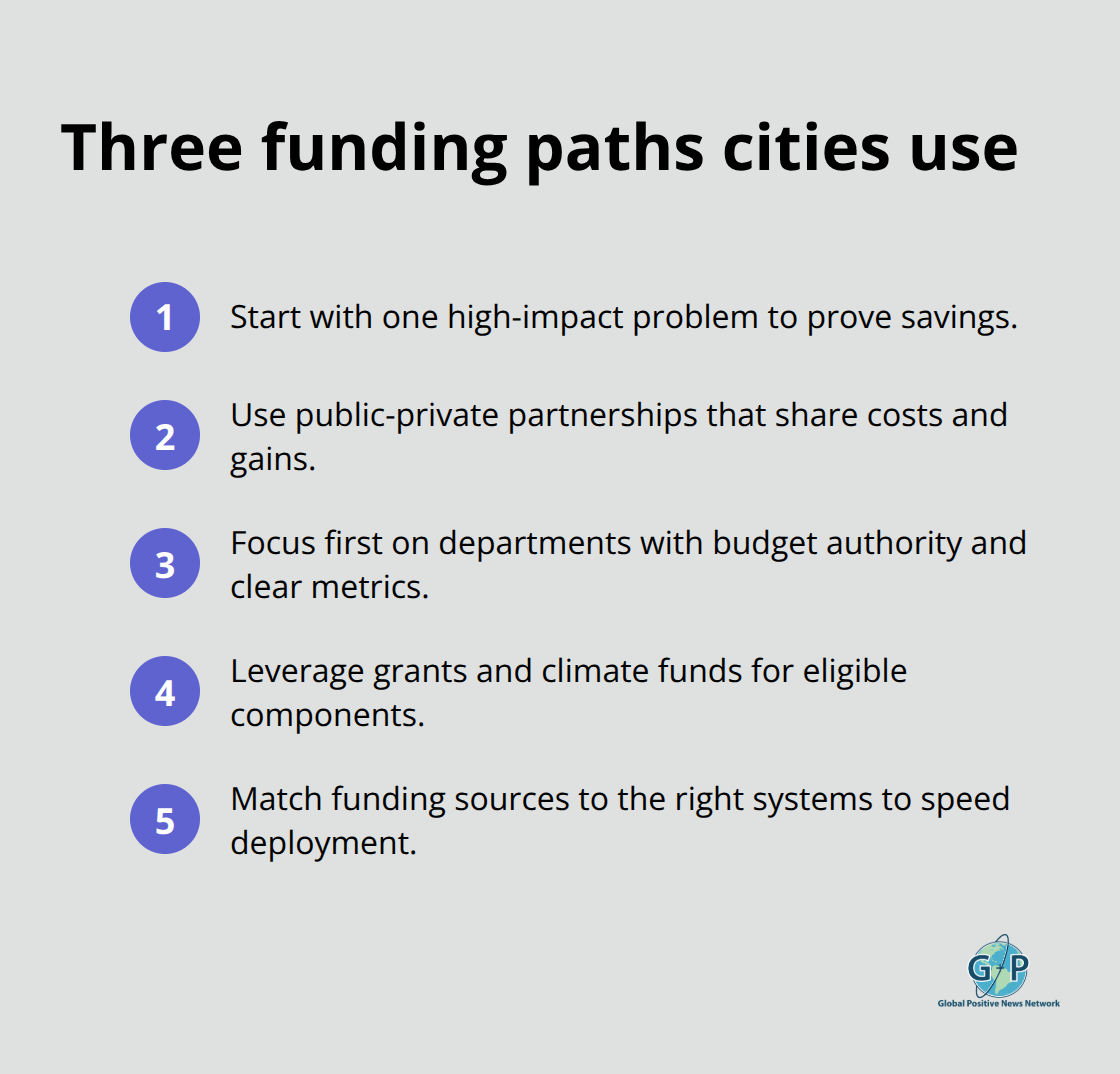
Copenhagen’s district heating network used this model, with equipment vendors financing installation in exchange for long-term service contracts. Third, they pursue grants and climate funding. NYC accounts for about 10% of global urban technology venture capital, meaning the city attracts private investment specifically because it combines municipal funding with venture-backed startups solving urban problems. Cities without NYC’s scale can access regional climate funds, national smart city grants, and international development banks that prioritize resilience projects. The key is matching each funding source to the right component-emergency response systems might qualify for federal disaster preparedness grants, while energy efficiency sensors often qualify for climate funds. Cities that mix funding sources instead of relying on a single budget line move projects forward.
Data Privacy Requires Real Governance, Not Just Technology
Data privacy concerns stop many cities from deploying smart systems because the risks are genuine and the solutions aren’t technical-they’re political and operational. Sidewalk Toronto shelved its smart city project after public backlash over data collection practices, proving that even well-funded initiatives fail without public trust. Cities overcome this barrier by separating data collection from data use through governance structures that citizens actually understand. Singapore publishes clear policies on what data it collects, who accesses it, and how long it stores information. Barcelona gives residents the ability to opt out of certain data collection, and the city publishes regular reports on how sensor data was used and what decisions it influenced. These aren’t perfect solutions, but they’re transparent enough that residents can evaluate whether they accept the tradeoff.
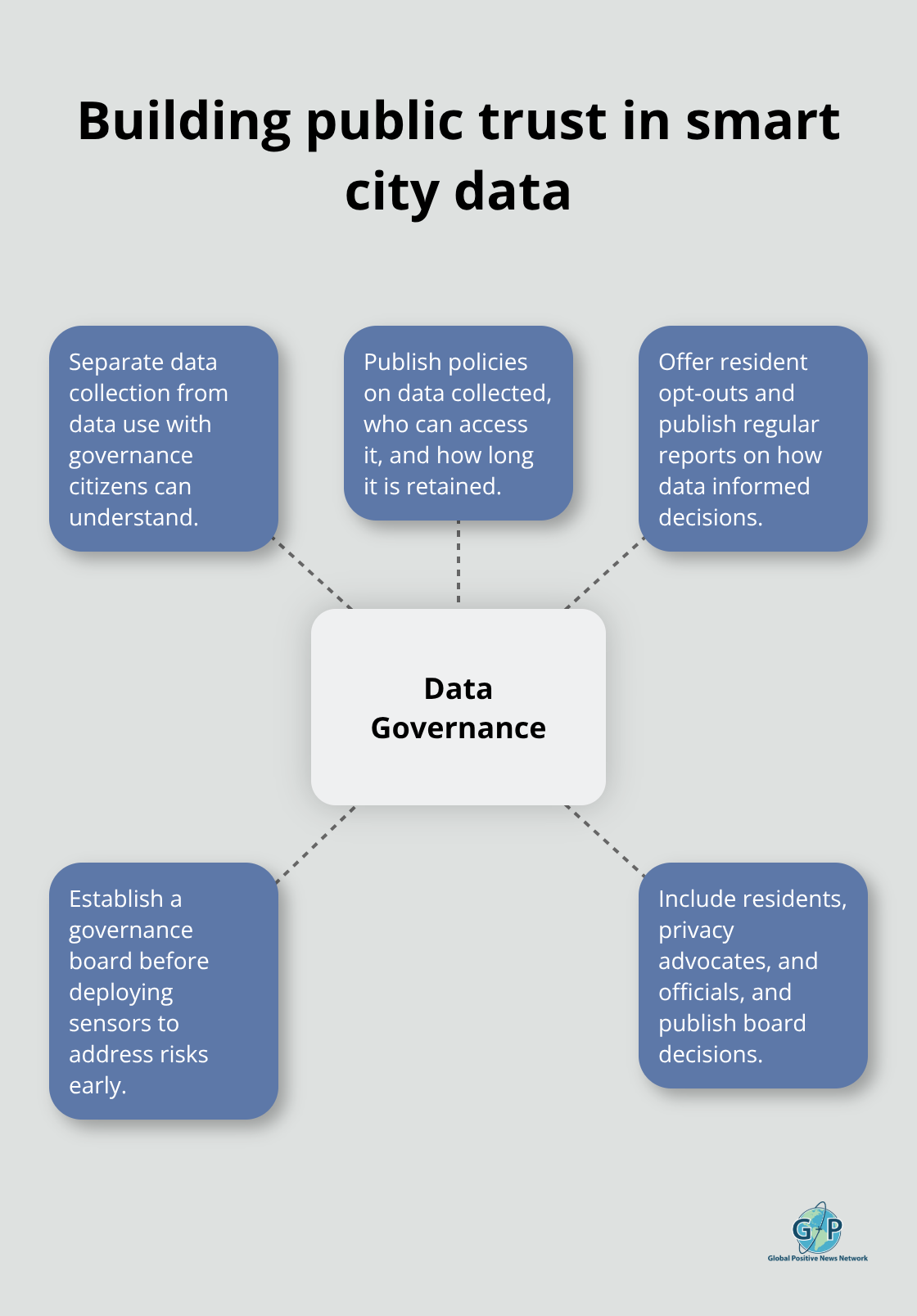
The practical step is establishing a data governance board before deploying sensors-not after discovering privacy problems. That board should include residents, privacy advocates, and city officials, and it should publish decisions publicly. Cities that treat data governance as an afterthought face delays and public resistance. Cities that treat it as a core project requirement move forward faster because they’ve already addressed concerns before they become obstacles.
Connecting New Systems to Old Infrastructure Takes Planning, Not Magic
Legacy infrastructure-pipes installed in 1960, electrical grids built in the 1980s, traffic signals from the 1990s-creates technical headaches because sensors and software assume standardized connections that older systems don’t have. Copenhagen’s solution was to deploy IoT sensors alongside scheduled infrastructure upgrades rather than trying to retrofit existing equipment. When a pipe needed replacement anyway, the city installed a smart pipe with sensors already embedded. This approach costs only slightly more than standard replacement but transforms the infrastructure from dumb to intelligent. Barcelona initially encountered resistance from departments using decades-old systems that couldn’t connect to new sensors, so the city hired integration contractors to build translation layers that allowed old and new systems to communicate. The cost was real but manageable because it addressed one system at a time rather than attempting full integration across the entire city. Cities should audit their infrastructure replacement schedules and identify opportunities to add smart components during planned upgrades, rather than treating smart infrastructure as a separate project. This removes the false choice between replacing aging infrastructure and deploying new technology-it combines both into a single project that costs less than doing them separately.
Final Thoughts
Smart cities hopeful tech works because it solves real problems that cost cities money and lives every day. Singapore reduced travel times by 25% through real-time traffic management, Barcelona cut water waste by 25% with sensor networks, and predictive maintenance systems prevent the expensive emergency repairs that drain municipal budgets. These improvements are measurable and happening now, not in some distant future.
The path forward requires three practical steps. Start small with a single high-impact problem rather than attempting citywide transformation at once-Barcelona proved this approach works by focusing initially on water and waste systems before expanding to other areas. Structure funding through multiple sources instead of relying on a single budget line, mixing municipal funding with private partnerships and climate grants to spread costs. Integrate smart infrastructure into scheduled replacement cycles rather than treating it as a separate project, since adding sensors to pipes or electrical systems during planned upgrades costs only slightly more but transforms aging infrastructure into intelligent systems.
Data governance matters as much as technology, and cities that establish clear policies on data collection, access, and storage before deploying sensors avoid the public backlash that derailed projects like Sidewalk Toronto. The investment in smart infrastructure pays back through operational savings, faster emergency response, and reduced disaster recovery costs. Visit Global Positive News Network to explore how cities and citizens worldwide are creating sustainable solutions that inspire hope.

Having a hard day?
The 2 Minute Hope Reset is a short free guide with three small practices for the days that feel heavy. Two minutes each, nothing to keep up with.
Get the free guideExplore more positive news:
Enjoying stories like this?
Global Positive News Network is reader-supported. If you’d like to support the mission, you can visit the Official GPNN store.