

The innovations reshaping our world right now aren’t distant dreams-they’re happening today. Renewable energy is scaling faster than ever, healthcare is becoming more personalized, and companies are redesigning how we manufacture and recycle.
At Global Positive News Network, we’re tracking the future hopeful innovations that matter most. This post explores the breakthroughs already changing lives and creating real opportunities for progress.
Renewable Energy Technologies Leading the Way
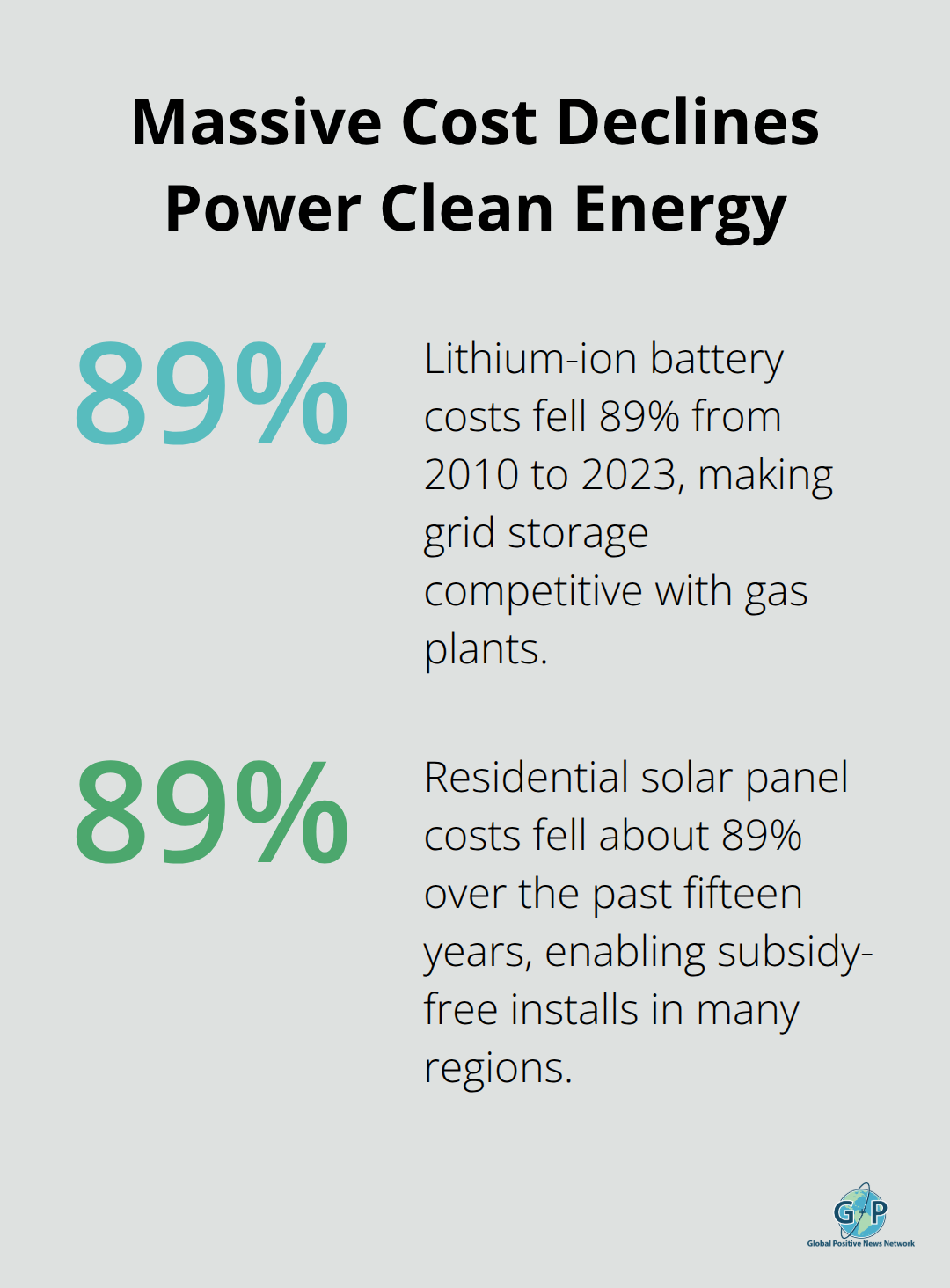
Solar and wind power have moved beyond niche status-they now form the backbone of global energy systems. Solar capacity reached approximately 1.6 terawatts globally in 2024, with installations growing at roughly 20 percent annually, according to the International Energy Agency. Wind energy contributed another 1.1 terawatts of capacity worldwide. The practical impact matters most for readers: residential solar panel costs have dropped about 89 percent over the past fifteen years, making installation financially viable for homeowners without subsidies in many regions. Germany generates over 60 percent of its electricity from renewable sources on peak days, proving that high renewable penetration works at scale. For homeowners considering solar, the payback period typically ranges from 5 to 12 years depending on location and electricity costs, after which the system generates power nearly free for decades.
Battery Storage Solves the Intermittency Problem
The real transformation isn’t just generating renewable power-storing it changes everything. Battery storage capacity worldwide reached 69 GW in 2024, with deployment accelerating rapidly. Tesla’s Megapack systems and similar grid-scale batteries allow utilities to store excess wind or solar energy and release it when demand peaks, solving the intermittency problem that plagued renewables for years. Lithium-ion battery costs dropped roughly 89 percent between 2010 and 2023, making large-scale storage economically competitive with natural gas plants. South Australia demonstrates this success: the Hornsdale Power Reserve, a 150-megawatt battery facility completed in 2017, has prevented blackouts and reduced electricity prices by stabilizing the grid. For businesses and homeowners, residential battery systems like the Tesla Powerwall (13.5 kilowatt-hours) or LG Chem RESU now enable energy independence, though installation costs range from 10,000 to 15,000 dollars depending on system size and local labor rates.
Government Investment Accelerates Deployment
Investment in renewable energy reached 1.7 trillion dollars globally in 2023, with government policies driving rapid deployment. The United States Inflation Reduction Act allocated roughly 369 billion dollars toward clean energy through 2032, creating measurable incentives for solar, wind, and battery projects. The European Union’s Green Deal targets climate neutrality by 2050 and mandates 42.5 percent renewable energy by 2030. These policies translate into tax credits, rebates, and direct subsidies that lower out-of-pocket costs for installations. China leads global renewable capacity additions, installing more solar and wind than all other nations combined in recent years, driven through state-directed investment and manufacturing scale. For those planning a renewable energy project, checking regional government incentives immediately proves essential: rebates, tax credits, and accelerated depreciation can reduce project costs by 30 to 50 percent.
The momentum is unmistakable-renewable energy has shifted from experimental technology to essential infrastructure. As costs continue declining and grid integration improves, the economic case strengthens further. This transformation in how we power our world opens doors to equally significant breakthroughs in how we care for human health.
Healthcare Innovations Transforming Lives
Personalized Medicine Matches Individual Biology
Healthcare transforms when treatments match individual biology rather than treating everyone identically. Personalized medicine now moves beyond genetics into protein markers, microbiome analysis, and real-time health monitoring. Companies like Tempus and Guardant Health analyze tumor DNA to recommend specific cancer therapies with measurable success rates, reducing trial-and-error treatment cycles that waste months and money. The global personalized medicine market growth reached USD 567.10 billion in 2024 and is projected to reach USD 1196.18 billion by 2033, at a CAGR of 8.80% from 2025 to 2033.
For patients, this means oncologists can identify which chemotherapy actually works for your specific cancer mutation rather than cycling through standard protocols. Pharmacogenomics services test how your genes metabolize medications, preventing adverse reactions and optimizing dosing for conditions from depression to heart disease. Insurance coverage expands gradually as evidence accumulates: Medicare increasingly reimburses genetic testing for cancer patients, and major insurers cover pharmacogenomic screening when ordered by physicians.
Telemedicine Removes Geographic Barriers
Remote care eliminates geography as a barrier to expert consultation. Telemedicine visits for mental health, chronic disease management, and specialist consultations now account for roughly 38 percent of all outpatient visits in the United States according to McKinsey research, up dramatically from 2 percent before 2020. Platforms like Ro and Nurx deliver prescription medications directly to patients after digital consultations, handling conditions from hypertension to contraception without clinic visits.
The practical advantage matters most: rural patients access cardiologists in major medical centers without six-hour drives, reducing missed appointments and enabling faster intervention when conditions worsen. This shift proves especially valuable for patients in underserved regions where specialist availability remains limited.
AI-Powered Diagnostics Accelerate Clinical Practice
AI-powered diagnostics represent the most tangible breakthrough reshaping clinical practice today. Algorithms from companies like Zebra Medical Vision and Arterys analyze medical imaging with accuracy matching or exceeding radiologists on specific tasks like detecting breast cancer in mammograms or lung nodules in CT scans. These tools don’t replace doctors but accelerate diagnosis and flag subtle findings humans might miss during fatigue-prone afternoon shifts.
Hospitals implementing AI diagnostic support report 15 to 20 percent faster turnaround times for imaging reports and improved detection rates for early-stage cancers. Cost reduction proves substantial: AI screening reduces unnecessary follow-up imaging (by identifying benign findings accurately), cutting healthcare expenses while improving patient outcomes. The FDA has cleared over 700 AI-powered medical devices, signaling mainstream adoption rather than experimental status.

For patients, faster diagnosis means faster treatment initiation, which directly correlates with survival rates in time-sensitive conditions like sepsis and stroke. Access remains unequal currently, with wealthy healthcare systems deploying these tools first, but hospital networks increasingly share AI infrastructure through cloud platforms, gradually extending benefits across regions.
These three forces-personalized treatment selection, remote expert access, and AI-assisted diagnosis-converge to reshape how we manufacture products and manage waste, creating opportunities for equally significant breakthroughs in how we design sustainable systems.
Sustainable Technology and Circular Economy Models
Circular Design Transforms Manufacturing Economics
Manufacturing today faces a hard truth: linear production wastes thousands of dollars per unit and depletes finite resources. Companies that redesign production around circular principles recover materials, reduce costs, and build competitive advantage simultaneously. Patagonia’s Worn Wear program takes used clothing, repairs it, and resells it at premium prices, turning waste into revenue while extending product lifecycles by years. Interface, a carpet manufacturer, shifted its entire business model to lease rather than sell flooring, which incentivizes them to design products lasting decades and use recycled materials in production. This lease model forces manufacturers to think differently: every dollar spent on durability and material recovery directly improves their margins.
The Ellen MacArthur Foundation reports that circular economy approaches reduce material costs by 15 to 30 percent while improving brand loyalty and regulatory compliance. For manufacturers implementing circular design, the practical first step involves mapping material flows through production: identifying where virgin materials enter, where waste accumulates, and where recycled inputs could substitute. Companies using this approach typically discover that 20 to 40 percent of production waste streams can feed back into manufacturing with minor process adjustments. Philips Electronics redesigned its lighting products to use modular components that customers can upgrade rather than replace entirely, reducing material consumption and generating service revenue from upgrades.
Waste Reduction Drives Operational Efficiency
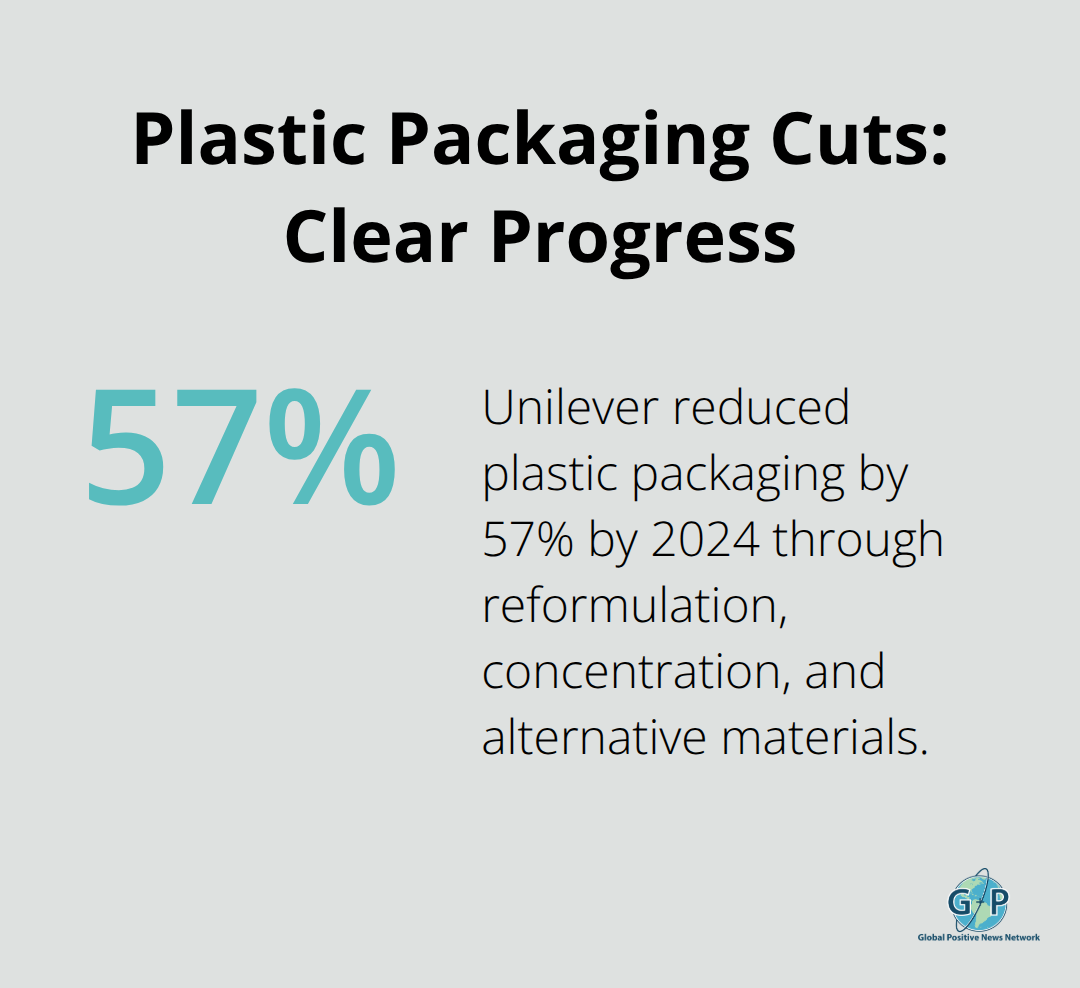
Corporate waste reduction now moves beyond recycling bins into production redesign and material innovation. Unilever committed to halving plastic packaging by 2025 and achieved 57 percent reduction by 2024 through reformulation, concentrated products, and alternative materials like aluminum and glass. Nestlé announced plans to eliminate single-use plastic from its entire portfolio by 2025 and already removed plastic packaging from over 50 percent of products. These commitments reflect investor demands for waste reduction as evidence of operational efficiency and long-term viability.
The World Economic Forum estimates that circular economy practices could generate $4.5 trillion in economic benefits through 2030. The shift requires upfront investment in new equipment and supply chain relationships, but payback periods typically range from 3 to 7 years as waste disposal costs disappear and material purchasing drops.
Corporate Sustainability Commitments Drive Market Change
Companies that announce targets without implementation pathways typically miss deadlines and damage credibility, while those publishing annual progress reports against specific metrics build investor confidence and attract talent seeking meaningful work. Setting specific, measurable targets matters far more than vague promises. Targets should specify what materials get eliminated, when, and through which mechanisms (alternative materials, process redesign, or product reformulation). Investors increasingly scrutinize sustainability claims, rewarding companies with transparent reporting and penalizing those with empty rhetoric.
Final Thoughts
The future hopeful innovations covered here solve real problems while creating economic value simultaneously. Renewable energy cuts electricity costs and grid instability at once. Personalized medicine improves survival rates while reducing wasteful treatment cycles. Circular manufacturing recovers material costs while eliminating waste. These outcomes align rather than compete.
Technology accelerates progress when directed toward measurable human benefit (solar installations now cost less than fossil fuel plants over their lifetime, AI diagnostics catch cancers earlier when treatment succeeds more often, and circular design makes products cheaper to manufacture while extending usefulness). The economic case strengthens alongside the environmental case, which removes the false choice between profit and progress.
Individual action matters more than waiting for systemic change. Homeowners installing solar panels reduce their electricity bills while supporting grid stability. Patients requesting pharmacogenomic testing push insurance coverage expansion through demonstrated demand. Consumers choosing products from companies with transparent sustainability reporting reward accountability and punish greenwashing. Communities adopting circular economy principles at local levels create models that larger systems eventually replicate. At Global Positive News Network, we track these innovations because they represent genuine progress rather than wishful thinking.
Explore more positive news:
Enjoying stories like this?
Global Positive News Network is reader-supported. If you’d like to support the mission, you can visit the Official GPNN store.